When do sheet metal fabrication services cost more?
Author
Date Published
Reading Time
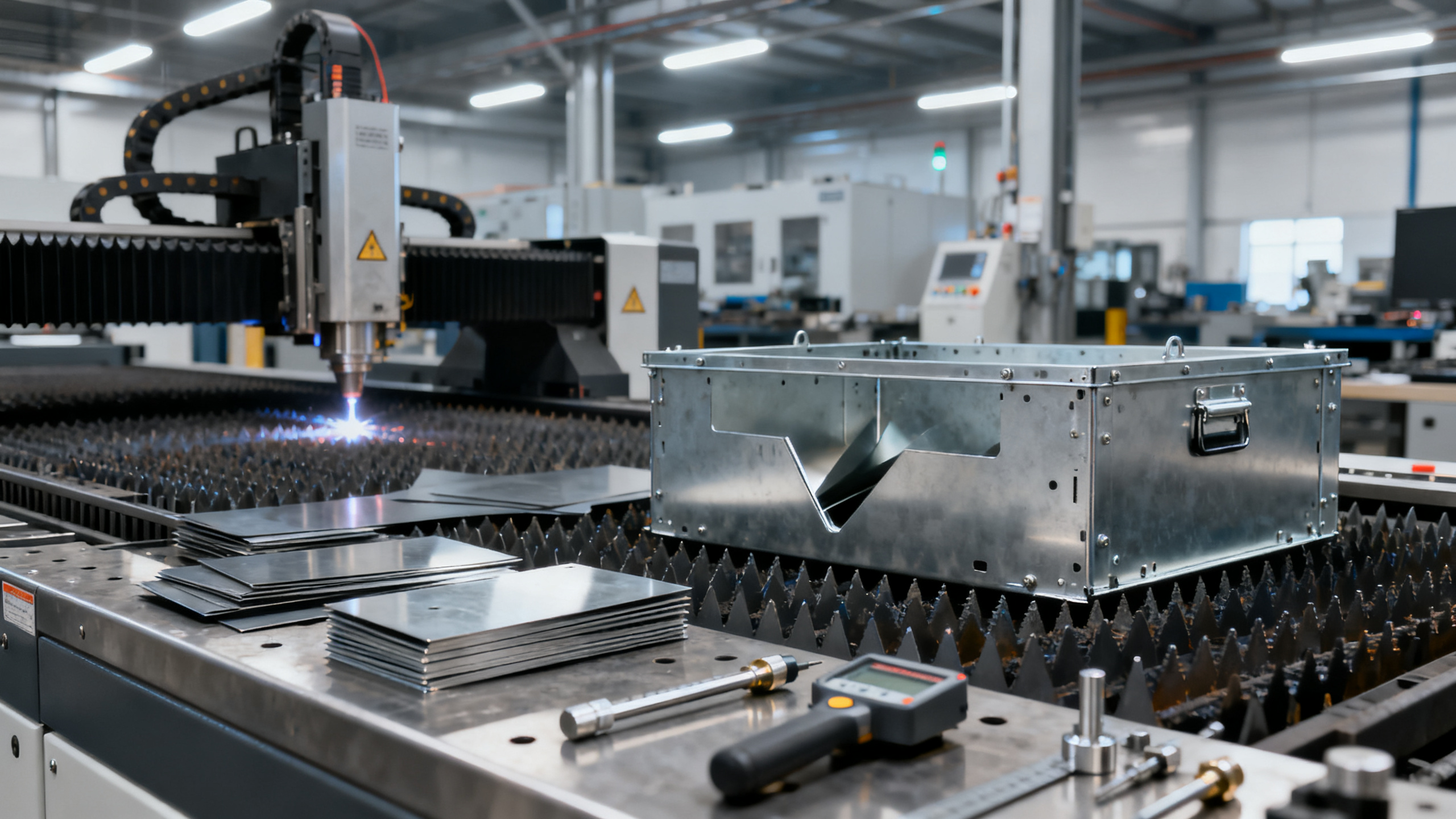
For financial approvers, the true cost of sheet metal fabrication services often extends beyond the quoted unit price. Expenses can rise when projects require tighter tolerances, certified materials, complex geometries, urgent lead times, or compliance with demanding industrial standards. Understanding these cost drivers is essential for approving budgets that protect both profitability and operational reliability. This article explains when fabrication costs typically increase and how procurement and finance teams can evaluate quotes with greater confidence.
In capital equipment, power distribution, safety enclosures, process machinery, and infrastructure components, a low unit price can conceal downstream costs. Finance leaders need to know when higher fabrication spending is justified by lower rework, fewer shutdowns, and stronger compliance control.
Why the Quoted Price Changes in Industrial Fabrication
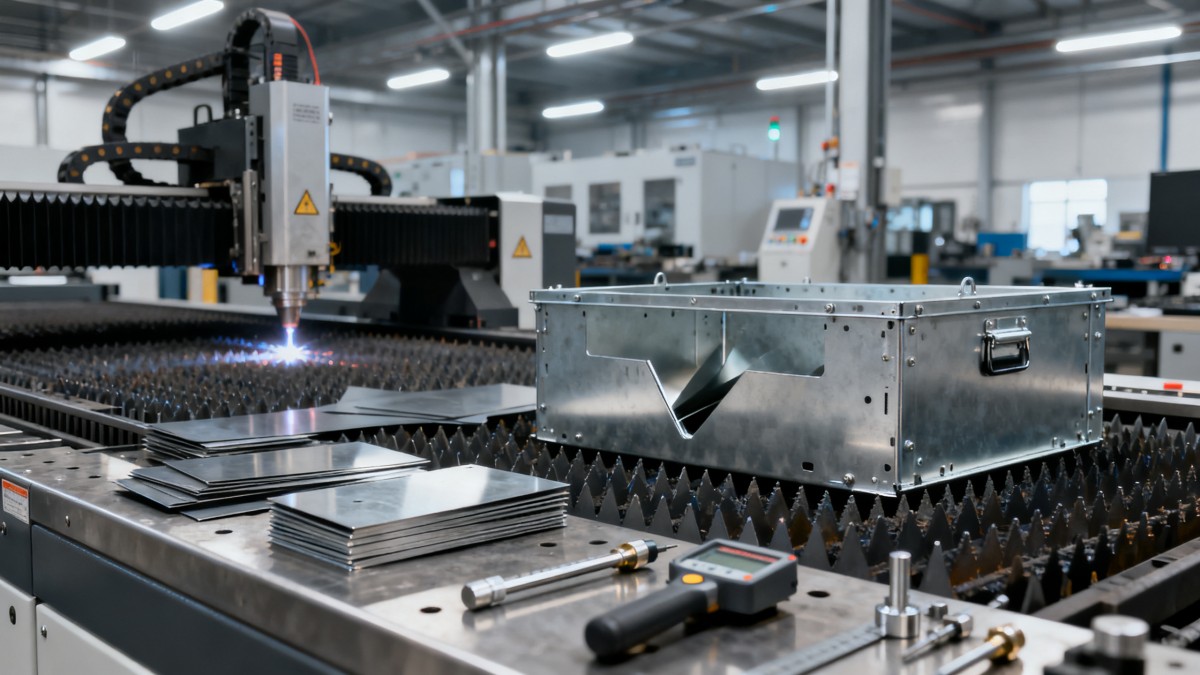
Sheet metal fabrication services combine engineering interpretation, material procurement, cutting, forming, welding, finishing, inspection, packaging, and logistics. Each step has cost variables that can shift once drawings, usage conditions, or acceptance criteria become clearer.
For finance teams, the practical question is not simply “Why is this quote higher?” It is “Which technical requirements are consuming budget, and do they reduce operational risk over a 3-year to 10-year asset life?”
Unit price is only one part of total landed cost
A fabricated panel priced 8% lower may still become more expensive if it requires secondary machining, local rework, or replacement after installation. For critical infrastructure, even a 24-hour delay can exceed the savings from a cheaper fabrication quote.
The strongest approvals compare total landed cost across at least 5 factors: material grade, processing complexity, inspection scope, packaging protection, and delivery reliability. This approach is especially important for EPC projects and plant maintenance programs.
Common cost drivers finance teams should expect
The following table summarizes why sheet metal fabrication services may cost more than a basic commodity quote. These drivers are normal in industrial projects where fit, safety, and documentation matter.
The key conclusion is that higher pricing is often linked to risk transfer. The fabricator is absorbing more responsibility for dimensional accuracy, material authenticity, repeatability, and acceptance evidence.
Approval checkpoint
- Confirm whether the quotation includes tooling, programming, inspection, finishing, and packaging.
- Ask whether the tolerance requirement is functional or simply inherited from an old drawing.
- Separate one-time engineering charges from recurring production costs.
- Check if the supplier quoted prototype pricing or production pricing for 100, 500, or 1,000 units.
When Materials and Certifications Raise the Budget
Material choice is one of the fastest ways for sheet metal fabrication services to become more expensive. Carbon steel, stainless steel, aluminum, galvanized sheet, and specialty alloys differ in price, machinability, weld behavior, corrosion resistance, and documentation needs.
A 2 mm stainless enclosure for a washdown area cannot be evaluated like a 1.5 mm mild steel bracket used indoors. The first may require corrosion resistance, sealed welds, and surface treatment; the second may prioritize low cost and fast replenishment.
Certified materials cost more because they reduce uncertainty
In industrial procurement, finance departments may see material certificates as paperwork. In reality, certificates help prove chemical composition, mechanical properties, heat number traceability, and compliance with project specifications.
When projects require mill test reports, RoHS-related declarations, or controlled material batches, the fabricator must source from qualified channels. This can add 3–10 business days and reduce low-cost substitution options.
Thickness and yield loss affect real material cost
Material thickness changes both purchase cost and processing time. Moving from 1.5 mm to 3 mm sheet may require slower laser cutting, more forming force, additional weld heat control, and stronger packaging.
Finance teams should also review nesting efficiency. A part layout with only 70% sheet utilization may cost more than a design that reaches 85% utilization, even if the unit geometry appears simple.
Material-related questions before approval
- Is the selected material essential for heat, humidity, chemical exposure, or load requirements?
- Can the design use a standard thickness such as 1.0 mm, 1.5 mm, 2.0 mm, or 3.0 mm?
- Does the quote include scrap allowance, offcut management, and minimum purchase quantities?
- Are certificates required for every batch or only for first-article approval?
These questions help financial approvers distinguish necessary compliance spending from over-specification. A lower-cost material may be acceptable for indoor covers, but not for safety-critical guards or outdoor power equipment.
How Geometry, Tolerance, and Engineering Changes Increase Labor Cost
Many cost increases in sheet metal fabrication services come from manufacturing difficulty rather than material price. A simple flat plate may be easy to cut, but a welded enclosure with 8 bends, inserts, hinges, seals, and vents requires more coordination.
For finance teams, the important distinction is direct production time versus hidden engineering time. Complex parts need design review, process planning, fixture strategy, bend sequencing, and sometimes prototype validation.
Tighter tolerance means more control points
A general tolerance of ±0.5 mm is usually easier to manage than ±0.1 mm across multiple bends. Each tighter dimension can add inspection points, fixture requirements, and slower machine settings.
If a part has 15 critical dimensions, inspection may require coordinate measurement, gauge checks, or documented reports. That level of quality control costs more than visual inspection and simple caliper checks.
Design changes after quotation create budget leakage
Late engineering changes are a frequent reason for cost escalation. A new hole pattern, altered bend radius, or changed finish may affect CNC programs, tooling, packaging, and previously purchased material.
A controlled change process should define 3 stages: pre-production drawing freeze, first article approval, and release for batch manufacturing. This protects both the buyer’s budget and the supplier’s production plan.
Fabrication complexity indicators
- More than 6 bends on a small part may require careful bend sequencing.
- Welded assemblies with visible cosmetic surfaces require additional grinding and finishing time.
- Press-fit hardware, threaded inserts, and studs add secondary operations and pull-out testing considerations.
- Large parts above 1,500 mm may require special handling, larger machines, or reinforced packaging.
When these indicators are present, a higher quote is not automatically inefficient. It may reflect a more realistic assessment of labor, inspection, and production stability.
Lead Time, Capacity, and Urgency Premiums
Short lead times can push sheet metal fabrication services into premium territory. A normal production window may be 2–4 weeks, while urgent jobs may require overtime, expedited material purchasing, and priority machine scheduling.
Financial approvers should treat urgency premiums as a supply chain risk signal. If repeated rush orders occur every month, the issue may be demand planning rather than fabrication pricing.
Typical timeline differences
The table below gives a practical framework for evaluating lead time assumptions. Actual timelines vary by part size, material availability, quantity, finishing method, and inspection requirements.
The decision point is whether the premium prevents a larger financial loss. In maintenance shutdowns, fast fabrication may be justified; in planned projects, earlier release usually delivers better pricing.
Capacity constraints are real cost factors
Fabrication suppliers balance laser cutting, punching, bending, welding, finishing, and assembly capacity. If a buyer needs 2,000 parts in 10 days, the supplier may need split shifts or outsourced finishing support.
Finance can reduce premiums by approving rolling forecasts, blanket orders, or staged deliveries. A 3-month demand view often supports better material purchasing and steadier machine allocation.
Practical lead-time controls
- Release drawings at least 2 weeks before required production for standard parts.
- Group similar materials and finishes to reduce setup changeovers.
- Use safety stock for high-risk spares with known failure consequences.
- Define realistic delivery lots, such as 30%, 40%, and 30%, instead of one compressed shipment.
Compliance, Inspection, and Risk Control Requirements
Industrial buyers often need more than formed metal. They need proof that parts meet safety, environmental, electrical, or mechanical requirements. That proof can make sheet metal fabrication services more expensive, but it also reduces acceptance risk.
For projects involving power cabinets, machine guards, laboratory equipment, transport frames, or environmental systems, inspection records may be as important as the parts themselves. Missing documentation can delay commissioning.
Inspection depth should match failure consequence
Not every bracket needs the same inspection level. A non-critical cover may need dimensional sampling, while a load-bearing assembly may need weld inspection, material traceability, and functional fit verification.
A practical inspection plan can use 3 tiers: basic dimensional check, first-article inspection report, and project-specific quality dossier. Finance should ask which tier is included in the quotation.
Documentation adds labor but protects payment approval
Certificates, inspection reports, coating thickness records, weld maps, and packing photos all take time to prepare. However, they also help procurement and finance approve invoices without disputes at delivery.
For international projects, document clarity can prevent customs delays and site rejection. A missing material certificate may cost more than the document charge if it stops installation for 2 or 3 days.
Risk-based approval checklist
- Identify whether the part is safety-critical, load-bearing, weather-exposed, or electrically integrated.
- Confirm required standards, such as CE-related documentation, UL project expectations, or ISO-controlled procedures.
- Define sampling rates, for example 100% inspection for critical dimensions or 10% sampling for low-risk batches.
- Request a clear nonconformance process with response targets, such as 24–48 hours for initial containment.
This checklist helps prevent under-budgeting. The cheapest quote may exclude the exact records that the site team needs before accepting fabricated components.
How Financial Approvers Can Evaluate Quotes More Confidently
Approving sheet metal fabrication services requires a structured commercial and technical review. The best decision is rarely based on price alone; it considers risk, repeatability, supplier capability, and the cost of failure.
A useful quote comparison should normalize at least 6 variables: material, thickness, tolerance, finish, inspection level, and delivery term. Without normalization, finance may compare different scopes as if they were equivalent.
Ask for transparent cost separation
A clear supplier quote should separate material cost, cutting and forming, welding or assembly, finishing, inspection, packaging, and logistics. This makes approval easier and highlights where optimization is possible.
If the price is high because of surface finish, the buyer may consider whether a non-visible surface can use a lower cosmetic grade. If inspection is the driver, the team can review which dimensions are truly critical.
Use lifecycle value, not only purchase variance
A fabricated part that avoids corrosion, misalignment, or installation rework may produce measurable value beyond procurement savings. In heavy industry, one avoided site visit can justify a moderate fabrication premium.
Finance teams should model at least 3 cost layers: purchase price, operational impact, and failure recovery. This is especially important for equipment enclosures, safety barriers, control cabinet panels, and replacement spares.
Recommended quote review process
- Collect drawings in the latest revision and mark all critical dimensions.
- Confirm annual volume, batch size, and expected reorder frequency.
- Request separate pricing for prototype, pilot batch, and full production.
- Review compliance documents before purchase order release.
- Agree on change control, acceptance criteria, and delivery milestones.
This 5-step process makes the approval record stronger. It also gives procurement a basis for negotiation without pressuring the supplier to remove essential controls.
Common Misunderstandings That Lead to Poor Budget Decisions
Many budget issues begin with assumptions. A drawing may look simple, but hidden requirements can turn it into a higher-cost job. Finance leaders can prevent surprises by challenging unclear scope early.
One common misunderstanding is that all sheet metal fabrication services are interchangeable. In reality, suppliers vary in machine range, weld skill, quality systems, finishing partners, and experience with industrial documentation.
Misunderstanding 1: Lower thickness always saves money
Reducing sheet thickness may lower material cost, but it can increase deformation, vibration, or assembly failures. If extra stiffeners are added later, total cost may rise instead of falling.
Misunderstanding 2: Cosmetic quality is free
Visible panels, operator-facing guards, and branded equipment covers often require controlled grinding, masking, coating, and handling. A Class A visible finish usually needs more labor than an internal industrial part.
Misunderstanding 3: Small batches should cost like mass production
Setup time is spread across fewer units in small batches. A 10-piece order can have a much higher unit cost than a 500-piece batch, even when the same machines are used.
Budget protection principles
- Do not remove tolerance, material, or inspection requirements without engineering approval.
- Do not compare suppliers unless scope and acceptance criteria are identical.
- Do not treat prototype cost as a valid benchmark for annual production pricing.
- Do not approve rush production without identifying the internal planning cause.
These principles support better capital discipline. They keep negotiations focused on design optimization, scheduling, and scope clarity rather than arbitrary price reduction.
Building a Stronger Business Case for Fabrication Spending
Higher fabrication cost is not automatically a problem. It becomes a problem when the buyer cannot explain what the added spend protects. A good business case connects cost drivers to operational outcomes.
For example, certified stainless parts may protect a hygienic processing line. A tighter tolerance may prevent assembly rework. A more durable coating may extend replacement intervals from 12 months to 36 months.
What a finance-ready justification should include
A strong approval note should state the functional requirement, the cost driver, the risk of under-specification, and the expected operational value. This creates a defensible record for procurement governance.
- Functional need: corrosion resistance, safety guarding, electrical enclosure fit, or mechanical support.
- Cost driver: certified material, tolerance, welding, finishing, inspection, or expedited delivery.
- Risk avoided: downtime, installation rework, quality rejection, compliance delay, or premature failure.
- Decision basis: total landed cost, lifecycle value, and supplier capability evidence.
Where Global Industrial Core fits into procurement decisions
Global Industrial Core supports industrial buyers with sourcing intelligence across mechanical components, metallurgy, safety systems, measurement, power infrastructure, and environmental engineering. This perspective helps finance teams evaluate fabrication cost in context.
Instead of looking only at a line-item quote, decision makers can assess supplier capability, documentation requirements, project risk, and long-term asset reliability. That broader view is essential when infrastructure failure is not acceptable.
Final approval guidance
Sheet metal fabrication services cost more when the project demands tighter control: better materials, stricter tolerances, more complex forming, faster delivery, documented compliance, or lower tolerance for failure.
For financial approvers, the best outcome is not the lowest initial price. It is a well-scoped purchase that protects budget, schedule, safety, and asset performance across the full operating cycle.
If your team needs a structured evaluation framework for industrial fabrication quotes, consult Global Industrial Core for procurement insight, supplier assessment guidance, and practical decision support. Contact us to explore more solutions or request a tailored sourcing approach.
Technical Specifications
- How to Select Electronic Hotel Key Card Locks for Guest Rooms and Staff AreasAuthor :Safety Compliance Lead
- How to Select Lab Instruments for Reliable Chemical Analysis WorkflowsAuthor :Precision Metrology Expert
- How to Size a UPS for Server Rooms: Load, Runtime, and Redundancy FactorsAuthor :Grid Infrastructure Analyst
Expert Insights

Chief Security Architect
Dr. Thorne specializes in the intersection of structural engineering and digital resilience. He has advised three G7 governments on industrial infrastructure security.
Related Analysis
- Sep 17, 2026How to Select Electronic Hotel Key Card Locks for Guest Rooms and Staff AreasAuthor :Safety Compliance Lead
- Sep 16, 2026How to Select Lab Instruments for Reliable Chemical Analysis WorkflowsAuthor :Precision Metrology Expert
- Sep 15, 2026How to Size a UPS for Server Rooms: Load, Runtime, and Redundancy FactorsAuthor :Grid Infrastructure Analyst
Core Sector // 01
Security & Safety
- Stainless Steel Welded Tube Applications: Matching Tube Supply to Fabrication NeedsAuthor :Heavy Industry Strategist

- What Maintenance Do Furnace Components Need After 18 Months?Author :Heavy Industry Strategist

- How to Assess Metal Materials for Thermal Cycling in Power BoilersAuthor :Heavy Industry Strategist

- How to Evaluate Aluminum Extrusion Suppliers for Tight-Tolerance Components?Author :Heavy Industry Strategist

- How to Evaluate a Weld Neck Flange Manufacturer for High-Pressure Pipe ProjectsAuthor :Heavy Industry Strategist

- EU REACH Ban Hits Cr(VI)-Coated Steel ImportsAuthor :Heavy Industry Strategist
-Coated Steel Imports")
- How to Evaluate a Heat Sink Aluminum Profile Supplier for Custom Thermal ProjectsAuthor :Heavy Industry Strategist

- Industrial Metal Fabrication Components Price: What Drives Cost and How to Compare QuotesAuthor :Heavy Industry Strategist