EU Updates EN 61000-6-4:2026 for Water Treatment EMC
Author
Date Published
Reading Time
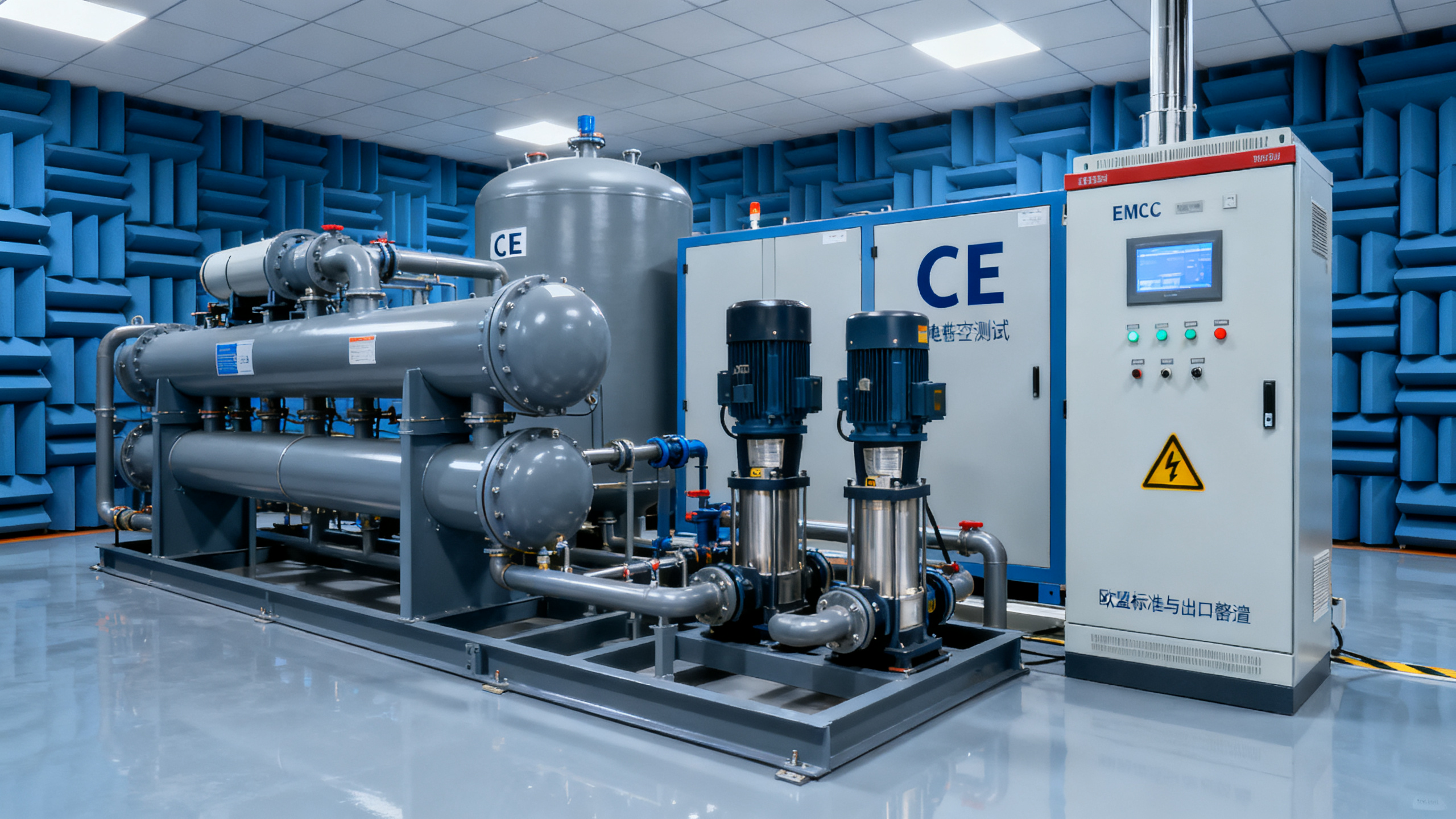
On July 20, 2026, the Official Journal of the European Union (OJEU) published the updated EN 61000-6-4:2026 standard, making it the mandatory replacement for the previous version in EMC certification for industrial water treatment equipment exported to the EU. This matters directly to equipment manufacturers, exporters, testing and certification workflows, and distribution channels because devices that have not completed type testing under the revised requirements will not be eligible for CE marking, with immediate consequences for customs clearance and market placement.
What the revised standard changes
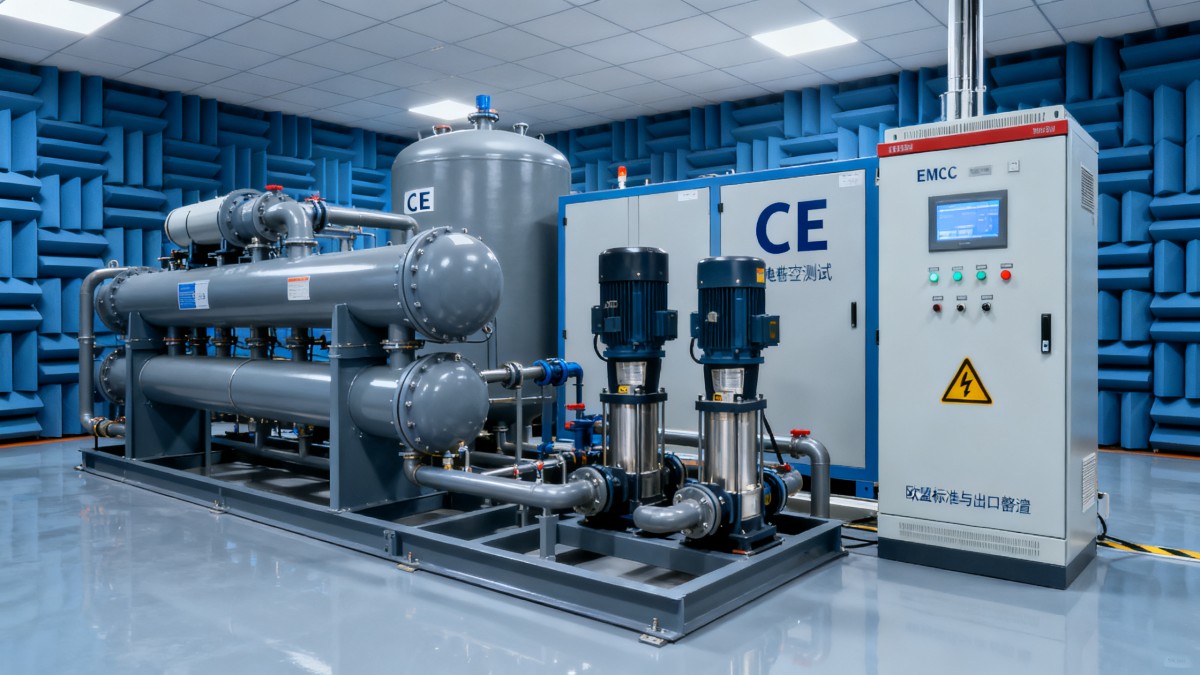
According to the information provided, EN 61000-6-4:2026 has been published by the OJEU and must replace the earlier version for industrial water treatment equipment sold into the EU market. The revision tightens radiated emission limits and adds immunity testing requirements for variable-frequency drive pump units and smart controllers. Equipment that has not completed type testing under the new rules cannot carry the CE mark, which may affect both import clearance and product listing for sale.
Where the impact is likely to be felt first
Export-facing equipment suppliers
From an industry perspective, companies shipping industrial water treatment equipment to the EU are the most directly exposed because EMC compliance is tied to CE marking. The main pressure point is product qualification: any model still relying on legacy test results may face disruption if it has not been assessed under EN 61000-6-4:2026.
Manufacturers using drive-based pump systems and smart controls
Analysis shows that producers whose systems include variable-frequency drive pump assemblies or intelligent controllers should pay closer attention to the new immunity test requirements. The impact is likely to center on product design validation, test scheduling, and technical file preparation, especially where these components are core to the equipment configuration.
Distributors and channel operators serving the EU market
For channel partners, the issue is less about design and more about sell-through risk. If a product cannot legally bear the CE mark under the updated standard, the effect can extend to customs handling, inventory movement, and readiness for listing or placement in the market.
Testing, certification, and delivery coordination
What deserves closer attention is the operational side of compliance. Even where products are already established in the EU business pipeline, the shift to a mandatory new standard can affect test sequencing, document review, and shipment timing, particularly for exporters working against fixed delivery windows.
Practical checkpoints for companies now
Confirm which products fall within the revised testing scope
Companies should first identify which industrial water treatment models exported to the EU are subject to EMC certification under the revised standard, with particular attention to equipment configurations involving variable-frequency drive pump units and smart controllers.
Recheck the validity of existing type-test arrangements
The immediate practical issue is whether existing type testing still supports EU market access. Since the prior version is being mandatorily replaced, businesses need to verify whether pending or planned CE marking activities are aligned with EN 61000-6-4:2026 rather than older certification assumptions.
Prepare for tighter emissions and broader immunity review
Observably, the revision is not limited to documentation updates. The tighter radiated emission limits and added immunity testing requirements mean companies should review whether current test plans, sample configurations, and supporting technical materials are sufficient for the new compliance path.
Align external communication across supply and sales teams
Businesses with EU-bound orders should ensure that certification status, shipment expectations, and product readiness are communicated consistently across suppliers, internal compliance teams, logistics coordinators, and customers. The key point is to separate what is already validated under the revised standard from what is still in transition.
Why this looks like more than a routine document update
Analysis shows that this development is better understood as an immediate compliance change rather than a distant policy signal. The reason is straightforward: the updated standard is described as a mandatory replacement, and the consequence of not completing type testing under the new rules is explicit loss of CE marking eligibility for the affected equipment. At the same time, it is also appropriate to view it as a longer-term signal that EMC expectations for industrial water treatment systems are moving closer to the realities of drive-based equipment and smarter electronic control architectures.
How the market should read the update
At this stage, the most balanced interpretation is that EN 61000-6-4:2026 creates an immediate compliance threshold for EU-bound industrial water treatment equipment while also signaling a stricter technical baseline for future product access. The short-term issue is marketability under CE marking requirements; the broader implication, based on the information provided, is that companies will need to treat EMC readiness as part of product planning rather than only a final certification step.
Source note and follow-up focus
This article is based on the user-provided news title, event date, and event summary regarding the OJEU publication of EN 61000-6-4:2026 on July 20, 2026. For this type of industry update, commonly relevant source categories include official notices, company disclosures, trade association updates, authoritative media reporting, and standards organization documents. A specific official source link was not provided in the input, so the exact linked source document still requires ongoing verification. Further attention should remain on any later official wording, implementation clarifications, and compliance interpretations directly related to testing and CE marking execution.
Technical Specifications
- How to Select Electronic Hotel Key Card Locks for Guest Rooms and Staff AreasAuthor :Safety Compliance Lead
- How to Select Lab Instruments for Reliable Chemical Analysis WorkflowsAuthor :Precision Metrology Expert
- How to Size a UPS for Server Rooms: Load, Runtime, and Redundancy FactorsAuthor :Grid Infrastructure Analyst
Expert Insights

Chief Security Architect
Dr. Thorne specializes in the intersection of structural engineering and digital resilience. He has advised three G7 governments on industrial infrastructure security.
Related Analysis
- Sep 17, 2026How to Select Electronic Hotel Key Card Locks for Guest Rooms and Staff AreasAuthor :Safety Compliance Lead
- Sep 16, 2026How to Select Lab Instruments for Reliable Chemical Analysis WorkflowsAuthor :Precision Metrology Expert
- Sep 15, 2026How to Size a UPS for Server Rooms: Load, Runtime, and Redundancy FactorsAuthor :Grid Infrastructure Analyst
Core Sector // 01
Security & Safety
- How to Size a Wafer Butterfly Valve for HVAC Chilled-Water and Heating LoopsAuthor :Environmental Engineering Director

- How Pressure Class and Joint Design Affect Long-Term Performance of Ductile Iron Pipes in Drainage InfrastructureAuthor :Environmental Engineering Director

- How Ductile Iron Pipe Joints Affect Installation Reliability and Leak ControlAuthor :Environmental Engineering Director

- How to Size Effluent Treatment Equipment for Variable Industrial Wastewater LoadsAuthor :Environmental Engineering Director

- US Battery Push Raises New Entry Rules for SuppliersAuthor :Environmental Engineering Director

- EU EMC Rule Tightens for Water Treatment ExportsAuthor :Environmental Engineering Director

- EU REACH Restriction Targets PFAS Water Treatment ImportsAuthor :Environmental Engineering Director

- EU Mandates EN 14113:2026 for Water Treatment ExportsAuthor :Environmental Engineering Director