China Raises Steel Export Quotas for ASEAN, Africa
Author
Date Published
Reading Time
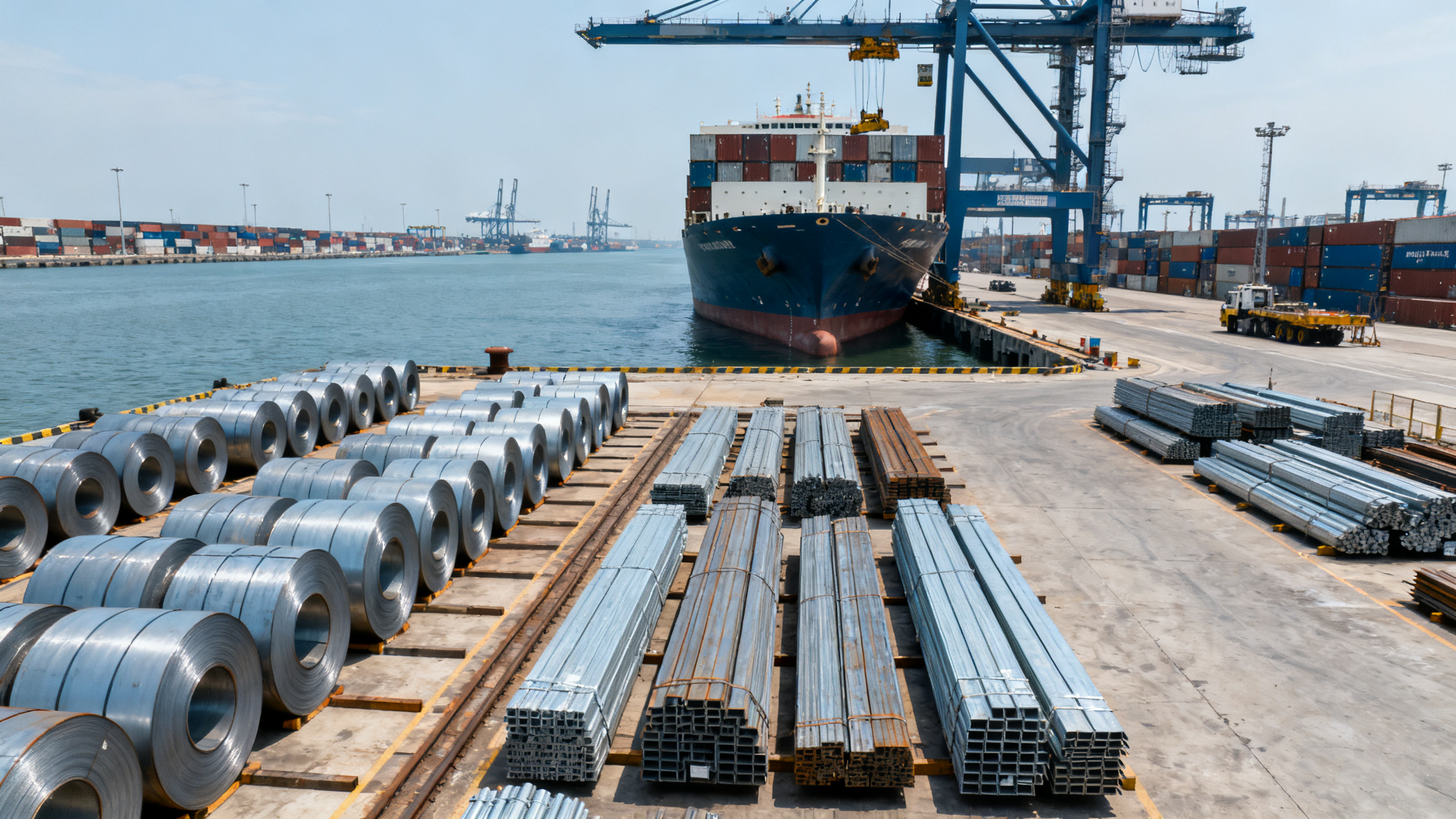
On 9 July 2026, China’s Ministry of Commerce announced a revision to quarterly export quotas for steel and metal profiles, increasing the allowance by 15% for shipments bound for ASEAN and African markets, with the change set to take effect on 1 August 2026. For exporters, project suppliers, manufacturers tied to infrastructure demand, and logistics providers, the update is worth watching because it directly affects market access, shipment planning, and port-side execution in trade flows linked to China-Africa and RCEP-backed joint ventures.
What the policy adjustment confirms
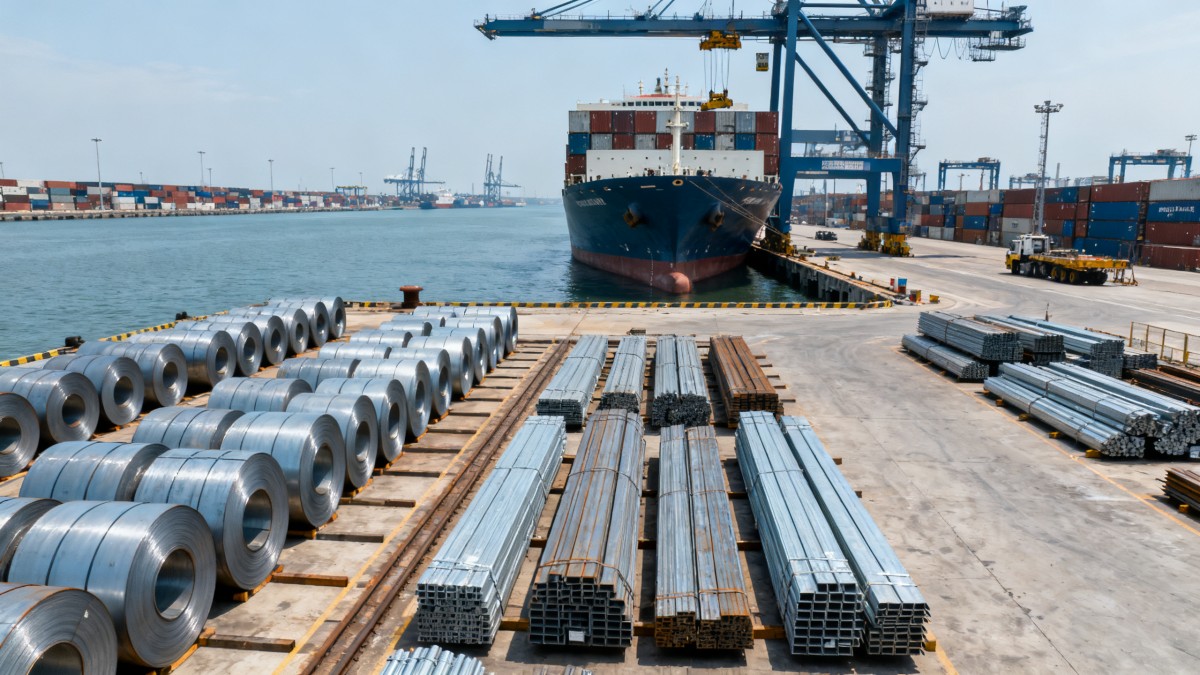
The confirmed facts are limited but commercially relevant. China’s Ministry of Commerce revised quarterly export quotas for steel and metal profiles on 9 July 2026. The revised arrangement lifts restrictions by 15% for exports to ASEAN and African countries, and the new measure will become effective on 1 August 2026. The stated purpose is to support infrastructure projects under China-Africa and RCEP-backed joint ventures. The announcement also indicates priority clearance at Qingdao and Nansha ports.
Where the immediate pressure points may appear
Export planning is likely to shift first
From an industry perspective, direct trading companies and export-oriented steel suppliers may feel the effect earliest because quota availability shapes how much volume can be scheduled for the target markets. The main impact is likely to appear in allocation decisions, order timing, and coordination with overseas buyers. What deserves closer attention is whether existing shipment plans need to be adjusted ahead of the 1 August 2026 effective date.
Project-linked manufacturers may revisit delivery assumptions
Analysis shows that manufacturers supplying steel and metal profiles into infrastructure-related business may need to reassess delivery windows and product allocation, especially where contracts are connected to China-Africa or RCEP-backed joint ventures. The possible impact is less about broad demand assumptions and more about operational readiness: which orders qualify, which timelines can move forward, and how production slots are prioritized.
Ports and logistics service providers face an execution question
Observably, the mention of priority clearance at Qingdao and Nansha ports makes supply chain service providers particularly relevant to this update. The practical effect may show up in booking strategy, documentation flow, and route planning rather than in headline trade volume alone. Companies working on freight, customs coordination, and port handling should pay attention to how priority treatment is implemented in practice.
Buyers and distributors need to watch availability rather than assume stability
For overseas buyers, distributors, and procurement teams in ASEAN and African markets, the policy may affect sourcing cadence and supplier communication. Analysis shows that the most relevant issue is not simply that quotas have increased, but how quickly the added quota translates into executable shipments, especially for orders tied to infrastructure use.
What companies should verify before acting
Track follow-up language, not just the headline measure
What deserves closer attention is whether further official wording clarifies the scope of covered products, applicable documentation, or implementation details around the revised quarterly quotas. The announcement establishes the direction of change, but businesses still need to distinguish between the policy signal and the exact operating rules that support shipment execution.
Review whether current orders match the targeted corridors
Companies with business in ASEAN and African destinations should examine which orders are tied to the markets and project frameworks referenced in the announcement. This matters because the stated policy purpose is linked to infrastructure projects under China-Africa and RCEP-backed joint ventures, which may shape how firms prioritize customer communication and internal scheduling.
Prepare documentation and port coordination early
Because priority clearance is specifically mentioned for Qingdao and Nansha, exporters and service providers should align documentation, booking, and handover processes in advance of the 1 August 2026 start date. Analysis shows that the operational value of a quota increase can be reduced if supporting paperwork or port coordination lags behind.
Separate quota relief from guaranteed shipment outcomes
It is more appropriate to understand this as an enabling change rather than a guaranteed result for every supplier or buyer. Firms should therefore avoid assuming that a higher quota automatically resolves all timing, allocation, or delivery constraints. Customer-facing teams may need to communicate that policy access and actual shipment completion are related but not identical issues.
Why this reads as a policy signal worth monitoring
Observably, this update carries two layers of meaning. First, it is a near-term operating change because it raises quotas by a defined percentage and gives an effective date. Second, it also reads as a directional signal because the policy is explicitly connected to infrastructure cooperation involving China-Africa and RCEP-backed joint ventures. Analysis shows that the industry should not treat it as a fully settled market outcome yet; the practical significance will depend on how the quota revision is translated into order flow, customs handling, and delivery execution after 1 August 2026.
How the market is likely to frame this update for now
At this stage, the development is best understood as a targeted trade and supply support measure rather than as a broad conclusion about the entire steel export market. It matters because it affects specific product categories, designated destination regions, and named port processes. From an industry perspective, the most balanced reading is that this is a concrete short-term adjustment with a broader policy signal behind it, but one that still requires follow-through observation before firmer conclusions can be made.
Basis of this article and what still needs verification
This article is based on the user-provided news title, event date, and event summary concerning China’s revised export quotas for steel and metal profiles. For this type of industry update, relevant source categories typically include official government notices, company disclosures, industry association releases, authoritative media coverage, and standards or trade-related institutional documents. No specific official source link was provided in the input, so the exact official document path still needs continued verification. What deserves closer attention in follow-up tracking is whether additional official language clarifies implementation details, eligible scope, and port-side operating arrangements after the measure takes effect.
Technical Specifications
- How to Select Electronic Hotel Key Card Locks for Guest Rooms and Staff AreasAuthor :Safety Compliance Lead
- How to Select Lab Instruments for Reliable Chemical Analysis WorkflowsAuthor :Precision Metrology Expert
- How to Size a UPS for Server Rooms: Load, Runtime, and Redundancy FactorsAuthor :Grid Infrastructure Analyst
Expert Insights

Chief Security Architect
Dr. Thorne specializes in the intersection of structural engineering and digital resilience. He has advised three G7 governments on industrial infrastructure security.
Related Analysis
- Sep 17, 2026How to Select Electronic Hotel Key Card Locks for Guest Rooms and Staff AreasAuthor :Safety Compliance Lead
- Sep 16, 2026How to Select Lab Instruments for Reliable Chemical Analysis WorkflowsAuthor :Precision Metrology Expert
- Sep 15, 2026How to Size a UPS for Server Rooms: Load, Runtime, and Redundancy FactorsAuthor :Grid Infrastructure Analyst
Core Sector // 01
Security & Safety
- Stainless Steel Welded Tube Applications: Matching Tube Supply to Fabrication NeedsAuthor :Heavy Industry Strategist

- What Maintenance Do Furnace Components Need After 18 Months?Author :Heavy Industry Strategist

- How to Assess Metal Materials for Thermal Cycling in Power BoilersAuthor :Heavy Industry Strategist

- How to Evaluate Aluminum Extrusion Suppliers for Tight-Tolerance Components?Author :Heavy Industry Strategist

- How to Evaluate a Weld Neck Flange Manufacturer for High-Pressure Pipe ProjectsAuthor :Heavy Industry Strategist

- EU REACH Ban Hits Cr(VI)-Coated Steel ImportsAuthor :Heavy Industry Strategist
-Coated Steel Imports")
- How to Evaluate a Heat Sink Aluminum Profile Supplier for Custom Thermal ProjectsAuthor :Heavy Industry Strategist

- Industrial Metal Fabrication Components Price: What Drives Cost and How to Compare QuotesAuthor :Heavy Industry Strategist