How to Evaluate a Wholesale Refractometers Factory for OEM Quality and Lead Time
Author
Date Published
Reading Time
How to Evaluate a Wholesale Refractometers Factory for OEM Quality and Lead Time
If you are sourcing from a wholesale refractometers factory, the real question is not “Who is cheapest?” It is “Who can keep my OEM product consistent, compliant, and on schedule without creating hidden costs later?” For procurement teams, that usually means looking past unit price and checking calibration discipline, production control, documentation readiness, and how the factory behaves when timelines get tight. A supplier that looks competitive on quotation day can become expensive once rework, shipment delay, or field complaints start showing up.
That is why experienced buyers tend to evaluate refractometer suppliers in layers. First, can the factory actually build the product you need? Second, can it keep quality stable across batches? Third, can it support your labeling, packaging, certification, and delivery requirements without turning every PO into a negotiation?
A short answer, if you need one: the best OEM partner is usually the factory that can prove repeatable measurement accuracy, stable component sourcing, documented QC checkpoints, and realistic lead-time control. Price still matters, but in this category, poor consistency can erase any savings very quickly.
Start with the use case, not the catalog
Many procurement problems begin before supplier evaluation even starts. A buyer requests quotes for “refractometers,” receives ten offers, and compares them as if they are interchangeable. They are not.
You need to define the working environment and application first. Is the product meant for food processing, beverage quality checks, coolant testing, salinity measurement, industrial fluids, or laboratory use? Are you sourcing handheld optical models, digital units, or a private-label line with custom scale ranges? Will the end customer need ATC, waterproof housing, multilingual manuals, serialized traceability, or retail-ready packaging?
A factory that performs well for low-cost promotional handheld units may not be the right OEM partner for industrial or professional measurement products. In practice, the more specific your application requirements are, the easier it becomes to eliminate weak candidates early.
What a capable wholesale refractometers factory should be able to show you
When a supplier says, “We are a factory,” do not stop at that claim. In this segment, some companies are true manufacturers, some are assembly operations, and some are trading firms presenting outsourced production as in-house capability. That difference affects lead time, engineering control, and problem resolution.
Ask for evidence in these areas:
- Production lines for optical or digital refractometer assembly
- Calibration and inspection procedures
- Incoming quality control for prisms, sensors, housings, and electronic components
- OEM/ODM experience with private labeling, packaging, and documentation
- Batch records or traceability practices
- Export experience to your target market
It is common for weaker suppliers to answer all of these questions with general statements. Stronger factories answer with process details, sample documents, photos of stations, and realistic tolerances. That difference matters.
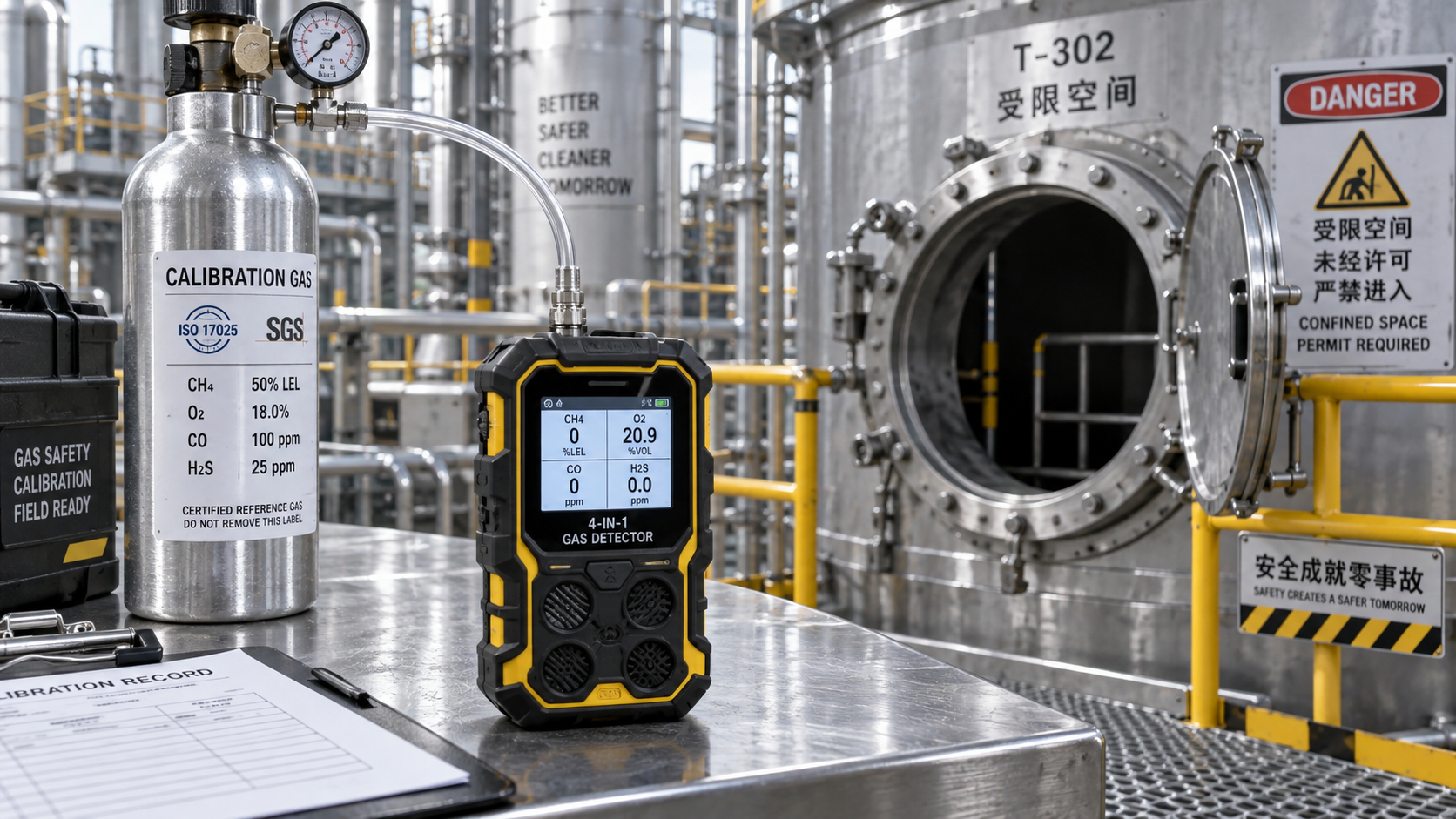
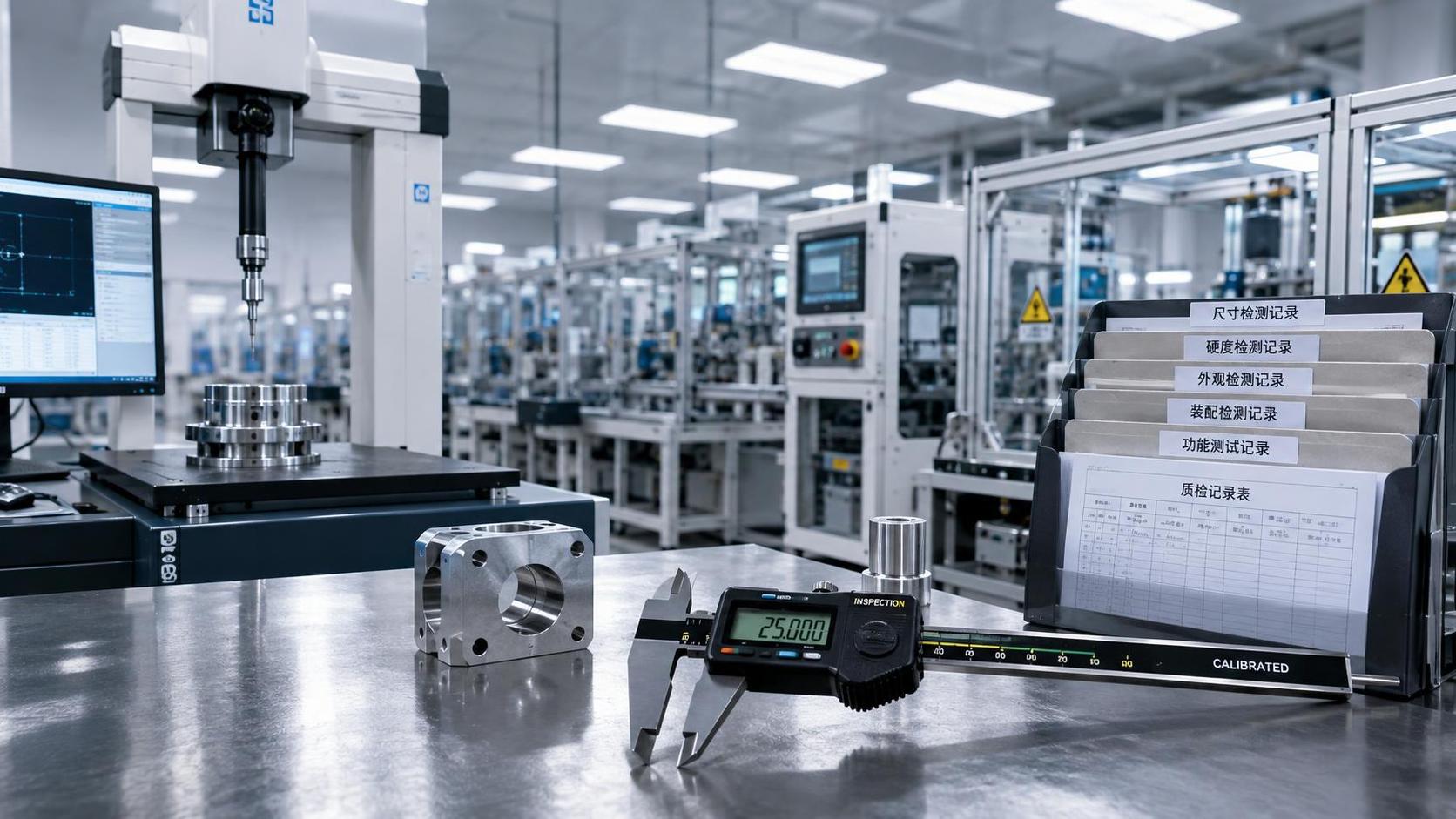
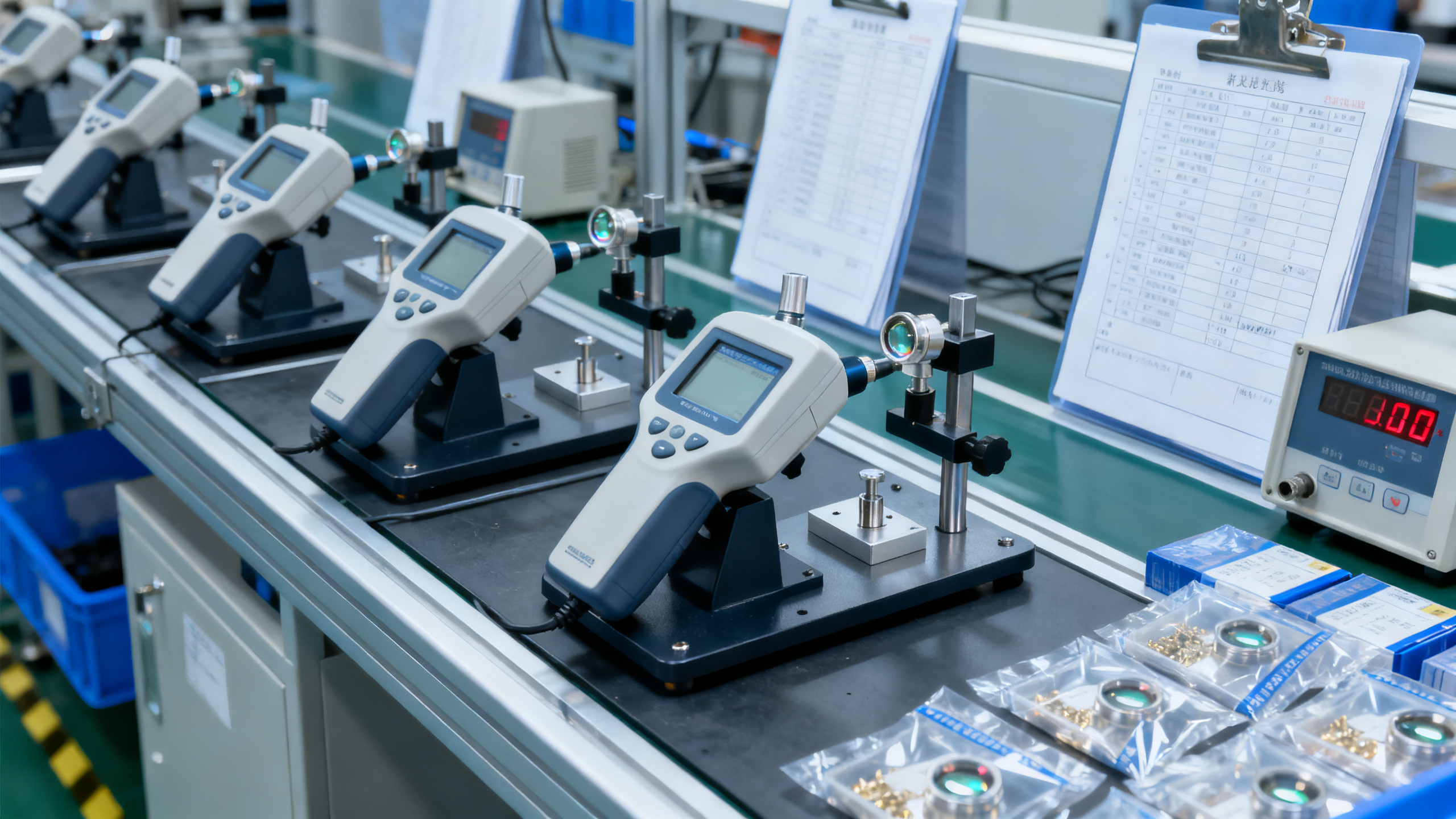
[图片占位符1:采购人员审核工厂质检与校准流程的现场画面,包括工位、检测记录和手持仪器,alt="procurement review at a wholesale refractometers factory with calibration and QC records"]
OEM quality is mostly a process question
Procurement teams often focus on the pre-shipment sample. That is understandable, but one good sample does not prove manufacturing stability. OEM quality is less about whether the supplier can make one acceptable unit and more about whether they can make the 500th or 5,000th unit to the same standard.
For refractometers, a few process areas deserve extra attention.
Calibration discipline
This is one of the easiest places for a factory to sound competent and one of the hardest places for an inexperienced buyer to verify. Ask what reference standards are used, how calibration is recorded, whether each unit is checked or only sampled, and how out-of-spec units are handled. If the supplier cannot clearly explain this, be careful.
Where technical claims involve accuracy, resolution, or repeatability, those figures should be supported by the factory’s internal test method or official product documentation. If market-specific compliance is relevant, final confirmation should come from the applicable standard or certification body.
Material and component consistency
Optical performance depends on more than external appearance. Prism quality, adhesive stability, housing fit, display quality in digital units, and sealing performance all affect the end product. A low quotation can reflect unstable upstream sourcing. That does not always show up in the first sample lot, but it often appears in later orders.
Ask a practical question: if a key component supplier changes, what is the factory’s revalidation process? A serious supplier will have an answer. A weak one will improvise.
Assembly control and final inspection
Look for defined checkpoints rather than vague promises. For example: incoming inspection, in-process inspection, final functional test, cosmetic inspection, packaging verification, and carton drop or transit checks where relevant. You do not need a theoretical lecture from the factory. You need to know who checks what, when, and with what standard.
Certifications are useful, but they do not replace evaluation
Buyers sometimes over-trust certificates because they are easy to compare. ISO systems, CE-related documentation, RoHS declarations, or other export paperwork can be important, but they are not the whole story.
A factory may have a certification framework and still struggle with day-to-day execution. On the other hand, a smaller but disciplined supplier may be operationally stronger than a larger factory with polished paperwork and weak follow-through.
Use certifications as part of the screen, not as the final decision. Check whether the documents match the product category you are sourcing, whether the issuing body is credible, and whether the factory can provide the technical file or test basis behind the claim when needed.
This is also where a sourcing intelligence platform such as Global Industrial Core (GIC) can be useful in the background. For industrial procurement teams that need to compare compliance posture, documentation quality, and supplier readiness across measurement-related categories, structured editorial analysis often helps narrow the field before RFQ rounds become expensive.
Lead time is rarely just a factory speed issue
Buyers often ask for standard lead time and treat the answer as fixed. In reality, lead time for OEM refractometers is made up of several moving parts: sampling, artwork approval, tooling or mold changes if any, component availability, assembly slotting, QC release, and export packing.
That is why two suppliers can both quote “30 days” and deliver very different outcomes.
When evaluating lead time, ask for a breakdown:
- Sample lead time
- Mass production lead time after sample approval
- Lead time impact of custom scale, logo, manual, gift box, barcode label, or carton mark
- Peak season capacity constraints
- Buffer stock policy for common components
- Average delay causes in recent export orders
A supplier that gives a detailed timeline is usually easier to manage than one that only gives a short promise. Procurement people know this already: uncertainty is often more damaging than a slightly longer but credible schedule.
How to test whether quoted lead time is believable
There is a simple way to pressure-test a factory’s promise. Ask them to walk through the critical path from PO to shipment and identify where queueing happens. If they cannot explain production loading, sample approval dependencies, or packaging lead times, the date on the quote sheet may be optimistic.
It also helps to compare answers across departments. Sales may promise one timeline; operations may describe another. If those answers do not align, expect friction later.
For larger programs, request a pilot order before awarding annual volume. A pilot run will tell you far more about responsiveness, documentation accuracy, and schedule control than a polished capability deck ever will.
Common procurement mistakes when comparing suppliers
One mistake is choosing purely on unit price without converting risk into cost. A lower ex-works price can disappear fast if you face calibration complaints, relabeling, repacking, delayed launches, or replacement shipments.
Another is approving a supplier based on appearance alone. Clean facilities and good presentations are useful signals, but they are not proof of process control.
A third mistake is failing to separate “can make” from “can scale.” Some factories handle development samples well but lose control when production volume increases or when too many SKUs are mixed into one schedule.
There is also a recurring misunderstanding around OEM customization. Buyers sometimes assume logo printing and packaging design are minor add-ons. In reality, custom manuals, inserts, color boxes, and barcode systems often create approval bottlenecks that affect delivery just as much as the instrument itself.
A practical scorecard for supplier selection
If your team needs a usable decision method, keep it simple. Score each candidate across five areas:
- Product fit: application match, model range, customization capability
- Quality control: calibration method, inspection records, batch consistency
- Compliance readiness: documentation, labeling support, export familiarity
- Lead-time reliability: capacity planning, component readiness, schedule transparency
- Commercial stability: quotation clarity, MOQ logic, response quality, problem handling
Do not overcomplicate the matrix. The goal is to make trade-offs visible. A factory with a slightly higher price but fewer unknowns may be the better procurement decision, especially if your downstream cost of delay is high.
Questions worth asking before you place the first OEM order
Before issuing the PO, confirm a few points in writing:
- What is the approved product specification and measurement range?
- What acceptance standard applies to accuracy, appearance, and packaging?
- Who approves artwork, manuals, labels, and cartons?
- What happens if incoming or final inspection fails?
- How are production delays communicated, and at what stage?
- Can the supplier keep reference samples or golden samples for future orders?
These are not formalities. They are where many avoidable disputes start.
When the sourcing program is tied to industrial applications, facility operations, or export compliance, disciplined buyers often benefit from using external technical references during evaluation. That is where GIC’s measurement and industrial procurement coverage fits naturally: not as a replacement for factory audits, but as a structured reference point for comparing supplier claims against broader industry expectations.
Final judgment: choose the supplier that reduces variance
The best wholesale refractometers factory is usually not the one with the most aggressive opening quote. It is the one that reduces variance across quality, documentation, and delivery. Procurement teams do well when they treat refractometer sourcing as a control problem rather than a price-only exercise.
If a supplier can show repeatable calibration practice, stable component control, credible compliance support, and a lead-time plan that survives real-world pressure, you are looking at a partner worth developing. If those basics are unclear, the risk premium is already hiding inside the quote, whether it is visible yet or not.
FAQ
How many samples should a buyer request before approving a refractometer supplier?
One sample is rarely enough for OEM decisions. If the program matters, request samples across at least two rounds or batches so you can see whether quality is repeatable.
Is a trading company always a bad choice for refractometer sourcing?
Not always. A capable trading partner can add value in communication and supplier management. The issue is visibility. You need to know who actually controls production and quality.
What matters more for procurement: certificate availability or actual QC records?
Both matter, but QC records usually tell you more about daily execution. Certificates can support market access; records show whether the factory is operationally disciplined.
How should I compare two suppliers with similar prices?
Look at calibration control, response quality, documentation accuracy, and lead-time transparency. Those areas usually predict the real cost difference better than the quote sheet alone.
When is the cheapest factory still a reasonable choice?
It can be reasonable for low-risk, non-critical applications with simple specifications and no demanding compliance or branding requirements. It is a weaker choice for repeat OEM programs where consistency matters.
Image Placeholder List
- Image Placeholder 1: Place in the section discussing factory capability and quality verification. Content: a buyer reviewing calibration stations, inspection sheets, and finished refractometers on a production line. Alt: “procurement review at a wholesale refractometers factory with calibration and QC records”
Internal Link Anchor Text Suggestions
- OEM instrument supplier audit checklist: supplier evaluation guide page
- How to verify calibration and measurement QC: technical procurement article
- Industrial sourcing lead time risk management: operations or procurement resource page
- CE, ISO, and export documentation for measuring instruments: compliance explainer page
- Private label packaging control for industrial products: OEM packaging standards page
External Authoritative Source Suggestions
- International standards organization materials related to quality management and conformity assessment
- Government or customs agency pages covering import compliance requirements for measuring instruments
- Official technical documentation from established refractometer brands or metrology-related manufacturers
Technical Specifications
- How to Select an Access Control Management System for Multi-Site FacilitiesAuthor :Safety Compliance Lead
- Portable Gas Monitor Calibration: How Often Is It Needed for Safe Confined-Space Work?Author :Precision Metrology Expert
- Wholesale Borosilicate Lab Glassware: How Buyers Verify Quality, Specs, and Supply ReliabilityAuthor :Precision Metrology Expert
Expert Insights

Chief Security Architect
Dr. Thorne specializes in the intersection of structural engineering and digital resilience. He has advised three G7 governments on industrial infrastructure security.
Related Analysis
- Sep 20, 2026How to Select an Access Control Management System for Multi-Site FacilitiesAuthor :Safety Compliance Lead
- Sep 19, 2026Portable Gas Monitor Calibration: How Often Is It Needed for Safe Confined-Space Work?Author :Precision Metrology Expert
- Sep 18, 2026Wholesale Borosilicate Lab Glassware: How Buyers Verify Quality, Specs, and Supply ReliabilityAuthor :Precision Metrology Expert
Core Sector // 01
Security & Safety
- Portable Gas Monitor Calibration: How Often Is It Needed for Safe Confined-Space Work?Author :Precision Metrology Expert

- What to Check When Sourcing Vibration Meters Wholesale for Industrial MaintenanceAuthor :Precision Metrology Expert

- How to Select Process Control Instruments for Accuracy, Safety, and UptimeAuthor :Precision Metrology Expert

- What Should Standards Compliance Analysis Training Cover Before an Audit?Author :Precision Metrology Expert

- Why Do Pressure Instruments Fail in High-Vibration Sites?Author :Precision Metrology Expert

- Is FM Software Integration Needed for Overseas Instrument Maintenance?Author :Precision Metrology Expert

- What Are the Differences Between Lab and Field Testing Equipment?Author :Precision Metrology Expert

- Is Independent Testing Necessary for Critical Safety Components?Author :Precision Metrology Expert