
Facility Upgrade Solutions: Prioritizing Safety and Energy Improvements
Author
Date Published
Reading Time

Facility Upgrade Solutions: Prioritizing Safety and Energy Improvements
A successful facility upgrade requires more than replacing aging equipment. Project managers must balance worker safety, energy performance, operational continuity, and capital costs while coordinating contractors and meeting applicable standards. The right facility upgrade solutions help teams assess risks, prioritize high-impact improvements, and develop a practical implementation plan. This guide explores how to align safety and energy investments with project objectives, from initial assessment through procurement and execution.
Start With the Facility’s Actual Operating Conditions
An equipment list is a useful starting point, but it rarely tells the whole story. A motor may appear oversized on paper yet serve a process with occasional high starting loads. A ventilation system may consume more electricity than expected because filters are neglected, dampers are poorly controlled, or production patterns have changed. Replacing components before understanding those conditions can transfer the problem to new equipment.
Build a baseline around how the site operates today. Review utility bills, equipment run hours, maintenance records, incident reports, production schedules, and available electrical drawings. Walk the facility with operators and maintenance personnel: they often know which panels are difficult to isolate, which areas overheat, and which systems cannot tolerate an unexpected shutdown.
Where records are incomplete, targeted measurements are more useful than broad assumptions. Temporary metering can reveal load profiles; pressure, temperature, and airflow readings can expose system restrictions or unnecessary operating hours. Check that instruments are suitable for the measurement range and conditions, and document how readings were taken so that later comparisons are meaningful.
The baseline should also capture constraints: required production capacity, available shutdown windows, emergency power needs, hazardous areas, and equipment nearing the end of support. These factors may matter more than the age of an asset alone.
Put Unacceptable Safety Risks Ahead of Payback
Energy savings are relatively easy to express in a financial model. Safety deficiencies are not always as easy to quantify, but that does not make them optional. An exposed electrical hazard, unreliable protective device, or inadequate machine guard should not have to compete on simple payback against a lighting retrofit.
Assess each proposed intervention using the severity of potential harm, likelihood of exposure, existing controls, and the consequences of failure. Where a serious risk is identified, establish interim controls while the permanent solution is designed. Those controls might include restricting access or changing procedures, but they should not be treated as a substitute for an engineered remedy where one is required.
Upgrades themselves introduce hazards. Electrical isolation, stored energy, work at height, confined spaces, fire protection impairment, and simultaneous work by multiple contractors all need project-specific review. Include construction and commissioning activities in the risk assessment—not just the condition of the finished installation.
Compliance must be checked against the location, equipment, and scope of work. CE marking, for example, relates to applicable European requirements for covered products; UL certification is relevant to particular products and markets; ISO standards address a range of management and technical subjects. None is a universal approval for an entire facility. Confirm applicable obligations with qualified personnel and the relevant authorities before specifications are finalized.
Find Energy Improvements Without Creating New Risks
The most attractive opportunities often lie in systems that run for long periods or serve variable demand. Motors, pumps, fans, compressed air, heating and cooling, and lighting are common candidates. The right intervention, however, depends on the full system rather than the efficiency rating of a single component.
Motors, pumps, and fans
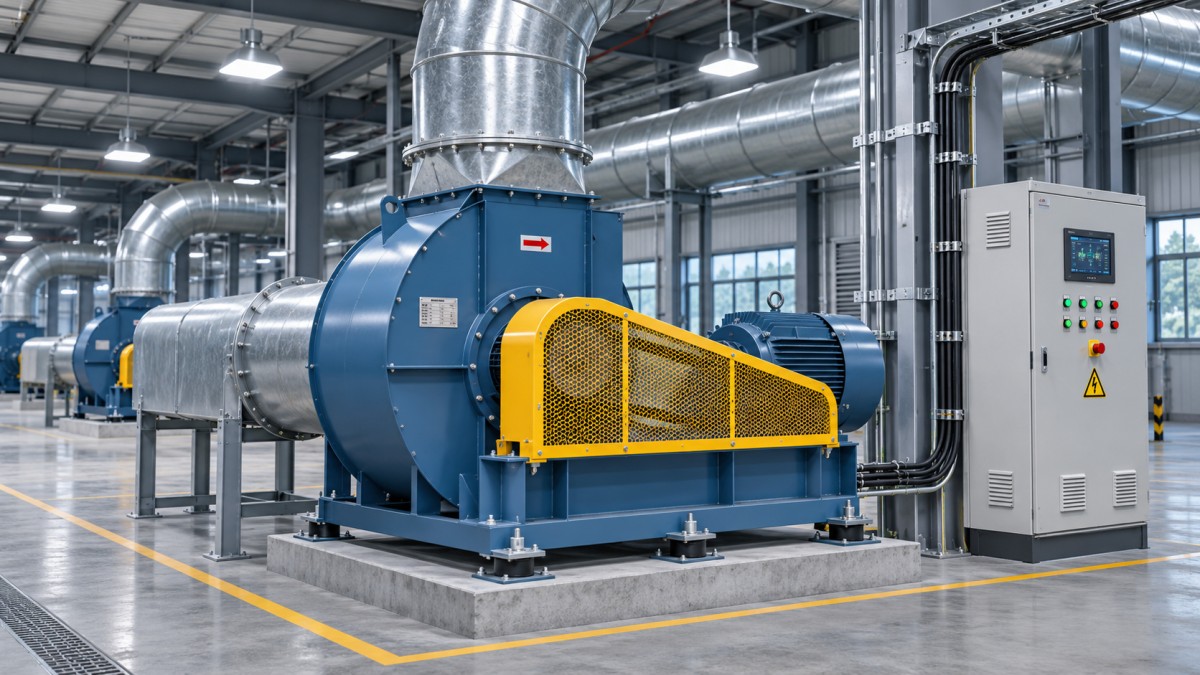
A variable-frequency drive can help match motor speed to demand where the process allows it. It is not automatically appropriate for every load. Check minimum operating speeds, motor compatibility, cooling, harmonics, control response, and the effect on protective devices. A pump serving a critical cooling circuit, for instance, must maintain the flow required under credible operating conditions, even when an energy-saving control calls for a lower speed.
Similarly, replacing a motor without investigating throttled valves, blocked filters, damaged impellers, or unnecessary recirculation may leave a large part of the waste untouched. Ask the design team to compare system-level options, including controls and maintenance corrections, before specifying a replacement.
Ventilation and building systems
Scheduling, controls, insulation, and equipment renewal can reduce energy use, but ventilation changes require particular care. A reduction in airflow that appears economical may compromise contaminant capture, room pressure relationships, temperature control, or worker comfort. Verify the process and occupational requirements first, then establish how the system will prove it is delivering the necessary performance after modification.
Lighting retrofits deserve the same practical scrutiny. Compare illumination and visibility at work surfaces, not only fixture wattage. Emergency lighting, hazardous locations, maintenance access, glare, and the behavior of occupancy controls all affect whether a proposed design is usable and safe.
Compare Projects on More Than Initial Cost
Once urgent risks are addressed, a transparent prioritization method helps prevent the loudest request from becoming the next project by default. Compare options against a small set of criteria agreed with operations, engineering, finance, and safety. Keep the reasoning visible: a scoring matrix is useful only if people understand what each score represents.
Simple payback can be a useful screening tool for an energy project, but it can hide maintenance costs and differences in equipment life. It also becomes unreliable when the baseline is weak or future operating hours are uncertain. Test a reasonable range of operating scenarios and show which assumptions change the decision. For safety-critical work, record the risk-based justification separately rather than forcing it into an energy-only return calculation.
Dependencies matter as much as individual scores. A new production line may require switchgear capacity before higher-efficiency equipment can be installed. A control-system upgrade may need reliable instrumentation before advanced scheduling will work. Map those relationships early so that a low-cost enabling project is not postponed until it disrupts a larger one.
Turn Priorities Into a Deliverable Scope
A good scope describes the required outcome and the conditions under which it must be achieved. It should identify operating loads, environmental conditions, available space, interfaces with existing equipment, maintenance access, and the documentation expected at handover. Where existing drawings are uncertain, arrange verification before design assumptions become purchase orders.
For electrical work, establish the available supply, load characteristics, fault-level and protection information, grounding arrangements, and any need for coordination studies. For mechanical systems, specify the required operating duty and control range, not simply the capacity of the unit being removed. For measurement devices, define accuracy needs, installation constraints, calibration expectations, and how data will reach the people who use it.
Procurement documents should make evidence requirements explicit. Depending on the equipment and destination, that may include product test reports, declarations of conformity, certification details, material documentation, or operating manuals. Ask suppliers to identify exclusions and deviations rather than assuming that a broad statement of compliance covers every requirement. Verify documents against the exact model and configuration being purchased.
This is also where cross-disciplinary research becomes useful. Global Industrial Core covers safety, measurement, electrical power, environmental systems, and mechanical components—areas that frequently intersect in one upgrade. Technical references can help frame supplier questions, but site-specific engineering and applicable local requirements remain the basis for a final decision.
Plan the Cutover Before the Equipment Arrives
An otherwise sound design can fail at the interface between construction and operations. Agree on isolation boundaries, permit responsibilities, temporary services, access routes, and emergency arrangements before contractors mobilize. Identify who can authorize a shutdown and who has authority to stop work if conditions differ from the plan.
For critical systems, prepare a cutover sequence that includes prerequisites, hold points, communications, and a realistic restoration plan. A temporary generator, bypass, or rental compressor may reduce downtime, but it introduces its own connection, capacity, fuel, noise, or safety considerations. Test assumptions about temporary arrangements with the same care as the permanent design.
Leave room in the schedule for discoveries. Hidden cable routes, undocumented modifications, deteriorated supports, and inaccessible valves are common reasons for change during work on existing facilities. Define how the team will assess and approve scope changes, especially when a proposed shortcut affects protection, maintainability, or future expansion.
Commission for Performance, Not Just Completion
Mechanical completion means equipment is installed; it does not prove that the facility can operate it safely or achieve the intended energy outcome. Establish acceptance tests during design, when corrective changes are still manageable. Tests should address normal operation, alarms, protective functions, control sequences, and foreseeable abnormal conditions appropriate to the system.
For an energy measure, agree on the baseline, measurement points, comparison period, and adjustments for production or weather before the upgrade goes live. If output changes substantially, a lower utility bill alone may not demonstrate improved efficiency. Where appropriate, use an energy metric tied to a meaningful unit of production and document its limitations.
Handover should include updated drawings, settings, maintenance instructions, spare-parts information, training, and a list of unresolved issues with owners and deadlines. Arrange a follow-up review after the system has operated across representative conditions. Controls that perform well during a brief test may behave differently during a shift change, seasonal temperature swing, or low-production period.
Before approving the next package of work, check three things: whether the highest-consequence risks have a credible treatment plan, whether projected savings are supported by a usable baseline, and whether the installation can be executed within the site’s operational constraints. If any answer is unclear, resolve it in the scope and schedule before comparing supplier prices.
Expert Insights

Chief Security Architect
Dr. Thorne specializes in the intersection of structural engineering and digital resilience. He has advised three G7 governments on industrial infrastructure security.
Related Analysis
Core Sector // 01
Security & Safety
- Facility Upgrade Solutions: Prioritizing Safety and Energy ImprovementsAuthor :Safety Compliance Lead

- Industrial Supplier Assessment Tools: Comparing Scorecards and AuditsAuthor :Safety Compliance Lead

- How to Build an Equipment Budget for EPC Projects Without Underestimating Lifecycle CostsAuthor :Safety Compliance Lead

- Selecting EPC Procurement Support Tools to Reduce Vendor and Delivery DelaysAuthor :Safety Compliance Lead

- How to Select an Access Control Management System for Multi-Site FacilitiesAuthor :Safety Compliance Lead

- How to Select Electronic Hotel Key Card Locks for Guest Rooms and Staff AreasAuthor :Safety Compliance Lead

- How to Evaluate a Hotel Key Card Lock Supplier for Multi-Property RolloutsAuthor :Safety Compliance Lead

- Pre-Contract Audit Checklist for Verified Production Safety and Environmental ComplianceAuthor :Safety Compliance Lead


