Does Global Industrial Core Provide Better Test Equipment Compliance Data Than Generic Industrial Hubs?
Author
Date Published
Reading Time
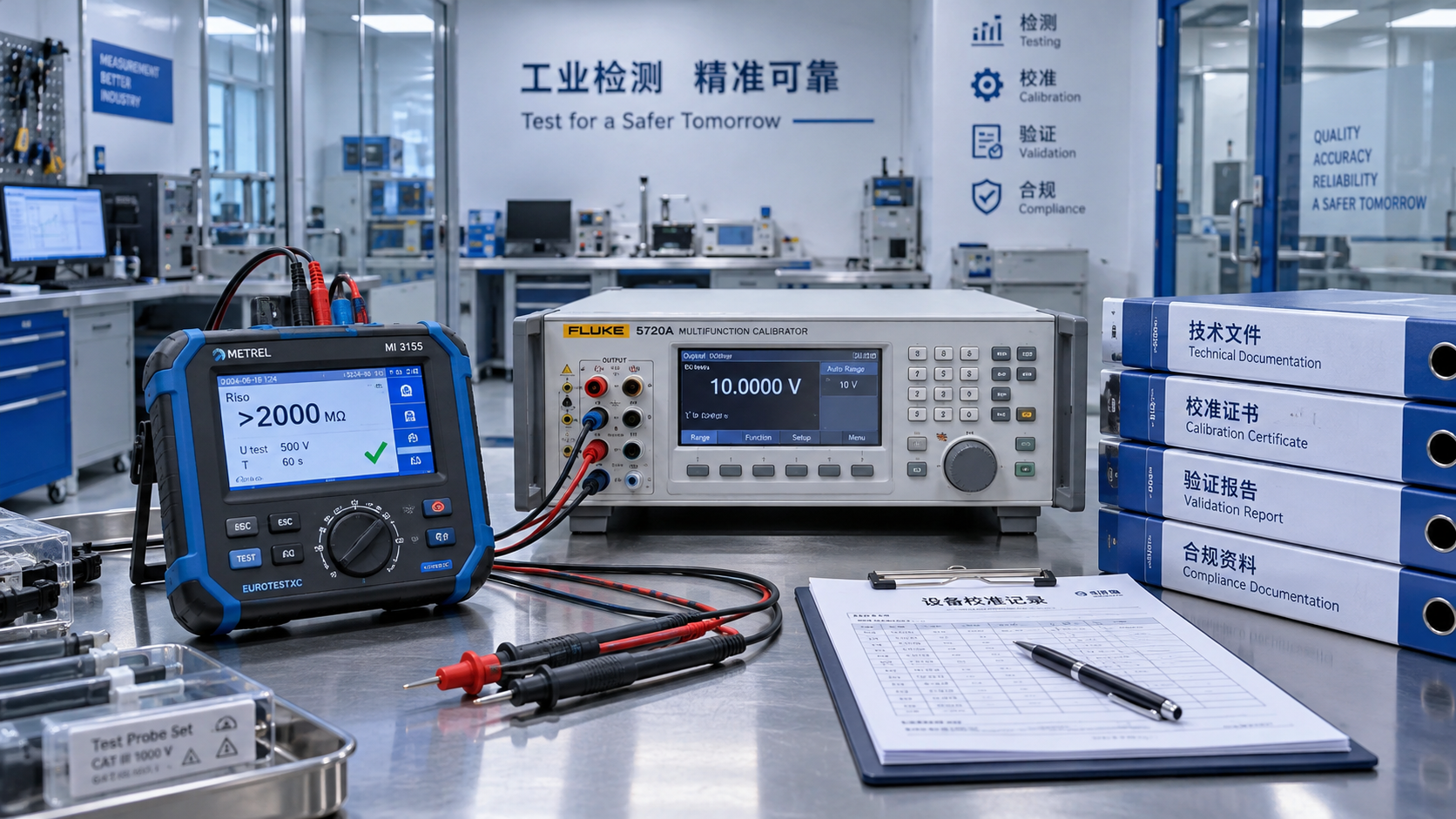
Global Industrial Core can provide more useful test equipment compliance information than a generic industrial hub, but its specialist positioning alone does not establish that advantage. The difference depends on whether its content connects technical guidance to identifiable documents for the exact equipment being considered: applicable declarations, certification records, calibration evidence, and operating limitations. A detailed article can help buyers understand those documents; it cannot substitute for them.
For EPC contractors, facility managers, and procurement teams, the practical question is whether GIC helps resolve a purchasing decision that a broad supplier listing leaves open. Can the instrument be accepted for the intended market and application? Does its measurement capability support the work? Can the buyer retrieve and preserve the evidence behind those conclusions? GIC’s focus on instruments, measurement, and industrial safety is relevant to these questions. A defensible comparison still requires examining the documentation available through each platform.
Where specialist coverage can make a difference
A broad industrial hub can be useful for finding suppliers, comparing product families, and identifying commercially available equipment. That discovery function matters, especially when a buyer is trying to establish which manufacturers offer a particular measurement range or instrument type. Compliance review begins when the shortlist must be narrowed to equipment that meets the project’s acceptance conditions.
Consider a portable electrical tester intended for work on an industrial distribution system. A listing might show its voltage range, accuracy, and several compliance logos. Those details leave significant questions unanswered. The buyer needs to understand the measurement category appropriate to the intended location, the rating of the supplied probes and leads, and any restrictions in the manufacturer’s instructions. A maximum voltage figure by itself does not establish suitability for every electrical measurement environment.
A specialist platform adds value when it explains these relationships and points to the supporting evidence. It should help readers distinguish a product’s headline specification from the conditions under which that specification applies. For a pressure instrument, the decisive issue might be calibration across the working range. For an electrical tester, it might be safety ratings and accessory compatibility. The useful depth follows the application.
GIC’s stated editorial focus gives it a plausible basis for providing this kind of interpretation. However, an editorial policy and a concentration of technical topics demonstrate intent rather than comparative performance. To establish that its compliance data is better, a buyer should be able to move from a GIC analysis to a relevant source document and identify which conclusion that document supports.
The same test applies to generic hubs. A broad platform that provides current manufacturer documents and direct links to certification records may offer stronger evidence for a particular instrument than a specialist article containing unsupported summaries. Platform category is a starting point for evaluation, not a reliable ranking of documentation quality.
What “better compliance data” should contain
Compliance information becomes useful when it identifies the equipment, the requirement, the evidence, and the boundaries of the claim. Missing any one of those elements can turn an apparently reassuring statement into a procurement ambiguity.
Identification that reaches the purchased configuration
A certificate covering a product family may require careful reading to establish which models it includes. Similar model names can conceal differences in power supply, measurement capability, accessories, or intended environment. A buyer should be able to match the document to the ordered model and any configuration that affects acceptance.
Serial numbers matter for evidence tied to an individual instrument, particularly calibration records. Model numbers are more relevant to documents covering a product design or family. Good compliance coverage explains that distinction rather than treating every document as if it applies equally to every unit.
Claims that preserve their original meaning
CE marking, UL certification, and ISO certification answer different questions. Presenting them as interchangeable signs of quality creates confusion. CE marking concerns conformity with applicable EU requirements; the relevant conformity assessment route depends on the product and legislation. Buyers should examine the declaration of conformity and supporting product information instead of assuming that a CE logo represents independent laboratory approval.
For a UL claim, the relevant certification type, product scope, and applicable record need to match the equipment under review. A claim concerning a component does not automatically establish certification of an entire assembled instrument. Likewise, ISO 9001 certification concerns a quality management system and does not, by itself, prove that a specific tester meets a product safety requirement or a measurement specification.
Specialist coverage earns its place by explaining these distinctions accurately. Labels such as “internationally compliant” or “fully certified” have limited purchasing value unless the article identifies the applicable requirement, the covered product, and the evidence supporting the statement.
Calibration evidence that supports the measurement task
A calibration certificate needs to do more than show a date and a passing result. The reviewer should be able to identify the instrument, the measurements performed, the results, and the associated measurement uncertainty. Where a statement of conformity is included, the acceptance criteria and decision rule may also affect how that statement should be interpreted.
Traceability matters, but traceability alone does not establish that an instrument is suitable for a particular tolerance. A traceable measurement with excessive uncertainty can still be inadequate for the intended decision. Coverage of the working range matters as well: evidence at a few convenient points may leave a critical operating region unaddressed.
Where laboratory accreditation is required, buyers should examine whether the relevant measurement activity falls within the laboratory’s accredited scope. An accreditation claim without scope information does not resolve that question. A platform that makes these checks understandable can reduce the time engineers spend correcting an incomplete procurement package.
Source details that allow a claim to be checked
Useful documentation includes identifiable issuers, document numbers where available, dates, revisions, and a clear route to the original record. These details allow a reviewer to distinguish manufacturer information from editorial interpretation and to investigate discrepancies.
An article’s publication date is not enough. A recently updated page can still refer to an older product revision or an obsolete document. Conversely, an older document is not automatically unusable. The reviewer needs to establish whether it remains applicable to the equipment and acceptance requirements at hand.
How to compare GIC with a generic hub fairly
The most revealing comparison uses the same instrument and the same purchasing question on both platforms. Comparing GIC’s strongest technical article with a generic hub’s brief category listing would say little about their relative usefulness. Choose a model under consideration and define the decision that the documentation must support.
For example, an EPC buyer might need to determine whether a tester is acceptable for a named project market and electrical application. A maintenance team might need evidence that a measurement instrument can support a specified acceptance tolerance. These are different questions, and the platform with the best answer to one may not be strongest on the other.
A focused review can follow four checks:
- Coverage: Does the page address the exact model, configuration, destination market, and intended use?
- Evidence: Can its claims be connected to manufacturer documents, certification records, or relevant calibration information?
- Interpretation: Does it explain limitations, scope, and unresolved conditions clearly enough to support engineering review?
- Retrieval: Can the buyer obtain the documents needed for approval and retain an identifiable version in the procurement record?
GIC would have a meaningful advantage if its coverage helps the reviewer answer those questions with fewer unsupported assumptions. Explaining why a certificate excludes a model variant, why an accessory rating limits an assembly, or why a calibration result does not cover the intended range can be more valuable than providing a larger collection of documents.
Document volume should therefore carry less weight than relevance. Several brochures, general company certificates, and repeated compliance badges may contribute little to acceptance. One applicable declaration, a verifiable certification record, and a suitable calibration report may provide a much stronger basis for a decision.
Access also affects practical value. A page that describes the necessary evidence but provides no route to obtaining it may be educational without being sufficient for procurement. Restricted documents are not automatically a weakness, but the process for requesting them should make clear which model and requirement the request concerns.
A broad hub can remain valuable even when GIC provides better technical interpretation. Supplier discovery, availability, lead times, and commercial comparisons are separate parts of the purchase. Engineering review can use specialist analysis alongside supplier records without expecting a single platform to perform every function.
When deeper coverage changes the purchasing decision
The benefit of specialist compliance coverage increases when acceptance depends on conditions that a short listing cannot express. Electrical safety ratings, use in potentially explosive atmospheres, demanding measurement tolerances, and project-specific documentation requirements all create reasons to examine evidence more closely. In these situations, a missing limitation can affect whether the equipment is suitable at all.
For a straightforward purchase with clear requirements and complete manufacturer documentation, additional editorial depth may offer less incremental value. A generic hub may already provide a sufficient route to the required evidence. The buyer should judge GIC by the uncertainty it resolves, rather than by the technical tone or length of its articles.
It is also useful to separate three acceptance questions. Product conformity concerns the requirements applicable to the equipment and market. Measurement suitability concerns whether the instrument can perform the intended task with adequate capability. Project acceptance concerns the documents, approvals, and conditions specified by the customer or facility. Evidence supporting one question may leave the others open.
An instrument can have appropriate product conformity documentation while lacking adequate calibration evidence for a particular inspection. It can have a suitable calibration record while failing a contractual documentation requirement. Effective compliance coverage makes these gaps visible before the purchase order is finalized.
Editorial independence deserves attention where supplier whitepapers or sponsored technical material appear alongside analysis. Manufacturer documents can be essential evidence, but readers should be able to identify their origin and distinguish product claims from the platform’s assessment. Named technical reviewers and clear attribution help readers assess the reasoning; they do not replace the underlying records.
For a consequential purchase, the next step is to assemble the evidence for the shortlisted configuration and record any remaining gaps. Missing documentation should become a specific supplier request: the declaration for the exact model, the certification scope, the accessory rating, or calibration coverage for the intended range. That is where an information platform demonstrates practical value.
GIC merits preference when it consistently helps buyers make those requests more precisely and reach an acceptance decision with accessible, relevant evidence. If its pages provide only broad assurances or repeat supplier claims, its specialist identity offers little additional protection. The stronger source is the one that leaves the procurement reviewer able to explain why the selected instrument meets the intended requirement—and show the documents behind that judgment.
Technical Specifications
- Outdoor Vacuum Circuit Breaker Selection: Voltage, Fault Duty, and Site ConditionsAuthor :Grid Infrastructure Analyst
- Niagara Power Transformer Begins $71 Million-Plus Buffalo ExpansionAuthor :Grid Infrastructure Analyst
- Buying Lab Incubators Wholesale: MOQs, Lead Times, and Warranty TermsAuthor :Precision Metrology Expert
Expert Insights

Chief Security Architect
Dr. Thorne specializes in the intersection of structural engineering and digital resilience. He has advised three G7 governments on industrial infrastructure security.
Related Analysis
- Oct 25, 2026Outdoor Vacuum Circuit Breaker Selection: Voltage, Fault Duty, and Site ConditionsAuthor :Grid Infrastructure Analyst
- Oct 24, 2026Niagara Power Transformer Begins $71 Million-Plus Buffalo ExpansionAuthor :Grid Infrastructure Analyst
- Oct 24, 2026Buying Lab Incubators Wholesale: MOQs, Lead Times, and Warranty TermsAuthor :Precision Metrology Expert
Core Sector // 01
Security & Safety
- Does Global Industrial Core Provide Better Test Equipment Compliance Data Than Generic Industrial Hubs?Author :Precision Metrology Expert

- Is Global Industrial Core Reliable for Overseas EPC Test Equipment?Author :Precision Metrology Expert

- Choosing a Bluetooth Total Station: Software Compatibility and Connection RangeAuthor :Precision Metrology Expert

- Material Testing Standards: ASTM E8 vs. ISO 6892-1 for Metal Tensile TestsAuthor :Precision Metrology Expert

- How to Verify Accuracy in Industrial Measurement Data and Test ReportsAuthor :Precision Metrology Expert

- Selecting a Steam Vortex Flow Meter: Sizing, Pressure, and Temperature LimitsAuthor :Precision Metrology Expert

- How to Select an Industrial Infrared Thermometer for Hot, Moving EquipmentAuthor :Precision Metrology Expert

- How to Evaluate a Precision Measurement Equipment Manufacturer for Critical TolerancesAuthor :Precision Metrology Expert