Industrial Metal Fabrication Components Price: What Drives Cost and How to Compare Quotes
Author
Date Published
Reading Time
Industrial Metal Fabrication Components Price: What Drives Cost and How to Compare Quotes
Understanding industrial metal fabrication components price is essential for procurement teams balancing cost, compliance, and long-term performance. From raw material volatility and machining complexity to surface treatment, tolerances, and certification requirements, multiple factors shape the final quote. This guide helps buyers identify what truly drives pricing, compare supplier offers more accurately, and make sourcing decisions that support quality, reliability, and budget control.
If you buy fabricated metal parts often, you already know the cheapest quote is rarely the lowest-cost decision. A bracket, housing, enclosure, flange, guard, frame, or machined plate can look comparable on paper while hiding very different assumptions on material grade, weld quality, inspection scope, lead time, or finishing. That is usually where cost overruns start. The better approach is to treat every quote review like a short audit.
Start With the Material Line, Because It Moves More Than Buyers Expect
For many fabricated components, raw material is still the biggest visible cost driver. Carbon steel, stainless steel, aluminum, copper alloys, and specialty metals do not just carry different base prices; they also change scrap rate, tooling wear, welding method, and finishing steps.
- Check whether the quote names an exact grade, not just “stainless” or “alloy steel.” A price for 304 is not a price for 316, and neither should be assumed equivalent in corrosive service.
- Ask whether thickness tolerance and source mill are fixed or open. Two suppliers can quote the same nominal plate size and still buy from different stock sources with different cost and consistency implications.
- Look for yield assumptions. Complex nesting, small parts, or odd geometry can increase material waste noticeably.
A common mistake is comparing quotes only by part weight. Weight matters, but buy-to-fly ratio matters too. If the part starts as thick plate and ends as a heavily machined component, the material cost is only one part of the story.
Do Not Lump “Fabrication” Into One Bucket
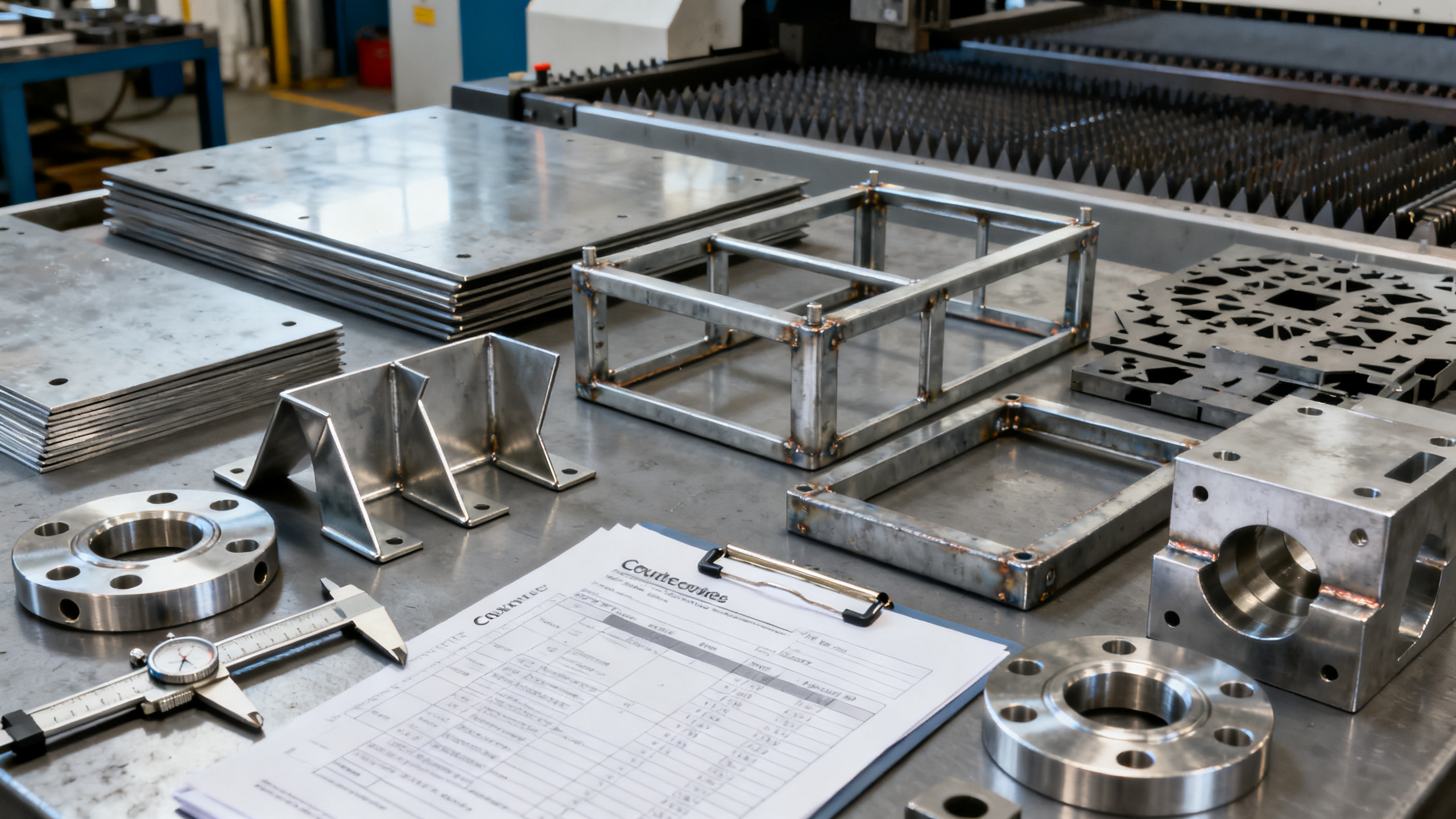
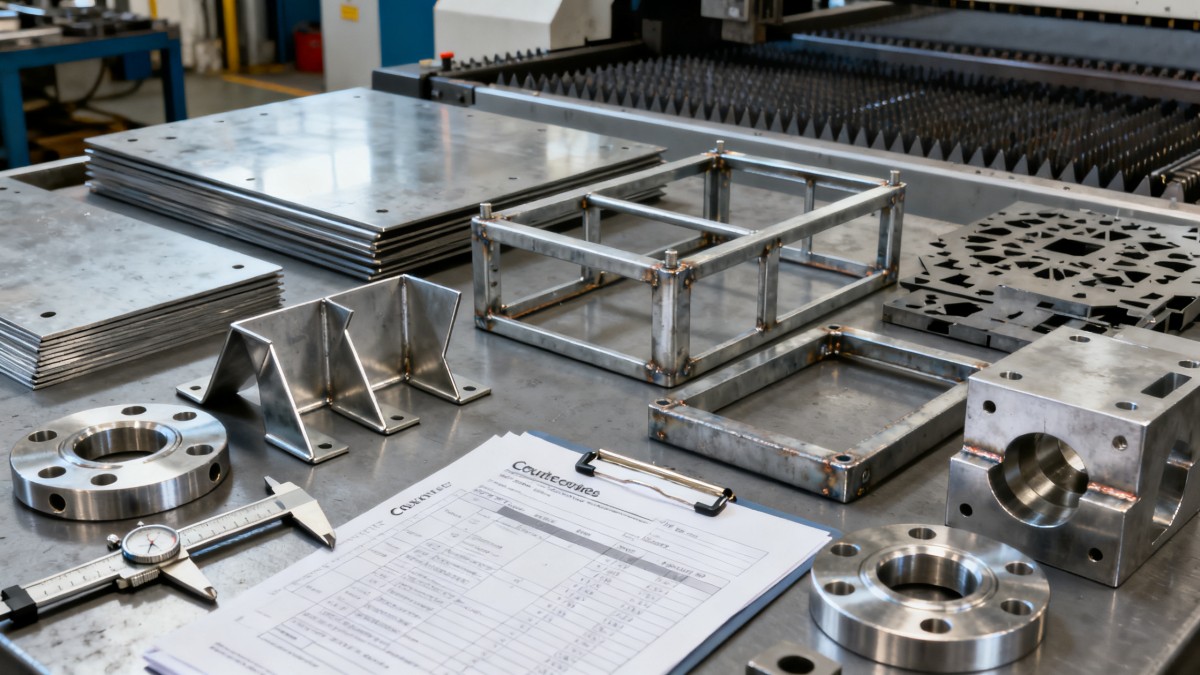
When suppliers say fabrication, they may be including very different operations: laser cutting, plasma cutting, waterjet, bending, rolling, welding, machining, tapping, deburring, assembly, and inspection. Industrial metal fabrication components price often changes less because of the final shape than because of the process route chosen to get there.
For procurement, the practical check is simple: make each supplier show the routing assumptions. If one supplier is laser cutting and CNC machining a feature while another is proposing a simpler punched-and-drilled approach, the quotes are not comparable. The lower one may be smarter. Or it may be cutting a capability your application actually needs.
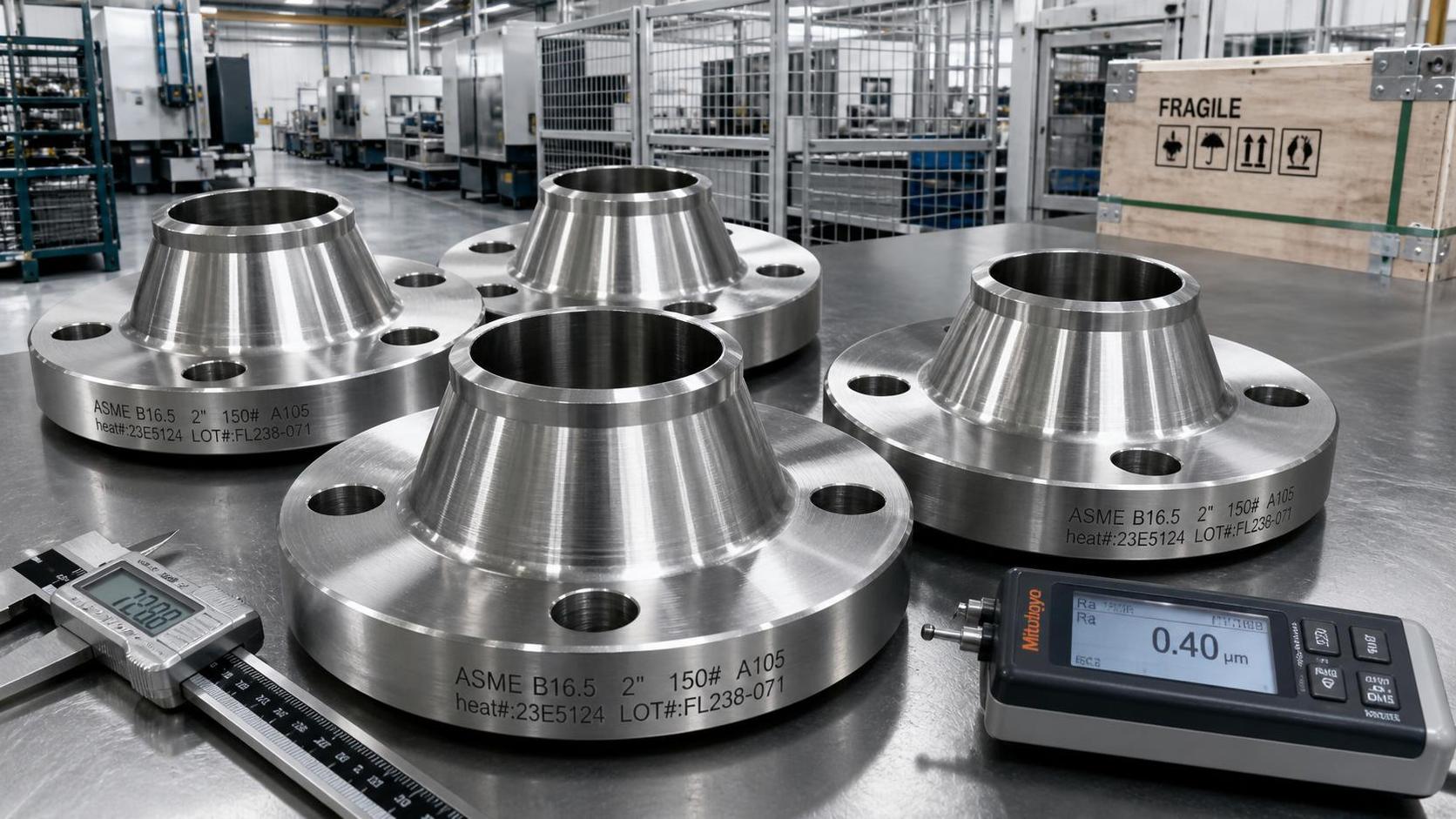
This is especially important for parts that mix fabrication and precision work. Welded structures with post-machined faces, hole position requirements, or sealing surfaces often produce the biggest quote spread.
Tolerance Is a Cost Lever, Not a Decorative Drawing Note
Buyers sometimes inherit drawings that carry tighter tolerances than the assembly actually needs. That inflates cost quickly. Flatness, perpendicularity, hole position, concentricity, surface finish, and weld distortion control all take time, fixturing, and inspection.
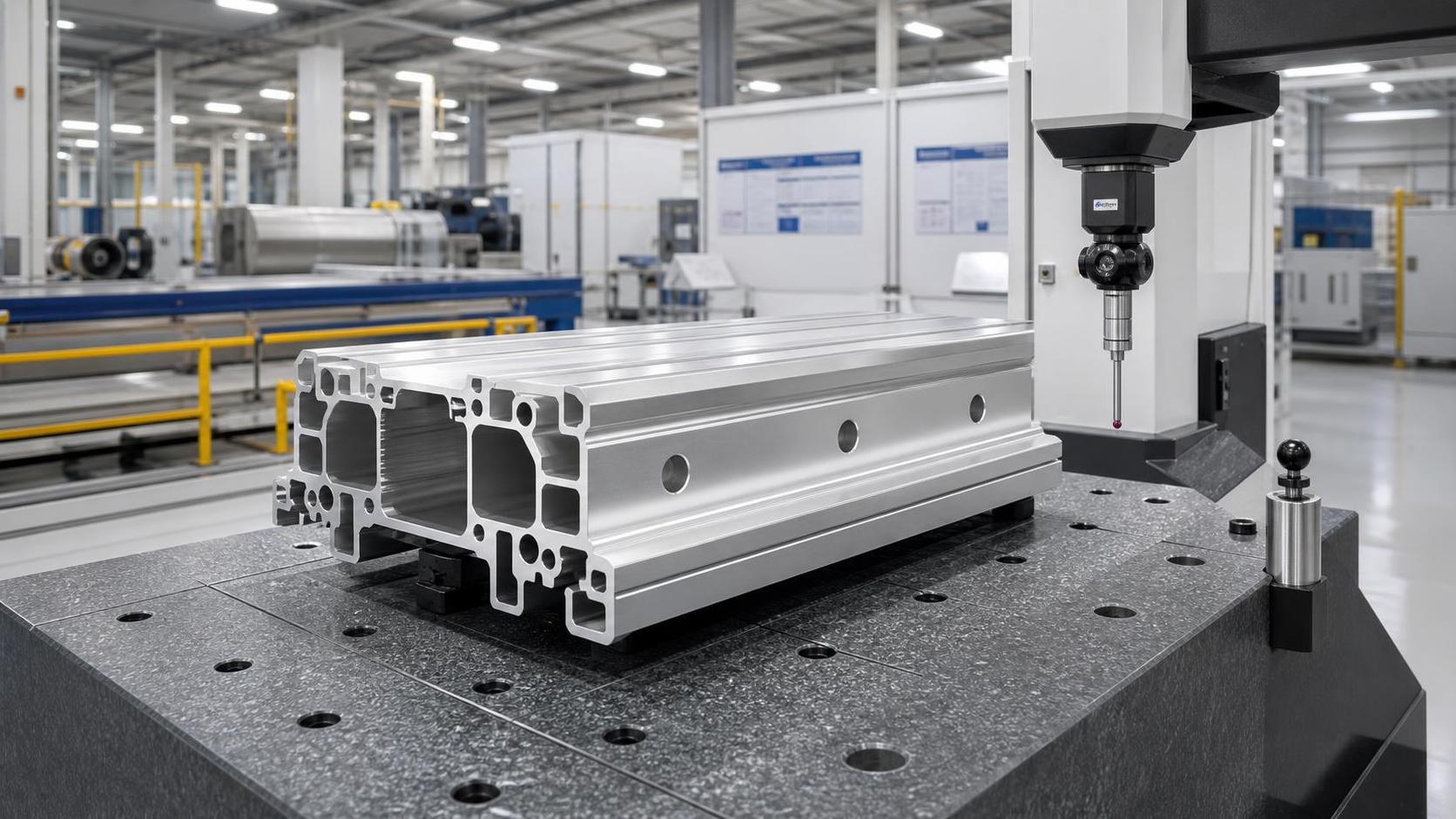
When quotes come back high, this is one of the first places worth reviewing with engineering. Not to relax requirements blindly, but to separate functional tolerances from copied legacy notes. In practice, one unnecessarily tight callout can make a supplier switch from general fabrication to precision machining and CMM inspection.
Useful questions to ask during quote comparison:
- Which dimensions are being machined to tolerance, and which are fabricated to general tolerance?
- Is the tolerance achievable before welding, after welding, or only with secondary machining?
- Is special inspection included in the quote?
Welds Change Price Faster Than Many RFQs Acknowledge
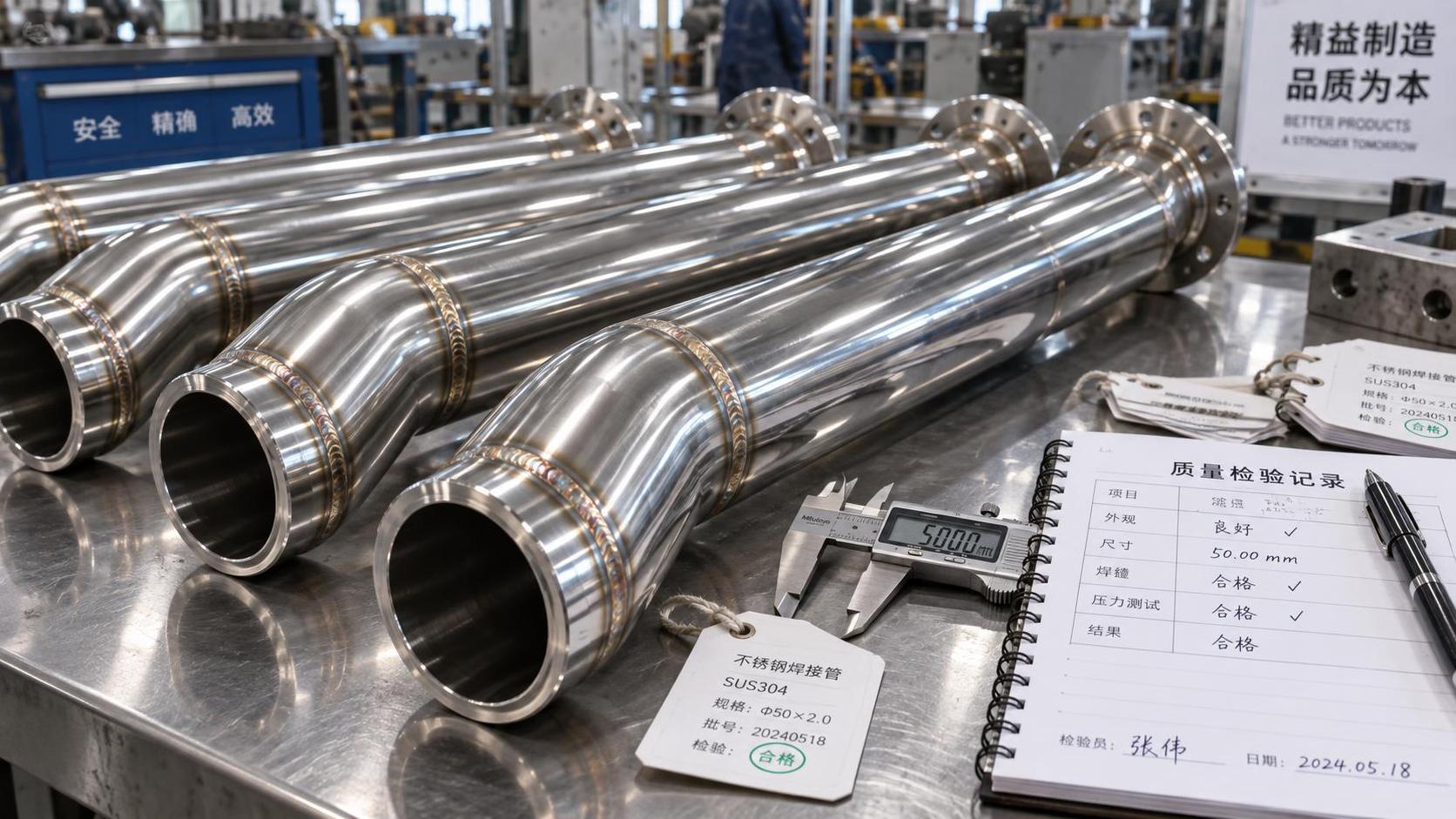
Welding cost is not just arc time. It includes joint prep, fit-up, fixture time, distortion control, welder qualification, filler material, cleanup, and sometimes NDT. If a quote says “welded assembly” without clarifying weld type and acceptance criteria, you do not yet know what you are buying.
For higher-risk applications, ask whether the supplier priced to a specific code or customer standard. Requirements tied to AWS, ISO, ASME, or project specifications should be explicit where applicable. If the supplier needs WPS/PQR records or certified welders for the job, that cost belongs in the comparison. If those requirements are absent from one quote, the quote may simply be incomplete. Where project documentation is unclear, mark it for engineering review rather than assuming equivalence.
Surface Finish and Coating Can Flip the Ranking
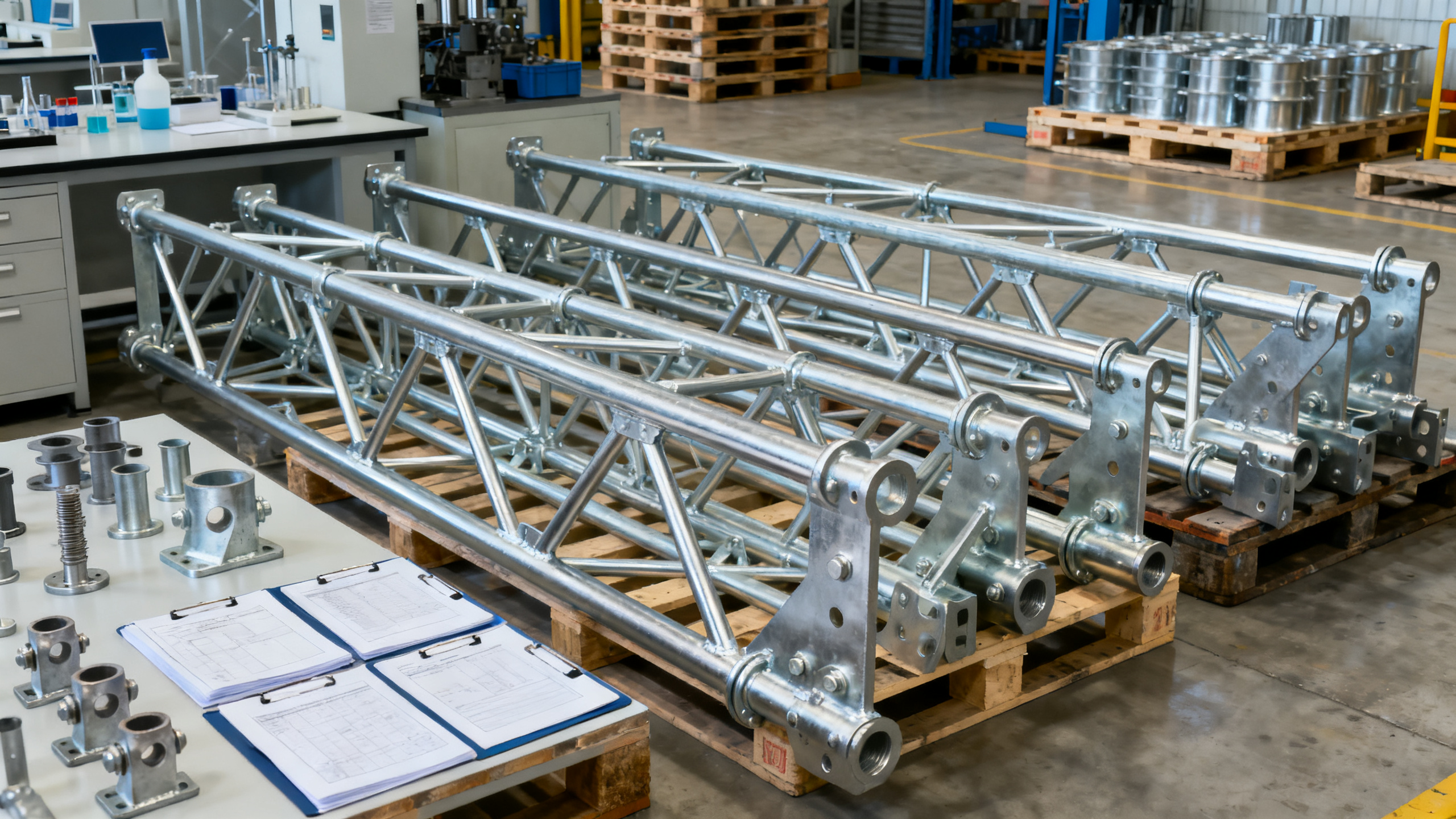
Finishing is where many “good” quotes stop being good. Powder coating, galvanizing, anodizing, passivation, electropolishing, plating, blasting, or simple oil protection each affect both cost and lead time. They also affect packaging, rework risk, and corrosion performance.
A few checks save trouble here:
- Confirm whether coating thickness or finish class is specified.
- Ask if masking, threaded-hole protection, or touch-up is included.
- Check whether the supplier performs finishing in-house or subcontracts it. Subcontracted finishing is normal, but it adds schedule and handling variables.
If the component will operate outdoors, in washdown environments, around chemicals, or near marine conditions, finish cannot be treated as an afterthought. That is a reliability issue, not just a cosmetic line item.
Certification, Traceability, and Inspection Scope Need Their Own Line
This matters a lot for EPC contractors, regulated facilities, and export projects. The quote should state what documentation is included: mill test certificates, certificate of conformity, dimensional reports, coating records, material traceability, packing lists, and any requested inspection witness points.
Be careful with compliance language. CE, UL, and ISO are not interchangeable commercial labels. CE marking may apply to finished products within specific directives, UL relates to particular listed or recognized scopes, and ISO usually refers to management systems or technical standards depending on context. If a supplier uses these terms broadly without tying them to the actual component and scope, treat that as a clarification point, not proof of compliance.
In many sourcing reviews, the quote that looks expensive is simply the only one that included the paperwork the project will eventually demand.
Tooling, Setup, and MOQ Often Explain the Quote Gap
Prototype, pilot, and production pricing should not be mixed together. A supplier quoting ten pieces may load setup and programming very differently from a supplier quoting one hundred or one thousand. Press brake tooling, welding fixtures, jigs, CNC programming, first article inspection, and custom gauges can create a high first-run price and a much lower repeat order price.
Ask for a breakout when volumes matter:
Lead Time Has a Price, and Rush Capacity Has Another One
Some buyers compare only EXW or FOB unit price and forget schedule risk. If the part is on the critical path for a shutdown, site installation, or panel build, delayed delivery can outweigh modest savings fast. Expedite charges, split shipments, overtime production, and premium freight are usually more expensive than a well-scoped initial order.
Ask the supplier what is driving lead time: raw material availability, machine loading, finishing queue, inspection, or export documentation. The answer tells you whether the schedule is stable or fragile.
Compare Quotes on Total Commercial Scope, Not Unit Price Alone
A disciplined quote comparison sheet should include more than price. For industrial metal fabrication components price analysis, I would want at least these fields side by side: material grade, process route, tolerance assumptions, finish, documentation, packaging, Incoterms, lead time, validity period, warranty or remedy terms where offered, and exclusions.
Exclusions are where surprises hide. Deburring excluded. Inspection excluded. Hardware excluded. Surface treatment excluded. Export crate excluded. Drawing revision mismatch. These are not minor notes. They are future purchase orders waiting to happen.
Red Flags That Usually Mean the RFQ Was Not Quoted on the Same Basis
- One quote is dramatically lower but has vague material language.
- The supplier did not reference the drawing revision.
- No mention of finish, inspection, or certificates in a project that clearly requires them.
- Lead time looks unrealistically short relative to process complexity.
- The supplier answered technical questions with only commercial language.
When you see these, do not reject the quote immediately. Normalize it first. Issue a clarification sheet and force all bidders onto the same commercial and technical baseline.
What Buyers Should Prepare Before Sending the RFQ
Better inputs produce better pricing. If suppliers need to guess, they will either overprice risk or underquote and come back later with exceptions.
- Latest drawing revision and 3D file where appropriate
- Defined material grade and acceptable alternatives, if any
- Critical tolerances clearly distinguished from general tolerances
- Weld requirements, finish requirements, and documentation requirements
- Order quantity, annual forecast, and whether repeat business is expected
- Destination, packing expectations, and commercial terms
If any of those are still undecided, say so. A supplier can often quote options cleanly if the uncertainty is visible upfront.
A Practical Way to Make the Final Decision
Use price as one filter, not the whole decision. For routine low-risk parts, a competitive unit cost may be enough. For infrastructure, safety-related, or tight-tolerance components, the better question is whether the supplier has priced the real job accurately and can repeat it consistently.
If two quotes are close, I would usually favor the supplier whose assumptions are transparent, whose documentation scope is explicit, and whose manufacturing route matches the application. That tends to reduce argument later. And in procurement, avoiding rework, delays, and compliance surprises is often where the actual savings sit.
So when reviewing industrial metal fabrication components price, do not ask only, “Which quote is lower?” Ask, “Which quote is complete, buildable, and aligned with the service conditions?” That question usually leads to the better buy.
Technical Specifications
- How to Select Electronic Hotel Key Card Locks for Guest Rooms and Staff AreasAuthor :Safety Compliance Lead
- How to Select Lab Instruments for Reliable Chemical Analysis WorkflowsAuthor :Precision Metrology Expert
- How to Size a UPS for Server Rooms: Load, Runtime, and Redundancy FactorsAuthor :Grid Infrastructure Analyst
Expert Insights

Chief Security Architect
Dr. Thorne specializes in the intersection of structural engineering and digital resilience. He has advised three G7 governments on industrial infrastructure security.
Related Analysis
- Sep 17, 2026How to Select Electronic Hotel Key Card Locks for Guest Rooms and Staff AreasAuthor :Safety Compliance Lead
- Sep 16, 2026How to Select Lab Instruments for Reliable Chemical Analysis WorkflowsAuthor :Precision Metrology Expert
- Sep 15, 2026How to Size a UPS for Server Rooms: Load, Runtime, and Redundancy FactorsAuthor :Grid Infrastructure Analyst
Core Sector // 01
Security & Safety
- Stainless Steel Welded Tube Applications: Matching Tube Supply to Fabrication NeedsAuthor :Heavy Industry Strategist

- What Maintenance Do Furnace Components Need After 18 Months?Author :Heavy Industry Strategist

- How to Assess Metal Materials for Thermal Cycling in Power BoilersAuthor :Heavy Industry Strategist

- How to Evaluate Aluminum Extrusion Suppliers for Tight-Tolerance Components?Author :Heavy Industry Strategist

- How to Evaluate a Weld Neck Flange Manufacturer for High-Pressure Pipe ProjectsAuthor :Heavy Industry Strategist

- EU REACH Ban Hits Cr(VI)-Coated Steel ImportsAuthor :Heavy Industry Strategist
-Coated Steel Imports")
- How to Evaluate a Heat Sink Aluminum Profile Supplier for Custom Thermal ProjectsAuthor :Heavy Industry Strategist

- Industrial Metal Fabrication Components Price: What Drives Cost and How to Compare QuotesAuthor :Heavy Industry Strategist