How to Select Lab Instruments for Reliable Chemical Analysis Workflows
Author
Date Published
Reading Time
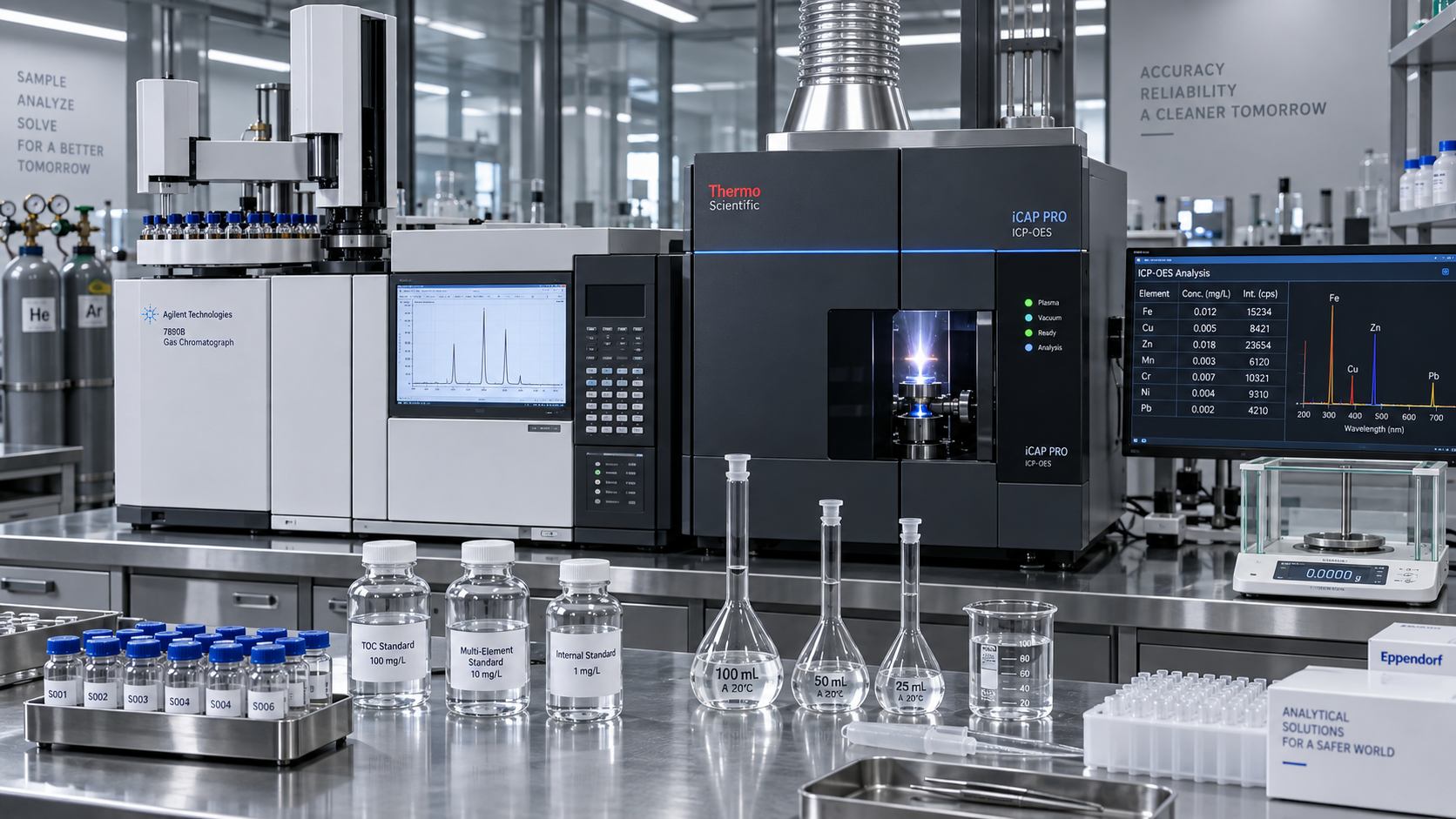
Reliable chemical analysis is not created by selecting the instrument with the lowest stated detection limit or the broadest specification sheet. It is created when the entire workflow—sampling, preparation, separation or measurement, calibration, quality control, calculation, review, and reporting—can produce defensible results under the laboratory’s actual operating conditions.
That distinction matters because lab and analytical instruments for chemical analysis are often evaluated as isolated capital items. A gas chromatograph, ICP-OES system, UV-Vis spectrophotometer, or analytical balance may meet its published performance specification, yet still fail to support the intended method because the sample matrix is unstable, the preparation process is inconsistent, the required reporting limit is misunderstood, or the data system does not preserve the needed audit trail. Selection should therefore begin with the measurement decision the laboratory must support, not with a preferred analytical technique.
Define the result before defining the instrument
The most useful starting point is a written analytical requirement that separates the business or technical decision from the instrument specification. “Measure trace metals” is not a sufficient requirement. A usable requirement identifies the analyte, the matrix, the concentration range, the reporting threshold, the required uncertainty or precision, the expected sample load, and the consequence of a false positive or false negative.
A method used to screen incoming raw materials has different needs from one used to release pharmaceutical intermediates, investigate corrosion products, verify wastewater discharge, or certify high-purity process chemicals. In a screening workflow, speed and a clear pass/fail threshold may matter more than full elemental coverage. In an investigative workflow, spectral information, unknown identification capability, and access to raw data may be more important than routine throughput. In a release workflow, the decisive issue may be traceability of calibration, system suitability, controlled methods, and reviewable electronic records.
The reporting limit needs particular attention. Instrument vendors may state a limit of detection under controlled conditions using a clean standard solution. That figure is not automatically the method detection limit in a real matrix, and neither figure necessarily proves that a laboratory can report results at the required level. Sample dilution, digestion blanks, contamination from reagents, extraction recovery, sample mass, and matrix suppression can all determine the practical reporting limit.
A sound selection document distinguishes at least three thresholds:
- Decision limit: the concentration at which a material is accepted, rejected, investigated, or escalated.
- Reporting limit: the lowest result the laboratory can report under the proposed method with defined confidence and quality controls.
- Instrument capability: the performance demonstrated by the measurement system under specified operating conditions.
When these are conflated, laboratories frequently purchase excess capability in one part of the workflow while overlooking a more limiting step elsewhere.
Choose the analytical technique around the matrix, not only the analyte
Many analytes can be measured by more than one technique. The best option depends on what else is present in the sample, how the sample can be prepared, and what type of interference is credible.
For volatile and semi-volatile organic compounds, GC-FID, GC-MS, and headspace GC may all be viable, but their suitability differs sharply. GC-FID is effective for many routine hydrocarbon measurements where a stable, well-characterized method is required. GC-MS adds compound identification and selectivity, but its value depends on library quality, spectral interpretation, maintenance discipline, and contamination control. Headspace sampling can reduce nonvolatile matrix transfer into the inlet and column, but equilibration conditions, vial sealing, and sample partitioning become integral to method performance.
For nonvolatile organic compounds, HPLC with UV, fluorescence, refractive index, charged aerosol, or mass spectrometric detection may be considered. UV detection can be robust and economical when analytes have adequate chromophores and matrix separation is strong. LC-MS can solve selectivity or sensitivity problems, yet it introduces ion suppression, source contamination, solvent purity requirements, and more demanding method development. Selecting LC-MS solely because it is more sensitive can be a poor decision if the true problem is inadequate sample cleanup or chromatographic resolution.
Elemental analysis presents a similar trade-off. XRF can provide rapid, largely nondestructive screening for suitable solid materials, but performance depends on matrix matching, sample homogeneity, geometry, and relevant calibration standards. AAS may be appropriate for limited element menus and moderate sample volumes. ICP-OES supports multi-element analysis with broad working ranges, while ICP-MS is selected when lower detection capability, isotope information, or certain elemental determinations justify its greater sensitivity to contamination and spectral or non-spectral interferences. Digestion chemistry and blank control may be more important than the detector choice for trace-level work.
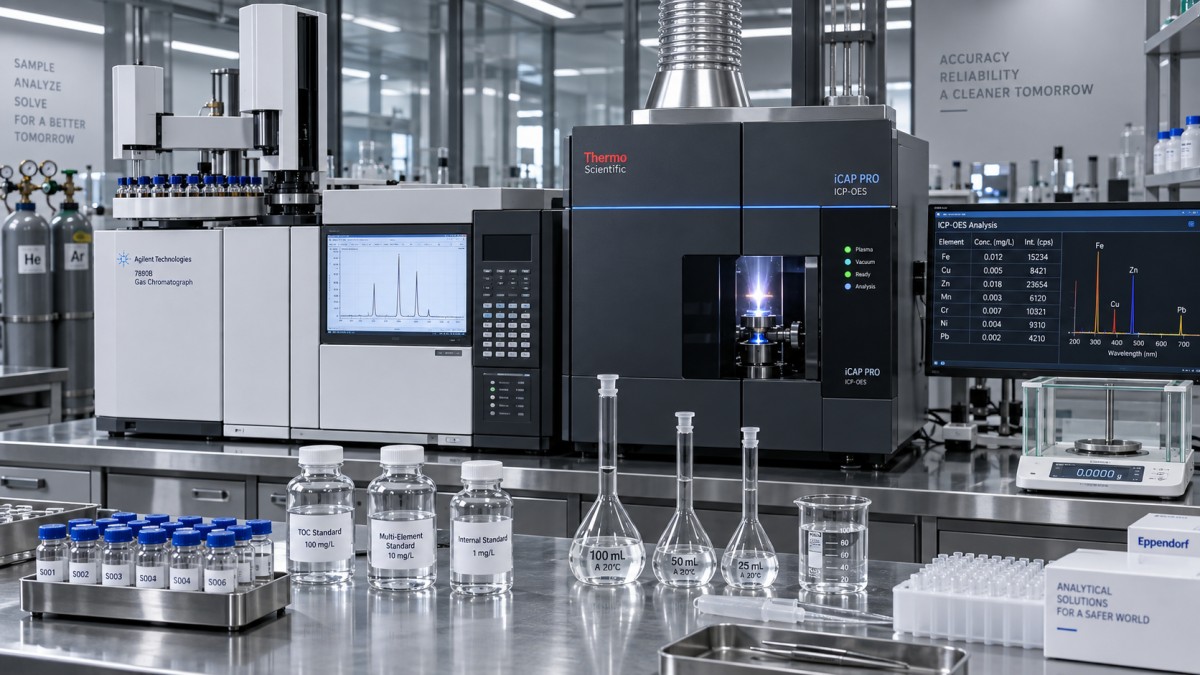
The analytical technique should be tested against the most difficult credible samples, not only ideal standards. A representative evaluation set may include high-salt samples, viscous products, strongly acidic or alkaline materials, samples with suspended solids, high organic loads, known interferents, and concentrations near the decision limit. If these matrices cannot be obtained during procurement, the evaluation should explicitly state which claims remain unverified.
Sample preparation is part of the instrument decision
Instrument selection often receives disproportionate scrutiny while filtration, weighing, extraction, dilution, digestion, derivatization, and transfer steps are treated as routine laboratory details. In chemical analysis, those steps define what reaches the detector. They also create a large share of variability, contamination risk, and operator dependence.
A trace metals workflow may require microwave digestion, controlled acid handling, high-purity reagents, compatible vessels, and a ventilation arrangement appropriate to the chemistry. A chromatographic workflow may need homogenization, centrifugation, solid-phase extraction, nitrogen evaporation, and low-adsorption consumables. An automated analyzer may reduce injection variability but cannot correct for unstable samples or inconsistent extraction recovery.
The evaluation question is not simply whether preparation can be performed. It is whether it can be performed repeatedly at the expected sample volume without compromising recovery, blank levels, turnaround time, or safety. A method requiring manual preparation across several precision-critical steps may be technically valid but operationally unsuitable where sample volume, staffing patterns, or shift coverage make consistency difficult to maintain.
Compatibility should be reviewed at the level of every wetted component. Solvents, acids, oxidizers, salts, surfactants, and particulate matter affect tubing, seals, pump heads, nebulizers, injector components, columns, and detector surfaces differently. A system compatible with an aqueous standard may not be suitable for concentrated hydrochloric acid, high-boiling solvents, abrasive slurries, or samples containing strong complexing agents. Vendor compatibility charts are useful screening tools, but the proposed method conditions should be assessed against the exact consumables and fluid path configuration.
Read specifications in the context of method performance
Published specifications are necessary, but they should be interpreted as evidence of capability under stated conditions rather than proof of routine method performance. Resolution, repeatability, linearity, drift, carryover, wavelength accuracy, mass accuracy, signal-to-noise ratio, and detector range all matter only when connected to the intended analytical claim.
For chromatography, a low carryover specification does not remove the need to test the highest anticipated concentration followed by blanks. For spectroscopy, wavelength accuracy alone does not establish that overlapping bands or background effects are manageable. For balances, readability is not equivalent to weighing accuracy at the actual sample mass. For pH, conductivity, or dissolved oxygen systems, probe condition, temperature compensation, sample temperature, and maintenance intervals may dominate the uncertainty budget.
Technical evaluations are stronger when suppliers are asked to demonstrate performance using a protocol tied to the intended application. The protocol should state acceptance criteria in advance. Depending on the method, relevant criteria may include:
- precision at concentrations near the reporting limit and at routine working levels;
- calibration range and residual behavior rather than correlation coefficient alone;
- recovery from representative matrices, including any extraction or digestion stage;
- blank contribution and contamination control;
- specificity in the presence of expected interferents;
- carryover after concentrated samples;
- stability over a realistic analytical sequence;
- re-analysis rules and the effect of dilution or repeat preparation.
System suitability requirements should also be considered during selection. If a method depends on frequent injections of standards, check solutions, or tuning compounds, the resulting throughput is lower than the nominal autosampler capacity suggests. If frequent recalibration is needed because of drift, the true operating cost includes standards, analyst time, and potentially delayed release decisions.
Calibration strategy determines whether accuracy is sustainable
Calibration is not a one-time commissioning task. It is the mechanism that connects routine results to reference values. The selected system should support the calibration approach required by the method: external calibration, internal standardization, standard addition, bracketing standards, multipoint curve fitting, or matrix-matched reference materials.
Matrix mismatch is a recurring source of misleading confidence. An instrument may show excellent linearity with neat standards while producing biased results in samples affected by viscosity, dissolved solids, ionization effects, extraction losses, or background absorption. In such cases, a more expensive detector may not be the correct solution; matrix-matched calibration, standard addition, internal standards, or improved sample cleanup may provide a more defensible control strategy.
Reference materials should be available in forms relevant to the method whenever possible. Their use is especially important when a workflow involves digestion, extraction, or conversion steps that cannot be evaluated through liquid calibration standards alone. Where certified reference materials are unavailable, the laboratory needs another justified route to demonstrate accuracy, such as recovery studies, comparison with an established method, or suitable proficiency testing arrangements.
For work performed within an ISO/IEC 17025 quality system, the laboratory’s accredited scope, validation approach, traceability arrangements, and record controls must align with the proposed workflow. Instrument purchase does not confer method validity or accreditation readiness. Those depend on documented evidence that the method performs as intended in the laboratory’s hands.
Throughput is governed by the slowest controlled step
Analytical throughput is frequently overstated because it is calculated from run time alone. A ten-minute chromatographic run does not mean six reportable samples per hour if the workflow includes extraction, incubation, sample cooling, duplicate preparation, calibration checks, integration review, and quality-control acceptance. The same principle applies to elemental workflows in which digestion capacity, cooling time, and dilution are the real bottlenecks.
Capacity planning should use the expected sample mix rather than an average sample. Include routine samples, high-concentration samples requiring dilution, blank and control requirements, repeat analyses, preventive maintenance, and samples that need manual review. A system sized only for normal daily volume can become unstable when a process upset, supplier change, or investigation produces a temporary surge of difficult samples.
Automation should be evaluated for the failure modes it removes and the new dependencies it introduces. Automated dilution, liquid handling, online sample introduction, and integrated preparation can improve repeatability and reduce exposure to hazardous reagents. They also create requirements for software configuration, maintenance competence, validation of liquid transfer performance, and recovery procedures after faults. The useful question is whether automation makes the critical control point more reliable, not whether it reduces visible manual activity.
Data integrity and integration belong in the technical specification
Modern laboratory workflows often fail at the reporting stage rather than the measurement stage. Instrument software must be examined for user access control, audit trails, method version control, raw-data retention, result reprocessing controls, and export capability. The necessary level of control depends on the laboratory’s regulatory and contractual environment, but the issue should be settled before purchase rather than after methods have been built around a closed system.
Integration with a laboratory information management system, enterprise quality system, or manufacturing execution environment should not be assumed from the presence of a network port or a generic “LIMS-ready” statement. Clarify whether the system supports direct interfaces, standardized data formats, controlled result transfer, sample identifier handling, error reporting, and retention of the original analytical context. A spreadsheet-based export may be adequate for low-risk work, but it can create transcription and traceability vulnerabilities in controlled release testing.
Cybersecurity and service access deserve similar attention. Remote diagnostics can shorten troubleshooting time, yet they should be compatible with site network rules, account governance, and data protection requirements. Clarify what data leave the laboratory environment, who can access the instrument remotely, and how software patches are assessed and deployed.
Lifecycle reliability is more than a service contract
The purchase price is only one component of the decision. Consumables, reference standards, gases, solvents, maintenance kits, lamps, columns, pumps, detectors, filters, waste disposal, and qualification activities may have a greater effect on the operating budget over the instrument’s useful life. Equally important is the availability of trained support, application expertise, spare parts, and documented maintenance procedures in the locations where the laboratory operates.
Reliability should be assessed through maintainability. Ask which parts are operator-replaceable, which failures require a field engineer, what routine maintenance is expected, how performance is checked after intervention, and whether the workflow can continue on an alternative system during downtime. A technically advanced platform with a single point of failure may be unsuitable for a release-critical test unless redundancy, cross-validation, or external contingency capacity is established.
Commissioning acceptance should be planned before the order is placed. The agreed protocol can include installation requirements, environmental conditions, software configuration, accessories, performance testing, documentation, training deliverables, and criteria for final acceptance. This prevents a common procurement failure: receiving an instrument that functions according to factory checks but lacks the sample introduction hardware, data controls, consumables, or application support required for the actual method.
The most dependable instrument portfolio is rarely the one with the most advanced individual components. It is the one in which sample preparation, analytical technique, calibration, quality controls, data handling, maintenance, and contingency arrangements are matched to the required decision. That is the standard against which any chemical analysis workflow should be selected.
Technical Specifications
- How to Select Electronic Hotel Key Card Locks for Guest Rooms and Staff AreasAuthor :Safety Compliance Lead
- How to Select Lab Instruments for Reliable Chemical Analysis WorkflowsAuthor :Precision Metrology Expert
- How to Size a UPS for Server Rooms: Load, Runtime, and Redundancy FactorsAuthor :Grid Infrastructure Analyst
Expert Insights

Chief Security Architect
Dr. Thorne specializes in the intersection of structural engineering and digital resilience. He has advised three G7 governments on industrial infrastructure security.
Related Analysis
- Sep 17, 2026How to Select Electronic Hotel Key Card Locks for Guest Rooms and Staff AreasAuthor :Safety Compliance Lead
- Sep 16, 2026How to Select Lab Instruments for Reliable Chemical Analysis WorkflowsAuthor :Precision Metrology Expert
- Sep 15, 2026How to Size a UPS for Server Rooms: Load, Runtime, and Redundancy FactorsAuthor :Grid Infrastructure Analyst
Core Sector // 01
Security & Safety
- How to Select Lab Instruments for Reliable Chemical Analysis WorkflowsAuthor :Precision Metrology Expert

- Buying Lint-Free Wipes in Bulk: How to Match Material and Packaging to Cleanroom UseAuthor :Precision Metrology Expert

- How to Choose a Class II Biosafety Cabinet Supplier for Compliant Lab ProcurementAuthor :Precision Metrology Expert

- Wholesale Binocular Microscopes: Comparing Specifications, MOQs, and QC RiskAuthor :Precision Metrology Expert

- How to Evaluate a UV-Visible Spectrophotometer Manufacturer for Lab Accuracy?Author :Precision Metrology Expert

- China Temporarily Bans Helium ExportsAuthor :Precision Metrology Expert

- What to Check Before Buying a Digital Lab Incubator Wholesale OrderAuthor :Precision Metrology Expert

- Electric Muffle Furnace Wholesale: How to Evaluate Capacity, Temperature, and MOQAuthor :Precision Metrology Expert