How to Assess Metal Materials for Thermal Cycling in Power Boilers
Author
Date Published
Reading Time
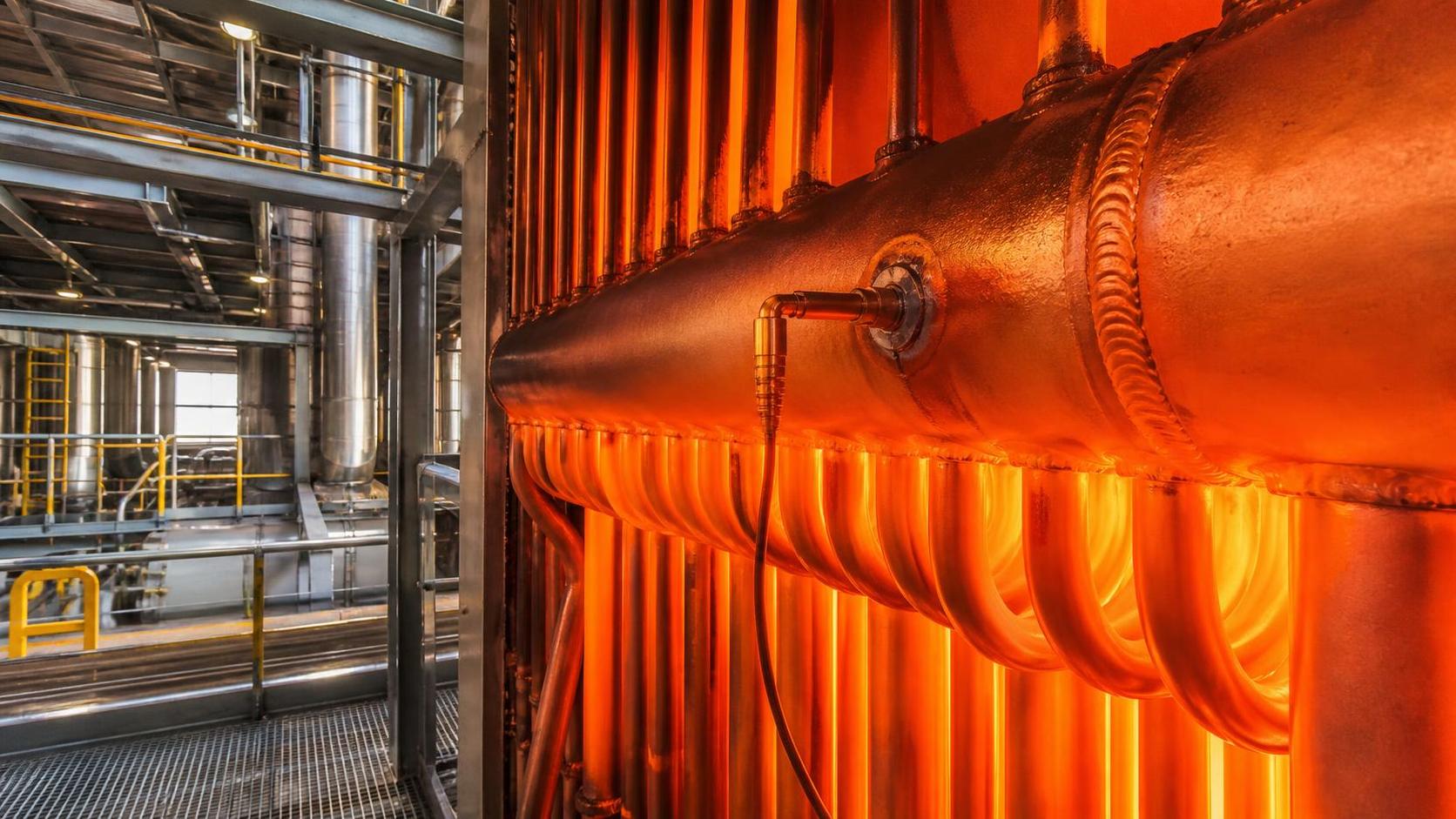
Knowing how to assess if a metal material solution handles thermal cycling in power boilers is less about finding the alloy with the highest temperature rating and more about matching the material to the real duty cycle. A tube, header, valve body, or transition piece can survive a high steady temperature yet still crack early when starts, stops, load swings, uneven heating, deposits, and corrosive flue gases combine. The right assessment connects the boiler’s thermal history, component geometry, material data, fabrication quality, and inspection plan.
That distinction matters because thermal-cycling failures rarely announce themselves through a simple data-sheet comparison. They often begin at weld toes, attachment points, tube bends, thick-to-thin transitions, ligaments around openings, and locations where a local temperature gradient is far more severe than the average metal temperature.
How to Assess If a Metal Material Solution Handles Thermal Cycling in Power Boilers
Start by defining the actual service envelope, then compare candidate materials against the damage mechanisms that envelope creates. For most boiler decisions, the question is not “Which metal is strongest?” It is “Which material-and-fabrication system retains enough fatigue, creep, corrosion, and weld performance through the expected number of operating cycles?”
A practical assessment should establish five things:
- The maximum and minimum metal temperature, rather than only steam or gas temperature.
- The heating and cooling rate during start-up, shutdown, trips, sootblowing, and load changes.
- The expected number of cycles at different severity levels.
- The pressure stress, restraint conditions, and local geometry that amplify thermal stress.
- The chemistry and environment on both sides of the component, including water chemistry, ash deposits, oxidation, sulfidation, chlorides, or hydrogen-related risks where applicable.
A material is suitable only when these factors are evaluated together. A high-alloy steel may offer better oxidation resistance but create welding, availability, cost, or differential-expansion issues. A lower-alloy steel may be entirely appropriate in a stable section of the boiler, yet be a poor choice near a cyclic hot spot.
First, Separate Thermal Fatigue From Creep and Corrosion
These mechanisms often occur in the same component, but they are not interchangeable. Treating them as one generic “high-temperature resistance” problem is a common procurement mistake.
For example, a superheater outlet tube operating at sustained elevated temperature needs a credible creep assessment. If that same unit is frequently cycled, it also needs a fatigue assessment. Selecting a material based solely on creep strength can leave the plant exposed to cracking during repeated start-up and shutdown events.
Likewise, corrosion-resistant chemistry does not automatically solve thermal cycling. The alloy may resist a corrosive deposit but still suffer from fatigue if thermal expansion is constrained at a welded attachment or a heavy section heats much more slowly than a thin adjacent section.
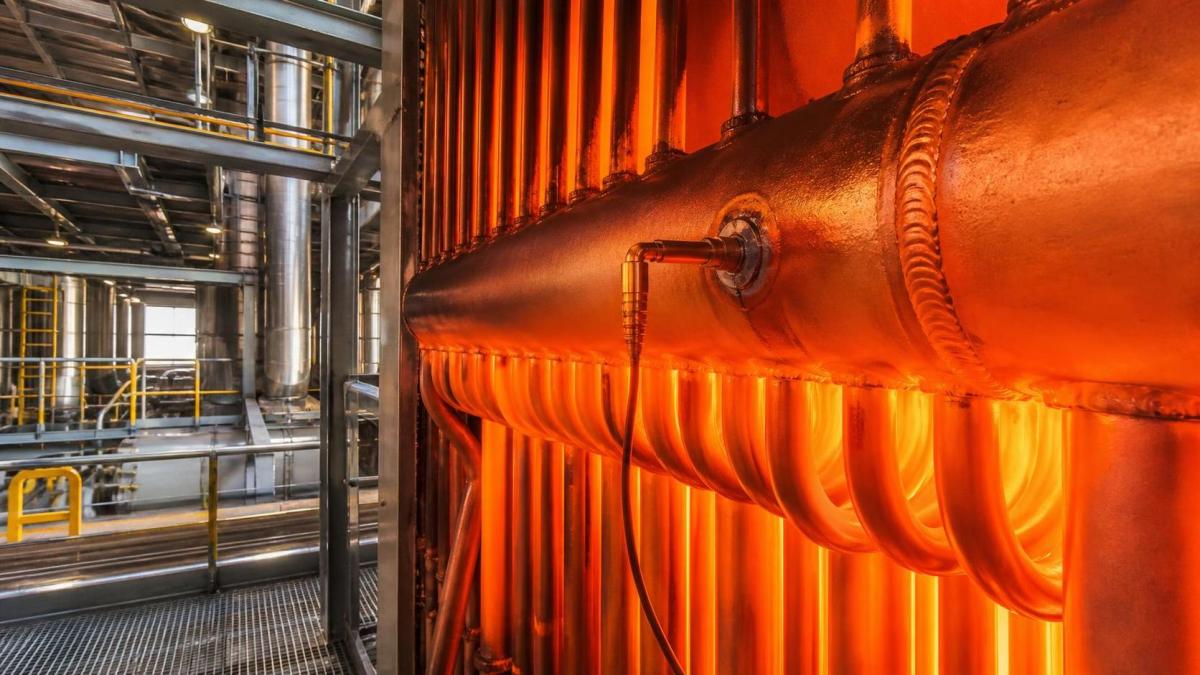
Use the Real Thermal Profile, Not the Design Temperature Alone
Many specifications begin with a single design temperature. It is necessary, but it is not enough. Thermal fatigue is driven by temperature difference, temperature rate, and restraint. A component that moves freely can tolerate a temperature change that would be damaging in a rigidly restrained assembly.
Request or develop a duty profile that records normal operation, cold starts, warm starts, hot starts, emergency shutdowns, load ramps, and known upset conditions. The profile should distinguish between routine cycles and rare but severe events. A plant that runs baseload with a few planned outages each year presents a different material challenge from a flexible unit that follows variable grid demand.
Pay particular attention to thermal gradients. A thick header may remain relatively cool while a connected tube or nozzle heats quickly. A deposit-covered surface may run hotter than an apparently similar clean surface. Poor circulation can create local metal temperatures that instrumentation at the outlet does not reveal. When the local metal temperature is uncertain, a conservative calculation and targeted field measurement are better than assuming the bulk fluid temperature represents the component.
For critical areas, finite element analysis can be useful because it estimates local thermal stress around welds, penetrations, ligaments, supports, and transitions. It is not required for every low-risk replacement tube. It becomes valuable when the geometry is complex, thermal transients are frequent, the consequence of failure is high, or previous cracking has occurred.
Compare Material Properties That Actually Influence Cycling Life
Strength at temperature matters, but a credible comparison goes further. The properties below should be reviewed at the relevant service temperature range, using traceable manufacturer data or recognized material standards where available.
Coefficient of thermal expansion
Materials expand at different rates when heated. A high coefficient of thermal expansion does not automatically disqualify an alloy, but it increases strain where movement is restrained. This becomes especially important in dissimilar-metal joints, cladding systems, tube-to-header connections, and repairs that join new material to aged material.
When comparing two candidates, do not ask only which has the lower expansion coefficient. Ask whether its expansion behavior is compatible with every adjoining material and the support arrangement. The interface often governs the result.
Elastic modulus, yield behavior, and ductility
Thermal stress depends in part on stiffness. A stiffer material can develop higher stress under the same restrained strain. Meanwhile, adequate ductility helps a component accommodate local strain without initiating a crack. The useful comparison is therefore not a single strength value; it is the balance of high-temperature strength, ductility, cyclic response, and the expected strain range.
Thermal conductivity
Higher thermal conductivity can reduce temperature gradients through a wall section, which may reduce thermal stress in some arrangements. It is not a universal advantage. Component thickness, heat flux, deposits, gas-side conditions, and internal fluid behavior all influence the actual gradient. Still, conductivity deserves attention in high-heat-flux zones and areas prone to uneven heating.
Creep strength and microstructural stability
For pressure parts at elevated temperature, creep data must be relevant to the planned operating range and expected life. Short-term tensile strength is not a substitute for creep performance. The comparison should also consider whether prolonged exposure, fabrication heat input, or welding procedures can change the material’s structure in a way that reduces long-term reliability.
This is particularly important when substituting materials due to supply constraints. “Equivalent chemistry” is not enough evidence for a high-temperature pressure boundary. The material specification, allowable-stress basis, weld procedure, heat treatment requirements, and code acceptance all need review.
The Weld Is Often the Deciding Factor
A sound base metal can still fail because the welded joint was not designed or controlled for cyclic service. Weld toes create geometric stress concentration. Dissimilar-metal welds introduce expansion mismatch and metallurgical complexity. Repair welds may see different restraint than original shop welds. Heat-affected zones can become the weak point if the procedure is unsuitable or post-weld heat treatment is missed where required.
When evaluating a metal material solution, ask for more than a material certificate. Review the proposed welding procedure specification, procedure qualification records, filler-metal compatibility, preheat and post-weld heat-treatment requirements, and non-destructive examination plan. Confirm that the fabricator has experience with the alloy family and section thickness involved.
There is also a design question: can the assembly be changed to reduce local stress? A smoother transition, improved support spacing, a more flexible connection, a larger bend radius, or removal of a sharp attachment can extend service life more effectively than an expensive alloy upgrade. Material selection should not be used to compensate for an avoidable geometric problem.
Testing: What Proves a Candidate Is Credible?
Laboratory data are a starting point, not a complete answer. The most useful evidence depends on the risk and the maturity of the application.
For a conventional, code-recognized material used within a known temperature range, traceable material certification, code-compliant design calculations, verified welding procedures, and inspection records may provide an adequate basis. For a novel alloy, a severe cycling duty, or a failure-prone location, more evidence is justified.
- Thermal fatigue testing evaluates cyclic damage under controlled heating and cooling. It is most valuable when candidate alloys or weld configurations need a direct comparison.
- Low-cycle fatigue data are relevant when the component sees relatively large strains over a limited number of starts or transients.
- High-cycle fatigue data matter where smaller, frequent fluctuations or vibration interact with thermal loading.
- Creep rupture and creep-fatigue assessment are needed where high-temperature dwell periods occur between cycles.
- Metallography and hardness checks can help assess aged components, repair zones, and suspected overheating.
- Non-destructive examination, such as ultrasonic, magnetic-particle, dye-penetrant, or radiographic methods as appropriate, helps establish a baseline and monitor known risk areas.
Be careful with generic claims such as “thermal shock resistant” or “suitable for boiler service.” Those descriptions are incomplete without a test method, temperature range, specimen condition, cycle severity, and acceptance criteria. A result from a thin laboratory coupon may not predict behavior in a thick, restrained pressure component with welded connections.
Material Comparisons Need a Component Context
Carbon and low-alloy steels can be practical, economical choices in lower-temperature sections where code requirements, corrosion conditions, and cycling severity are well understood. Their limitations become clearer as metal temperature, dwell time, corrosion severity, or cycling stress rises.
Chromium-molybdenum steels are commonly considered where elevated-temperature strength is needed, but the actual grade selection still depends on design temperature, pressure, fabrication controls, and code acceptance. Higher-alloy ferritic steels may offer improved high-temperature capability in suitable applications, while austenitic stainless steels can bring corrosion and oxidation advantages. They also have different expansion behavior and may require careful joint design when paired with ferritic materials.
Nickel-based alloys may be considered in unusually aggressive high-temperature environments, but their cost and fabrication requirements mean they should be selected for a clearly defined failure mechanism, not as a blanket “premium” upgrade. In many cases, a more targeted solution such as shielding, cladding, altered geometry, improved steam-temperature control, or deposit management is more economically defensible.
The best comparison is therefore component-specific. A material that is sensible for a superheater tube may be unnecessary for a lower-temperature economizer section. A material suitable for a freely expanding tube may be unsuitable for a rigid nozzle connection.
Check Codes, Traceability, and Supply-Chain Evidence
For pressure-retaining boiler parts, selection must align with the governing construction and inspection code, project specification, and jurisdictional requirements. Material substitution should be approved through the applicable engineering and quality process. A supplier statement that an alternative is “equal or better” does not replace documented compliance.
Confirm heat-level traceability, chemical composition, mechanical-property records, heat treatment where applicable, dimensional tolerances, and identification controls through fabrication and installation. This is especially relevant for replacement programs, where mixed stock, undocumented legacy material, or incompatible filler metal can undermine an otherwise sound design decision.
Independent technical review is useful when the decision combines pressure-boundary materials, harsh environments, frequent cycling, and international procurement. Global Industrial Core (GIC) supports this kind of evidence-led sourcing discussion by emphasizing technical documentation, compliance context, and operating-condition fit rather than a price-only material comparison.
A Practical Decision Before Purchase or Repair
Before releasing an order, gather the component drawing, material specification, operating history, temperature and pressure data, start-stop profile, process chemistry, prior inspection findings, and proposed weld details. Then ask a focused question: what is the likely first failure mechanism at this exact location?
If the answer is uncertain, do not jump directly to a higher-grade alloy. Establish whether the problem is thermal fatigue, creep, corrosion, flow maldistribution, poor support design, weld quality, or a combination. A failed material solution may be a symptom of an unresolved operating or design issue.
That is the disciplined way to assess if a metal material solution handles thermal cycling in power boilers: verify the duty cycle, identify the dominant damage mechanism, compare temperature-relevant properties, qualify the joints, and maintain traceable evidence from design through inspection. It produces a selection that is easier to defend technically and more likely to deliver reliable service.
Frequently Asked Questions
Can a material with a higher maximum service temperature automatically handle more thermal cycles?
No. Maximum service temperature mainly addresses thermal exposure. Cycling resistance also depends on expansion, stiffness, ductility, component restraint, weld configuration, and the size and frequency of temperature changes.
Is a material upgrade enough after repeated boiler tube cracking?
Not always. Repeated cracking should trigger a review of deposits, circulation, temperature imbalance, support conditions, tube geometry, welding, and operating transients. Upgrading the alloy without identifying the crack mechanism can repeat the failure.
Why are dissimilar-metal welds a concern in cyclic boiler service?
Joined metals can expand at different rates and respond differently to heat exposure. That mismatch concentrates stress near the joint, so filler-metal choice, joint design, welding procedure, and inspection need closer control.
Should material selection be based on fluid temperature or metal temperature?
Metal temperature is the more relevant value for material damage. Fluid temperature is an input, but heat flux, wall thickness, deposits, and flow conditions can make the actual metal temperature significantly different.
When is fatigue testing worth the additional effort?
It is most justified for severe or frequent cycling, nonstandard alloys, critical pressure-boundary components, unusual geometries, and locations with a history of unexplained failures. For established materials in proven service, documented design and fabrication evidence may be sufficient.
Technical Specifications
- Air Handling Unit Supplier Checklist: Performance Data, Lead Times, and SupportAuthor :Environmental Engineering Director
- Buying Fiberglass Water Tanks Wholesale: Compare Quotes and Delivery CostsAuthor :Environmental Engineering Director
- Choosing an XLPE Power Cable Supplier: Test Reports, Traceability, and Lead TimesAuthor :Grid Infrastructure Analyst
Expert Insights

Chief Security Architect
Dr. Thorne specializes in the intersection of structural engineering and digital resilience. He has advised three G7 governments on industrial infrastructure security.
Related Analysis
- Oct 19, 2026Air Handling Unit Supplier Checklist: Performance Data, Lead Times, and SupportAuthor :Environmental Engineering Director
- Oct 18, 2026Buying Fiberglass Water Tanks Wholesale: Compare Quotes and Delivery CostsAuthor :Environmental Engineering Director
- Oct 17, 2026Choosing an XLPE Power Cable Supplier: Test Reports, Traceability, and Lead TimesAuthor :Grid Infrastructure Analyst
Core Sector // 01
Security & Safety
- How to Specify Steel Heavy-Duty Corner Guards for Loading Bays and High-Traffic AreasAuthor :Heavy Industry Strategist

- Selecting Non-Ferrous Metal Plates for Corrosion, Weight, and Formability RequirementsAuthor :Heavy Industry Strategist

- Stainless Steel Welded Tube Applications: Matching Tube Supply to Fabrication NeedsAuthor :Heavy Industry Strategist

- What Maintenance Do Furnace Components Need After 18 Months?Author :Heavy Industry Strategist

- How to Assess Metal Materials for Thermal Cycling in Power BoilersAuthor :Heavy Industry Strategist

- How to Evaluate Aluminum Extrusion Suppliers for Tight-Tolerance Components?Author :Heavy Industry Strategist

- How to Evaluate a Weld Neck Flange Manufacturer for High-Pressure Pipe ProjectsAuthor :Heavy Industry Strategist

- EU REACH Ban Hits Cr(VI)-Coated Steel ImportsAuthor :Heavy Industry Strategist
-Coated Steel Imports")