How to Evaluate a Heat Sink Aluminum Profile Supplier for Custom Thermal Projects
Author
Date Published
Reading Time
Start with the thermal requirement, not the supplier brochure
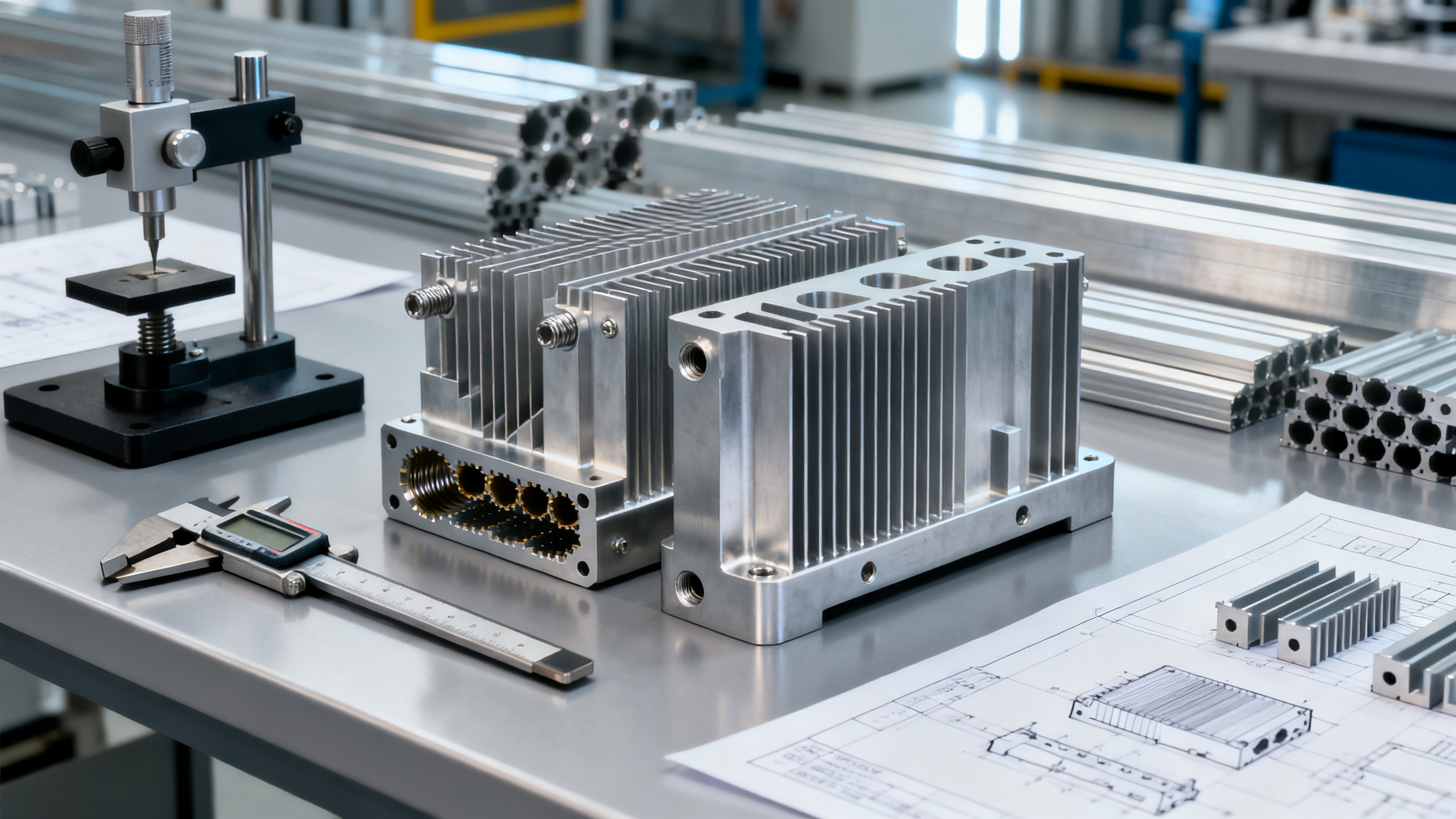
When buyers source a heat sink aluminum profile supplier for a custom project, the easiest mistake is comparing factories before the thermal target is fully defined. That usually leads to a lot of discussion about alloy grades, extrusion capability, and price tiers, while the real question is still unanswered: what does the part actually need to do in the end product?
Before you send RFQs, lock down the operating environment, heat load, available installation space, interface method, surface treatment expectations, and whether the profile will be used as-extruded or with secondary machining. If the application goes into power electronics, LED assemblies, control cabinets, or industrial equipment exposed to dust, vibration, or outdoor temperature swings, those conditions change the supplier shortlist immediately.
A supplier that looks competitive on a simple cross-section may become expensive once you add tight flatness requirements, tapped holes, CNC finishing, anodizing, insulation needs, or export packaging. Procurement teams save time when they treat the first supplier review as a fit check against the real technical package, not a price scan.
Check whether the supplier understands profiles or complete thermal parts
Some factories are strong at aluminum extrusion and weak at everything after that. Others can deliver a finished thermal component with machining, deburring, surface finish, packaging, and documentation under one roof. That distinction matters more than many buyers expect.
Ask a simple question early: Are you quoting raw extruded profiles, or a production-ready heat sink component? The answer affects lead time, scrap risk, dimensional control, and who owns defects when the finished part fails assembly.
- If you only need stock or near-standard extrusion lengths, a profile-focused supplier may be enough.
- If your part needs drilling, slotting, threading, milling, cut-to-length tolerances, or cosmetic anodizing, review secondary processing capability as carefully as the extrusion line itself.
- If the component mates directly to electronics or enclosure surfaces, ask who controls final inspection after all finishing steps are complete.
This is where low initial quotes often drift upward. A supplier that outsources half the process may still win on base price, but the hidden cost shows up in coordination, longer queues, and inconsistent accountability.
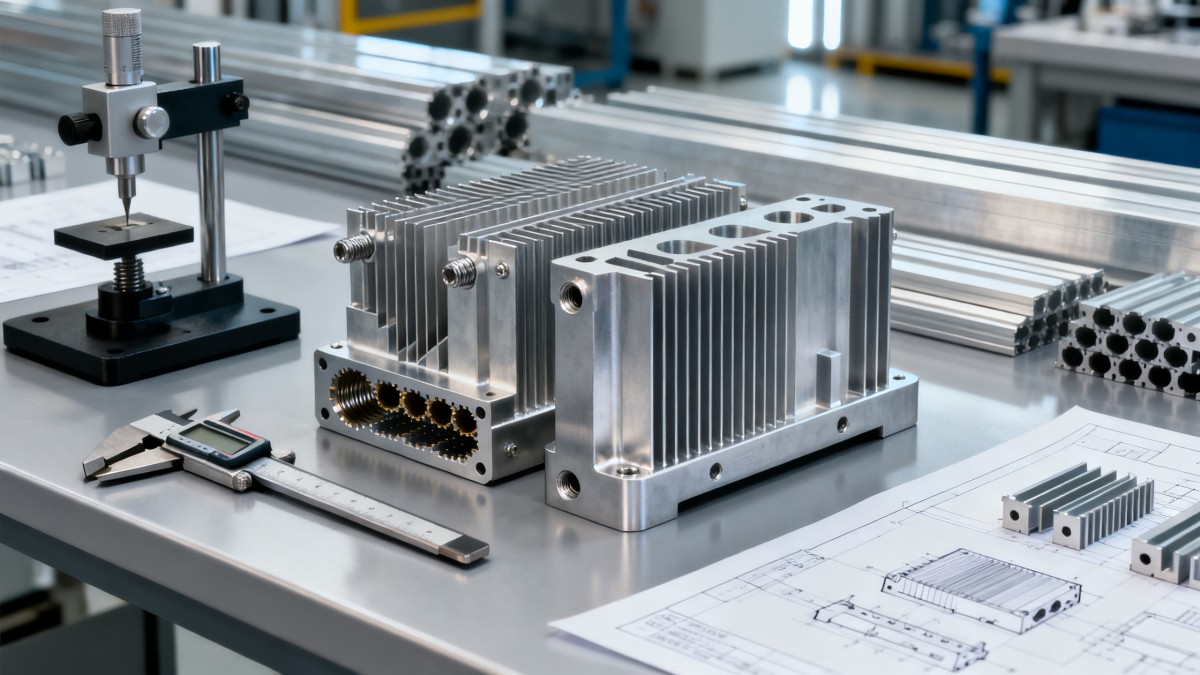
Review the alloy and temper against the job, not habit
Buyers often see familiar materials listed and move on. That is risky. The right aluminum choice depends on the profile geometry, required conductivity, machining behavior, mechanical strength, finish quality, and the abuse the part will see during assembly and service.
You do not need to turn procurement into materials engineering, but you do need the supplier to explain why the proposed alloy and temper suit the part. Ask them to match the material choice to the drawing, the fin design, the post-processing steps, and the end-use environment. If they cannot do that clearly, they may be quoting from inventory convenience rather than project fit.
Also check whether the material callout on your drawing is aligned with the target market. If your project requires compliance documentation for a customer or an EPC package, make sure the supplier can provide traceable material records tied to the lot shipped.
Look closely at profile manufacturability before you compare prices
Custom heat sink designs are easy to over-engineer. Deep thin fins, aggressive aspect ratios, sharp transitions, and cosmetic surfaces on complex shapes all push extrusion difficulty up. The supplier that flags those issues early is usually more valuable than the one that simply says yes.
Ask for a manufacturability review before final quote acceptance. You want comments on fin thickness, fin spacing, wall uniformity, expected extrusion distortion, cut length stability, and whether secondary straightening or machining will be required to hold the drawing. These are not academic details. They drive die cost, yield loss, and repeatability.
A practical supplier will also tell you which dimensions are routine and which ones need special control. That is useful because it lets procurement separate true technical requirements from inherited tolerances that only inflate cost.
Treat tolerances as a commercial issue as much as a quality issue
Many custom thermal projects carry machining-style expectations into an extrusion drawing. That usually creates friction. Extrusions, cut parts, machined features, and anodized surfaces do not behave the same way, so the inspection plan has to reflect the real process flow.
During supplier evaluation, ask for three things:
- A marked drawing showing critical dimensions and how they will be measured.
- A distinction between extrusion tolerance, machining tolerance, and cosmetic acceptance criteria.
- Confirmation of when inspection happens: after extrusion, after machining, after finishing, or only at final packing.
If flatness or mounting surface quality is critical for thermal transfer, state that explicitly and tie it to the mating condition. Otherwise you may receive a technically acceptable profile that performs poorly once assembled.
Do not separate thermal performance from finishing and machining
Surface treatment gets treated like a cosmetic decision far too often. In custom heat sink procurement, it is part of the performance and process discussion. Anodizing, coating choices, machining marks, burr control, and contact surface preparation can all affect how the part behaves in the final assembly.
Review the full sequence with the supplier. Which features are machined before finishing? Which surfaces must stay free from excess coating buildup? Are threaded features masked or reworked afterward? How are burrs removed from fin areas without damaging geometry? Suppliers with solid process control answer these questions directly because they deal with them every day.
One common buying mistake is approving a beautiful sample while ignoring repeatability at production volume. A proper supplier evaluation goes beyond one good-looking part and asks how the finish and critical dimensions will stay consistent lot after lot.
Check certification and document control where it actually matters
Certification questions should be tied to the sale, the destination market, and the product’s role in the assembly. For heat sink aluminum profiles, buyers often ask for every document available and still miss the ones that matter operationally.
Focus the review on documents the supplier can connect to the shipped product: material traceability records, inspection reports where required by contract, and quality system documentation relevant to the manufacturing process. If your end customer or target market requires specific declarations or conformity support, ask the supplier to show sample document formats and explain how they map lot numbers or production batches to shipment records.
A supplier saying they are familiar with CE, UL, or ISO is not the same as having the right documentation path for your project. Procurement should verify document flow, not just certificate language.
Lead time is really four lead times
This is where many sourcing plans go sideways. Buyers ask for one lead time number, suppliers give one, and everyone discovers later that they were talking about different stages.
The suppliers worth keeping usually break lead time down this way without being pushed. That is a good sign they manage real project schedules rather than quoting optimistic averages.
Test communication quality with a real engineering package
A capable supplier should get better when the discussion becomes specific. Send the drawing, the intended application, annual volume range, finish requirement, packing expectation, and any special inspection needs. Then watch how they respond.
Good signs are hard to fake: they ask clarifying questions about critical dimensions, they identify cost drivers without turning every issue into a problem, and they separate tooling assumptions from production assumptions. Weak suppliers tend to do the opposite. They quote quickly, stay vague on tolerances, and postpone technical detail until after the order.
For procurement, this communication test is more useful than a polished capability deck. It shows how the supplier will behave when there is a drawing revision, a nonconformance, or a shipment at risk.
Compare total cost in the format below, not just unit price
The cheapest quote often belongs to the supplier that left something out. When you compare offers, line up the full commercial structure:
- Tooling or die charges
- Minimum order quantity and reorder flexibility
- Scrap assumptions on trial runs
- Machining and finishing adders
- Inspection, documentation, and special packaging costs
- Yield risk tied to complex geometry
- Replacement cost if parts fail assembly or field reliability targets
That last point is the one teams skip when budget pressure is high. A supplier that saves a little on unit price but creates sorting, rework, schedule slip, or customer claims is not low cost in any meaningful procurement sense.
Use a short decision sequence before nomination
A workable buying sequence is simple. First, confirm the thermal and mechanical requirement package. Next, screen suppliers for process fit: extrusion only or finished component capability. Then review manufacturability, tolerance control, finishing sequence, and documentation path. After that, compare total cost and staged lead times. Only then does a sample order or first article review make sense.
For custom thermal projects, the right supplier is rarely the one with the most aggressive first quote. It is usually the one that can explain the drawing, expose the real risks early, and hold process control when volume starts. If you evaluate a heat sink aluminum profile supplier in that order, you will make fewer price-driven mistakes and have a much stronger position when procurement has to defend the final decision internally.
Technical Specifications
- Wholesale Borosilicate Lab Glassware: How Buyers Verify Quality, Specs, and Supply ReliabilityAuthor :Precision Metrology Expert
- How to Select Electronic Hotel Key Card Locks for Guest Rooms and Staff AreasAuthor :Safety Compliance Lead
- How to Select Lab Instruments for Reliable Chemical Analysis WorkflowsAuthor :Precision Metrology Expert
Expert Insights

Chief Security Architect
Dr. Thorne specializes in the intersection of structural engineering and digital resilience. He has advised three G7 governments on industrial infrastructure security.
Related Analysis
- Sep 18, 2026Wholesale Borosilicate Lab Glassware: How Buyers Verify Quality, Specs, and Supply ReliabilityAuthor :Precision Metrology Expert
- Sep 17, 2026How to Select Electronic Hotel Key Card Locks for Guest Rooms and Staff AreasAuthor :Safety Compliance Lead
- Sep 16, 2026How to Select Lab Instruments for Reliable Chemical Analysis WorkflowsAuthor :Precision Metrology Expert
Core Sector // 01
Security & Safety
- Stainless Steel Welded Tube Applications: Matching Tube Supply to Fabrication NeedsAuthor :Heavy Industry Strategist

- What Maintenance Do Furnace Components Need After 18 Months?Author :Heavy Industry Strategist

- How to Assess Metal Materials for Thermal Cycling in Power BoilersAuthor :Heavy Industry Strategist

- How to Evaluate Aluminum Extrusion Suppliers for Tight-Tolerance Components?Author :Heavy Industry Strategist

- How to Evaluate a Weld Neck Flange Manufacturer for High-Pressure Pipe ProjectsAuthor :Heavy Industry Strategist

- EU REACH Ban Hits Cr(VI)-Coated Steel ImportsAuthor :Heavy Industry Strategist
-Coated Steel Imports")
- How to Evaluate a Heat Sink Aluminum Profile Supplier for Custom Thermal ProjectsAuthor :Heavy Industry Strategist

- Industrial Metal Fabrication Components Price: What Drives Cost and How to Compare QuotesAuthor :Heavy Industry Strategist