What Maintenance Do Furnace Components Need After 18 Months?
Author
Date Published
Reading Time
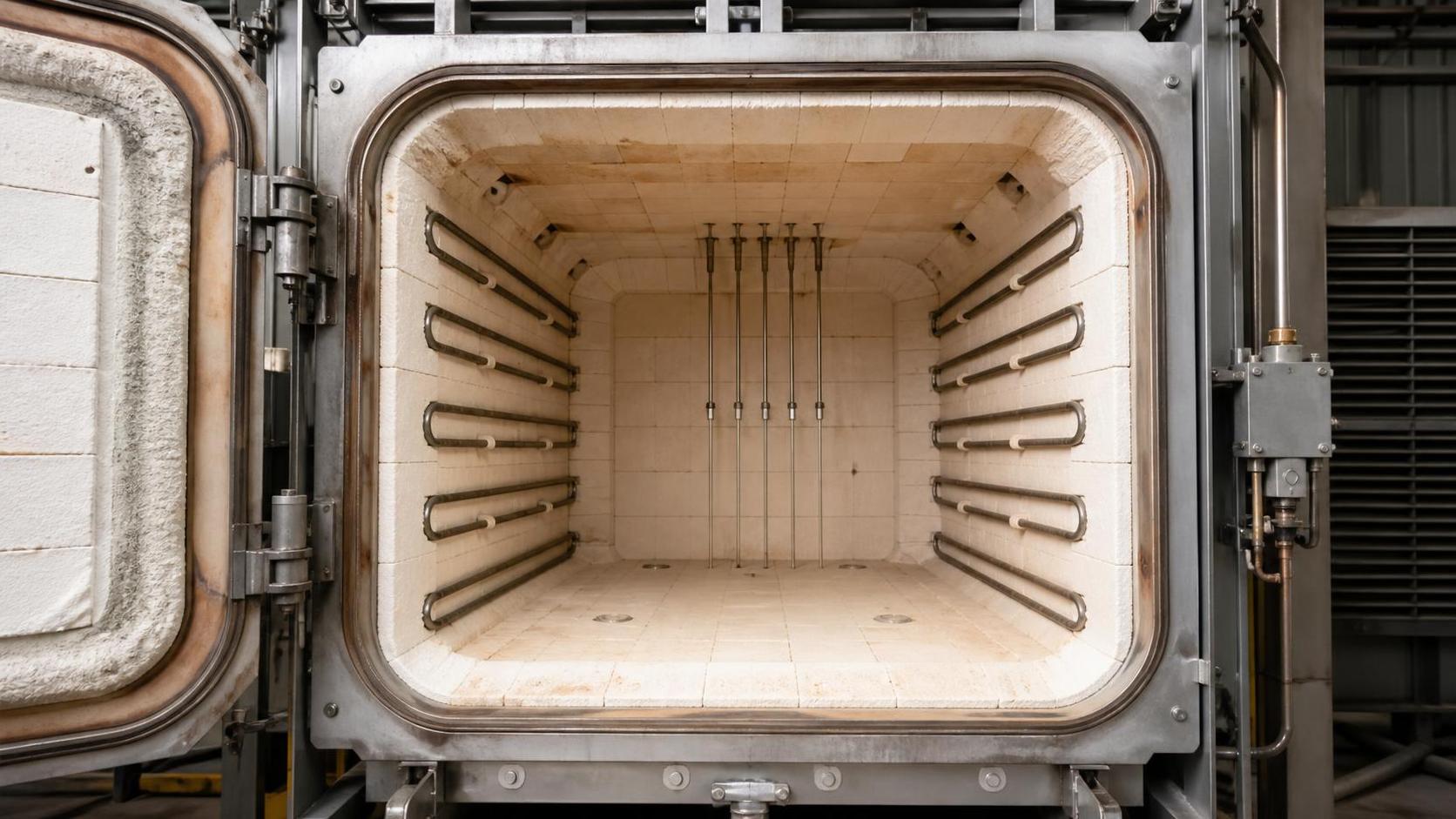
At roughly 18 months of service, a metallurgical furnace is usually past the point where a simple “looks acceptable” inspection is enough. The maintenance question is no longer only whether a component has failed. It is whether wear, drift, leakage, oxidation, or distortion is beginning to compromise thermal efficiency, temperature control, product quality, worker safety, or the remaining campaign life of the furnace.
For plant managers, maintenance supervisors, and procurement teams, the practical question is: what maintenance is needed for metallurgical engineering furnace components after 18 months? The answer depends on furnace type, duty cycle, atmosphere, operating temperature, charge material, and shutdown history. A continuously operated high-temperature furnace processing abrasive or contaminated feedstock will age very differently from a batch heat-treatment furnace with controlled loading and regular planned outages.
Still, 18 months is a useful decision point. It is often the right time to move from routine checks toward a documented condition assessment that links component condition to operating risk and replacement planning.
Why the 18-Month Point Deserves More Attention
Furnace components rarely deteriorate at the same rate. Refractory linings may remain structurally intact while insulation behind them has degraded. Thermocouples can still produce readings while drifting enough to affect metallurgical results. Door seals may appear serviceable but allow air ingress that changes furnace atmosphere, increases fuel consumption, and accelerates oxidation of internal parts.
This is why maintenance at 18 months should not be treated as a calendar-based replacement exercise. It should be a condition-based review supported by operating records. The most useful evidence includes temperature trends, fuel or power consumption, product rejection patterns, alarm history, unplanned stoppages, burner tuning records, refractory repair logs, and previous inspection findings.
In practice, maintenance teams should be looking for three categories of risk:
- Immediate safety risks: gas leakage, damaged electrical insulation, unstable supports, compromised pressure relief equipment, overheating enclosures, or refractory collapse hazards.
- Process risks: temperature non-uniformity, sensor drift, atmospheric leakage, burner instability, charge contamination, and reduced heating capacity.
- Lifecycle risks: progressive refractory loss, structural deformation, recurring repairs, obsolete controls, and increasing dependence on emergency spares.
An 18-month review is especially important where furnace availability affects a larger production chain. A localized failure in a reheating, annealing, sintering, melting, or heat-treatment furnace can stop downstream forming, machining, coating, or assembly operations. The cost exposure is therefore broader than the price of the damaged part.
Start With the Furnace’s Actual Operating History
Before opening panels, removing insulation, or ordering replacement parts, establish what the furnace has experienced. Nameplate design conditions are useful, but maintenance decisions should be based on real operation.
Review whether the unit has operated above normal setpoints, undergone frequent thermal cycling, processed corrosive materials, experienced flame failures, been held idle for extended periods, or received emergency refractory patching. These events can materially shorten component life even when elapsed service time appears moderate.
Maintenance planners should also distinguish between continuous and intermittent duty. Continuous service tends to create steady high-temperature degradation, creep, oxidation, and chemical attack. Intermittent service can create a different problem: repeated heating and cooling cycles that drive refractory cracking, seal fatigue, and structural movement.
For electrically heated furnaces, power quality and control behavior matter. Repeated high-current starts, uneven loading, failed control zones, and extended over-temperature events can shorten heating-element life. For fuel-fired systems, fuel quality, combustion-air conditions, burner cycling, and furnace pressure stability deserve the same attention.
Without this operating context, a maintenance team can easily replace visible wear items while missing the conditions that caused the wear.
Refractory Linings: Inspect Beyond the Surface
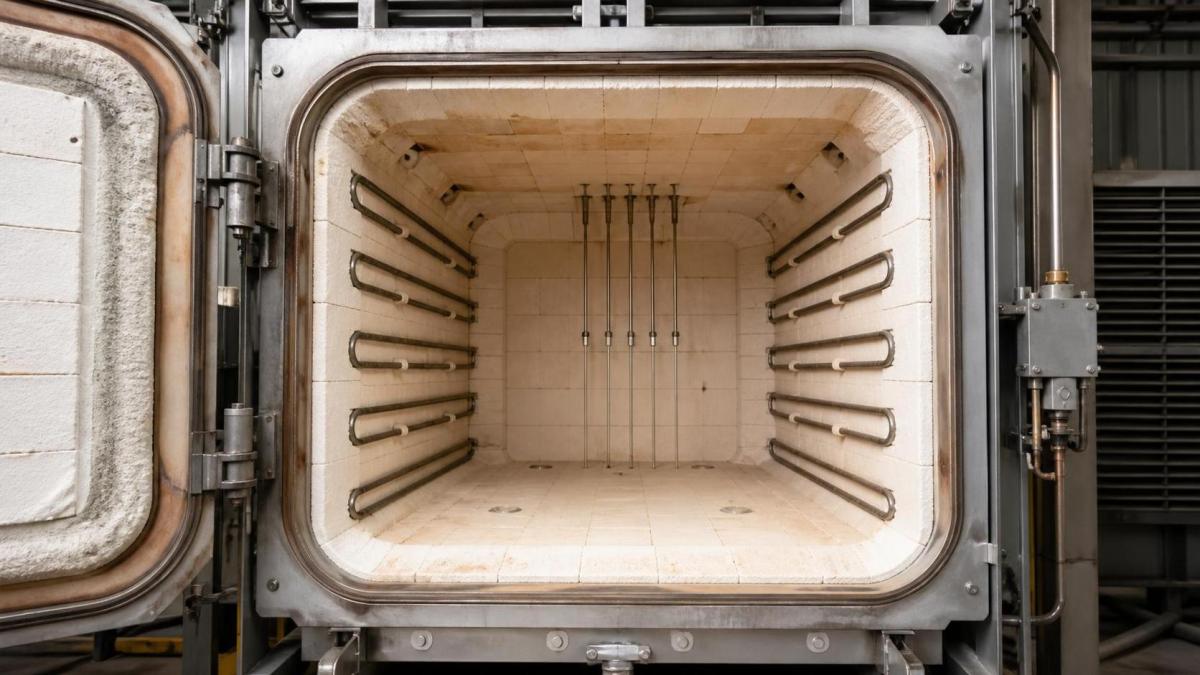
Refractory systems are commonly the most consequential maintenance area after 18 months because they affect containment, heat loss, furnace atmosphere, shell temperature, and safety. Inspection should cover the hot face, joints, expansion allowances, anchor systems where accessible, burner blocks, hearth areas, roofs, and transition zones around doors, charging openings, and exhaust paths.
Common warning signs include open joints, spalling, cracking, glazing, localized erosion, hot spots on the furnace shell, loose brickwork, slag penetration, and repeated patch repairs in the same area. A crack is not automatically a replacement trigger; some controlled cracking can be expected in certain refractory systems. The key question is whether the crack is stable, isolated, and within the design movement allowance, or whether it indicates structural separation, chemical attack, or progressive heat loss.
Particular attention should be given to zones exposed to flame impingement, molten material, mechanical loading, rapid temperature change, or corrosive fluxes and vapors. Hearth refractories may suffer from abrasion and metal penetration. Roof sections may be vulnerable to sagging, anchor degradation, and thermal shock. Burner quarls can deteriorate quickly where combustion is poorly tuned or flame shape is incorrect.
Useful methods include visual inspection during a cold shutdown, infrared thermography of the shell during operation, thickness measurement where practical, and comparison against prior inspection records. Thermography can identify areas of abnormal heat loss, but it does not independently prove the remaining thickness or mechanical integrity of a lining. Findings should be verified before major repair scope is approved.
Heating Elements, Burners, and the Heat-Input System
The heat-input system should be assessed for both performance and failure risk. In electrical furnaces, inspect heating elements for sagging, distortion, oxidation, embrittlement, localized overheating, poor terminal connections, and uneven resistance across zones. Element degradation is often uneven because loading patterns, airflow, atmosphere, and control behavior are uneven.
A furnace may still reach its nominal temperature while taking longer to heat, drawing more power, or producing a wider temperature spread. Those are maintenance signals, not merely operating inconveniences. Element resistance checks, insulation-resistance testing, terminal torque verification, and zone-by-zone power comparisons can help identify deterioration before an element breaks in service.
Fuel-fired furnaces require a different set of checks. Burner maintenance after 18 months should normally include inspection of burner tiles and quarl condition, ignition systems, flame detection devices, valves, regulators, hoses or piping connections, air registers, combustion blowers, filters, and burner management controls. Burner ports should be assessed for blockage, deformation, carbon buildup, or damage that could alter flame shape.
Combustion tuning is often neglected because burners may continue to ignite and hold flame. Yet excess air, insufficient air, poor fuel pressure stability, and incorrect furnace pressure can increase fuel use and create localized hot or cold zones. In atmospheres where oxidation, decarburization, or carburization affects product quality, these deviations can have a direct commercial impact.
Gas safety work should be performed by competent personnel under applicable site procedures and local regulations. Requirements vary by jurisdiction and installation, so teams should verify the relevant code, insurer requirements, and equipment manufacturer guidance rather than assuming that a generic inspection interval is sufficient.
Temperature Measurement and Control: Treat Drift as a Quality Risk
At 18 months, thermocouples, temperature sensors, transmitters, controllers, and recording systems deserve formal review. A thermocouple does not need to fail completely to create a serious process problem. Sensor drift can lead operators to believe the furnace is holding the correct temperature when the actual work zone is hotter or colder than indicated.
The effect can be significant in processes that depend on controlled soaking, phase transformation, sintering behavior, hardness, grain structure, or stress relief. Where product specifications impose tight thermal requirements, instrument maintenance should be integrated with the plant’s quality system rather than handled solely as a utilities task.
Typical actions include calibration or comparison testing against a traceable reference, checking sensor placement, examining protection tubes for cracking or contamination, reviewing compensation wiring, testing controller response, and verifying alarm and interlock functions. In multi-zone furnaces, compare temperature behavior across zones under representative load conditions rather than judging performance only at idle.
Temperature-uniformity surveys and system-accuracy tests may be necessary where customer specifications, internal procedures, or sector-specific requirements call for them. The governing method, acceptance limits, and frequency should be confirmed against the applicable quality standard or customer requirement 【待核实】. A calibration certificate alone does not prove that a loaded furnace delivers uniform heat to the product.
Seals, Doors, Dampers, and Atmosphere Control
Door gaskets, labyrinth seals, charging-door mechanisms, dampers, furnace pressure controls, and exhaust connections often receive less attention than refractories or burners. They should not. Air leakage can drive up energy use, destabilize process atmosphere, promote oxidation, and expose adjacent components to temperatures they were not designed to handle.
After 18 months, inspect seals for compression set, tears, hardening, cracking, misalignment, and missing sections. Check hinges, rollers, latches, actuator linkages, and door frames for wear that prevents even closure. A new gasket will not solve an underlying door alignment problem.
For controlled-atmosphere furnaces, assess oxygen ingress and atmosphere composition where instruments are available. Leak testing may be appropriate after refractory repairs, door work, or replacement of process-gas piping. Exhaust dampers and pressure-control components should move freely and repeatably; sticking dampers can create pressure excursions that affect both safety and product consistency.
It is also worth checking whether maintenance practices themselves are damaging seal systems. Improper cleaning tools, uncontrolled refractory debris, repeated forced closing, and unauthorized substitutions of gasket material can shorten service life and alter furnace performance.
Structural Supports, Shells, Fans, and Mechanical Drives
High temperatures affect mechanical components gradually. Furnace shells, support frames, refractory anchors, rail systems, lifting mechanisms, circulation fans, recirculation shafts, conveyor chains, rollers, and charging equipment should be reviewed for deformation, corrosion, fatigue, loosened fasteners, and misalignment.
Shell temperature monitoring is useful because rising external temperatures can indicate insulation or refractory degradation. However, a cooler-than-expected area should not automatically be considered healthy; it may reflect water leakage, altered airflow, or inconsistent operating conditions. Compare results with baseline readings and inspect unusual patterns.
Fans and motors deserve a focused check where circulation is critical to temperature uniformity. Inspect bearings, shaft alignment, impellers, vibration levels, motor current, cooling paths, and lubrication condition. In high-temperature applications, fan failure can quickly change product heating behavior even if the heat source remains operational.
For moving hearth, roller hearth, pusher, walking-beam, or conveyor furnaces, examine drive wear and product-handling alignment. Mechanical faults can damage refractories, create jams, expose operators to intervention risks, and generate inconsistent residence times.
A Practical 18-Month Maintenance Priority Matrix
Do Not Replace Everything on a Fixed Calendar
A common mistake is to assume every furnace component should be replaced at a standard 18-month interval. That can create unnecessary cost and discard components with meaningful remaining service life. The opposite mistake is more damaging: deferring action because the furnace remains operational.
The better approach is to assign each component a condition and consequence rating. A moderately worn refractory patch in a non-critical zone may be monitored. A similar defect near a burner opening, structural support, or molten-metal exposure area may require immediate repair. A thermocouple that is slightly outside expected calibration behavior may be tolerable for a non-critical preheat stage but unacceptable in a tightly controlled heat-treatment process.
This distinction matters for spare-parts planning as well. Procurement should not only ask which parts are likely to wear. It should identify components with long lead times, proprietary interfaces, certification implications, or single-source supply risks. Heating elements, specialized refractories, burner controls, high-temperature fans, and certain sensor assemblies may require advance qualification and stocking decisions.
When an Inspection Should Become a Capital Decision
Some 18-month findings point beyond maintenance. Repeated refractory failures, steadily rising energy consumption, chronic temperature non-uniformity, obsolete burner-management systems, unavailable controls, or recurring atmosphere leaks may indicate that piecemeal repairs are no longer the economically sound option.
At that point, teams should compare the cost of continued corrective maintenance with a planned shutdown, lining upgrade, combustion retrofit, insulation improvement, controls modernization, or replacement of a critical furnace section. The decision should include lost production, energy consumption, quality losses, safety exposure, spare availability, and contractor access requirements, not just the immediate repair quotation.
For many facilities, the most valuable output of the 18-month maintenance review is not a longer work order. It is a defensible view of remaining risk: which components can continue in service, which need intervention during the next outage, and which conditions could turn into an unplanned production event if left unresolved.
That is the point at which furnace maintenance becomes an operational decision rather than a checklist exercise.
Technical Specifications
- How to Select Electronic Hotel Key Card Locks for Guest Rooms and Staff AreasAuthor :Safety Compliance Lead
- How to Select Lab Instruments for Reliable Chemical Analysis WorkflowsAuthor :Precision Metrology Expert
- How to Size a UPS for Server Rooms: Load, Runtime, and Redundancy FactorsAuthor :Grid Infrastructure Analyst
Expert Insights

Chief Security Architect
Dr. Thorne specializes in the intersection of structural engineering and digital resilience. He has advised three G7 governments on industrial infrastructure security.
Related Analysis
- Sep 17, 2026How to Select Electronic Hotel Key Card Locks for Guest Rooms and Staff AreasAuthor :Safety Compliance Lead
- Sep 16, 2026How to Select Lab Instruments for Reliable Chemical Analysis WorkflowsAuthor :Precision Metrology Expert
- Sep 15, 2026How to Size a UPS for Server Rooms: Load, Runtime, and Redundancy FactorsAuthor :Grid Infrastructure Analyst
Core Sector // 01
Security & Safety
- Stainless Steel Welded Tube Applications: Matching Tube Supply to Fabrication NeedsAuthor :Heavy Industry Strategist

- What Maintenance Do Furnace Components Need After 18 Months?Author :Heavy Industry Strategist

- How to Assess Metal Materials for Thermal Cycling in Power BoilersAuthor :Heavy Industry Strategist

- How to Evaluate Aluminum Extrusion Suppliers for Tight-Tolerance Components?Author :Heavy Industry Strategist

- How to Evaluate a Weld Neck Flange Manufacturer for High-Pressure Pipe ProjectsAuthor :Heavy Industry Strategist

- EU REACH Ban Hits Cr(VI)-Coated Steel ImportsAuthor :Heavy Industry Strategist
-Coated Steel Imports")
- How to Evaluate a Heat Sink Aluminum Profile Supplier for Custom Thermal ProjectsAuthor :Heavy Industry Strategist

- Industrial Metal Fabrication Components Price: What Drives Cost and How to Compare QuotesAuthor :Heavy Industry Strategist