Freight Shock Hits Bearings and Seals as Hormuz Traffic Stays Low
Author
Date Published
Reading Time

On June 10, 2026, the sharp rise in ocean shipping costs for bearings and sealing components became more than a logistics story; it also signaled a practical change in trade execution conditions for industrial mechanical parts moving on Asia-Europe routes. For exporters, buyers, manufacturers, and supply-chain service providers, the issue now is not only higher freight, but also tighter booking acceptance, longer shipment cycles, and closer scrutiny of delivery, documentation, and contract performance for high-precision parts.
What the reported market disruption confirms
According to the latest report released by Clarksons Research on June 13, 2026, continued geopolitical tension in the Middle East kept the average daily traffic through the Strait of Hormuz in early June at 12 vessels, compared with 202 in the same period last year.
Against that backdrop, the SCFI spot freight index for the “industrial machinery parts” segment on Asia-Europe routes rose 47% in a single week.
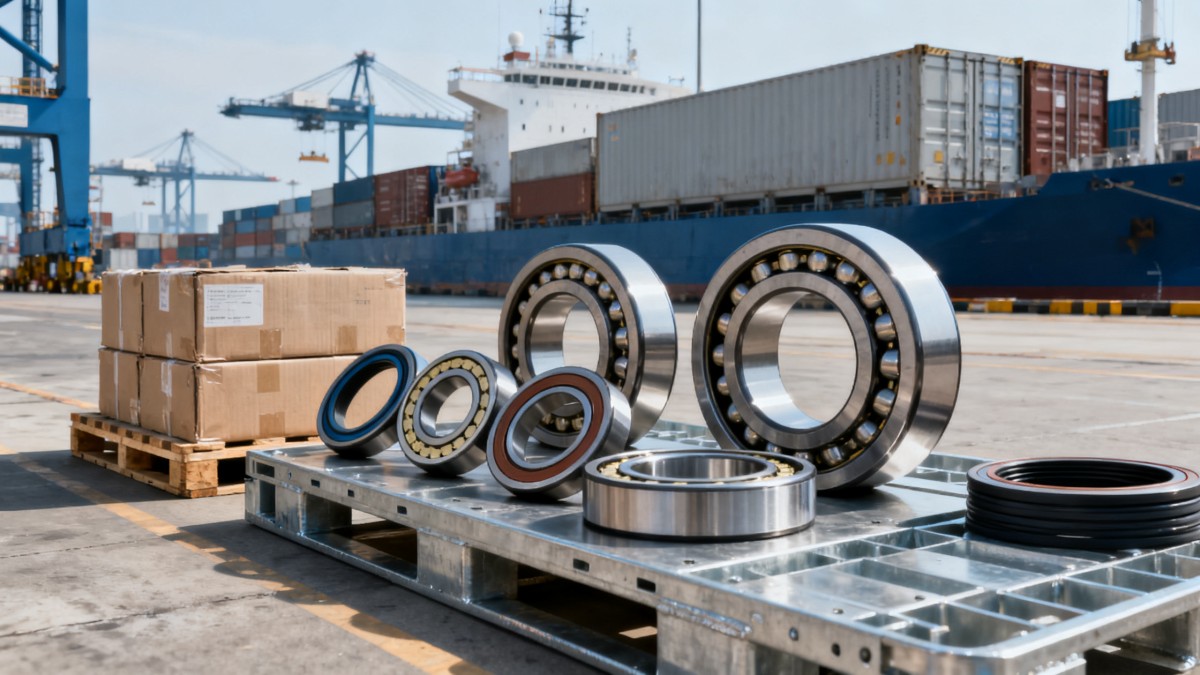
The report also indicates that high-precision mechanical base components such as deep groove ball bearings and four-point contact sealing rings faced more acute space shortages because they are small in size, high in value, and subject to strict temperature-control requirements.
Some shipping companies have already suspended order acceptance, while average shipment delays at major Chinese bearing export hubs in Wafangdian, Luoyang, and Changzhou reached 5 to 8 working days.
Where the pressure is likely to appear across the supply chain
Export execution is becoming more sensitive to booking conditions
From an industry perspective, exporters of bearings and sealing products are likely to feel the impact first because booking access, loading schedules, and delivery commitments are directly exposed to freight disruption. The immediate business pressure is likely to center on whether confirmed orders can still ship within agreed timelines, whether transport terms remain workable, and whether supporting shipping documents can stay aligned with revised departure dates.
Procurement teams may need to reassess delivery-linked terms
For procurement functions buying high-precision mechanical parts, the reported changes matter because a one-week freight jump and 5 to 8 working days of shipment delay can affect replenishment timing, maintenance planning, and supplier coordination. What deserves closer attention is not only price movement, but also whether purchase orders, lead-time clauses, and technical delivery expectations remain realistic under constrained vessel space.
Manufacturing and processing operations face a scheduling risk
Manufacturers and processors that depend on inbound bearings or sealing rings may see the impact through production sequencing and material availability. Analysis shows that when some carriers suspend order acceptance and temperature-controlled cargo space becomes tighter, the operational issue shifts from ordinary cost management to execution reliability, especially for components that are small, high-value, and sensitive in handling.
Logistics and service intermediaries may face tighter compliance checks
Supply-chain service providers, freight coordinators, and after-sales support teams may need to pay closer attention to cargo handling instructions, shipment status records, and traceability of delivery changes. Observably, when transport conditions change abruptly, the need to maintain clear records around booking status, transit timing, and handover documentation becomes more important for later claims handling, quality tracing, and customer communication.
What companies should watch in the coming weeks
Review contract and shipment documents against delayed delivery risk
Analysis shows that companies should pay close attention to delivery schedules, booking confirmations, shipping instructions, and customer-facing shipment commitments. Where outbound timing is shifting, documentation consistency may become as important as freight cost itself.
Track acceptance policies for sensitive or high-spec products
For deep groove ball bearings, four-point contact sealing rings, and similar high-precision parts, companies should closely monitor whether carrier acceptance conditions continue to tighten. It is more appropriate to understand this as a practical execution issue affecting transport eligibility and slot access, rather than as a purely commercial price fluctuation.
Recheck procurement and supplier coordination windows
Buyers and sourcing teams should watch whether existing procurement cycles still match actual shipment performance at the affected export hubs. If lead times were set under normal routing assumptions, current execution conditions may require closer coordination with suppliers on dispatch readiness, shipping sequence, and delivery notices.
Keep technical and quality records ready for downstream communication
Observably, when shipment timing becomes less predictable for high-value and tightly handled mechanical parts, downstream customers may ask for clearer technical files, batch records, inspection materials, or shipment status evidence. The current information does not confirm any new formal compliance rule, but it does suggest a stronger need for documentation discipline in delivery and after-sales communication.
Why this matters beyond a freight spike
Analysis shows that this development is better read as an execution signal in trade and supply-chain practice rather than as a confirmed new regulatory framework. The reported jump in freight, suspension of some bookings, and export delays indicate that market participants may need to operate under stricter practical constraints on shipment planning, delivery promises, and handling arrangements.
What deserves closer attention is whether these transport disruptions begin to influence tender documents, buyer delivery terms, carrier acceptance standards, or customer documentation requests. At this stage, those downstream adjustments still require observation rather than assumption.
How the market is likely to interpret the signal for now
The immediate significance of this event lies in its effect on execution reliability for bearings and sealing components, especially those with high precision, high value, and strict transport requirements. It is more appropriate to understand the current situation as a live operational and trade-risk signal: costs have already moved, shipment timing has already been affected, but the broader rule interpretation by buyers, carriers, and market intermediaries still needs continued monitoring.
Basis of this article and points still requiring verification
This article is generated on the basis of the user-provided news title, event date, and event summary. For developments of this kind, market participants would normally also monitor source types such as official notices, regulator releases, customs or trade authority information, industry association updates, standard-setting documents, and reporting by established industry media.
No specific official source link was provided in the input, so the official-source chain still requires continued verification. Observably, the next points to watch are whether any more detailed execution guidance emerges in transport practice, whether acceptance standards or delivery language change in commercial documents, and how industry participants respond in procurement, shipment scheduling, and customer communication.
Technical Specifications
- How to Select Electronic Hotel Key Card Locks for Guest Rooms and Staff AreasAuthor :Safety Compliance Lead
- How to Select Lab Instruments for Reliable Chemical Analysis WorkflowsAuthor :Precision Metrology Expert
- How to Size a UPS for Server Rooms: Load, Runtime, and Redundancy FactorsAuthor :Grid Infrastructure Analyst
Expert Insights

Chief Security Architect
Dr. Thorne specializes in the intersection of structural engineering and digital resilience. He has advised three G7 governments on industrial infrastructure security.
Related Analysis
- Sep 17, 2026How to Select Electronic Hotel Key Card Locks for Guest Rooms and Staff AreasAuthor :Safety Compliance Lead
- Sep 16, 2026How to Select Lab Instruments for Reliable Chemical Analysis WorkflowsAuthor :Precision Metrology Expert
- Sep 15, 2026How to Size a UPS for Server Rooms: Load, Runtime, and Redundancy FactorsAuthor :Grid Infrastructure Analyst
Core Sector // 01
Security & Safety
- Selecting Low-Friction Pneumatic Seals for High-Cycle, Low-Pressure CylindersAuthor :Heavy Industry Strategist

- Selecting Spherical Roller Bearings for Mining: Load, Contamination, and Service LifeAuthor :Heavy Industry Strategist

- Do Deep Groove Ball Bearings Need Special Seals in Coastal Humidity?Author :Heavy Industry Strategist

- How to Select Anti Vibration Rubber Shock Absorbers for Machinery and EquipmentAuthor :Heavy Industry Strategist

- When to Specify Induction Hardened Slewing Ring Bearings for Heavy-Duty EquipmentAuthor :Heavy Industry Strategist

- How to Evaluate Weather Resistant EPDM Extrusion for Outdoor Sealing ApplicationsAuthor :Heavy Industry Strategist

- Bearing and Seal Lead Times Stretch to 22 WeeksAuthor :Heavy Industry Strategist

- Angular Contact Ball Bearings Explained: Contact Angle, Load Capacity, and Common UsesAuthor :Heavy Industry Strategist