How to Choose a Hydraulic Cylinder Seal Supplier for Heavy-Duty Equipment
Author
Date Published
Reading Time
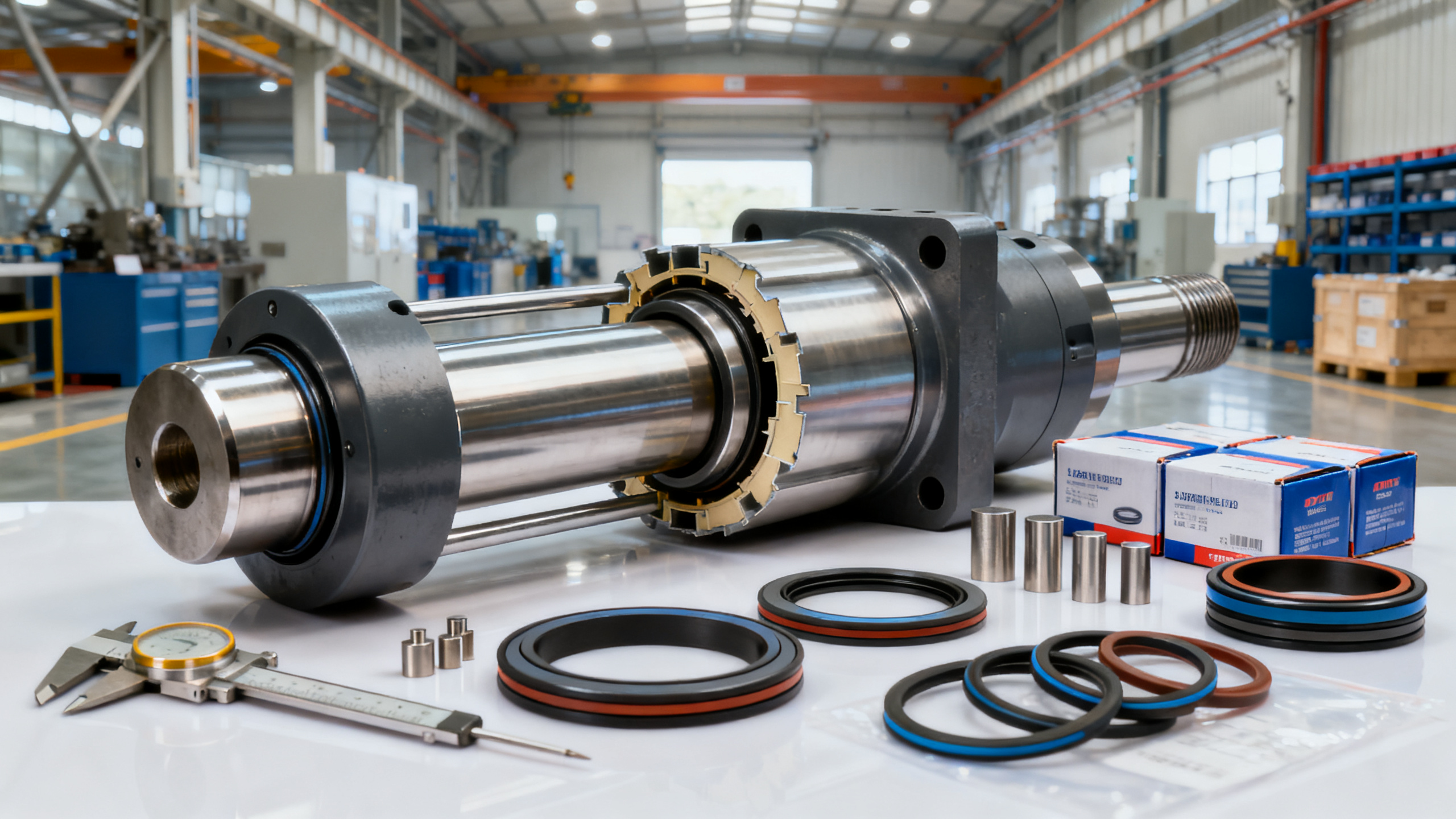
Choosing a hydraulic cylinder seal supplier for heavy-duty equipment is rarely a routine sourcing task. Seal failure can stop production, increase fluid loss, damage cylinder surfaces, and create safety exposure across construction, mining, marine, agricultural, and material handling operations.
That is why supplier selection should go beyond catalog fit and unit price. A capable hydraulic cylinder seal supplier supports uptime, traceability, and predictable lifecycle cost, especially where pressure spikes, abrasive media, temperature swings, and long service intervals are normal.
Within industrial infrastructure, this decision sits inside a larger reliability chain. GIC’s editorial focus on safety, measurement, power, environment, and mechanical systems reflects a simple reality: small component choices often determine whether critical assets remain stable under demanding field conditions.
Why seal suppliers matter more in heavy-duty service
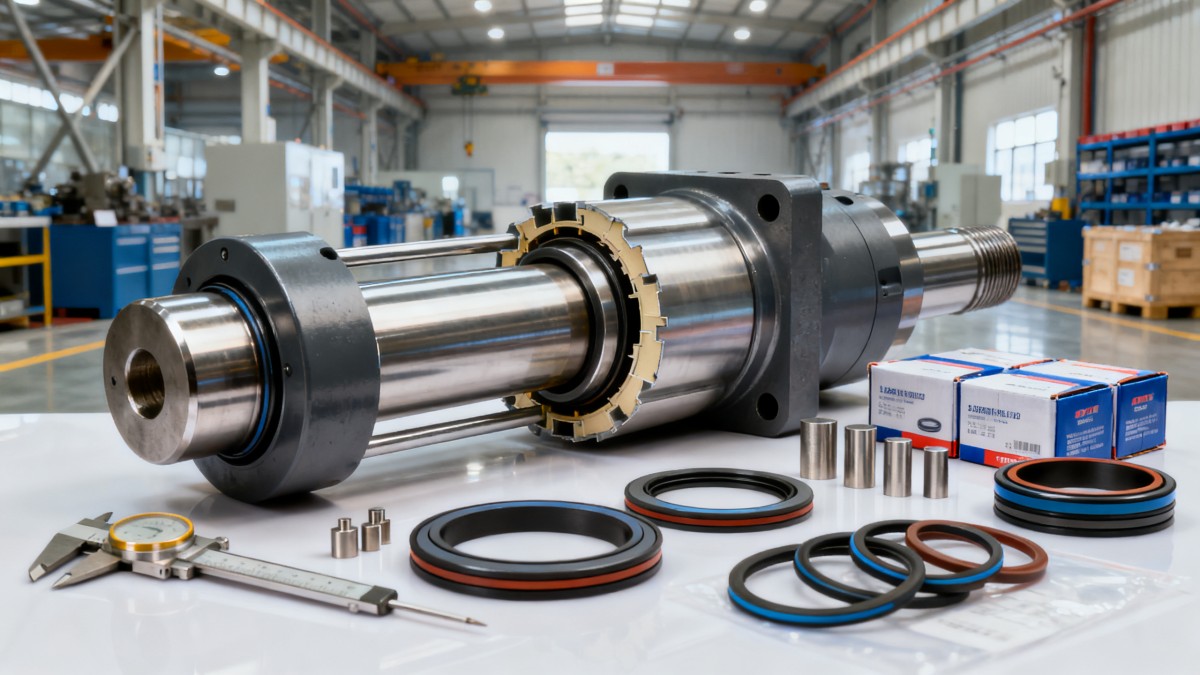
Hydraulic cylinder seals are not generic consumables. They control fluid retention, exclude contaminants, maintain pressure, and protect mating surfaces inside systems that often work under shock loads and continuous vibration.
In light-duty equipment, a marginal seal may cause leakage and maintenance inconvenience. In heavy-duty equipment, the same weakness can trigger unplanned shutdowns, rod scoring, accelerated wear, or failure of nearby components.
A strong hydraulic cylinder seal supplier understands this operating context. The supplier is not only shipping rings and wipers. It is contributing to equipment resilience, environmental control, and maintenance planning.
What a qualified hydraulic cylinder seal supplier should actually provide
The baseline requirement is product fit. The more important requirement is technical alignment between seal design, material chemistry, machining tolerances, fluid compatibility, and actual duty cycle.
A reliable hydraulic cylinder seal supplier should be able to explain performance by application, not by marketing language. That includes dynamic sealing behavior, extrusion resistance, friction control, and contamination defense.
The supplier should also support documentation discipline. In global sourcing, buyers increasingly need proof of dimensional consistency, material origin, test data, and compliance records that stand up to internal audits and customer review.
Core capabilities worth checking early
- Material expertise across PU, NBR, FKM, PTFE, filled PTFE, and engineered elastomers.
- Application guidance for rod seals, piston seals, wear rings, guide rings, buffer seals, and wipers.
- Tolerance control matched to cylinder groove design and surface finish requirements.
- Batch traceability, inspection records, and documented quality procedures.
- Stable production planning, lead-time visibility, and replacement support.
Material selection is often where supplier quality becomes visible
Many sourcing problems begin when seals are treated as interchangeable by size alone. In practice, material choice affects compression set, abrasion resistance, chemical stability, low-temperature flexibility, and sealing force over time.
For example, polyurethane may perform well in abrasive conditions and high-pressure mobile hydraulics. PTFE-based seals can help where low friction and chemical resistance matter. FKM may suit elevated temperatures, but not every fluid mix.
A credible hydraulic cylinder seal supplier should ask about fluid type, pressure range, peak pressure, stroke speed, rod condition, ambient contaminants, and service interval expectations before confirming a recommendation.
If the supplier immediately offers a standard part without those questions, that is a warning sign. Heavy-duty sealing performance depends on context, not only on nominal dimensions.
Useful material questions during evaluation
Manufacturing discipline and precision should not be assumed
Even the right compound can fail if dimensional accuracy is inconsistent. Seal geometry, lip profile, surface quality, and flash control all affect startup friction, leakage behavior, and wear progression.
This is especially relevant for rebuilt cylinders, custom equipment, and export programs. Small groove deviations or rough rod finishes can interact badly with marginal seal manufacturing.
A dependable hydraulic cylinder seal supplier should be comfortable discussing inspection methods, SPC practices, tooling repeatability, and how tolerances are maintained across production batches.
Requesting sample inspection reports is practical, not excessive. It reveals whether the supplier operates with metrology discipline or relies mainly on outbound visual checks.
Compliance, documentation, and risk control in global procurement
For industrial buyers, documentation quality is now part of product quality. Supplier selection should account for ISO alignment, material declarations, test certificates, change control, and nonconformance handling.
This is where a sourcing decision connects with broader infrastructure governance. GIC consistently emphasizes that reliability, safety, and audit readiness are linked, especially in regulated or multinational operating environments.
A hydraulic cylinder seal supplier with mature documentation processes reduces friction during qualification, customer approval, and post-failure investigation. That can be as valuable as a favorable quoted price.
Documentation signals that deserve attention
- Material certificates linked to batch numbers.
- Formal revision control for design or compound changes.
- Defined NCR and corrective action procedures.
- Clear export, packaging, and storage specifications.
- Test standards referenced by name, not vague claims.
Supply reliability affects total cost more than quote comparison suggests
Seal sourcing decisions often become expensive after the purchase order is issued. Late shipments, unstable batches, incomplete kits, or poor packaging can delay maintenance windows and extend equipment downtime.
That is why lead time consistency matters almost as much as technical quality. A hydraulic cylinder seal supplier should be evaluated on forecast responsiveness, stock strategy, emergency order handling, and communication speed.
For heavy-duty fleets and project-based operations, dual-region supply capability may also matter. It can reduce exposure to port delays, regional disruptions, and sudden demand spikes during seasonal maintenance cycles.
Looking only at piece price can hide these risks. The better comparison is total operating impact across service life, failure frequency, and maintenance interruption.
How to compare suppliers in a practical evaluation process
A useful review process combines technical screening with commercial validation. It should narrow suppliers based on application fit, then test whether they can support long-term operational discipline.
In actual sourcing cycles, the strongest hydraulic cylinder seal supplier is often the one that responds with precise questions, relevant case evidence, and controlled documentation rather than the fastest generic quotation.
A workable supplier scorecard
Where the decision should lead next
The best starting point is a clear demand profile. Separate standard maintenance seals from high-risk applications, note fluid types and operating pressures, and identify which cylinders drive the highest downtime cost.
Then compare each hydraulic cylinder seal supplier against those operating conditions, not against a generic checklist alone. Sample validation, document review, and supply performance history should all influence the final decision.
For organizations managing global assets, it is also useful to align seal sourcing with broader reliability and compliance priorities. That is where a data-driven approach, of the kind championed by GIC, becomes practical rather than theoretical.
A disciplined evaluation now can prevent repeated troubleshooting later. The next step is to build a short supplier matrix, request application-specific evidence, and test which partner can support performance under real field conditions.
Technical Specifications
- Air Handling Unit Supplier Checklist: Performance Data, Lead Times, and SupportAuthor :Environmental Engineering Director
- Buying Fiberglass Water Tanks Wholesale: Compare Quotes and Delivery CostsAuthor :Environmental Engineering Director
- Choosing an XLPE Power Cable Supplier: Test Reports, Traceability, and Lead TimesAuthor :Grid Infrastructure Analyst
Expert Insights

Chief Security Architect
Dr. Thorne specializes in the intersection of structural engineering and digital resilience. He has advised three G7 governments on industrial infrastructure security.
Related Analysis
- Oct 19, 2026Air Handling Unit Supplier Checklist: Performance Data, Lead Times, and SupportAuthor :Environmental Engineering Director
- Oct 18, 2026Buying Fiberglass Water Tanks Wholesale: Compare Quotes and Delivery CostsAuthor :Environmental Engineering Director
- Oct 17, 2026Choosing an XLPE Power Cable Supplier: Test Reports, Traceability, and Lead TimesAuthor :Grid Infrastructure Analyst
Core Sector // 01
Security & Safety
- How to Select Flange Gaskets for Pressure, Temperature, and Media CompatibilityAuthor :Heavy Industry Strategist

- Selecting High-Temperature Gaskets for Steam, Flanges, and Thermal CyclingAuthor :Heavy Industry Strategist

- Selecting Low-Friction Pneumatic Seals for High-Cycle, Low-Pressure CylindersAuthor :Heavy Industry Strategist

- Selecting Spherical Roller Bearings for Mining: Load, Contamination, and Service LifeAuthor :Heavy Industry Strategist

- Do Deep Groove Ball Bearings Need Special Seals in Coastal Humidity?Author :Heavy Industry Strategist

- How to Select Anti Vibration Rubber Shock Absorbers for Machinery and EquipmentAuthor :Heavy Industry Strategist

- When to Specify Induction Hardened Slewing Ring Bearings for Heavy-Duty EquipmentAuthor :Heavy Industry Strategist

- How to Evaluate Weather Resistant EPDM Extrusion for Outdoor Sealing ApplicationsAuthor :Heavy Industry Strategist