Elastomer Bellows Mechanical Seals: Common Failure Causes and How to Prevent Leakage
Author
Date Published
Reading Time
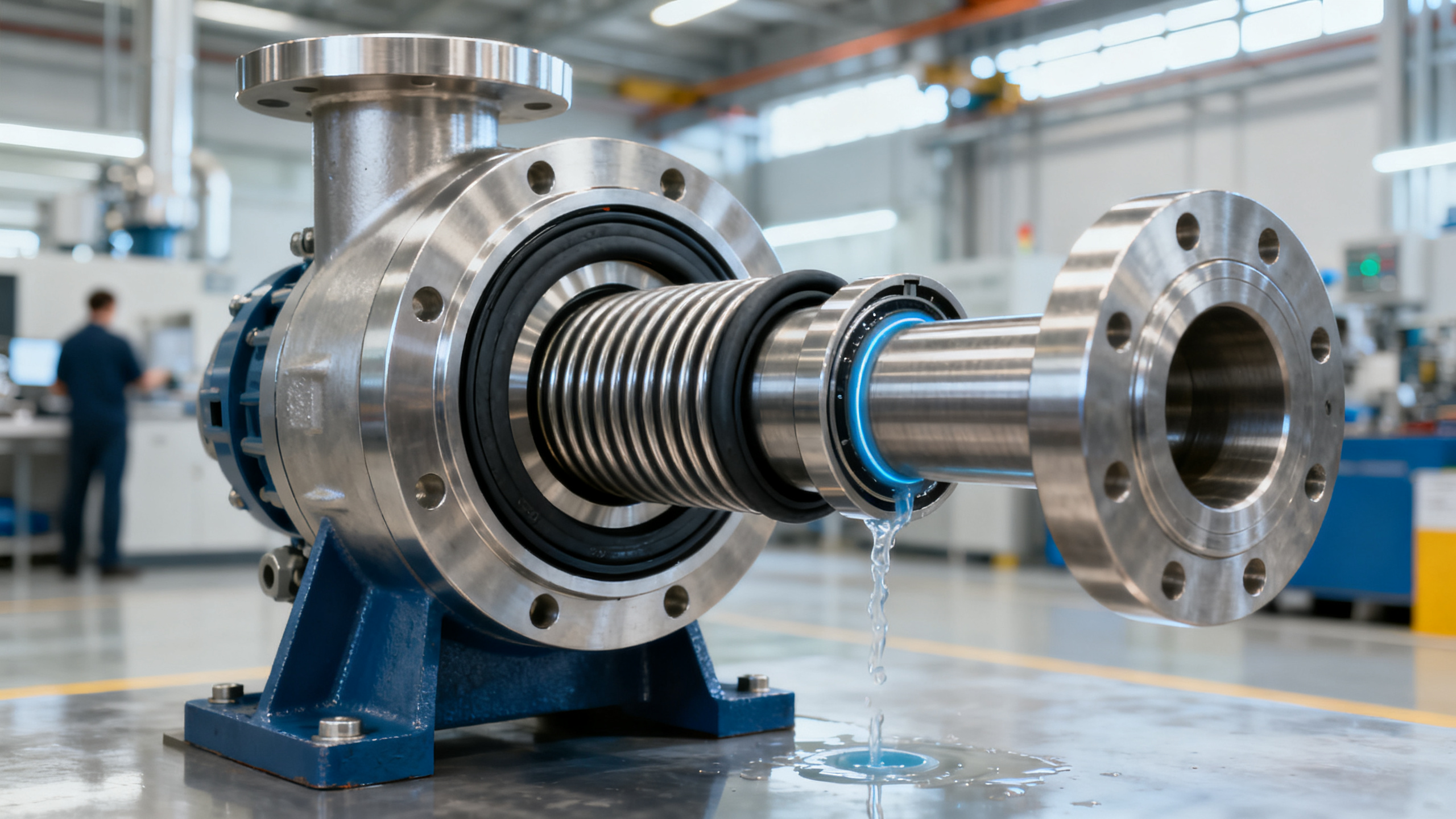
Elastomer Bellows Mechanical Seals: Common Failure Causes and How to Prevent Leakage
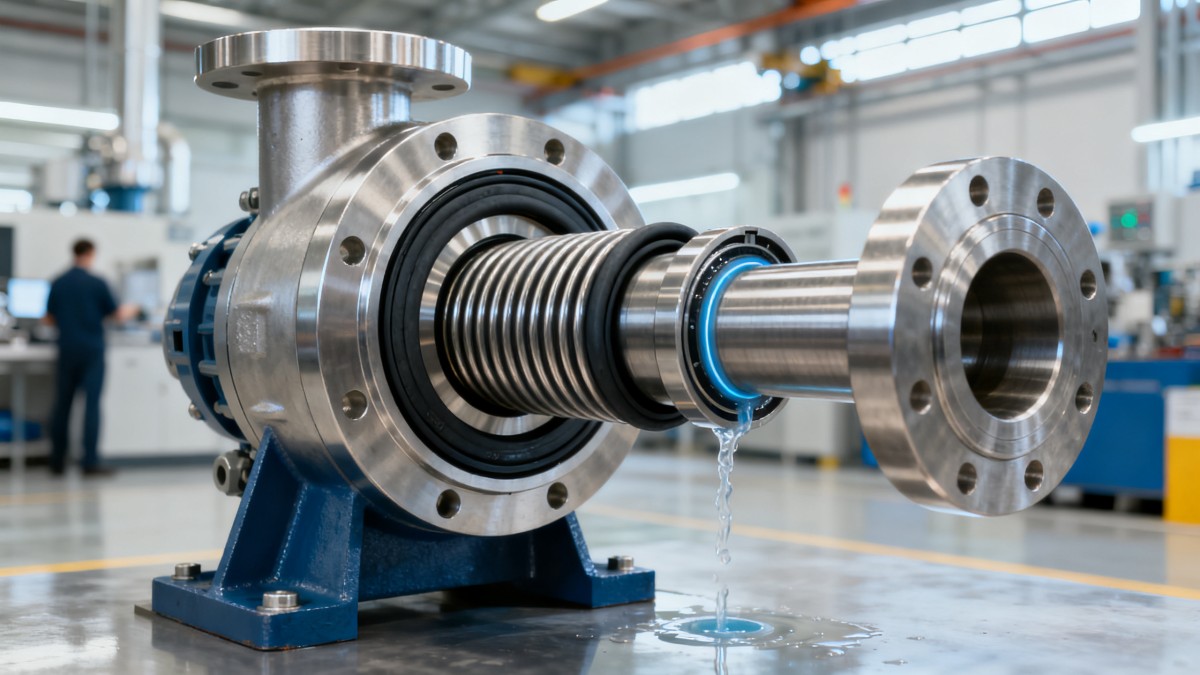
Elastomer bellows mechanical seals are valued for compact construction, easy installation, and dependable shaft sealing in pumps, mixers, and auxiliary rotating equipment.
Even so, leakage still appears in daily service. In most cases, the seal itself is not the only problem.
More often, leakage starts with poor fit, dry running, chemical attack, shaft movement, or maintenance shortcuts taken during urgent shutdown recovery.
That matters because elastomer bellows mechanical seals usually fail progressively. A small drip today can become a full production interruption tomorrow.
A practical troubleshooting method helps reduce repeat repairs. It also improves service life, spare planning, and confidence during restart.
The sections below break down the most common leakage causes, what they look like in the field, and how to prevent them.
Why Elastomer Bellows Mechanical Seals Leak So Often
Elastomer bellows mechanical seals rely on several conditions staying stable at the same time.
The seal faces must remain flat and lubricated. The bellows must stay flexible. The shaft must run true. The liquid must also suit the seal materials.
When one condition drifts, leakage begins at the weakest point. That point may be the faces, secondary seal, shaft contact area, or hardware.
In actual service, many teams replace a leaking seal without checking the surrounding machine condition. The same failure then returns quickly.
A better approach is to treat leakage as a system symptom. Seal design, fluid condition, alignment, and operating practice must be reviewed together.
1. Incorrect Installation and Handling Damage
Installation error remains one of the top reasons elastomer bellows mechanical seals start leaking soon after commissioning.
Bellows can twist during fitting. Faces can chip from accidental contact. Springs may bind if parts are forced into position.
A damaged face often shows early drips, visible scoring, or leakage that increases as pressure rises.
Typical installation mistakes
- Installing over a shaft burr or worn sleeve edge
- Using grease or incompatible lubricant on elastomer parts
- Skipping face cleaning before assembly
- Setting the wrong working length or compression
- Touching lapped faces with dirty gloves
How to prevent it
Inspect the shaft, sleeve, and gland before opening the seal package. Remove burrs, confirm dimensions, and protect elastomers during sliding installation.
Use the manufacturer setting dimensions exactly. If a shaft sleeve is grooved, replacing only the seal usually will not stop leakage.
2. Wrong Elastomer Material for the Process Fluid
Material mismatch is another frequent cause of leakage in elastomer bellows mechanical seals, especially in mixed chemical or temperature-cycling service.
An elastomer that swells, hardens, cracks, or loses elasticity cannot maintain proper contact and sealing force.
This issue often appears after a fluid change, cleaning cycle adjustment, or supplier substitution that seemed minor at the time.
Common field signals
- Bellows feel sticky, brittle, or unusually soft
- Seal leakage begins after chemical washdown
- Elastomer shows blisters, cracking, or permanent set
- Failure interval becomes shorter after process change
How to prevent it
Verify full media compatibility, including concentration, flush liquid, cleaning agents, startup temperature, and upset conditions.
Do not select elastomer bellows mechanical seals by fluid name alone. Actual temperature and chemical exposure usually decide performance.
If the service changed recently, compare failed parts with the original material specification before ordering replacements.
3. Dry Running, Poor Lubrication, and Heat Build-Up
Mechanical seal faces need a thin fluid film. Without it, friction rises fast and heat damages both faces and elastomer components.
Dry running may happen during startup, after suction loss, during venting mistakes, or when flush lines are blocked.
For elastomer bellows mechanical seals, heat can also reduce bellows flexibility, which weakens tracking and face loading.
What failed parts usually show
- Blue or brown heat marks on seal faces
- Carbon face cracking or blistering
- Melted or hardened elastomer bellows
- Sudden leakage right after startup
How to prevent it
Prime the equipment fully before rotation. Confirm venting. Verify flush or quench flow. Check suction conditions before restarting after maintenance.
If leakage starts during brief no-flow events, the operating procedure needs correction as much as the seal hardware does.
4. Shaft Runout, Misalignment, and Excess Vibration
Elastomer bellows mechanical seals can tolerate some movement, but they are not a cure for poor machine condition.
Excess runout or vibration prevents stable face contact. The seal then opens microscopically and leaks under dynamic operation.
This is common on worn bearings, misaligned couplings, bent shafts, and pumps operating far from best efficiency point.
Signs that point beyond the seal
- Leakage changes with load or speed
- Repeated seal failures on the same asset
- Uneven face wear patterns
- Bearing noise or elevated housing temperature
How to prevent it
Measure shaft runout and check bearing condition during seal replacement. Review alignment records instead of assuming the previous setting remains correct.
When elastomer bellows mechanical seals fail repeatedly, vibration analysis often reveals the real source faster than another seal change.
5. Contamination, Solids, and Product Build-Up
Dirty service shortens seal life quickly. Abrasive particles scratch faces, while sticky product can block bellows movement.
Once the bellows cannot move freely, the seal loses its ability to follow axial movement and maintain proper face pressure.
That is why leakage may start slowly in slurry, crystallizing, or scaling duties and then worsen after shutdown.
How to reduce contamination-related leakage
- Review whether the seal type matches solids content and particle behavior.
- Inspect flush plans, strainers, and piping restrictions.
- Clean surrounding hardware thoroughly during disassembly.
- Check for product hardening during standby periods.
- Consider seal support improvements if fouling is routine.
In these services, elastomer bellows mechanical seals may still perform well, but only when contamination control is treated as part of the sealing system.
A Practical Inspection Checklist Before Replacing the Seal
Before ordering another replacement, pause and inspect the failure pattern. That short step usually saves more time than a rushed repeat repair.
This checklist makes troubleshooting elastomer bellows mechanical seals more objective. It also improves handover between maintenance, operations, and procurement teams.
How to Extend Service Life and Prevent Repeat Leakage
Longer seal life usually comes from discipline, not luck. Small routine controls make a large difference over time.
- Standardize installation steps and setting dimensions
- Record failed seal condition with photos and notes
- Match elastomer grade to real fluid and temperature data
- Verify shaft condition every time the seal is removed
- Protect seals from dry running during startup and standby
- Review vibration and alignment trends on repeat failures
For high-consequence assets, store failure history by equipment tag. Patterns become easier to spot, and seal upgrades become easier to justify.
The main point is simple. Elastomer bellows mechanical seals rarely fail without warning signs. Most leakage can be reduced through earlier inspection and better fit-to-service decisions.
When the next leak appears, start with evidence, not assumptions. That approach leads to faster root cause identification and a more reliable return to service.
Technical Specifications
- How to Select Electronic Hotel Key Card Locks for Guest Rooms and Staff AreasAuthor :Safety Compliance Lead
- How to Select Lab Instruments for Reliable Chemical Analysis WorkflowsAuthor :Precision Metrology Expert
- How to Size a UPS for Server Rooms: Load, Runtime, and Redundancy FactorsAuthor :Grid Infrastructure Analyst
Expert Insights

Chief Security Architect
Dr. Thorne specializes in the intersection of structural engineering and digital resilience. He has advised three G7 governments on industrial infrastructure security.
Related Analysis
- Sep 17, 2026How to Select Electronic Hotel Key Card Locks for Guest Rooms and Staff AreasAuthor :Safety Compliance Lead
- Sep 16, 2026How to Select Lab Instruments for Reliable Chemical Analysis WorkflowsAuthor :Precision Metrology Expert
- Sep 15, 2026How to Size a UPS for Server Rooms: Load, Runtime, and Redundancy FactorsAuthor :Grid Infrastructure Analyst
Core Sector // 01
Security & Safety
- Selecting Low-Friction Pneumatic Seals for High-Cycle, Low-Pressure CylindersAuthor :Heavy Industry Strategist

- Selecting Spherical Roller Bearings for Mining: Load, Contamination, and Service LifeAuthor :Heavy Industry Strategist

- Do Deep Groove Ball Bearings Need Special Seals in Coastal Humidity?Author :Heavy Industry Strategist

- How to Select Anti Vibration Rubber Shock Absorbers for Machinery and EquipmentAuthor :Heavy Industry Strategist

- When to Specify Induction Hardened Slewing Ring Bearings for Heavy-Duty EquipmentAuthor :Heavy Industry Strategist

- How to Evaluate Weather Resistant EPDM Extrusion for Outdoor Sealing ApplicationsAuthor :Heavy Industry Strategist

- Bearing and Seal Lead Times Stretch to 22 WeeksAuthor :Heavy Industry Strategist

- Angular Contact Ball Bearings Explained: Contact Angle, Load Capacity, and Common UsesAuthor :Heavy Industry Strategist