Bearing and Seal Freight Costs Jump 47% in a Week
Author
Date Published
Reading Time
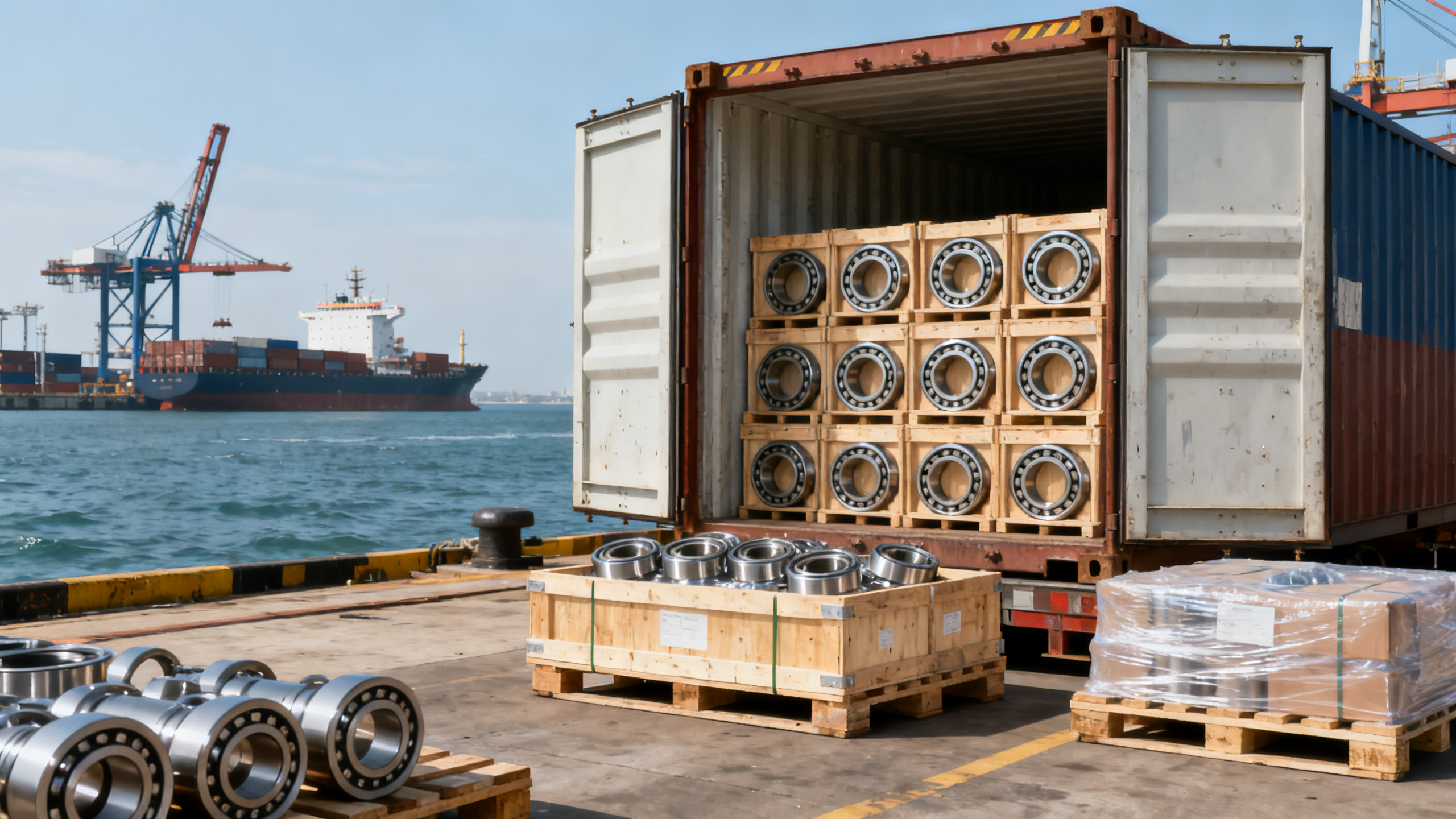
From June 7 to June 13, 2026, ocean shipping costs tied to industrial mechanical parts, including bearings and seals, rose sharply across major global routes. For companies involved in sourcing, manufacturing, distribution, and delivery, this is notable not only because of the speed of the increase, but also because it reflects how low traffic through the Strait of Hormuz is feeding directly into freight pricing and shipment risk for industrial cargo.
What the latest shipping data confirms
According to the latest Drewry shipping index, container freight rates for “industrial mechanical parts,” including bearings and seals, increased 47% week on week during June 7–13. The stated driver was the Middle East situation, which has kept actual traffic through the Strait of Hormuz 12% below its usual average level. On the Persian Gulf-to-Europe route, spot rates reached $4,280 per FEU, and with an added war-risk surcharge of $1,800 per FEU, the total cost has moved close to peak levels last seen in 2022.
Where the pressure is likely to be felt first
Procurement and import planning face immediate cost volatility
From an industry perspective, buyers of bearings and seals may feel the impact first in landed-cost calculations and shipment timing decisions. When freight and war-risk charges rise together, procurement teams need to watch whether existing quotations, purchase timing, and route assumptions still hold.
Manufacturers may see pressure in delivery coordination
For processing and manufacturing businesses that rely on these components, the issue is not only higher transport cost but also the potential need to adjust delivery scheduling. What deserves closer attention is whether logistics costs begin to affect order batching, replenishment rhythm, or customer delivery commitments.
Distributors and channel operators need to monitor pass-through pressure
Distributors and circulation businesses may be affected through inventory turnover and margin management. Analysis shows that a rapid freight increase can force closer review of how transport surcharges are reflected in pricing, especially for shipments linked to Gulf-to-Europe flows.
Logistics service providers must track route and surcharge changes
For freight forwarders and other supply-chain service providers, the key issue is operational visibility. The combination of elevated spot rates and war-risk surcharges means customers are likely to ask for more frequent updates on routing, transit expectations, and cost breakdowns.
What companies should watch now
Separate freight movement from broader commercial assumptions
Analysis shows that the current signal is highly specific: a one-week jump in shipping costs for a defined cargo category, linked to reduced traffic through a key maritime corridor. Companies should avoid treating it as a blanket market conclusion and instead review the exposure of specific lanes, shipments, and customer contracts.
Recheck cost structures on Gulf-linked shipments
Businesses with cargo moving on Persian Gulf-to-Europe routes should focus on how the spot rate and the war-risk surcharge affect total shipment cost. This matters for quotation validity, internal budgeting, and discussions with customers or suppliers about who bears incremental logistics charges.
Review documents, lead times, and execution windows
For teams managing active orders, it is more appropriate to understand this as an execution issue as much as a pricing issue. Shipment documentation, booking windows, lead-time buffers, and delivery promises may all need closer checking while traffic through the Strait of Hormuz remains below its normal level.
Keep communication lines short across suppliers and customers
Observably, when freight costs move this quickly, communication becomes a practical risk-control tool. Companies should closely monitor supplier updates, carrier notices, and customer delivery expectations so that any change in transport charges or shipment timing can be addressed early.
How this development is best understood
Editor’s observation: this update is best read as a sharp short-term market signal rather than a fully settled long-term trend. The confirmed facts show a fast freight-rate increase, reduced traffic through the Strait of Hormuz, and added war-risk cost pressure on Gulf-to-Europe shipments. What deserves closer attention is whether these conditions persist beyond a single week and whether elevated shipping premiums begin to influence routine commercial decisions across the bearing and seal trade.
Why the market should keep tracking it
At this stage, the industry significance lies in the connection between route disruption, insurance-related charges, and component logistics costs. That does not by itself confirm a prolonged shift, but it does indicate that maritime access constraints in this corridor can quickly affect industrial component trade. It is more appropriate to understand the event as a development that requires continued monitoring, especially for businesses with direct exposure to affected routes.
Basis of this article and follow-up focus
This article is based on the user-provided news title, event timing, and event summary. Relevant source types for this kind of development typically include official notices, company disclosures, industry association updates, authoritative media coverage, and shipping market index publications. A specific official source link was not provided in the input, so further verification remains necessary. Follow-up attention should remain on subsequent shipping index changes, any update related to actual traffic conditions in the Strait of Hormuz, and any further change in route-specific freight or war-risk charges.
Technical Specifications
- How to Select Electronic Hotel Key Card Locks for Guest Rooms and Staff AreasAuthor :Safety Compliance Lead
- How to Select Lab Instruments for Reliable Chemical Analysis WorkflowsAuthor :Precision Metrology Expert
- How to Size a UPS for Server Rooms: Load, Runtime, and Redundancy FactorsAuthor :Grid Infrastructure Analyst
Expert Insights

Chief Security Architect
Dr. Thorne specializes in the intersection of structural engineering and digital resilience. He has advised three G7 governments on industrial infrastructure security.
Related Analysis
- Sep 17, 2026How to Select Electronic Hotel Key Card Locks for Guest Rooms and Staff AreasAuthor :Safety Compliance Lead
- Sep 16, 2026How to Select Lab Instruments for Reliable Chemical Analysis WorkflowsAuthor :Precision Metrology Expert
- Sep 15, 2026How to Size a UPS for Server Rooms: Load, Runtime, and Redundancy FactorsAuthor :Grid Infrastructure Analyst
Core Sector // 01
Security & Safety
- Selecting Low-Friction Pneumatic Seals for High-Cycle, Low-Pressure CylindersAuthor :Heavy Industry Strategist

- Selecting Spherical Roller Bearings for Mining: Load, Contamination, and Service LifeAuthor :Heavy Industry Strategist

- Do Deep Groove Ball Bearings Need Special Seals in Coastal Humidity?Author :Heavy Industry Strategist

- How to Select Anti Vibration Rubber Shock Absorbers for Machinery and EquipmentAuthor :Heavy Industry Strategist

- When to Specify Induction Hardened Slewing Ring Bearings for Heavy-Duty EquipmentAuthor :Heavy Industry Strategist

- How to Evaluate Weather Resistant EPDM Extrusion for Outdoor Sealing ApplicationsAuthor :Heavy Industry Strategist

- Bearing and Seal Lead Times Stretch to 22 WeeksAuthor :Heavy Industry Strategist

- Angular Contact Ball Bearings Explained: Contact Angle, Load Capacity, and Common UsesAuthor :Heavy Industry Strategist