How to Evaluate Weather Resistant EPDM Extrusion for Outdoor Sealing Applications
Author
Date Published
Reading Time
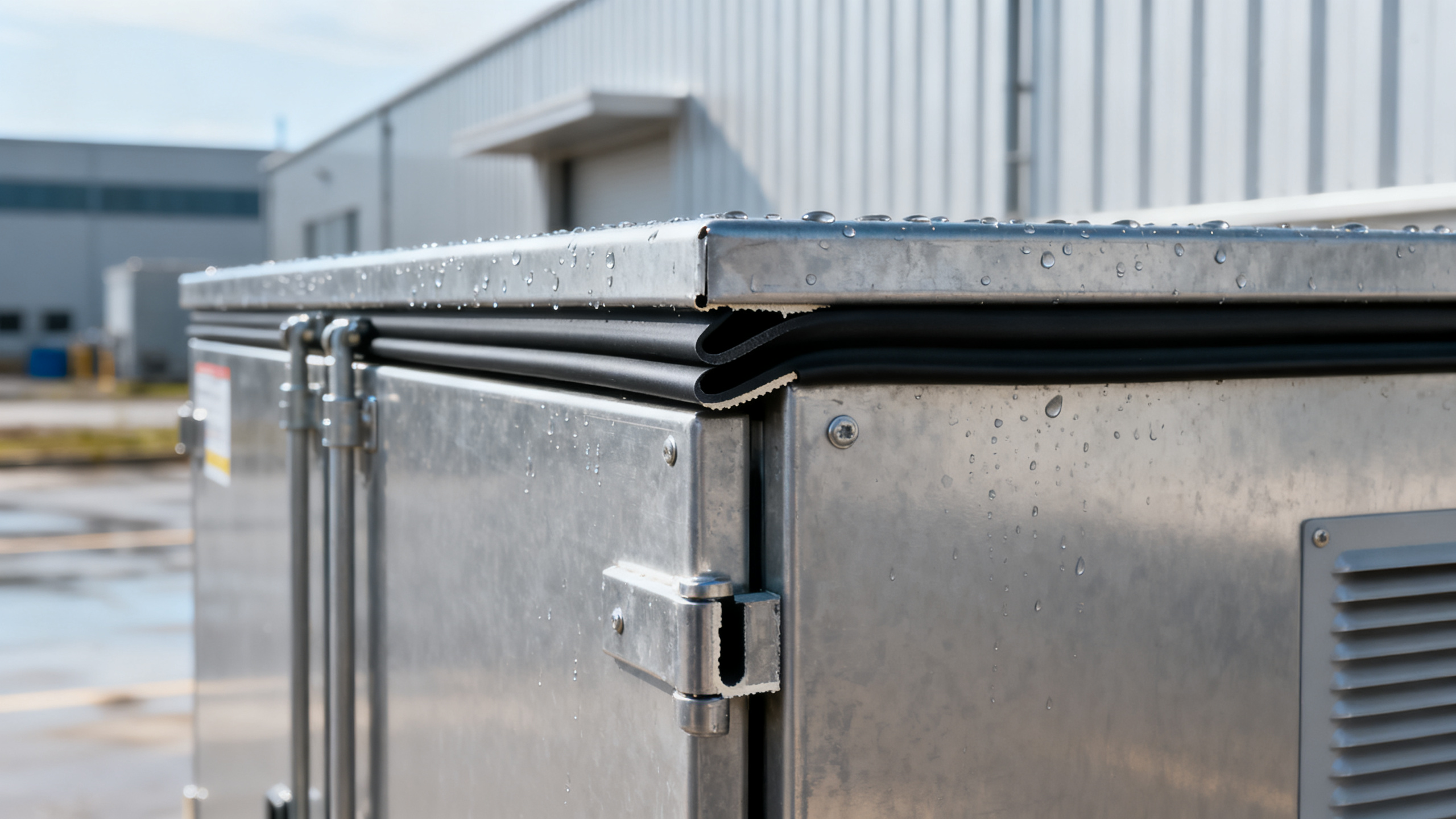
Outdoor sealing failures rarely begin as dramatic breakdowns. They start with small changes in elasticity, surface cracking, water ingress, or dimensional drift. That is why evaluating weather resistant EPDM extrusion requires more than reading a datasheet. In exposed joints, enclosure doors, glazing systems, utility housings, and equipment interfaces, long-term sealing performance depends on how the profile behaves under ultraviolet light, ozone, heat cycling, cold starts, and sustained compression. For industrial projects where reliability and compliance matter as much as price, the right assessment method can prevent expensive maintenance and avoid hidden lifecycle risk.
Why EPDM remains central in outdoor sealing
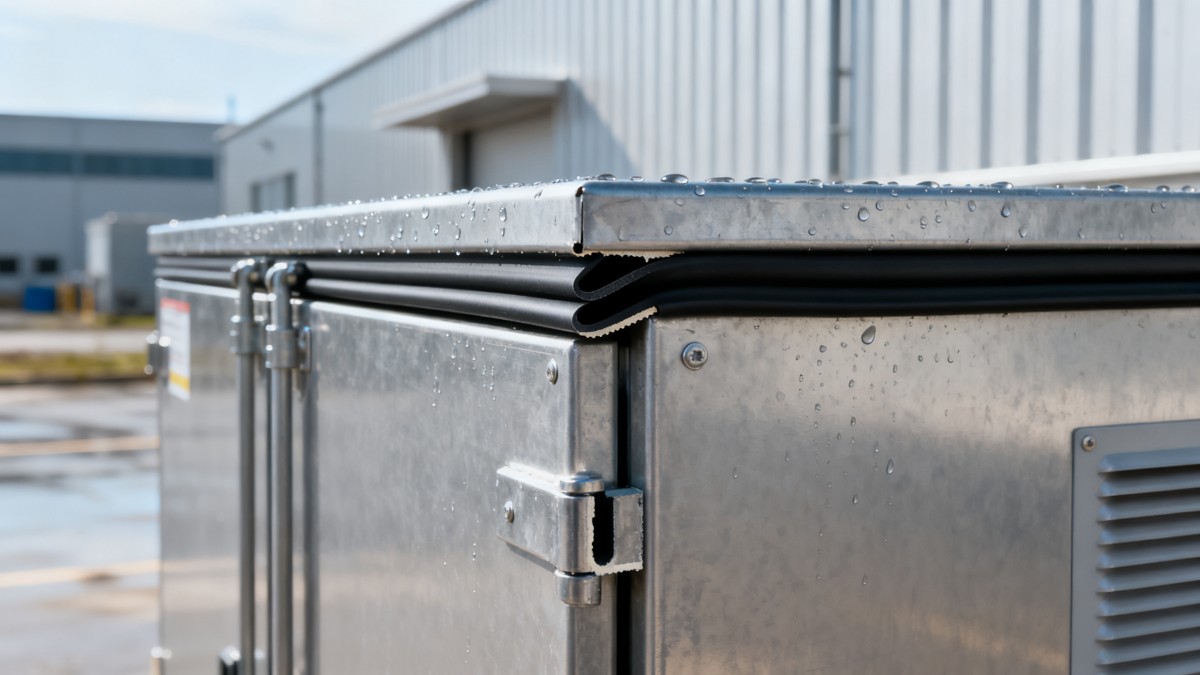
A weather resistant EPDM extrusion is a shaped rubber profile made from ethylene propylene diene monomer. It is widely used where seals must stay flexible outdoors for years.
EPDM has a strong reputation because it resists ozone, weathering, and many environmental stresses better than several general-purpose elastomers. That makes it common in infrastructure and industrial assemblies.
In practice, though, not every EPDM compound performs the same way. Polymer quality, filler system, curing method, and profile design all influence real service life.
This matters across the sectors GIC tracks closely, especially mechanical components, environmental protection systems, electrical enclosures, and safety-critical interfaces exposed to harsh climates.
What technical evaluation should actually confirm
A proper review of weather resistant EPDM extrusion should answer one practical question: will the seal maintain function throughout the required service interval under actual field conditions?
That means looking beyond headline hardness and tensile strength. Outdoor sealing depends on retention of properties, not just initial values measured after production.
Several factors deserve close attention:
- Resistance to UV and ozone aging
- Compression set after heat exposure
- Elastic recovery after repeated deflection
- Dimensional consistency across production lots
- Tolerance control on critical sealing surfaces
- Compatibility with substrates, coatings, and nearby chemicals
- Compliance with relevant project and regulatory standards
When one of these items is weak, the seal may still pass incoming inspection but underperform in service. That gap is where many outdoor sealing problems begin.
Material behavior under real weather exposure
The term weather resistant EPDM extrusion sounds straightforward, but weather exposure is not a single condition. It is a combination of radiation, oxygen attack, moisture, pollutants, and temperature variation.
UV and ozone stability
EPDM is naturally strong against ozone cracking, which is one reason it is preferred for external gaskets and edge seals. Still, compound design determines how well that advantage is preserved.
Look for accelerated aging data tied to recognized methods. Results should show property retention, not only pass or fail language.
Temperature swings and compression set
Outdoor equipment often sees hot afternoons, cold nights, and repeated seasonal cycling. A seal that hardens or takes a permanent set can lose contact pressure and let water or dust in.
Compression set data after heat aging is one of the clearest indicators of long-term sealing reliability. Lower permanent deformation usually supports better recovery in service.
Water, humidity, and surface condition
Moisture itself may not severely attack EPDM, but trapped water can expose weaknesses in profile geometry, bonding areas, or installed compression levels. Surface chalking or microcracks also become more serious over time.
The profile design matters as much as the compound
A strong compound cannot compensate for a poor cross-section. Many sealing issues come from geometry that does not match joint movement, closure force, or installation tolerances.
For that reason, weather resistant EPDM extrusion should be reviewed as a system element, not simply as raw material converted into shape.
Cross-section drawings should be matched against actual installation loads. Lab performance means little if the seal is under-compressed or over-compressed in service.
Where evaluation standards and documentation become decisive
Industrial procurement has shifted toward evidence-backed qualification. In GIC-aligned sourcing environments, test reports, lot traceability, and standard references are part of the technical decision, not paperwork after the fact.
For weather resistant EPDM extrusion, useful documentation often includes ASTM or ISO test methods for hardness, tensile properties, elongation, compression set, accelerated aging, and ozone resistance.
Where the seal is used near electrical systems, public infrastructure, or controlled environmental enclosures, supporting records may also need to address flame behavior, toxicity limits, or application-specific approvals.
It is also worth checking whether test conditions mirror the intended application. A report at moderate laboratory conditions may not be enough for desert exposure, coastal corrosion zones, or freeze-thaw service.
Typical outdoor applications and failure patterns
Weather resistant EPDM extrusion is used across more settings than many buyers initially assume. The evaluation criteria shift slightly depending on the sealing objective.
- Electrical cabinets and control boxes: water ingress, dust exclusion, door closure consistency
- HVAC and rooftop systems: UV exposure, vibration, drainage management
- Transportation and utility housings: repeated motion, splash exposure, maintenance cycles
- Building envelopes and glazing interfaces: thermal expansion, joint movement, visible finish quality
- Outdoor machinery panels: oil mist, washdown routines, mechanical wear at contact edges
Failure patterns usually reveal whether the original evaluation was too narrow. Cracks suggest aging or formulation issues. Flattening suggests poor compression-set performance. Local leaks often point to geometry, splice quality, or assembly misalignment.
A practical evaluation sequence
A disciplined review process helps compare suppliers on more than price. It also creates a repeatable standard for future projects.
Start with the service profile
Map the real environment first: temperature range, sunlight exposure, humidity, pollution, compression rate, movement, expected maintenance interval, and contact with fluids or coatings.
Review compound data with retention in mind
Ask how the weather resistant EPDM extrusion performs after aging, not only when new. Retained elasticity and compression recovery usually deserve more weight than peak tensile values.
Inspect samples physically
Check surface uniformity, odor, flash, cut quality, corner joints, and dimensional repeatability. Variation at this stage often predicts installation inconsistency later.
Validate fit in the real assembly
Short pilot testing is valuable. Install the profile in the target joint, measure closure force, inspect contact lines, and run water or dust ingress checks where relevant.
Confirm manufacturing discipline
Stable production controls matter for any weather resistant EPDM extrusion used in repeat orders. Batch traceability, tooling maintenance, and inspection routines should be visible in supplier records.
What separates a sound choice from a risky one
A sound choice usually combines three things: a compound suited to weather exposure, a profile geometry matched to the joint, and documentation that proves consistency over time.
A risky option often looks acceptable on a basic specification sheet but lacks aging data, lot discipline, or application-specific validation. That gap becomes expensive after installation.
For organizations managing critical infrastructure, the best next step is to build a comparison matrix around service conditions, retained properties, tolerance control, and compliance evidence. That approach makes weather resistant EPDM extrusion easier to judge objectively and supports decisions that hold up in the field as well as on paper.
Technical Specifications
- How to Select Electronic Hotel Key Card Locks for Guest Rooms and Staff AreasAuthor :Safety Compliance Lead
- How to Select Lab Instruments for Reliable Chemical Analysis WorkflowsAuthor :Precision Metrology Expert
- How to Size a UPS for Server Rooms: Load, Runtime, and Redundancy FactorsAuthor :Grid Infrastructure Analyst
Expert Insights

Chief Security Architect
Dr. Thorne specializes in the intersection of structural engineering and digital resilience. He has advised three G7 governments on industrial infrastructure security.
Related Analysis
- Sep 17, 2026How to Select Electronic Hotel Key Card Locks for Guest Rooms and Staff AreasAuthor :Safety Compliance Lead
- Sep 16, 2026How to Select Lab Instruments for Reliable Chemical Analysis WorkflowsAuthor :Precision Metrology Expert
- Sep 15, 2026How to Size a UPS for Server Rooms: Load, Runtime, and Redundancy FactorsAuthor :Grid Infrastructure Analyst
Core Sector // 01
Security & Safety
- Selecting Low-Friction Pneumatic Seals for High-Cycle, Low-Pressure CylindersAuthor :Heavy Industry Strategist

- Selecting Spherical Roller Bearings for Mining: Load, Contamination, and Service LifeAuthor :Heavy Industry Strategist

- Do Deep Groove Ball Bearings Need Special Seals in Coastal Humidity?Author :Heavy Industry Strategist

- How to Select Anti Vibration Rubber Shock Absorbers for Machinery and EquipmentAuthor :Heavy Industry Strategist

- When to Specify Induction Hardened Slewing Ring Bearings for Heavy-Duty EquipmentAuthor :Heavy Industry Strategist

- How to Evaluate Weather Resistant EPDM Extrusion for Outdoor Sealing ApplicationsAuthor :Heavy Industry Strategist

- Bearing and Seal Lead Times Stretch to 22 WeeksAuthor :Heavy Industry Strategist

- Angular Contact Ball Bearings Explained: Contact Angle, Load Capacity, and Common UsesAuthor :Heavy Industry Strategist