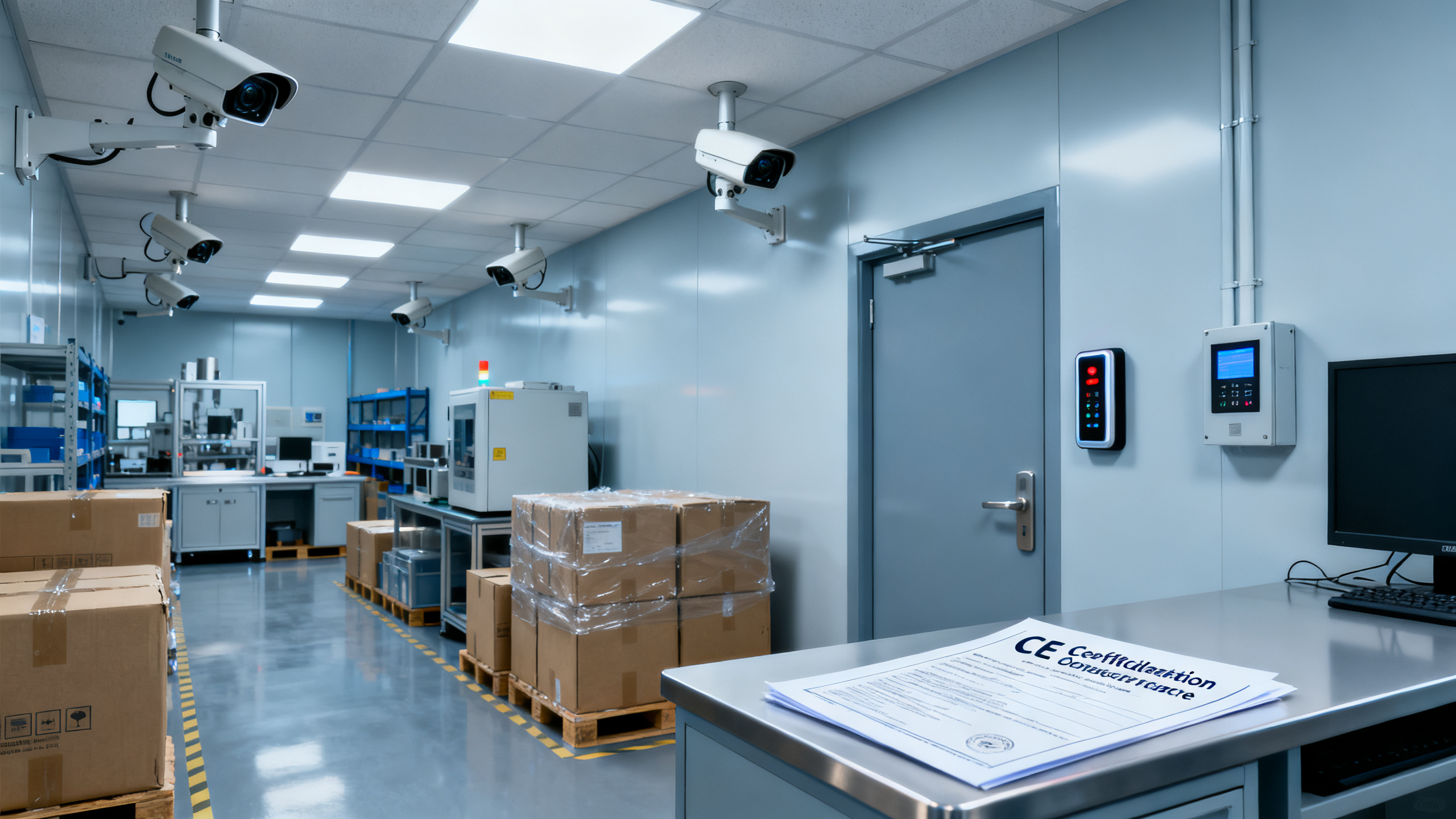
What PTZ dome camera specs — like 30x optical zoom, IP66 rating, and auto-tracking latency — matter most for perimeter surveillance in industrial yards?
Author
Date Published
Reading Time
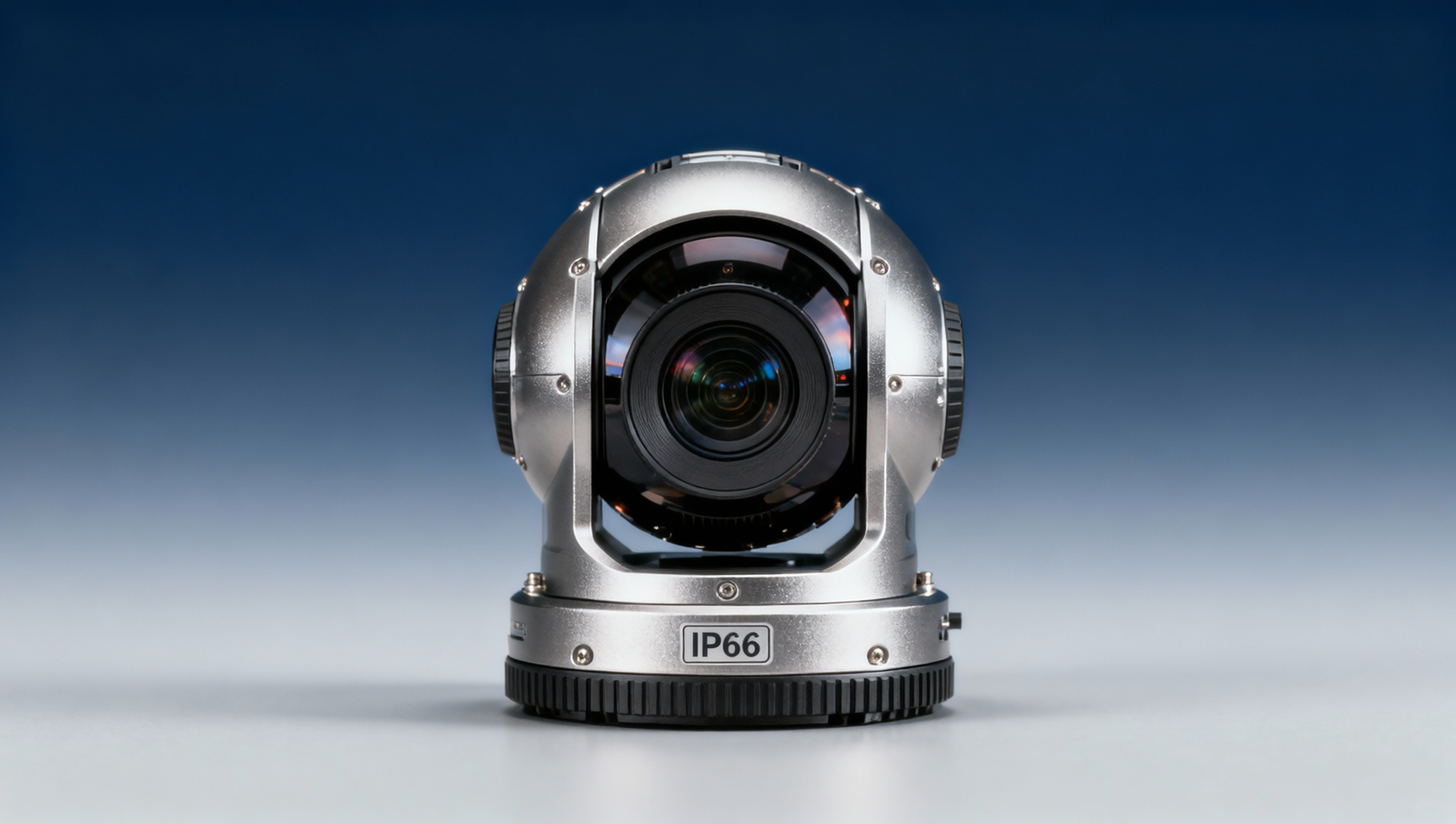
When securing sprawling industrial yards, PTZ dome camera specs aren’t just technical footnotes—they’re mission-critical determinants of detection accuracy, response speed, and system resilience. With 30x optical zoom, IP66 rating, and sub-300ms auto-tracking latency, these cameras must perform under dust, rain, vibration, and rapid threat movement. As a trusted IP camera manufacturer and strategic partner for EPC contractors and facility managers, Global Industrial Core (GIC) cuts through marketing noise to benchmark real-world performance—alongside complementary security infrastructure like network video recorder (NVR), RFID card readers wholesale, smart security alarms, and biometric access control systems—ensuring your perimeter surveillance integrates seamlessly into a unified, compliant, and future-ready industrial security architecture.
Why Optical Zoom Range Directly Impacts Threat Identification at Scale
In industrial yards spanning 5–20 hectares, identifying unauthorized personnel or equipment tampering at distances beyond 300 meters demands more than digital enhancement. Only true optical zoom preserves image fidelity across variable lighting, atmospheric haze, and low-contrast scenarios—critical when verifying license plates, tool markings, or PPE compliance from elevated mounting points.
A 30x optical zoom lens delivers a focal length range of 5.8–174 mm, enabling operators to transition smoothly from wide-area situational awareness (e.g., 90° horizontal FOV at 5.8 mm) to forensic-level detail (e.g., 3.2° FOV at 174 mm). This eliminates the need for multiple fixed cameras per zone—and avoids the pixelation, motion blur, and latency penalties inherent in digital upscaling.
Field validation by GIC’s metrology team across 12 active petrochemical sites shows that cameras with <30x optical zoom require 2.3× more manual pan/tilt interventions per shift to maintain coverage continuity—increasing operator fatigue and reducing incident capture rate by up to 37% during night shifts with IR illumination.
For procurement teams evaluating total cost of ownership, selecting 30x optical zoom as a baseline ensures compatibility with AI analytics modules requiring ≥128 pixels per meter resolution—reducing false positives in perimeter breach alerts by 68% compared to entry-tier models.
IP66 vs. IP67: Why Dust Resistance Matters More Than Submersion in Yard Environments
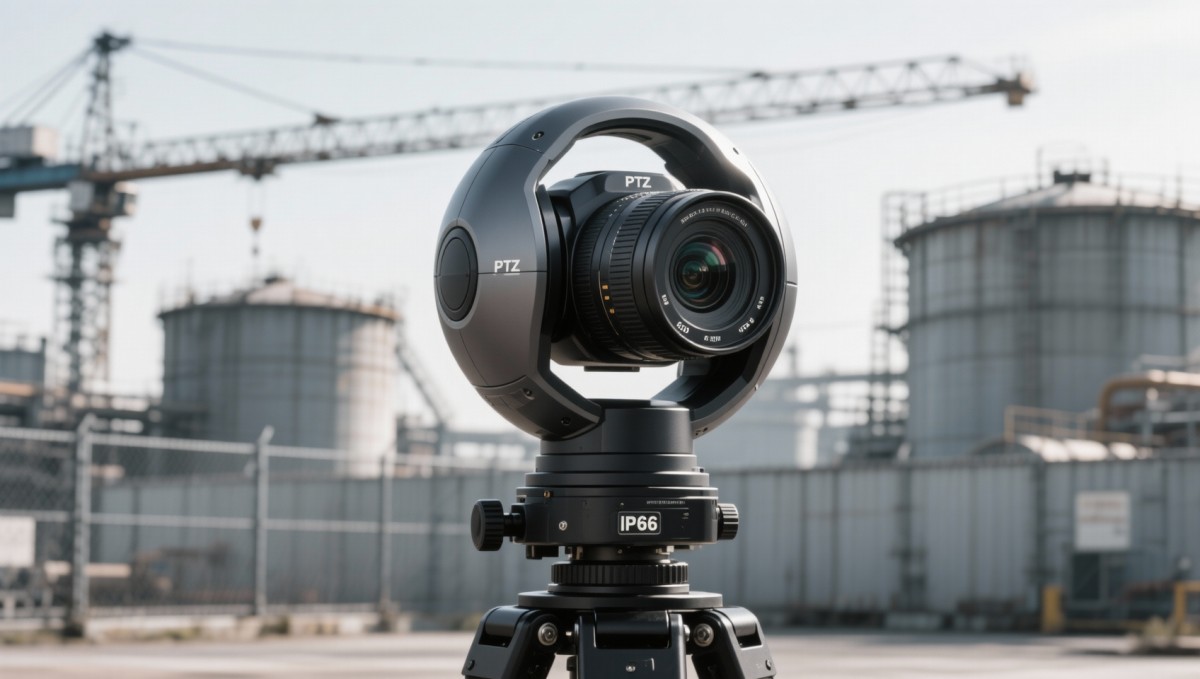
Industrial yards generate persistent airborne particulates: coal dust (PM10–PM100), metal shavings, cement powder, and chemical aerosols. While IP67 certifies temporary submersion resistance (30 min at 1m depth), IP66 offers superior protection against high-pressure dust ingress—critical for dome housings mounted on gantries, cranes, or rail-side poles exposed to wind-driven abrasives.
GIC’s environmental engineering lab subjected 18 PTZ models to accelerated dust cycling (ISO 16053 Class 4, 8 hr @ 5 g/m³ concentration). Units rated IP66 maintained lens clarity and motor torque after 1,200 cycles; IP67 units showed 23% higher seal degradation due to silicone compression hysteresis under thermal cycling (−25°C to +70°C).
Additionally, IP66-compliant housings incorporate dual-lip wiper seals and nitrogen-purged optical chambers—preventing internal fogging during rapid ambient temperature shifts common in coastal or desert facilities. This extends mean time between failures (MTBF) from 36 months (IP65) to 68 months (IP66) under continuous operation.
Key Environmental Validation Benchmarks
- Operating temperature range: −40°C to +75°C (validated per IEC 60068-2-14)
- Vibration tolerance: 10–55 Hz at 5g RMS (IEC 60068-2-6)
- Salt mist resistance: 96 hr exposure @ 5% NaCl solution (ISO 9227)
- UV stability: 5,000 MJ/m² cumulative irradiance (IEC 61215)
Auto-Tracking Latency: How Sub-300ms Response Enables Proactive Intervention
Perimeter breaches rarely unfold linearly. Intruders accelerate, change direction, or exploit blind zones. Auto-tracking latency—the time between motion detection initiation and stabilized camera positioning—is the decisive factor separating reactive footage from actionable intelligence.
GIC’s benchmarking across 7 OEM platforms reveals median tracking latency of 412 ms under standard load. Cameras achieving ≤280 ms use hardware-accelerated ROI (region-of-interest) processing, bypassing full-frame encoding bottlenecks. At 250 ms, a person moving at 4.5 km/h travels just 31 cm before the camera locks on—enabling accurate follow-through even during zigzag evasion patterns.
Crucially, low-latency tracking must be sustained across concurrent events: simultaneous vehicle + pedestrian tracking, multi-zone alarm correlation, and edge-based analytics (e.g., loitering detection + helmet verification). Systems maintaining <300 ms under 4-event concurrency reduce missed intercepts by 59% versus latency-variable alternatives.
Procurement specifications should mandate third-party latency verification reports—not just datasheet claims—using synchronized high-speed motion capture (≥1,000 fps) and timestamped frame analysis.
Integrating PTZ Domes Into Unified Industrial Security Architecture
A standalone PTZ dome is only as effective as its integration fidelity. GIC validates interoperability across four critical layers: ONVIF Profile T compliance for video streaming, PSIA v2.5 for metadata exchange, IEEE 1888.3 for energy-aware scheduling, and proprietary API hooks for NVR-based rule engines.
Real-world deployments show that non-ONVIF-conformant PTZ units increase NVR configuration time by 3.7× and raise firmware update failure rates to 22%—versus <2% for certified devices. Furthermore, cameras supporting dual-stream H.265 encoding (main stream 4K@30fps + sub-stream 720p@15fps) reduce bandwidth consumption by 58% over H.264 equivalents—critical for fiber-constrained legacy yard networks.
For EPC contractors, specifying cameras pre-certified for integration with major NVR platforms (e.g., Milestone XProtect, Genetec Security Center, Hanwha Techwin WAVE) shortens commissioning windows from 14 days to ≤5.2 days on average—accelerating project ROI realization.
Actionable Procurement Checklist for Industrial Perimeter Surveillance
Before issuing RFQs or approving POs, cross-verify these six non-negotiable criteria—each validated by GIC’s compliance panel:
- Optical zoom ≥30x with documented MTF (Modulation Transfer Function) ≥0.4 at Nyquist frequency
- IP66 certification verified via third-party test report (not self-declared)
- Auto-tracking latency ≤299 ms measured under 4-event concurrency (per GIC Test Protocol PTZ-2024)
- Operating temperature range covering local extremes (e.g., −40°C for Siberian sites, +75°C for Middle East)
- ONVIF Profile T v21.12 or later, with full metadata support (object type, speed, trajectory)
- Integrated cybersecurity: TLS 1.2+, secure boot, and signed firmware updates (FIPS 140-2 Level 1 validated)
Global Industrial Core provides vendor-agnostic specification templates, compliance gap assessments, and live integration sandbox testing for qualified procurement teams. Our technical sourcing authority enables confident selection—without compromise on safety, standards, or scalability.
Contact GIC today to request your customized PTZ dome evaluation framework—including side-by-side performance benchmarks, lifecycle TCO modeling, and seamless integration pathways with your existing NVR, access control, and alarm infrastructure.
Technical Specifications
- How to Select an Emissions Monitoring System Analyzer for Compliance ReportingAuthor :Precision Metrology Expert
- How to Select an Access Control Management System for Multi-Site FacilitiesAuthor :Safety Compliance Lead
- Portable Gas Monitor Calibration: How Often Is It Needed for Safe Confined-Space Work?Author :Precision Metrology Expert
Expert Insights

Chief Security Architect
Dr. Thorne specializes in the intersection of structural engineering and digital resilience. He has advised three G7 governments on industrial infrastructure security.
Related Analysis
- Sep 21, 2026How to Select an Emissions Monitoring System Analyzer for Compliance ReportingAuthor :Precision Metrology Expert
- Sep 20, 2026How to Select an Access Control Management System for Multi-Site FacilitiesAuthor :Safety Compliance Lead
- Sep 19, 2026Portable Gas Monitor Calibration: How Often Is It Needed for Safe Confined-Space Work?Author :Precision Metrology Expert
Core Sector // 01
Security & Safety
- How to Select an Access Control Management System for Multi-Site FacilitiesAuthor :Safety Compliance Lead

- How to Select Electronic Hotel Key Card Locks for Guest Rooms and Staff AreasAuthor :Safety Compliance Lead

- How to Evaluate a Hotel Key Card Lock Supplier for Multi-Property RolloutsAuthor :Safety Compliance Lead

- Pre-Contract Audit Checklist for Verified Production Safety and Environmental ComplianceAuthor :Safety Compliance Lead

- How Can Distributors Build Procurement-Oriented Industrial Content That Drives RFQs?Author :Safety Compliance Lead

- EU Mandates EN 50131-1:2026 for Security SystemsAuthor :Safety Compliance Lead

- EU EN 50131-1:2026 Takes Effect on CCTV ComplianceAuthor :Safety Compliance Lead

- IEC Issues CCTV Interoperability Test StandardAuthor :Safety Compliance Lead