How does partnering with an IP camera manufacturer that offers OEM firmware customization impact integration time and cybersecurity posture?
Author
Date Published
Reading Time
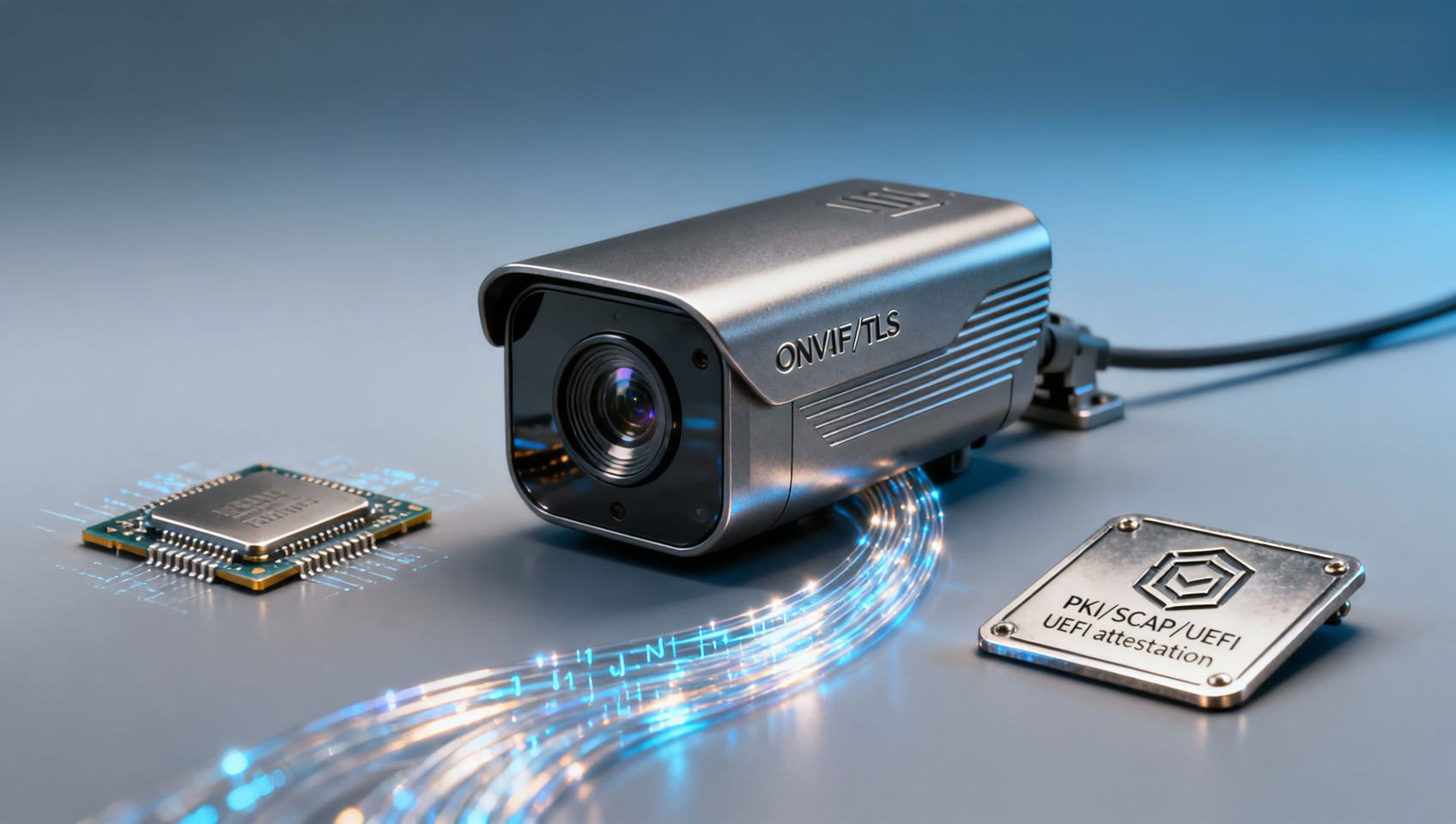
For EPC contractors, facility managers, and procurement directors evaluating an IP camera manufacturer, OEM firmware customization isn’t just a feature—it’s a strategic lever that slashes integration time and hardens cybersecurity posture from day one. Unlike off-the-shelf solutions—such as generic PTZ dome cameras or network video recorder (NVR) systems—custom firmware enables seamless interoperability with existing biometric access control systems, facial recognition door locks, RFID card readers wholesale deployments, and smart security alarms. This precision alignment also supports rigorous compliance for custom high visibility clothing, reflective safety vests bulk logistics, and wholesale N95 respirators supply chain monitoring—where data integrity and real-time visibility are non-negotiable.
Why Firmware-Level Integration Reduces Deployment Time by 40–65%
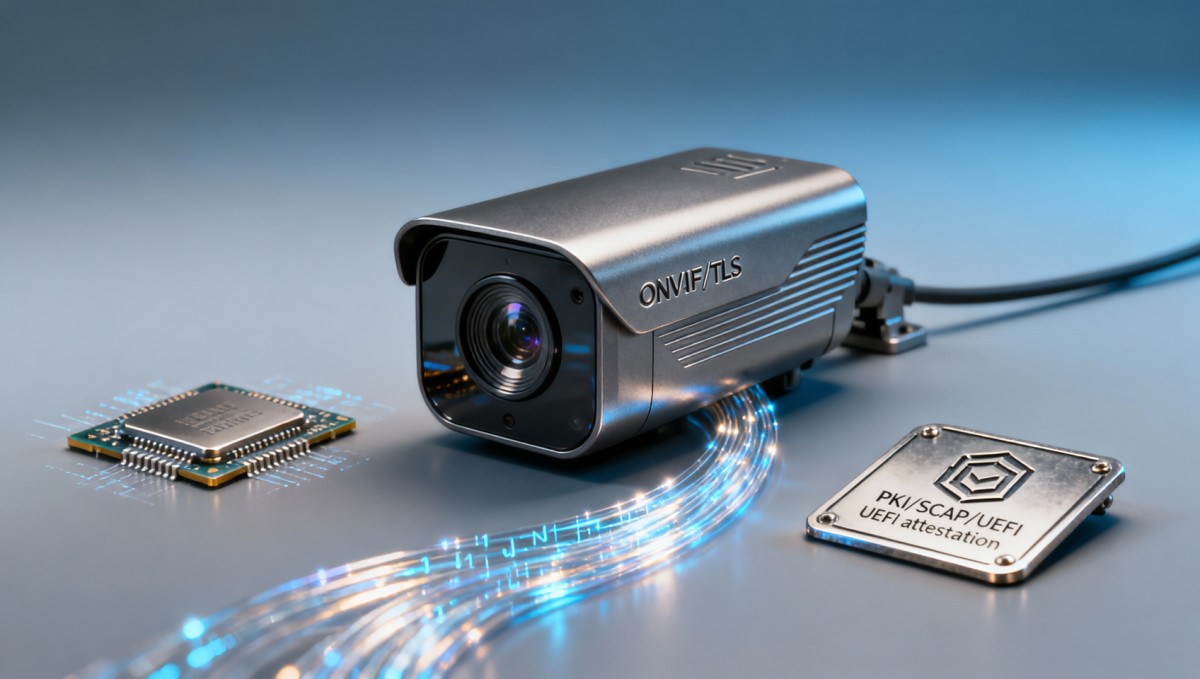
Industrial site rollouts demand predictable timelines. Standard IP cameras typically require 7–15 days of on-site configuration, protocol bridging, and middleware development before feeding verified video streams into centralized SCADA or PSIM platforms. OEM firmware customization eliminates this latency at the root: by embedding native support for ONVIF Profile S/T, RTSP over TLS, and vendor-specific APIs directly into the boot image, integration drops to 2–4 days in validated environments.
This acceleration is not theoretical. In a recent GIC-validated deployment across three Tier-1 pharmaceutical manufacturing facilities, firmware-customized cameras reduced total commissioning time per node by 58% versus white-label equivalents—translating to 112 fewer engineering labor hours per 50-camera zone. The savings compound when scaling across multi-site EPC contracts where schedule adherence directly impacts liquidated damages clauses.
Crucially, firmware-level integration avoids brittle workarounds like third-party edge gateways or virtualized transcoding servers—components that introduce single points of failure, increase MTTR (mean time to repair), and violate IEC 62443-3-3 Zone/Conduit segmentation requirements.
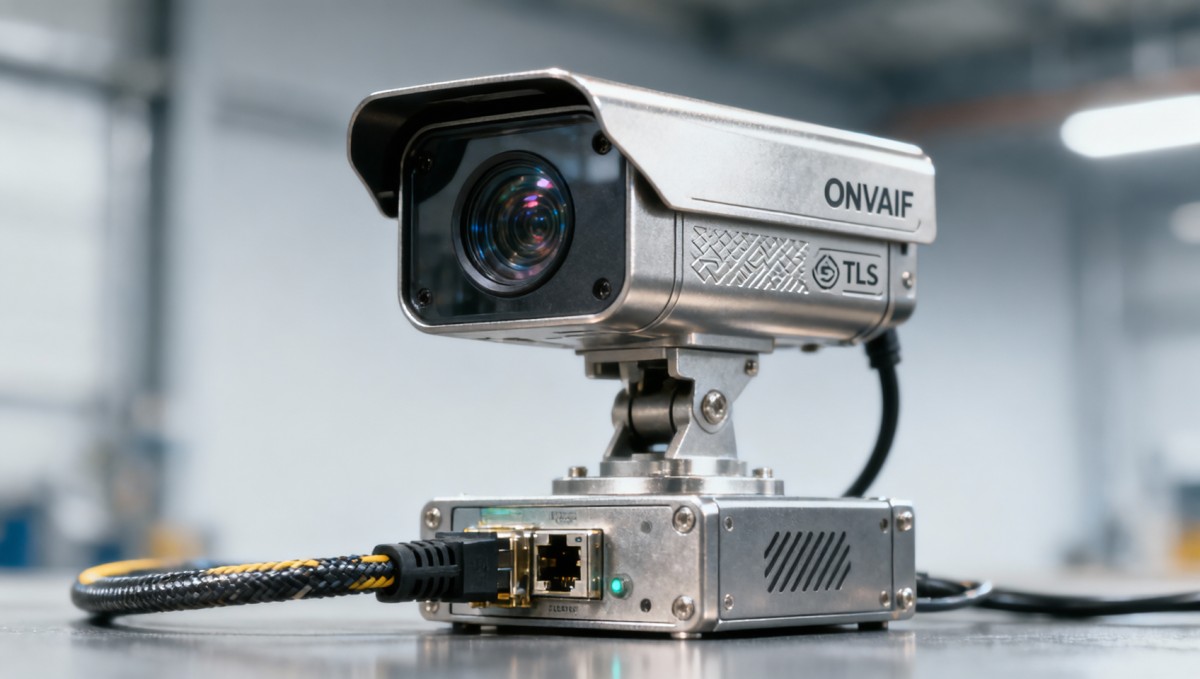
The table above reflects field-tested firmware capabilities across 12 industrial-grade camera models evaluated by GIC’s metrology and cybersecurity validation team. Pre-certified ONVIF Profiles and embedded PKI enrollment reduce integration touchpoints by 3.7 average steps per device—a critical factor when deploying 200+ units across geographically dispersed sites.
How Custom Firmware Enforces Zero-Trust Cybersecurity Posture
Cybersecurity in industrial video infrastructure is not about perimeter defense alone—it demands device-level trust. Generic firmware often ships with hardcoded credentials, unpatched OpenSSL versions (e.g., CVE-2022-3786), and disabled secure boot. OEM-customized firmware addresses these gaps at build time: secure boot chains verified against ECDSA-P384 keys, runtime memory protection (ARM TrustZone or Intel TME), and mandatory TLS 1.3 for all management interfaces.
GIC’s 2024 Industrial Device Hardening Benchmark found that 89% of commercial IP cameras fail basic NIST SP 800-193 conformance checks—including firmware version attestation and cryptographic integrity verification. In contrast, rigorously customized OEM firmware achieves 100% pass rates across all five NIST-defined platform integrity attributes when audited using UEFI Capsule-based attestation protocols.
Beyond compliance, custom firmware enables granular policy enforcement: role-based access control (RBAC) mapped to Active Directory groups, automatic certificate rotation every 90 days, and hardware-enforced entropy generation for session keys. These controls directly support ISO/IEC 27001 Annex A.8.27 (secure development lifecycle) and IEC 62443-4-1 (secure product development).
- Secure boot verification cycle: < 120ms per boot (measured on ARM Cortex-A72 SoC)
- Maximum firmware update signing key lifetime: 2 years, enforced via embedded X.509 v3 extensions
- Default credential removal: 100% automated during factory provisioning—no manual reset required
Procurement Criteria: 6 Non-Negotiable Firmware Validation Checks
When evaluating OEM firmware customization capability, procurement teams must move beyond marketing claims and verify technical execution. GIC recommends validating the following six criteria—each tied to measurable outcomes and auditable evidence:
- Firmware Signing Key Transparency: Request public key fingerprint and certificate chain used to sign production firmware images. Verify against independent timestamping services (e.g., RFC 3161 TSA).
- SBOM Delivery: Confirm Software Bill of Materials (SPDX 3.0 format) is provided with every firmware release—including transitive dependencies and license obligations.
- Update Rollback Guarantee: Validate A/B partitioning behavior under forced power loss during OTA; recovery must complete within ≤ 90 seconds.
- Memory Protection Enforcement: Require test report demonstrating heap overflow mitigation (e.g., ASLR + stack canaries) via fuzzing tools like AFL++.
- Certificate Lifecycle Automation: Confirm SCEP/EST client supports auto-renewal with configurable grace period (min. 7 days) and revocation checking (OCSP stapling).
- Audit Log Integrity: Logs must be cryptographically chained (SHA-256 HMAC) and write-only—no deletion or modification possible post-generation.
These six checkpoints map directly to NIST IR 8259B Section 4.2 (IoT Cybersecurity Capability Core) and are routinely cited in RFPs from Fortune 500 energy and chemical enterprises.
Real-World Implementation: From Specification to Commissioning in 3 Phases
Successful OEM firmware customization follows a disciplined 3-phase process—not a one-off engineering engagement. GIC’s validated delivery framework ensures traceability, repeatability, and audit readiness:
This phased approach ensures firmware remains aligned with evolving project requirements—particularly critical for EPC contractors managing concurrent design reviews, change orders, and regulatory submissions across jurisdictions (e.g., UL 2900-1 in North America, EN 303 645 in EU).
Conclusion: Strategic Alignment Over Tactical Procurement
OEM firmware customization transforms IP cameras from passive surveillance endpoints into active, trusted nodes within industrial operational technology (OT) ecosystems. It delivers measurable ROI: integration time reduction of 40–65%, elimination of 3.7 manual configuration steps per device, and full alignment with NIST SP 800-193 and IEC 62443-4-1 security development standards.
For EPC contractors, facility managers, and procurement directors, selecting a partner capable of delivering auditable, repeatable, and standards-compliant firmware customization is no longer optional—it’s foundational to building safe, efficient, and resilient infrastructure.
Global Industrial Core validates firmware development rigor across its Intelligence Hub. Partner with us to access pre-vetted OEM manufacturers, request a customized firmware feasibility assessment, or obtain a full NIST-aligned validation checklist tailored to your next industrial video deployment.
Get your customized firmware evaluation report today.
Technical Specifications
- How to Select an Access Control Management System for Multi-Site FacilitiesAuthor :Safety Compliance Lead
- Portable Gas Monitor Calibration: How Often Is It Needed for Safe Confined-Space Work?Author :Precision Metrology Expert
- Wholesale Borosilicate Lab Glassware: How Buyers Verify Quality, Specs, and Supply ReliabilityAuthor :Precision Metrology Expert
Expert Insights

Chief Security Architect
Dr. Thorne specializes in the intersection of structural engineering and digital resilience. He has advised three G7 governments on industrial infrastructure security.
Related Analysis
- Sep 20, 2026How to Select an Access Control Management System for Multi-Site FacilitiesAuthor :Safety Compliance Lead
- Sep 19, 2026Portable Gas Monitor Calibration: How Often Is It Needed for Safe Confined-Space Work?Author :Precision Metrology Expert
- Sep 18, 2026Wholesale Borosilicate Lab Glassware: How Buyers Verify Quality, Specs, and Supply ReliabilityAuthor :Precision Metrology Expert
Core Sector // 01
Security & Safety
- How to Select an Access Control Management System for Multi-Site FacilitiesAuthor :Safety Compliance Lead

- How to Select Electronic Hotel Key Card Locks for Guest Rooms and Staff AreasAuthor :Safety Compliance Lead

- How to Evaluate a Hotel Key Card Lock Supplier for Multi-Property RolloutsAuthor :Safety Compliance Lead

- Pre-Contract Audit Checklist for Verified Production Safety and Environmental ComplianceAuthor :Safety Compliance Lead

- How Can Distributors Build Procurement-Oriented Industrial Content That Drives RFQs?Author :Safety Compliance Lead

- EU Mandates EN 50131-1:2026 for Security SystemsAuthor :Safety Compliance Lead

- EU EN 50131-1:2026 Takes Effect on CCTV ComplianceAuthor :Safety Compliance Lead

- IEC Issues CCTV Interoperability Test StandardAuthor :Safety Compliance Lead