Indonesia BPOM Expands Green Channel for Industrial Dust Purifiers
Author
Date Published
Reading Time
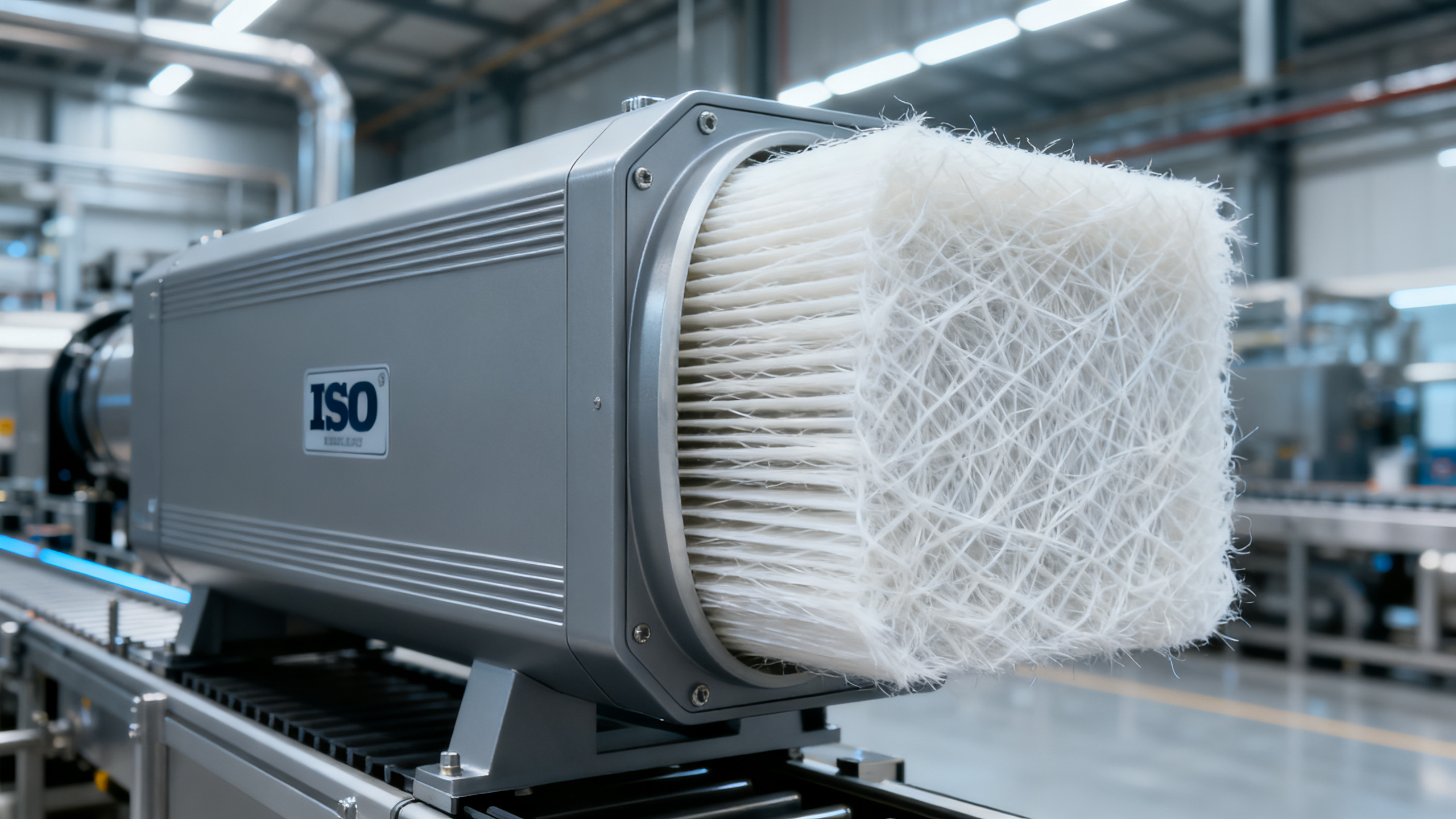
On May 8, 2026, the Indonesian Food and Drug Authority (BPOM) updated its regulatory notice to extend the ‘Green Channel’ fast-track approval pathway for industrial dust purifiers to products using nanofiber filter media — but with a new mandatory requirement: biological aerosol (Bacillus subtilis) penetration testing (BET) per ISO 16890-3:2026 Annex D, with a maximum allowable penetration rate of ≤0.005%. This development directly affects manufacturers, exporters, and suppliers of filtration materials targeting the Indonesian industrial air purification market.
Event Overview
On May 8, 2026, Indonesia’s Badan Pengawas Obat dan Makanan (BPOM) issued an official update expanding eligibility for the ‘Green Channel’ regulatory pathway for industrial dust purifiers to include devices incorporating nanofiber filter media. Concurrently, BPOM introduced a new mandatory test: biological aerosol penetration (BET) using Bacillus subtilis, conducted in accordance with ISO 16890-3:2026 Annex D, with a strict limit of ≤0.005% penetration. As of the announcement, only three Chinese filter material manufacturers have passed the initial round of this BET assessment.
Industries Affected by This Regulatory Update
Filter Media Manufacturers (Nanofiber-Based)
Manufacturers producing nanofiber filter media are directly subject to the new BET requirement. Because the test specifically targets biological aerosol retention performance — not just particulate efficiency — it necessitates validation of both fiber architecture and surface functionalization (e.g., nano-coating integrity, electrostatic stability under humid or loaded conditions). This shifts quality assurance from standard PM filtration metrics toward biologically relevant challenge testing.
Industrial Air Purifier OEMs & Exporters
OEMs integrating nanofiber filters into dust purifiers intended for the Indonesian market must now verify that their filter suppliers meet the BPOM-mandated BET threshold. Failure to provide certified test reports may delay or block Green Channel access, resulting in longer review timelines and increased compliance costs.
Raw Material & Coating Suppliers
Suppliers of polymer precursors, nanocoating agents (e.g., antimicrobial or hydrophobic additives), and electrospinning process enablers face indirect but tangible pressure. The BET pass rate reflects cumulative effects across material selection, coating uniformity, and post-treatment stability — meaning upstream inputs now carry greater regulatory weight in final certification.
Third-Party Testing & Certification Service Providers
Laboratories accredited to ISO/IEC 17025 and authorized to perform ISO 16890-3:2026 Annex D testing are seeing increased demand — particularly those with validated Bacillus subtilis aerosol generation and detection protocols. Capacity constraints and method harmonization across labs remain practical bottlenecks for applicants.
What Enterprises and Practitioners Should Monitor and Do Now
Track official BPOM implementation guidance and timeline enforcement
While the May 8, 2026 notice announces the requirement, BPOM has not yet published transitional provisions, grandfathering clauses, or deadlines for existing Green Channel approvals. Enterprises should monitor BPOM’s official portal and registered notifications for updates on effective dates and documentation templates.
Verify whether your current nanofiber filter batch meets BET ≤0.005% under ISO 16890-3:2026 Annex D
This is not equivalent to standard MPPS (Most Penetrating Particle Size) testing or EN 1822-rated H13/H14 classification. Confirm with your testing lab whether the protocol includes controlled spore aerosol generation, real-time bioaerosol sampling, and colony-forming unit (CFU)-based quantification — as specified in Annex D. Retesting may be required even for previously certified filters.
Distinguish between policy signal and operational readiness
The fact that only three Chinese manufacturers passed initial BET assessment signals technical difficulty — not insurmountability. However, it indicates that conventional nanofiber production lines may require recalibration or post-processing upgrades (e.g., plasma treatment, cross-linking, or dual-layer hybrid structuring) to consistently meet the limit. Avoid assuming prior ISO 16890-2 or -4 compliance suffices.
Engage early with BPOM-authorized testing labs and prepare full technical dossiers
Lead times for BET testing are extending due to rising demand. Applicants should secure lab slots in advance and compile complete technical files — including filter substrate composition, nanofiber diameter distribution, coating chemistry, and loading-condition test data — to avoid iterative submission delays.
Editorial Perspective / Industry Observation
Observably, this update represents more than a technical amendment — it signals BPOM’s strategic pivot toward health-critical performance validation for air filtration devices used in industrial settings where biological contaminants (e.g., mold spores, endotoxin-laden dust, or pathogen-carrying aerosols) pose occupational risks. Analysis shows the BET requirement aligns with emerging global emphasis on bioaerosol control beyond PM2.5/PM10 metrics, especially in tropical climates where microbial growth on filters is accelerated. However, it remains a regulatory signal rather than a fully matured enforcement regime: no public record yet confirms whether BPOM will accept overseas-accredited test reports or mandate local retesting. From an industry perspective, the bottleneck lies less in scientific feasibility and more in standardized method adoption and supply chain traceability for nanocoating inputs.
In summary, BPOM’s expansion of the Green Channel with the new BET requirement marks a targeted tightening of technical entry criteria for nanofiber-based industrial dust purifiers entering Indonesia. It does not broadly restrict market access, but raises the bar for evidence-based performance claims — particularly around biological aerosol retention. Current practice suggests this is best understood not as an immediate barrier, but as a calibrated step toward functionally grounded, health-oriented air filtration regulation in Southeast Asia.
Source: Official BPOM Regulatory Notice dated May 8, 2026 (Reference ID: BPOM/REG/2026/05-IND); ISO 16890-3:2026 Annex D (published March 2026).
Note: Ongoing observation is warranted for BPOM’s forthcoming implementation guidelines, including acceptance criteria for foreign test reports and phased enforcement timelines.
Technical Specifications
- How to Select an Emissions Monitoring System Analyzer for Compliance ReportingAuthor :Precision Metrology Expert
- How to Select an Access Control Management System for Multi-Site FacilitiesAuthor :Safety Compliance Lead
- Portable Gas Monitor Calibration: How Often Is It Needed for Safe Confined-Space Work?Author :Precision Metrology Expert
Expert Insights

Chief Security Architect
Dr. Thorne specializes in the intersection of structural engineering and digital resilience. He has advised three G7 governments on industrial infrastructure security.
Related Analysis
- Sep 21, 2026How to Select an Emissions Monitoring System Analyzer for Compliance ReportingAuthor :Precision Metrology Expert
- Sep 20, 2026How to Select an Access Control Management System for Multi-Site FacilitiesAuthor :Safety Compliance Lead
- Sep 19, 2026Portable Gas Monitor Calibration: How Often Is It Needed for Safe Confined-Space Work?Author :Precision Metrology Expert
Core Sector // 01
Security & Safety
- Environmental Technologies for Heavy Industry: Choosing Cleaner Production SolutionsAuthor :Environmental Engineering Director

- Selecting Air Compliance Equipment for Dust, Fumes, and VOC ControlAuthor :Environmental Engineering Director

- EU Rule Tightens EN 1822-2 for Industrial Air PurifiersAuthor :Environmental Engineering Director

- EU Eco-Design Rules Tighten for Air PurifiersAuthor :Environmental Engineering Director

- Low-Maintenance Dust and Fume Control Systems: Best Options for Welding ShopsAuthor :Environmental Engineering Director

- EPA Sets VOC Labeling Rule for Air PurifiersAuthor :Environmental Engineering Director

- Saudi SASO Rule Adds Real-Time Logging for Air SystemsAuthor :Environmental Engineering Director

- Saudi SASO Rules Tighten for Air PurifiersAuthor :Environmental Engineering Director