FDA eSTAR Upgrade: ISO/IEC 17025:2026 Digital Signatures Required for Water Monitor Submissions
Author
Date Published
Reading Time
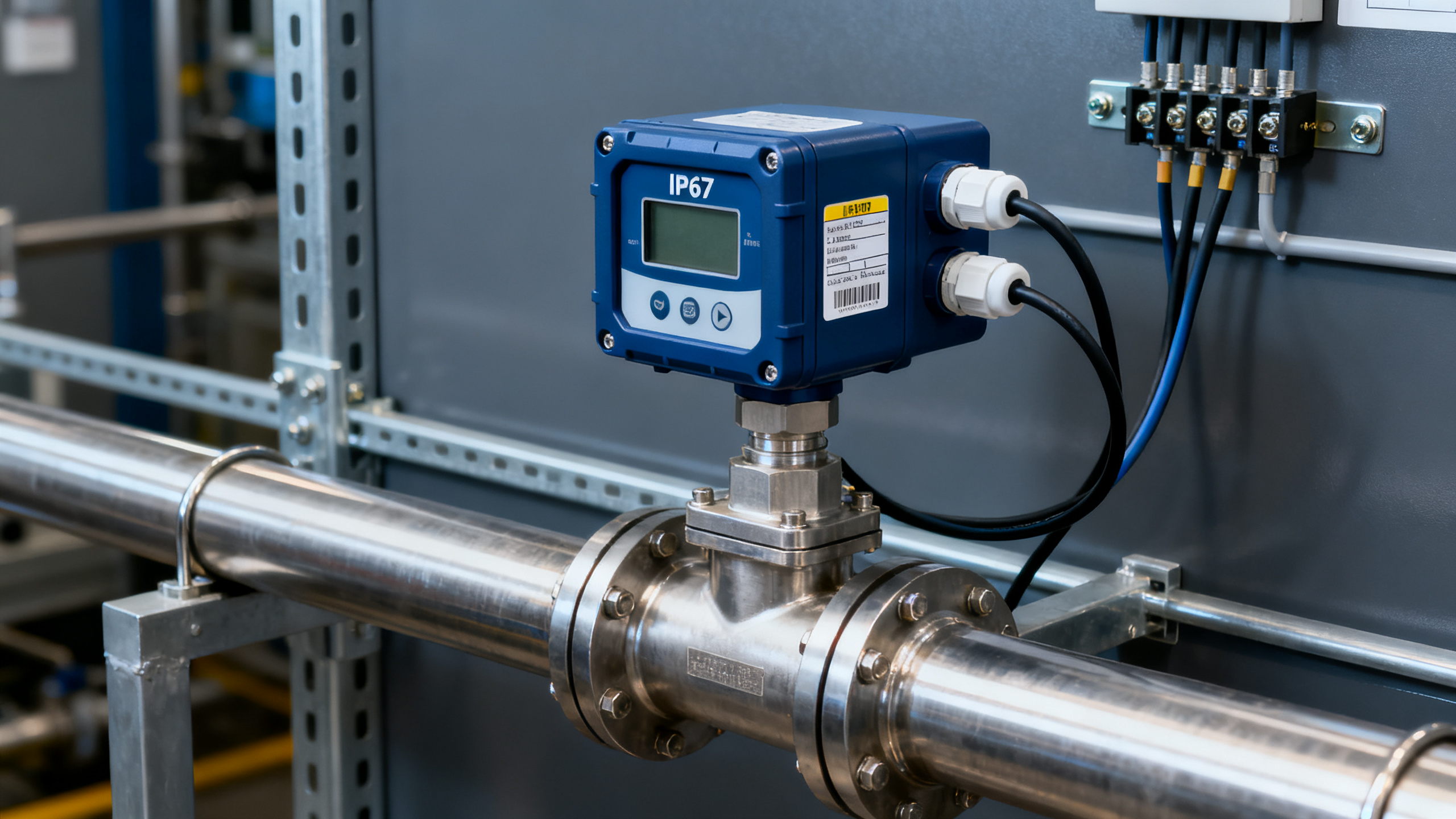
On May 8, 2026, the U.S. Food and Drug Administration (FDA) announced an upgrade to its electronic Submission Tracking and Review (eSTAR) system, mandating digital signatures on ISO/IEC 17025:2026 calibration certificates for industrial water quality monitors entering the U.S. market starting June 1, 2026. This requirement directly affects manufacturers, exporters, and regulatory compliance teams in the environmental monitoring, medical device support, and industrial process control sectors — particularly those supplying online or portable water analyzers to U.S. customers.
Event Overview
On May 8, 2026, the FDA published the eSTAR system version 3.2 upgrade notice. Effective June 1, 2026, all eSTAR electronic submission packages for industrial water quality monitors — including both online and portable devices — must embed a PDF calibration certificate digitally signed using PKI (Public Key Infrastructure) by a laboratory accredited to ISO/IEC 17025:2026. Submissions lacking this embedded digital signature will be automatically rejected by the eSTAR system, with no option for resubmission or late upload. The FDA’s notice states that over 70% of Chinese exporting enterprises have not yet completed integration with the required digital signature infrastructure.
Industries Affected by This Change
Direct Exporters and Trade Enterprises: Companies shipping industrial water monitors from China or other jurisdictions into the U.S. must now ensure calibration documentation meets the new technical specification. Impact includes delayed market access, increased pre-submission validation workload, and potential rejection of otherwise compliant devices due solely to signature format nonconformance.
Manufacturers and OEMs: Firms producing water quality monitors — especially those relying on third-party calibration labs — face upstream coordination challenges. If their calibration partners lack ISO/IEC 17025:2026 accreditation *and* PKI-capable digital signing capability, product submissions cannot proceed. This affects design-for-compliance workflows and supplier qualification protocols.
Calibration Service Providers and Accredited Labs: Laboratories issuing calibration certificates for export-bound water monitors must now operate under ISO/IEC 17025:2026 (not earlier versions) and implement PKI-based digital signing infrastructure. Non-accredited or legacy-signature labs risk becoming non-viable for U.S.-bound submissions.
Regulatory Affairs and Compliance Support Providers: Consultants, submission agents, and QA/QC service firms assisting exporters must update internal checklists, training materials, and validation tools to verify digital signature integrity, certificate accreditation scope, and eSTAR v3.2 file packaging requirements.
What Relevant Enterprises or Practitioners Should Focus On — and How to Respond Now
Verify current calibration lab accreditation status and digital signing capability
Confirm whether your calibration provider holds valid ISO/IEC 17025:2026 accreditation (not 2017 or earlier editions) and has deployed PKI-based digital signing for PDF certificates. Request evidence of technical implementation — not just policy statements — as eSTAR v3.2 performs automated cryptographic validation.
Test eSTAR v3.2 submission packaging before June 1, 2026
Use the FDA’s publicly available eSTAR test environment (if accessible) or engage authorized eSTAR support channels to validate end-to-end submission flow — including PDF embedding, signature verification, and metadata tagging. Do not assume prior eSTAR submissions remain valid; v3.2 enforces new structural rules.
Map internal documentation handoffs between manufacturing, QA, and regulatory teams
Identify where calibration certificates are generated, signed, archived, and transferred to regulatory staff. Introduce version-controlled digital handoff logs to prevent mismatched certificates (e.g., ISO/IEC 17025:2017-signed vs. 2026-signed) or unsigned drafts being uploaded inadvertently.
Monitor FDA communications for transitional guidance or phased enforcement
Although the notice states automatic rejection applies from June 1, 2026, the FDA may issue clarifications on acceptable timestamping methods, certificate revocation handling, or limited grace periods for legacy submissions filed before May 31. Subscribe to FDA’s eSTAR email alerts and review updates on the official FDA eSTAR webpage regularly.
Editorial Perspective / Industry Observation
Observably, this change reflects a broader FDA shift toward cryptographically verifiable, machine-readable regulatory evidence — moving beyond static PDFs to enforce provenance and integrity at the file level. Analysis shows it is less about tightening calibration science standards (ISO/IEC 17025:2026 itself introduces only incremental updates) and more about strengthening digital trust architecture within eSTAR. From an industry perspective, this is best understood not as a standalone technical mandate, but as an early indicator of future FDA expectations for other device categories — particularly those involving measurement-critical functions. Current readiness gaps among exporters suggest many firms treat calibration documentation as an administrative afterthought rather than a core regulatory data asset. That misalignment is now being operationally exposed.
Current more appropriate understanding is that this requirement signals institutional prioritization of submission integrity over procedural flexibility — and that similar digital signature mandates may follow for other analytical or diagnostic instrumentation regulated under 21 CFR Part 820 or related frameworks.
Conclusion: This eSTAR upgrade does not alter fundamental performance or safety expectations for industrial water monitors. Rather, it redefines how compliance evidence must be structured, authenticated, and delivered. For affected enterprises, the operational impact lies not in new testing or redesign, but in upgrading documentation governance, supplier coordination, and digital workflow controls. It is, therefore, a process-level inflection point — one that rewards systematic preparedness over reactive compliance.
Source: U.S. Food and Drug Administration (FDA), eSTAR System Version 3.2 Upgrade Notice, issued May 8, 2026.
Note: Ongoing observation is warranted for any FDA-issued FAQs, enforcement discretion notices, or technical bulletins regarding eSTAR v3.2 implementation details beyond the May 8, 2026 announcement.
Technical Specifications
- How to Select an Emissions Monitoring System Analyzer for Compliance ReportingAuthor :Precision Metrology Expert
- How to Select an Access Control Management System for Multi-Site FacilitiesAuthor :Safety Compliance Lead
- Portable Gas Monitor Calibration: How Often Is It Needed for Safe Confined-Space Work?Author :Precision Metrology Expert
Expert Insights

Chief Security Architect
Dr. Thorne specializes in the intersection of structural engineering and digital resilience. He has advised three G7 governments on industrial infrastructure security.
Related Analysis
- Sep 21, 2026How to Select an Emissions Monitoring System Analyzer for Compliance ReportingAuthor :Precision Metrology Expert
- Sep 20, 2026How to Select an Access Control Management System for Multi-Site FacilitiesAuthor :Safety Compliance Lead
- Sep 19, 2026Portable Gas Monitor Calibration: How Often Is It Needed for Safe Confined-Space Work?Author :Precision Metrology Expert
Core Sector // 01
Security & Safety
- How to Size a Wafer Butterfly Valve for HVAC Chilled-Water and Heating LoopsAuthor :Environmental Engineering Director

- How Pressure Class and Joint Design Affect Long-Term Performance of Ductile Iron Pipes in Drainage InfrastructureAuthor :Environmental Engineering Director

- How Ductile Iron Pipe Joints Affect Installation Reliability and Leak ControlAuthor :Environmental Engineering Director

- How to Size Effluent Treatment Equipment for Variable Industrial Wastewater LoadsAuthor :Environmental Engineering Director

- US Battery Push Raises New Entry Rules for SuppliersAuthor :Environmental Engineering Director

- EU EMC Rule Tightens for Water Treatment ExportsAuthor :Environmental Engineering Director

- EU REACH Restriction Targets PFAS Water Treatment ImportsAuthor :Environmental Engineering Director

- EU Mandates EN 14113:2026 for Water Treatment ExportsAuthor :Environmental Engineering Director