How to assess a Security & Safety supplier beyond certificates
Author
Date Published
Reading Time

Choosing a Security & Safety supplier for industrial projects requires more than checking certificates. For commercial evaluators, the real question is whether a supplier can prove long-term reliability, compliance consistency, delivery capability, and risk control under demanding operating conditions. This article explores the practical criteria that help buyers assess supplier strength beyond paperwork and make more confident sourcing decisions.
In heavy industry, utilities, process plants, logistics hubs, and infrastructure projects, a weak supplier assessment can create delays that last 4–12 weeks, increase rework, and expose operators to avoidable safety incidents. A certificate can confirm that a product passed a test at a point in time, but it does not automatically prove stable production quality, responsive technical support, or disciplined change control. For business evaluators, the task is to look at the full operating picture.
When evaluating a Security & Safety supplier, buyers should examine five practical dimensions: product performance in real industrial environments, process maturity, supply chain resilience, after-sales capability, and commercial transparency. These factors matter whether the procurement scope includes PPE, emergency systems, gas detection, access control, fire safety components, site alarms, or integrated industrial protection solutions.
Why certificates alone are not enough in industrial supplier evaluation
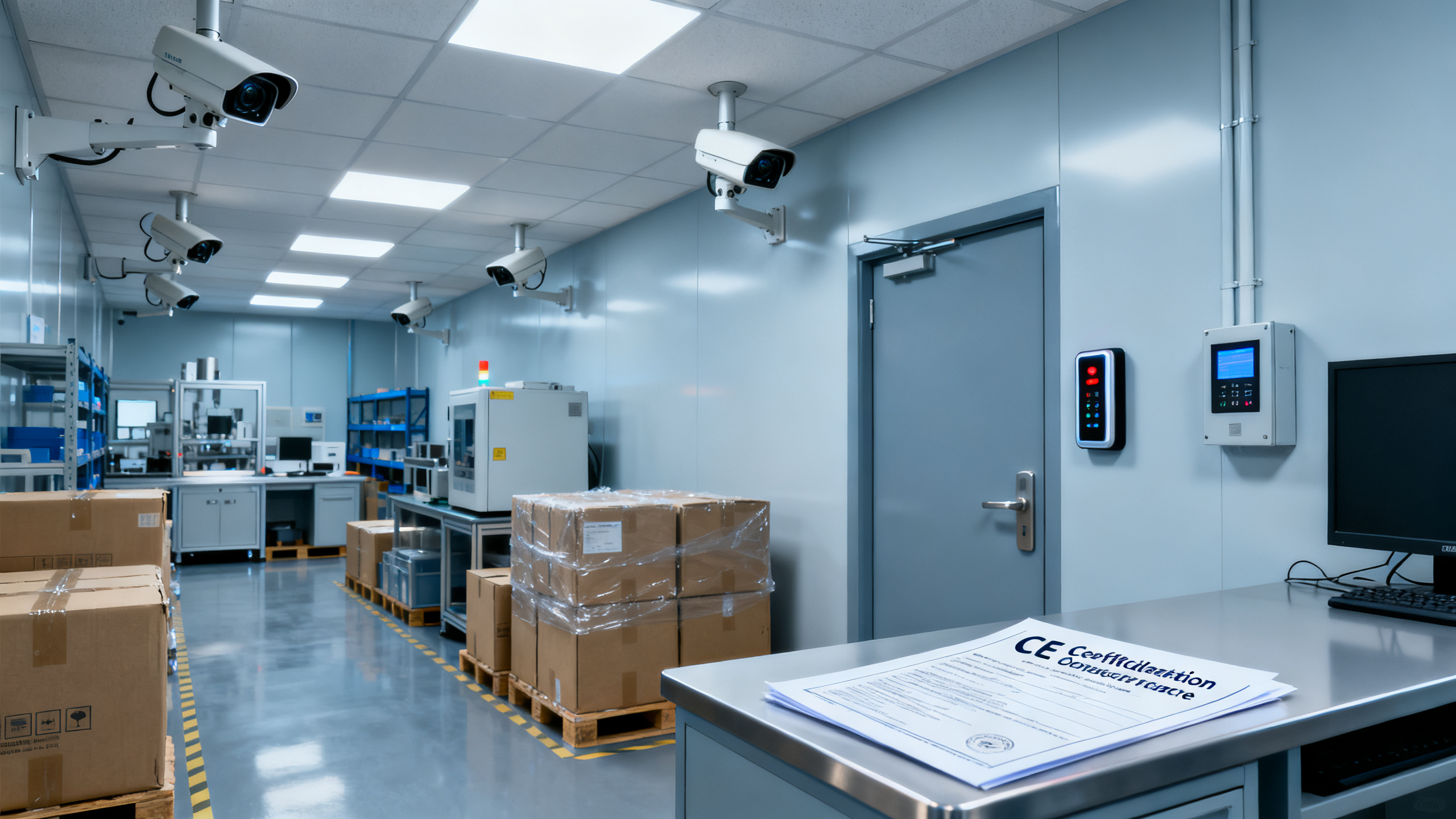
Certificates remain essential. They help screen out unqualified vendors and confirm baseline compliance with relevant standards such as CE, UL, ISO, or product-specific testing protocols. However, a commercial evaluator should treat certificates as the starting point, not the finish line. Industrial risk is often created in the gap between documented compliance and day-to-day execution.
For example, two suppliers may hold similar certifications, yet one may maintain lot traceability for 24 months, document design revisions within 48 hours, and control nonconforming material through a formal quarantine process. The other may outsource critical components to multiple sub-vendors without stable incoming inspection. On paper, both appear compliant. In operation, their risk profile is very different.
The difference between compliance evidence and operating reliability
A strong Security & Safety supplier can show how products perform under actual field conditions: vibration, dust, humidity, chemical exposure, outdoor temperature swings, and continuous duty cycles. In many industrial settings, devices are expected to operate across ranges such as -20°C to 60°C, or in high-ingress areas where IP54, IP65, or higher enclosure protection becomes relevant. Buyers should ask not only what standard was met, but under what conditions performance was validated.
Commercial evaluators should also verify whether compliance is consistently maintained across production lots. A supplier with strong process discipline will be able to show sample retention, test frequency, calibration intervals, and internal release criteria. If a supplier cannot explain how it ensures consistency from batch 1 to batch 100, the value of the certificate becomes limited.
Common blind spots in supplier screening
- Reviewing only certificates without checking issue dates, scope, and validity period.
- Ignoring lead time variation between standard items and custom-configured products.
- Not asking who manufactures critical subassemblies and where they are sourced.
- Assuming that test reports automatically cover every product variant or revision.
- Overlooking post-sale support, spare part availability, and failure-response time.
These blind spots often appear during multi-site or EPC procurement, where a supplier may look acceptable in the RFQ stage but struggle when volume rises by 30%–50% or when documentation requirements become more demanding. The earlier these risks are surfaced, the lower the cost of correction later.
Core criteria for assessing a Security & Safety supplier beyond paperwork
A practical assessment model should balance technical, commercial, and operational factors. The table below outlines a useful framework for business evaluators comparing suppliers across multiple projects or categories.
The most reliable Security & Safety supplier is rarely the one with the longest certificate list alone. It is usually the one that can show repeatable control over quality, delivery, and issue resolution. This is particularly important when projects involve phased commissioning, strict permit-to-work systems, or shutdown windows measured in hours rather than days.
1. Production and quality system maturity
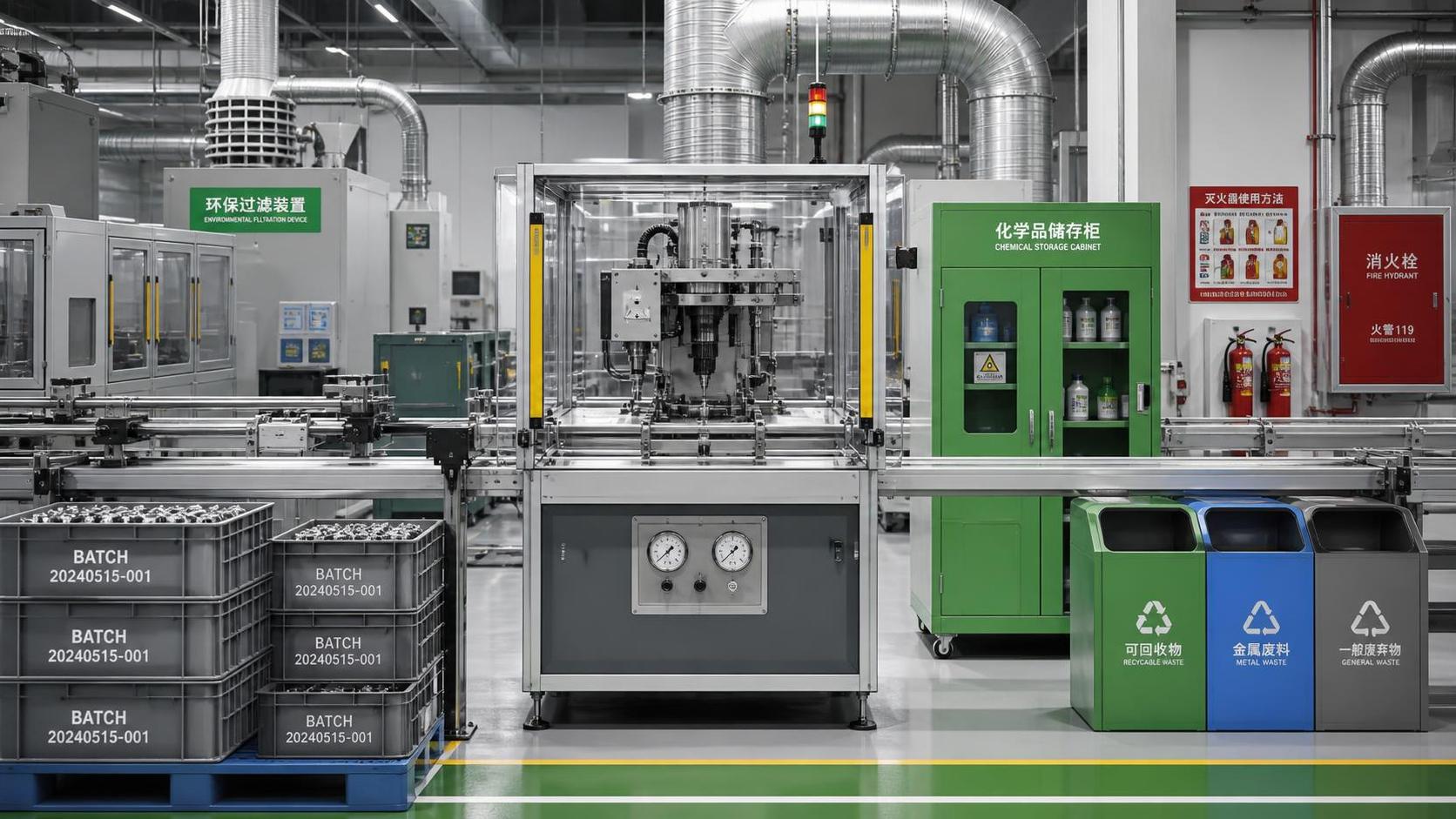
Ask how the supplier controls critical quality points. For industrial safety products, typical checkpoints may include raw material verification, assembly torque or fit checks, alarm calibration, enclosure sealing inspection, and final functional testing. A dependable supplier should be able to explain who performs these checks, how often they are recorded, and what happens when a result falls outside tolerance.
If the supplier uses external laboratories, ask whether internal verification is still performed before shipment. External testing may happen once per product series, but internal release decisions happen every production cycle. That difference matters in commercial risk assessment.
Questions evaluators should ask
- What are the top 3 quality failure modes in this product category?
- How are production changes approved and communicated?
- How long are inspection records retained?
- What percentage of final units undergo functional testing?
- How are field complaints closed and verified?
2. Real delivery performance and capacity realism
Many supplier problems appear not in product design, but in delivery execution. A Security & Safety supplier may quote 10 days for standard products, yet actual lead time can move to 4–6 weeks when component shortages, labeling customization, export packing, or inspection witness requirements are added. Evaluators should ask for realistic lead times by SKU type, not a single average figure.
Capacity should also be tested against surge demand. If a project requires 2,000 units across 3 sites within a 30-day window, can the supplier allocate capacity without compromising quality? A mature vendor can explain standard monthly throughput, bottleneck processes, and contingency plans for expedited orders.
3. Technical depth and application fit
Commercial teams should not evaluate technical support as an optional bonus. In industrial environments, a mismatch between product specification and site condition can create hidden costs long after purchase. A good Security & Safety supplier should clarify application limits, installation constraints, maintenance intervals, and compatibility with existing systems.
For example, buyers should verify operating temperature range, environmental sealing, cable or connector compatibility, mounting method, and inspection frequency. In some categories, preventive checks every 6 or 12 months are standard. If the supplier cannot define the maintenance rhythm, lifecycle risk becomes harder to price.
How to validate supplier strength during RFQ, audit, and trial order stages
A structured evaluation process gives commercial teams a clearer basis for supplier approval. Instead of making a decision on brochures and certificates alone, use a 3-stage method: document review, operational verification, and controlled trial order. This approach helps reveal whether the supplier can perform under project conditions, not just in a sales presentation.
Stage 1: Document review with commercial intent
At the RFQ stage, ask for more than catalogues. Request a document pack that includes quality procedures, sample inspection format, lead time matrix, packaging method, warranty terms, and standard deviation handling process. A professional Security & Safety supplier should be able to respond within 3–5 working days with organized, version-controlled material.
This step is not about creating unnecessary paperwork. It is about testing responsiveness, technical clarity, and internal coordination. A supplier that struggles to provide basic operational documents may also struggle when handling site-specific submittals, factory acceptance requests, or urgent engineering clarifications later.
Stage 2: Audit or remote process verification
When spend, project risk, or product criticality is high, an audit is justified. If travel is difficult, a remote audit can still cover production flow, warehouse segregation, calibration control, and packaging readiness. The goal is to understand whether daily operations match the supplier’s claims.
The table below can be used as a lightweight audit checklist for commercial evaluators working with technical colleagues.
This type of audit does not need to be complex. Even a 60–90 minute review can reveal whether the supplier’s control environment is robust or fragile. For high-risk items, a focused audit often saves more cost than it adds.
Stage 3: Trial order with measurable acceptance criteria
Before awarding a long-term contract, place a limited pilot order. The order size can be modest, but the acceptance criteria should be clear. Measure at least 6 points: on-time delivery, document accuracy, packaging integrity, labeling correctness, product consistency, and speed of issue resolution. This gives evaluators operational evidence rather than assumptions.
A trial order is especially useful when a Security & Safety supplier is entering a new region, supporting a custom requirement, or replacing an incumbent supplier. It also helps reveal whether communication remains strong once the order moves from sales to planning, production, and logistics teams.
Commercial risk signals, service expectations, and long-term fit
A supplier may pass technical screening but still create long-term commercial friction. Business evaluators should therefore look at service discipline, pricing transparency, and relationship stability. These factors influence total procurement efficiency over 12–36 months, especially in framework agreements and repeat industrial supply programs.
Warning signs that should trigger deeper review
- Frequent price changes without clear material or logistics explanation.
- Lead times that vary widely from one quote to the next.
- Reluctance to define warranty scope, exclusions, or claim procedure.
- Technical answers that remain generic after two or more clarification rounds.
- No clear ownership for quality complaints, returns, or urgent site issues.
None of these signs automatically disqualifies a supplier, but together they indicate operational uncertainty. In industrial procurement, uncertainty usually becomes cost. It can appear as spare stock inflation, extra inspections, delayed approvals, or duplicated supplier management effort.
What strong after-sales support looks like
After-sales support should be defined before the first order is placed. A capable Security & Safety supplier can typically commit to documentation response within 24–72 hours, preliminary complaint review within 2–5 working days, and replacement or corrective-action coordination within an agreed service window. Support terms do not need to be identical across all categories, but they should be explicit.
For critical installations, buyers should also ask about spare parts, consumables, firmware or configuration support where relevant, and product end-of-life notice period. Even a 6-month advance notice can significantly improve transition planning for regulated or continuous-operation sites.
Building a supplier scorecard that procurement can actually use
To compare suppliers fairly, create a scorecard with weighted criteria. A common model uses 25% for quality control, 25% for delivery performance, 20% for technical capability, 15% for service responsiveness, and 15% for commercial terms. The exact weighting can change by project, but the principle is simple: do not let unit price overpower risk evaluation.
Where site safety exposure is high, quality and delivery reliability may deserve a combined weight of 60% or more. Where standard, low-complexity items are being sourced, cost can carry a higher share. The important point is consistency. A repeatable scorecard improves internal alignment between sourcing, engineering, operations, and HSE stakeholders.
FAQ for commercial evaluators
How many suppliers should be benchmarked?
For most industrial categories, 3 qualified suppliers provide a practical comparison set. Fewer than 2 limits market visibility, while more than 5 can slow evaluation without materially improving decision quality.
When is a site audit necessary?
A site audit is usually justified when the supply is safety-critical, highly customized, or linked to high downtime cost. It is also useful when annual spend rises above a threshold defined by your procurement policy.
Can a newer supplier still be a good choice?
Yes, if the supplier can demonstrate disciplined processes, responsive support, and successful pilot performance. Commercial maturity matters more than company age alone.
Assessing a Security & Safety supplier beyond certificates means looking at how the supplier performs across the full supply lifecycle: qualification, production, delivery, field support, and issue recovery. For commercial evaluators, the most valuable suppliers are those that reduce uncertainty, communicate clearly, and maintain control when demand, documentation, or site conditions become more complex.
If your team is benchmarking industrial suppliers across safety, electrical, measurement, environmental, or core infrastructure categories, Global Industrial Core can help you turn technical information into clearer sourcing decisions. Contact us to discuss your evaluation criteria, request a tailored supplier assessment framework, or learn more solutions for resilient industrial procurement.
Technical Specifications
- How to Select an Emissions Monitoring System Analyzer for Compliance ReportingAuthor :Precision Metrology Expert
- How to Select an Access Control Management System for Multi-Site FacilitiesAuthor :Safety Compliance Lead
- Portable Gas Monitor Calibration: How Often Is It Needed for Safe Confined-Space Work?Author :Precision Metrology Expert
Expert Insights

Chief Security Architect
Dr. Thorne specializes in the intersection of structural engineering and digital resilience. He has advised three G7 governments on industrial infrastructure security.
Related Analysis
- Sep 21, 2026How to Select an Emissions Monitoring System Analyzer for Compliance ReportingAuthor :Precision Metrology Expert
- Sep 20, 2026How to Select an Access Control Management System for Multi-Site FacilitiesAuthor :Safety Compliance Lead
- Sep 19, 2026Portable Gas Monitor Calibration: How Often Is It Needed for Safe Confined-Space Work?Author :Precision Metrology Expert
Core Sector // 01
Security & Safety
- How to Select an Access Control Management System for Multi-Site FacilitiesAuthor :Safety Compliance Lead

- How to Select Electronic Hotel Key Card Locks for Guest Rooms and Staff AreasAuthor :Safety Compliance Lead

- How to Evaluate a Hotel Key Card Lock Supplier for Multi-Property RolloutsAuthor :Safety Compliance Lead

- Pre-Contract Audit Checklist for Verified Production Safety and Environmental ComplianceAuthor :Safety Compliance Lead

- How Can Distributors Build Procurement-Oriented Industrial Content That Drives RFQs?Author :Safety Compliance Lead

- EU Mandates EN 50131-1:2026 for Security SystemsAuthor :Safety Compliance Lead

- EU EN 50131-1:2026 Takes Effect on CCTV ComplianceAuthor :Safety Compliance Lead

- IEC Issues CCTV Interoperability Test StandardAuthor :Safety Compliance Lead