Why Security & Safety price alone leads to poor system value
Author
Date Published
Reading Time
For finance approvers, focusing on Security & Safety price alone may seem efficient, but it often creates hidden costs, compliance risks, and long-term operational losses. In industrial environments where reliability, certification, and lifecycle performance directly affect asset value, the lowest upfront bid rarely delivers the strongest return. Understanding this gap is essential to making procurement decisions that protect both budgets and business continuity.
Why a checklist approach works better than a price-only review
When finance teams evaluate industrial procurement, speed and comparability matter. That is exactly why Security & Safety price can become an overly powerful shortcut. A low quote is easy to see, easy to compare, and easy to defend in a spreadsheet. But industrial security and safety systems do not create value through purchase price alone. Their value comes from risk reduction, compliance protection, uptime support, audit readiness, and predictable lifecycle cost.
A checklist approach helps financial approvers move from “Which bid is cheapest?” to “Which option protects enterprise value best?” It creates a structured review that procurement, operations, engineering, and compliance teams can align around. This is especially important in cross-functional buying decisions involving alarms, access control, fire detection, PPE, hazardous-area devices, emergency shutdown systems, gas detection, surveillance, and plant-wide safety infrastructure.
In practical terms, the right checklist reduces approval mistakes in three ways: it exposes hidden cost drivers, highlights non-negotiable compliance requirements, and clarifies the total business impact of a low-cost but low-performing solution.
First review: the five questions finance approvers should ask before comparing Security & Safety price
- Is the item mission-critical, compliance-critical, or convenience-oriented? A low-cost option may be acceptable for non-critical items, but not for systems tied to injury prevention, emergency response, or regulatory exposure.
- What is the cost of failure? If failure can stop production, trigger fines, delay commissioning, or create legal liability, then Security & Safety price must be evaluated against financial impact, not unit cost alone.
- Which certifications are mandatory? CE, UL, ISO-related quality controls, local fire codes, hazardous-area approvals, or industry-specific requirements should be verified before any commercial comparison.
- How long is the intended service life? A lower bid can become more expensive if replacement cycles, recalibration, spare parts consumption, or maintenance labor rise within one to three years.
- Who carries the downstream risk? A supplier may win on price while transferring integration risk, warranty ambiguity, testing responsibility, or documentation gaps to the buyer.
These five questions create a more reliable approval baseline. They also help finance teams distinguish valid cost-saving opportunities from false economies.
Core checklist: what to verify beyond Security & Safety price
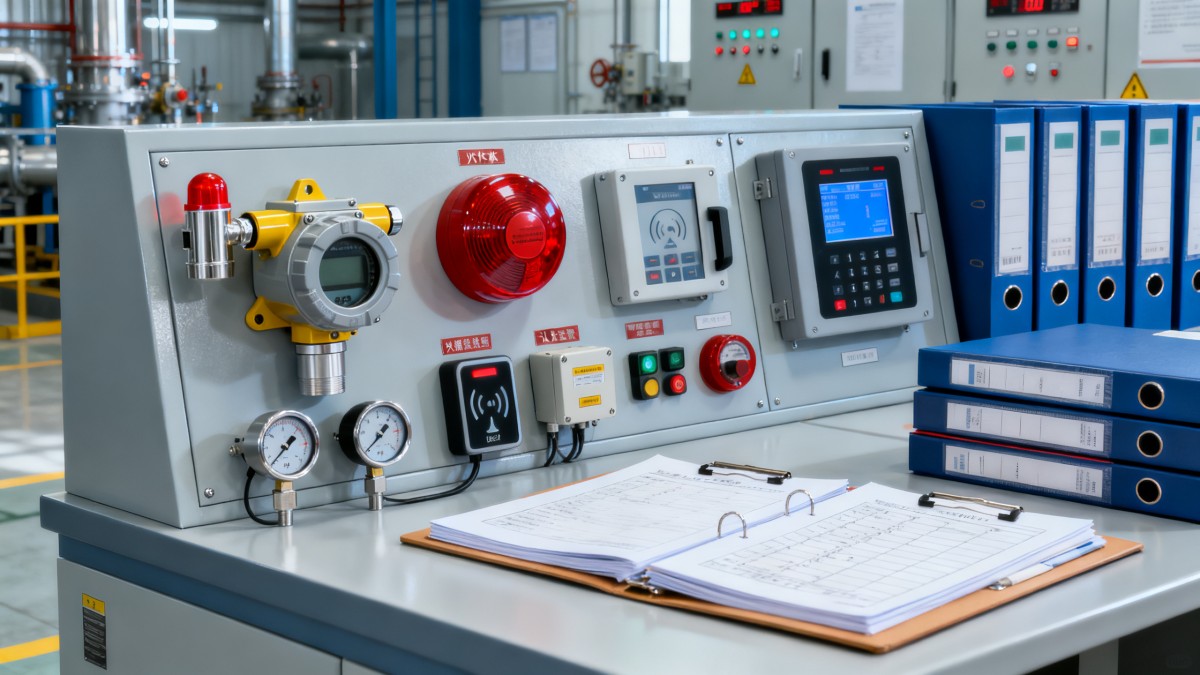
Before signing off on any supplier recommendation, finance approvers should ask for a documented comparison across the following criteria. This is where many poor-value purchases can be prevented.
- Certification status: Verify whether the product carries authentic and current certifications required in the destination market and operating environment. Missing or invalid certification can create rework, project delay, customs issues, or legal exposure.
- Performance under real conditions: Ask whether the quoted item has been tested for heat, dust, vibration, moisture, corrosion, explosive atmospheres, or continuous-duty operation. Security & Safety price means little if the product fails in field conditions.
- Lifecycle cost: Include installation, commissioning, training, inspections, calibration, software updates, consumables, spare parts, and replacement intervals.
- Integration compatibility: Check whether the system fits existing control platforms, building systems, power requirements, network protocols, or reporting workflows. Cheap components often become expensive through integration friction.
- Supplier reliability: Review lead times, after-sales support, documentation quality, local service capacity, and claim-handling history. A lower Security & Safety price can hide delivery or service risks that erode project value.
- Traceability and documentation: Confirm test reports, batch records, manuals, certificates of conformity, and maintenance instructions. In audits and incident reviews, documentation quality matters financially.
- Warranty scope: Compare not just duration but exclusions, response times, and failure definitions. A long warranty with weak terms may not protect the buyer.
- Operational consequence of downtime: Map the item to production continuity. The higher the consequence of failure, the less valid a lowest-price decision becomes.
A simple decision table for price versus total value
If your team needs a fast method for screening bids, use the table below to decide whether Security & Safety price should carry low, medium, or limited influence in the final approval.
Scenario-based review: where price-only decisions fail fastest
EPC project procurement
For EPC contractors, the danger of using Security & Safety price as the main approval metric is schedule disruption. A non-compliant or poorly documented product may pass initial commercial review but fail during inspection, client approval, or site acceptance testing. The result is not just replacement cost; it is delay cost, labor idle time, change-order friction, and reputational strain.
Existing facility upgrades
In brownfield sites, compatibility is often the hidden budget driver. A lower Security & Safety price may require adapters, rewiring, software workarounds, retraining, or revised maintenance procedures. For finance approvers, this means the “saved” amount on procurement may simply reappear in engineering and service budgets.
Multi-site industrial groups
For enterprises operating multiple facilities, standardization matters. Buying the lowest-cost item site by site can fragment inventory, spare parts planning, training, and incident response. Over time, inconsistent platforms increase cost and reduce control. In this setting, Security & Safety price must be balanced against enterprise-wide standardization value.
Common hidden costs that do not appear in the initial quote
One reason buyers overvalue Security & Safety price is that many real costs sit outside the supplier quotation. Finance approvers should request visibility into the following hidden cost categories:
- Commissioning delays caused by incomplete technical documents
- Re-inspection fees or failed audits due to certification issues
- Additional engineering hours for system integration or retrofitting
- Downtime during early failure, replacement, or troubleshooting
- Shorter replacement cycles and higher spare stock requirements
- Incident investigation, claims handling, or insurance impact
- Supplier transition costs if the low-price vendor cannot scale or support globally
These costs are especially important in industrial settings because they can hit different budget lines. Procurement may look efficient, while maintenance, operations, legal, or project management absorb the losses elsewhere.
Risk reminders: the most overlooked approval mistakes
Even disciplined finance teams can miss a few recurring issues when evaluating Security & Safety price. Watch for these high-frequency mistakes:
- Approving based on product category instead of use case. Two devices with similar names may perform very differently under industrial load, hazardous exposure, or regulatory scrutiny.
- Assuming certification claims are equivalent. Not all marks, declarations, or reports carry the same validity across markets and applications.
- Ignoring implementation cost. The quoted hardware price may exclude software licenses, site configuration, inspections, or recurring validation activities.
- Overlooking support geography. Global projects need service capability where the asset actually operates.
- Failing to quantify the value of uptime. If one hour of production loss is expensive, then reliability has measurable financial value.
Execution guide: what finance approvers should request before final approval
To convert theory into action, finance teams should require a short approval pack from procurement or engineering. This keeps Security & Safety price in context and strengthens internal governance.
- A side-by-side comparison of at least three suppliers on certification, lifecycle cost, lead time, warranty, and service support
- A written explanation of failure consequence and operational criticality
- A statement of required standards and whether each bidder fully meets them
- A total cost of ownership estimate over the expected service life
- A risk note covering integration, maintenance, and replacement exposure
- Evidence of supplier references, testing, and documentation quality
This review discipline does not slow procurement unnecessarily. In most cases, it prevents rushed approvals that later create budget overruns and operational disputes.
FAQ for decision-makers reviewing Security & Safety price
When is a low Security & Safety price acceptable?
It is acceptable when the item is non-critical, fully compliant, easy to replace, and supported by a credible supplier. The lower price should not create hidden integration, maintenance, or risk-transfer costs.
Should finance teams always choose the premium option?
No. The goal is not to pay more; it is to pay intelligently. The best choice is the option with the strongest risk-adjusted value, not automatically the highest or lowest bid.
What is the best metric besides upfront price?
For most industrial purchases, total cost of ownership combined with failure consequence is the most useful metric. It links procurement cost to business continuity and compliance exposure.
Final checklist and next-step action
The key lesson is simple: Security & Safety price is a relevant data point, but it is not a value decision on its own. For finance approvers, the strongest process is to confirm criticality, compliance, lifecycle cost, support capability, and failure impact before approving a vendor. That approach protects both capital discipline and operational resilience.
If your organization is preparing to compare suppliers or justify budget decisions, prioritize discussion around five areas: required certifications, application environment, expected service life, integration constraints, and the financial consequence of downtime or non-compliance. Once those inputs are clear, Security & Safety price can be judged in the right context—where cost control supports system value instead of undermining it.
Technical Specifications
- How to Select an Emissions Monitoring System Analyzer for Compliance ReportingAuthor :Precision Metrology Expert
- How to Select an Access Control Management System for Multi-Site FacilitiesAuthor :Safety Compliance Lead
- Portable Gas Monitor Calibration: How Often Is It Needed for Safe Confined-Space Work?Author :Precision Metrology Expert
Expert Insights

Chief Security Architect
Dr. Thorne specializes in the intersection of structural engineering and digital resilience. He has advised three G7 governments on industrial infrastructure security.
Related Analysis
- Sep 21, 2026How to Select an Emissions Monitoring System Analyzer for Compliance ReportingAuthor :Precision Metrology Expert
- Sep 20, 2026How to Select an Access Control Management System for Multi-Site FacilitiesAuthor :Safety Compliance Lead
- Sep 19, 2026Portable Gas Monitor Calibration: How Often Is It Needed for Safe Confined-Space Work?Author :Precision Metrology Expert
Core Sector // 01
Security & Safety
- How to Select an Access Control Management System for Multi-Site FacilitiesAuthor :Safety Compliance Lead

- How to Select Electronic Hotel Key Card Locks for Guest Rooms and Staff AreasAuthor :Safety Compliance Lead

- How to Evaluate a Hotel Key Card Lock Supplier for Multi-Property RolloutsAuthor :Safety Compliance Lead

- Pre-Contract Audit Checklist for Verified Production Safety and Environmental ComplianceAuthor :Safety Compliance Lead

- How Can Distributors Build Procurement-Oriented Industrial Content That Drives RFQs?Author :Safety Compliance Lead

- EU Mandates EN 50131-1:2026 for Security SystemsAuthor :Safety Compliance Lead

- EU EN 50131-1:2026 Takes Effect on CCTV ComplianceAuthor :Safety Compliance Lead

- IEC Issues CCTV Interoperability Test StandardAuthor :Safety Compliance Lead