AI Expo Shenzhen 2026 Opens: Humanoid Robots, AI Cameras Draw Global Industrial Buyers
Author
Date Published
Reading Time
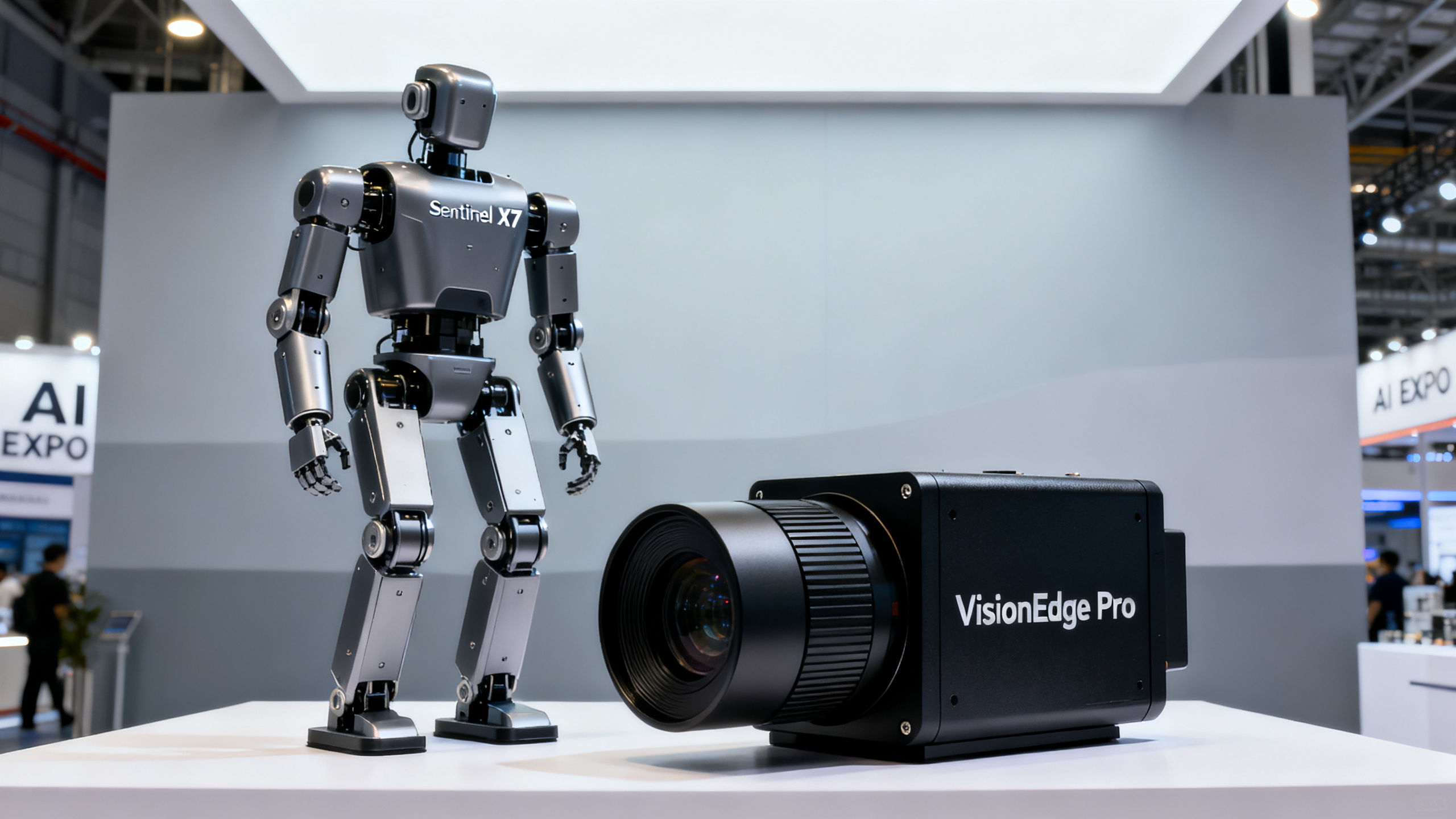
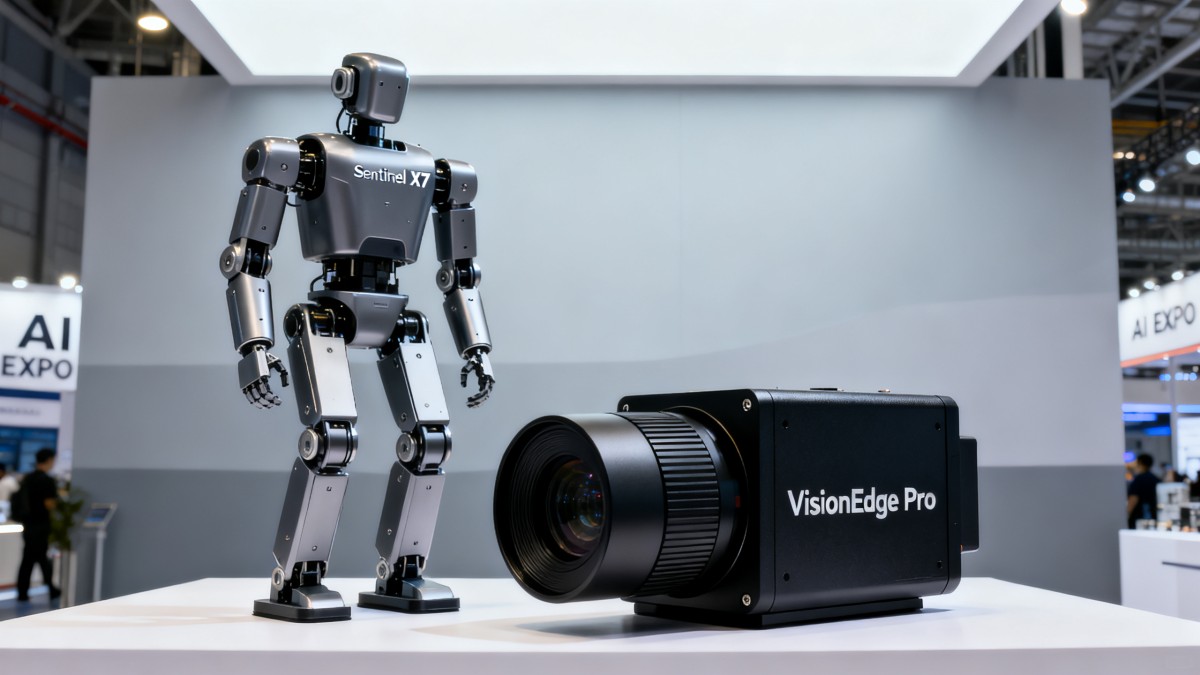
On May 7, 2026, the 2026 Global AI Terminal Exhibition (AI Expo Shenzhen) opened at the Shenzhen Convention and Exhibition Center. Early data from Day One shows heightened international procurement interest—particularly from Europe, the Middle East, and Southeast Asia—in humanoid robots for industrial inspection, security patrol, and fire reconnaissance (e.g., Zhongqing’s ‘Sentinel X7’) and AI-powered industrial cameras (e.g., Pasini’s ‘VisionEdge Pro’). Notably, 32% of initial purchase inquiries explicitly required ONVIF Profile M compliance and localized multilingual UI support. This signals a structural shift in China’s AI hardware export strategy—from consumer electronics toward mission-critical industrial safety and quality assurance applications.
Event Overview
The 2026 Global AI Terminal Exhibition (AI Expo Shenzhen) commenced on May 7, 2026, at the Shenzhen Convention and Exhibition Center. According to publicly reported Day One metrics, humanoid robots and AI industrial cameras attracted high-frequency procurement inquiries from buyer delegations based in Europe, the Middle East, and Southeast Asia. Specific product examples cited include Zhongqing’s ‘Sentinel X7’ and Pasini’s ‘VisionEdge Pro’. A documented 32% of these early orders specified technical requirements for ONVIF Profile M protocol support and multilingual user interface localization.
Impact on Specific Industry Segments
Direct Export Trading Firms
These firms face immediate implications for product positioning and technical documentation. The explicit demand for ONVIF Profile M and multilingual UI indicates that buyers are prioritizing interoperability and operational readiness—not just hardware performance. As a result, pre-shipment certification alignment and localized technical collateral (e.g., bilingual datasheets, firmware update guides) are becoming baseline expectations rather than value-adds.
Component & Raw Material Suppliers
Suppliers providing vision sensors, real-time inference modules, or ruggedized chassis components may see shifting demand signals. Increased focus on industrial-grade reliability (e.g., IP67-rated enclosures, thermal stability for 24/7 operation) and standardized video streaming protocols suggests tighter integration requirements with end-system OEMs—and less tolerance for non-compliant subassemblies.
Contract Manufacturers & OEMs
OEMs developing AI-enabled inspection or mobile robotic platforms must now treat ONVIF Profile M not as optional middleware but as a de facto interoperability prerequisite for global industrial tenders. Firmware architecture decisions—including API design, metadata tagging, and authentication flows—must align with this profile early in development cycles to avoid costly late-stage rework.
Distribution & Channel Partners
Regional distributors serving industrial end users (e.g., system integrators in manufacturing or critical infrastructure) will need updated technical training and demo assets. Support capacity must extend beyond hardware logistics to include protocol configuration assistance and multilingual troubleshooting—especially where local language UI is contractually mandated.
Key Priorities for Enterprises and Practitioners
Monitor ONVIF Certification Roadmaps and Regional Conformance Requirements
ONVIF Profile M governs metadata-rich video streaming for AI analytics; however, its implementation scope varies across regions and verticals. Enterprises should track official ONVIF release notes and regional regulatory interpretations—not only for compliance, but to anticipate upcoming test requirements for CE, UKCA, or GCC conformity assessments.
Validate Multilingual UI Localization Beyond Translation
Localization here extends beyond text strings to include right-to-left layout support, date/time formatting, keyboard input methods, and audio prompt compatibility. Procurement teams should require demonstrable UI testing reports—not just translation certificates—before approving supplier submissions.
Distinguish Between Inquiry Volume and Commercial Readiness
While 32% of Day One inquiries specified ONVIF Profile M and multilingual UI, this reflects stated preferences—not executed contracts. Enterprises should treat this as an early signal for capability planning, not evidence of immediate market saturation or guaranteed order conversion.
Prepare Technical Documentation and Firmware Update Pipelines Now
Firmware updates supporting ONVIF Profile M and dynamic language switching require secure OTA mechanisms, versioned metadata schemas, and rollback safeguards. Companies still relying on manual field updates or monolithic firmware builds should prioritize modularization and CI/CD pipeline integration before Q3 2026.
Editorial Perspective / Industry Observation
Observably, this event reflects a maturation point—not a starting point—for China’s AI hardware exports. The emphasis on standardized protocols (ONVIF), domain-specific use cases (industrial inspection, fire reconnaissance), and operational localization (multilingual UI) suggests that overseas buyers are moving past novelty evaluation into procurement due diligence. Analysis shows this is less about isolated product success and more about systemic readiness: it tests whether suppliers can deliver certified, interoperable, and locally operable systems—not just intelligent components. From an industry perspective, this is best understood as a signal of tightening technical gateways for industrial AI adoption—not yet a widespread commercial inflection, but one requiring proactive alignment across R&D, compliance, and channel functions.
In summary, the 2026 AI Expo Shenzhen highlights a strategic pivot in global demand: industrial buyers are no longer evaluating AI hardware solely on inference speed or form factor, but on deployability within existing infrastructure and operational workflows. This shift does not replace consumer-oriented AI exports—it adds a parallel, higher-barrier segment requiring deeper systems integration and standards adherence. Currently, it is more accurate to interpret this as an emerging procurement pattern than a fully scaled market transition.
Source: Official Day One press release from AI Expo Shenzhen 2026; publicly disclosed procurement inquiry statistics from exhibition organizers. Note: ONVIF Profile M implementation timelines and regional certification enforcement dates remain under observation and are not yet confirmed by regulatory authorities.
Technical Specifications
- How to Select an Emissions Monitoring System Analyzer for Compliance ReportingAuthor :Precision Metrology Expert
- How to Select an Access Control Management System for Multi-Site FacilitiesAuthor :Safety Compliance Lead
- Portable Gas Monitor Calibration: How Often Is It Needed for Safe Confined-Space Work?Author :Precision Metrology Expert
Expert Insights

Chief Security Architect
Dr. Thorne specializes in the intersection of structural engineering and digital resilience. He has advised three G7 governments on industrial infrastructure security.
Related Analysis
- Sep 21, 2026How to Select an Emissions Monitoring System Analyzer for Compliance ReportingAuthor :Precision Metrology Expert
- Sep 20, 2026How to Select an Access Control Management System for Multi-Site FacilitiesAuthor :Safety Compliance Lead
- Sep 19, 2026Portable Gas Monitor Calibration: How Often Is It Needed for Safe Confined-Space Work?Author :Precision Metrology Expert
Core Sector // 01
Security & Safety
- How to Select an Access Control Management System for Multi-Site FacilitiesAuthor :Safety Compliance Lead

- How to Select Electronic Hotel Key Card Locks for Guest Rooms and Staff AreasAuthor :Safety Compliance Lead

- How to Evaluate a Hotel Key Card Lock Supplier for Multi-Property RolloutsAuthor :Safety Compliance Lead

- Pre-Contract Audit Checklist for Verified Production Safety and Environmental ComplianceAuthor :Safety Compliance Lead

- How Can Distributors Build Procurement-Oriented Industrial Content That Drives RFQs?Author :Safety Compliance Lead

- EU Mandates EN 50131-1:2026 for Security SystemsAuthor :Safety Compliance Lead

- EU EN 50131-1:2026 Takes Effect on CCTV ComplianceAuthor :Safety Compliance Lead

- IEC Issues CCTV Interoperability Test StandardAuthor :Safety Compliance Lead