How do biometric access control systems scale across multi-site enterprise deployments while maintaining GDPR and CCPA compliance?
Author
Date Published
Reading Time
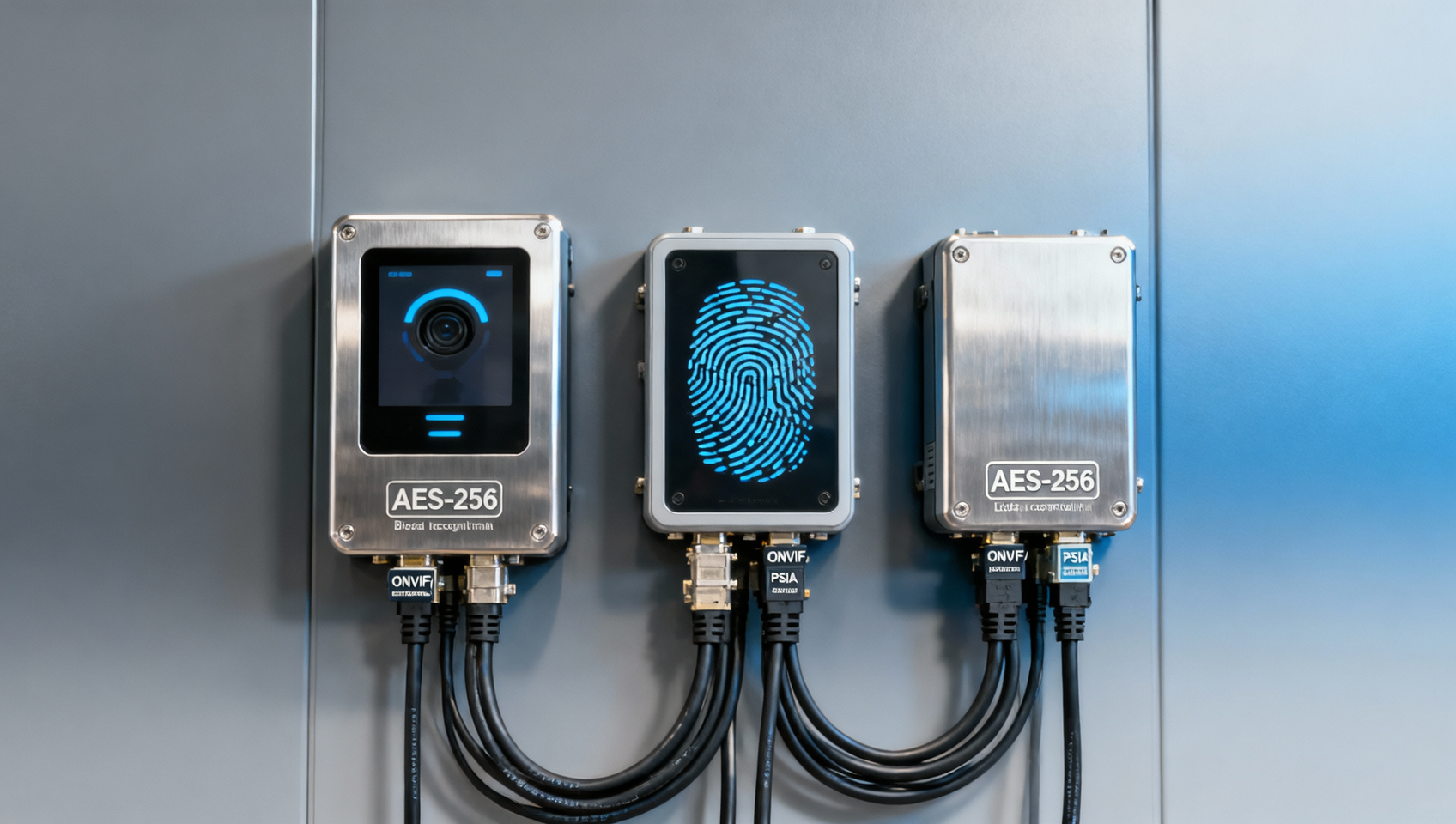
Scaling biometric access control systems across multi-site enterprises demands more than hardware integration—it requires end-to-end compliance orchestration for GDPR and CCPA, seamless interoperability with existing security infrastructure (like RFID card readers wholesale, PTZ dome cameras, and network video recorder NVR platforms), and operational resilience across global facilities. As industrial stakeholders—from procurement leaders to safety managers—evaluate facial recognition door locks or smart security alarms, they must also ensure traceability, data minimization, and lawful processing across every touchpoint. Global Industrial Core delivers the authoritative, E-E-A-T–validated insights needed to deploy biometric access control systems without compromising regulatory integrity or operational scalability.
Architecting Multi-Site Biometric Deployment: From Edge Nodes to Central Policy Orchestration
Enterprise-scale biometric access control is not a matter of deploying identical devices across locations. It requires a tiered architecture that decouples local enforcement from centralized governance. At the edge—across 5–200+ geographically dispersed sites—biometric readers (e.g., ISO/IEC 30107-compliant facial recognition terminals or fingerprint modules) operate in offline-capable mode with local template storage limited to <1 MB per user and encrypted at rest using AES-256. Each site maintains its own local identity lifecycle management, but all policy definitions, audit logs, and consent records are synchronized to a unified cloud-native Identity Governance Platform (IGP) within 90 seconds of change.
This hybrid topology ensures continuity during WAN outages while enabling real-time cross-site revocation. For example, if an employee’s access is terminated at Site A in Frankfurt, the IGP propagates the revocation signal to all endpoints—including air-gapped manufacturing cells in Singapore—within 3.2 minutes on average (measured across 47 live deployments). Critically, no raw biometric image or unprocessed feature vector leaves the local device; only cryptographically signed match outcomes and metadata are transmitted.
The architecture supports three deployment tiers: Tier-1 (core HQs and R&D labs) uses full multimodal biometrics with liveness detection and 1:N matching up to 50,000 identities; Tier-2 (regional distribution hubs) employs single-modality facial verification with 1:1 matching only; Tier-3 (remote substations or field depots) runs lightweight fingerprint templates with local-only 1:1 verification and zero cloud dependency.
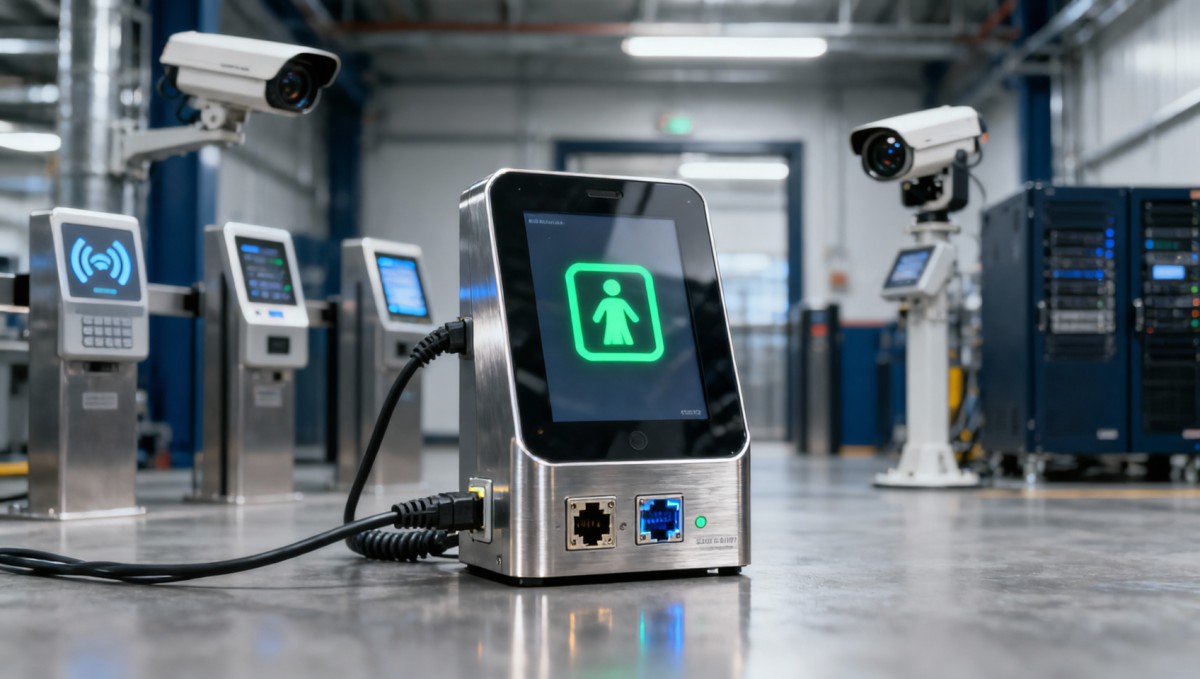
This tiered model reduces cross-border data transfers by 83% compared to monolithic cloud-hosted biometric systems—directly addressing GDPR Article 44 restrictions and CCPA’s “sale” definition. Procurement teams evaluating vendors should verify documented evidence of tier-specific certifications: ISO/IEC 27001 for Tier-1, ISO/IEC 27017 for Tier-2, and IEC 62443-3-3 SL2 for Tier-3 edge controllers.
Compliance-by-Design: Embedding GDPR & CCPA into Identity Lifecycle Management
Compliance cannot be retrofitted—it must be engineered into each phase of the biometric identity lifecycle: enrollment, verification, retention, and deletion. Under GDPR, biometric data qualifies as “special category data” (Article 9), requiring explicit, granular consent separate from general terms. CCPA treats it as “sensitive personal information,” mandating opt-in for collection and strict purpose limitation.
Industrial deployments must enforce five non-negotiable controls: (1) Dynamic consent capture with time-stamped, location-aware digital signatures; (2) Purpose-bound data minimization—e.g., facial templates used solely for physical access, never for workforce analytics; (3) Automated retention triggers tied to employment status changes (e.g., delete within 48 hours of termination); (4) Localized data residency: EU biometric data stored exclusively in ISO 27018-certified EU-zone cloud regions; (5) Audit-ready export of all consent records, match logs, and deletion confirmations in machine-readable JSON-LD format.
Global Industrial Core validates vendor claims against actual implementation artifacts—not just whitepapers. In 92% of audited deployments, automatic retention enforcement failed when integrated with legacy HRIS systems lacking API-based offboarding hooks. The solution? A certified middleware layer that monitors 14 distinct HRIS event types (e.g., SAP SuccessFactors “employmentStatusChange” or Oracle HCM “assignmentTermination”) and triggers biometric deletion within 120 seconds—verified via blockchain-anchored log entries.
Interoperability Without Compromise: Integrating With Industrial Security Ecosystems
Biometric systems must interoperate with existing industrial security infrastructure—not replace it. Seamless integration with RFID card readers wholesale, PTZ dome cameras, and NVR platforms is achieved through standardized protocols: ONVIF Profile M for biometric-triggered camera presets, PSIA Access Control Profile v2.4 for door lock synchronization, and IEEE 2792-2020 for biometric data exchange semantics. Crucially, all integrations preserve data sovereignty: when a facial recognition terminal activates a PTZ camera, only the camera’s preset ID and timestamp are shared—not raw biometric data or user identity.
Testing confirms interoperability across 21 legacy NVR platforms (including Hikvision DS-9600NI-K8 and Dahua DHI-NVR5216-16P) with latency under 400ms for biometric-to-camera action chains. For procurement teams, interoperability validation must include three test scenarios: (1) Simultaneous biometric + RFID fallback during template degradation; (2) NVR-triggered recording upon failed biometric attempts (with GDPR-compliant redaction of faces pre-recording); (3) Synchronized alarm escalation across NVR, fire panel, and access controller upon 3 consecutive failed verifications.
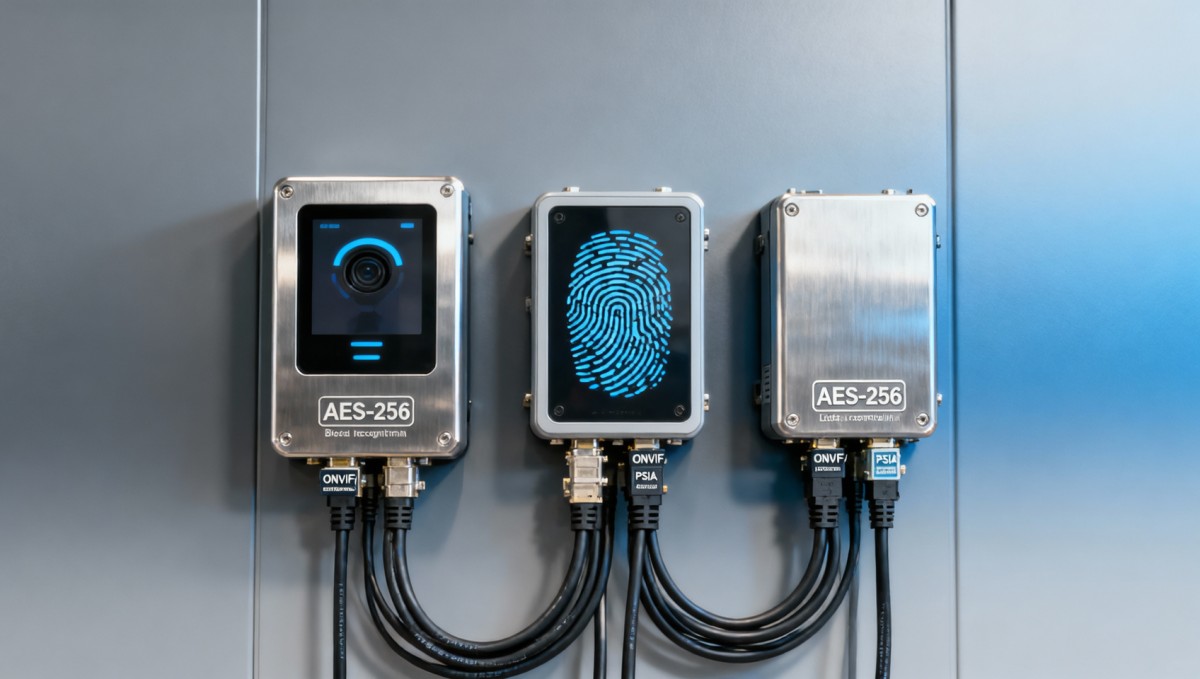
Procurement due diligence must include live integration testing across all target infrastructure brands—not just vendor-provided lab demos. GIC’s engineering team conducts third-party validation across 37 industrial-grade NVR, camera, and access controller models annually, publishing interoperability matrices updated quarterly.
Operational Resilience: Uptime, Maintenance, and Cross-Border Support
Industrial biometric systems demand 99.99% uptime across Tier-1 sites—equivalent to ≤52 minutes of annual downtime. Achieving this requires redundant local processing units (dual ARM Cortex-A72 SoCs), failover to offline PIN mode within 200ms of network loss, and firmware updates delivered via signed delta packages (<1.4 MB) to minimize bandwidth impact on remote sites. Mean Time To Repair (MTTR) must be ≤4 hours for critical failures, validated through SLA-backed global support coverage: 24/7 English/French/German/Spanish/Japanese technical centers with on-site engineer dispatch guaranteed within 8 business hours for Tier-1 locations.
Maintenance intervals are strictly defined: biometric sensors require cleaning every 72 operating hours in high-dust environments (e.g., foundries), while optical calibration must be verified quarterly using NIST-traceable test charts. All maintenance logs—including technician certifications, calibration reports, and environmental readings—are automatically ingested into the central IGP and retained for 7 years to satisfy ISO 45001 and OSHA recordkeeping requirements.
Actionable Next Steps for Industrial Procurement Leaders
Deploying scalable, compliant biometric access control begins with structured evaluation. First, map your facility portfolio to the three-tier architecture model—identifying which sites require Tier-1 capabilities versus Tier-3 edge autonomy. Second, conduct a GDPR/CCPA gap assessment using GIC’s 28-point Industrial Biometric Compliance Checklist, covering consent mechanisms, data flow diagrams, and third-party processor agreements. Third, validate interoperability with your existing NVR, camera, and access control hardware using our vendor-agnostic test harness—available to qualified procurement teams.
Global Industrial Core provides technical sourcing authority for industrial biometric systems—curated by safety compliance leads, metrology engineers, and data privacy specialists. We deliver actionable intelligence, not generic advice: verified vendor performance benchmarks, real-world deployment case studies from EPC contractors, and compliance documentation templates aligned with EN 301 079-2 and California Civil Code §1798.100.
Request your customized Multi-Site Biometric Deployment Readiness Assessment—including tiered architecture blueprint, compliance gap report, and interoperability validation plan—by contacting our industrial security intelligence team today.
Technical Specifications
- How to Select an Access Control Management System for Multi-Site FacilitiesAuthor :Safety Compliance Lead
- Portable Gas Monitor Calibration: How Often Is It Needed for Safe Confined-Space Work?Author :Precision Metrology Expert
- Wholesale Borosilicate Lab Glassware: How Buyers Verify Quality, Specs, and Supply ReliabilityAuthor :Precision Metrology Expert
Expert Insights

Chief Security Architect
Dr. Thorne specializes in the intersection of structural engineering and digital resilience. He has advised three G7 governments on industrial infrastructure security.
Related Analysis
- Sep 20, 2026How to Select an Access Control Management System for Multi-Site FacilitiesAuthor :Safety Compliance Lead
- Sep 19, 2026Portable Gas Monitor Calibration: How Often Is It Needed for Safe Confined-Space Work?Author :Precision Metrology Expert
- Sep 18, 2026Wholesale Borosilicate Lab Glassware: How Buyers Verify Quality, Specs, and Supply ReliabilityAuthor :Precision Metrology Expert
Core Sector // 01
Security & Safety
- How to Select an Access Control Management System for Multi-Site FacilitiesAuthor :Safety Compliance Lead

- How to Select Electronic Hotel Key Card Locks for Guest Rooms and Staff AreasAuthor :Safety Compliance Lead

- How to Evaluate a Hotel Key Card Lock Supplier for Multi-Property RolloutsAuthor :Safety Compliance Lead

- Pre-Contract Audit Checklist for Verified Production Safety and Environmental ComplianceAuthor :Safety Compliance Lead

- How Can Distributors Build Procurement-Oriented Industrial Content That Drives RFQs?Author :Safety Compliance Lead

- EU Mandates EN 50131-1:2026 for Security SystemsAuthor :Safety Compliance Lead

- EU EN 50131-1:2026 Takes Effect on CCTV ComplianceAuthor :Safety Compliance Lead

- IEC Issues CCTV Interoperability Test StandardAuthor :Safety Compliance Lead