Selecting EPC Procurement Support Tools to Reduce Vendor and Delivery Delays
Author
Date Published
Reading Time
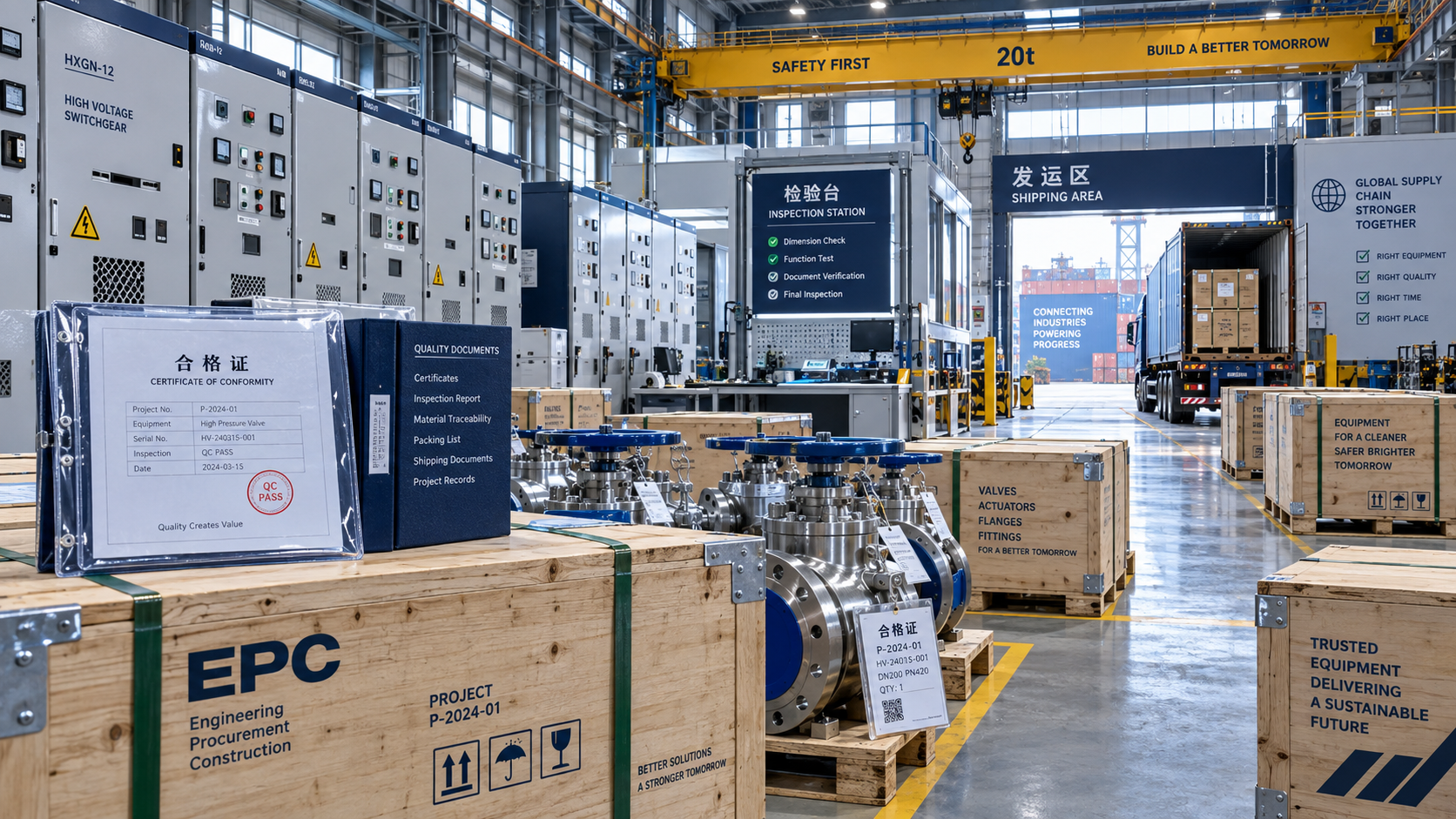
For project leaders managing complex industrial builds, vendor uncertainty and late deliveries can quickly disrupt schedules, budgets, and compliance obligations. A delayed cable termination kit, an incomplete valve dossier, or a switchgear shipment held pending documentation can affect far more than one purchase order. It can hold up commissioning, force crews to stand by, create interface disputes between contractors, and expose the project to avoidable claims.
Selecting EPC procurement support tools is therefore not mainly a software-shopping exercise. The real question is whether a tool helps the project team identify risk early enough to act on it. That means seeing where a supplier is falling behind on engineering documents, where an approved manufacturer has limited capacity, where a certificate does not match the purchase specification, and where logistics dates are being reported without evidence.
The right setup does not need to replace every ERP, document-control, or scheduling platform already in use. In many EPC environments, the more practical aim is to build a reliable control layer between engineering, procurement, quality, expediting, construction, and suppliers. The best tools make that handoff visible. The weaker ones simply produce cleaner-looking status reports.
Start with the delay mechanisms, not the feature list
Vendor and delivery delays rarely begin at the point where a shipment misses its promised date. By then, the underlying problem may have existed for weeks. A vendor could be waiting for a technical clarification. A sub-supplier may have missed a forging slot. The inspection and test plan might still be under review. A manufacturer may have reported “production in progress” when only raw material has been ordered.
Before comparing platforms, map the failure patterns that repeatedly affect your projects. In electrical and power-grid packages, long-lead equipment often becomes vulnerable during design release, factory testing, and export preparation. For mechanical components and metallurgy, material traceability, heat treatment records, dimensional inspection, and third-party witnessing may be the real constraint. Instrumentation packages often fail through late data sheets, unresolved interfaces, or incomplete calibration documentation rather than simple manufacturing delay.
This matters because procurement support tools should be selected around the decisions people need to make. If the team’s common problem is late technical submittal approval, a generic supplier scorecard will not solve it. If the major exposure is port congestion or remote-site delivery coordination, document workflow alone is not enough. The tool must reflect the actual route from requisition to site acceptance.
The capabilities that separate useful control systems from reporting dashboards
Most EPC procurement support tools can track purchase orders, planned delivery dates, and basic supplier status. Those functions are necessary, but they are only the starting point. For high-stakes industrial procurement, the more valuable capabilities are the ones that link schedule status to technical, quality, and supply-chain evidence.
Milestone tracking with proof behind each status
A vendor’s percentage-complete field is not a reliable progress signal on its own. Look for a system that can track package-specific milestones: drawing submission, drawing approval, material release, production start, inspection readiness, factory acceptance testing, packing, dispatch, customs clearance, and delivery to site. Each milestone should allow attachments, comments, revision history, and accountable ownership.
The distinction is subtle but important. “FAT scheduled” is not the same as “FAT readiness confirmed with approved procedures, calibrated test equipment, and client witness notice issued.” A good tool lets the expeditor record that difference without relying on a separate email trail. It also makes slippage visible before the overall delivery date changes.
Technical document and certification control
For industrial infrastructure, the deliverable is often not just a physical item. It is an item accompanied by accepted technical documentation: data sheets, drawings, material certificates, inspection records, operating manuals, calibration evidence, and compliance declarations where applicable. Requirements can vary by project location, contract, equipment duty, and client specification. CE, UL, ISO-related documentation, or other standards references should never be treated as interchangeable checkboxes.
Evaluate whether the platform can connect individual documents to the relevant purchase-order line, revision, inspection point, and approval status. It should distinguish “submitted,” “under review,” “approved with comments,” and “rejected,” rather than collapsing all files into one repository. More importantly, it must preserve an auditable trail when a technical change affects lead time, cost, or field installation.
Supplier capacity and risk visibility
A supplier may be technically approved and commercially competitive while still being a poor fit for a particular project window. Capacity risk is not always visible in a prequalification file. It may emerge when the manufacturer is handling several large orders, depending on a single specialist sub-supplier, or operating with limited testing capacity.
The strongest procurement workflows combine vendor master data with current project signals. Useful fields include manufacturing location, critical sub-suppliers, approved source status, prior nonconformance patterns, inspection history, logistics route, and document turnaround performance. These are not reasons to automatically reject a vendor. They are reasons to decide where closer expediting, earlier technical review, or a backup source is justified.
A tool should also avoid misleading risk scores. A single red-amber-green indicator may be convenient for management review, but project teams need to see why a package is flagged. Is the issue engineering, manufacturing, quality, transport, payment documentation, or a dependency outside the vendor’s direct control? Risk without a stated cause is difficult to manage.
Integration matters, but forced integration can create its own delay
EPC projects already operate with a crowded technology stack. Engineering may work in one environment, commercial procurement in another, document control in a dedicated system, and site logistics through spreadsheets or contractor portals. It is tempting to select a broad enterprise platform on the assumption that one system will solve every interface. In practice, large-scale implementation can consume the same time the project is trying to protect.
Prioritize the integrations that support live decisions. At minimum, teams usually need dependable links between the procurement register, approved vendor list, document register, quality or inspection records, and master schedule. The exact technical method—API, structured import, controlled export, or another arrangement—is less important than data ownership and update discipline.
Ask a simple operational question during evaluation: when a vendor revises a promised shipping date, who sees it, which schedule activity changes, and what evidence supports the new date? If the answer requires manual re-entry across multiple systems, the process remains fragile no matter how sophisticated the interface diagram looks.
Supplier adoption is a practical selection criterion
A procurement platform may work well inside the EPC contractor’s organization and still fail at the supplier interface. Manufacturers, fabricators, freight forwarders, and inspection parties have different levels of digital maturity. Some can integrate data feeds; others will need a straightforward portal, a structured template, and clear rules on when updates are due.
During demonstrations, do not focus only on what the buyer sees. Ask to see the vendor experience: how a supplier receives an action, uploads an inspection record, requests a milestone-date revision, or flags a technical blocker. If it takes too many steps, suppliers will revert to email. Then the project team ends up maintaining two competing versions of the truth.
Contractual alignment is equally important. A system cannot compel useful updates if the purchase order does not define reporting expectations, document deliverables, inspection notifications, or the consequences of late disclosure. Procurement support tools work best when the project’s expediting plan and vendor communication protocol are established before the first critical order is released.
Do not treat all purchased equipment with the same level of control
One of the most expensive mistakes is applying intensive tracking to every purchase order while giving insufficient attention to genuinely critical packages. The result is alert fatigue. Teams spend time chasing routine items and miss the equipment whose delay would stop energization, environmental compliance testing, or mechanical completion.
Build a practical segmentation model. Criticality should consider more than purchase value. Include schedule dependency, replacement difficulty, technical complexity, certification exposure, transport constraints, site storage limitations, and the availability of qualified alternatives. A low-cost specialty sensor can be more schedule-critical than a high-value commodity package if it is required for a safety interlock or commissioning sequence.
This is where specialist industrial intelligence can support procurement judgment. Resources focused on security and safety, instruments and measurement, electrical systems, environmental equipment, and mechanical materials can help teams frame the technical questions behind a sourcing decision. Global Industrial Core, for example, concentrates on the foundational systems where compliance, operating conditions, and documentation quality often determine whether an apparently available product is truly project-ready. The useful outcome is not more supplier information for its own sake; it is a better basis for identifying which packages deserve earlier scrutiny.
Run a pilot around a live procurement problem
A polished demonstration cannot show whether a system will improve control under real project pressure. A more credible evaluation uses a limited pilot with a mix of packages: one long-lead engineered item, one document-heavy compliance-sensitive package, and one logistics-exposed delivery. Include the people who will actually use the workflow—buyers, engineers, expeditors, quality representatives, planners, and at least a small group of suppliers.
Set a few test conditions. Can the team identify an overdue approval before it affects manufacturing? Can a supplier’s revised date trigger an owned action rather than merely change a colour on a dashboard? Can the team retrieve the latest accepted certificate and connect it to the correct equipment tag? Can site personnel see whether an arriving shipment is complete enough to receive?
The answers will reveal more than a feature comparison. They show whether the platform supports accountability across the full chain of engineering, supply, inspection, transport, and handover.
The most effective EPC procurement support tools do not promise that every vendor will deliver perfectly. They make uncertainty explicit, assign it to the right owner, and give the project team enough time to intervene. For a project leader, that is the standard worth using: not a system that creates more status data, but one that makes the next procurement decision clearer while there is still room to protect the schedule.
Technical Specifications
- How to Select a Twin Shaft Shredder for Bulky Waste, Scrap Metal, and PlasticsAuthor :Environmental Engineering Director
- Selecting EPC Procurement Support Tools to Reduce Vendor and Delivery DelaysAuthor :Safety Compliance Lead
- How to Evaluate a Precision Measurement Equipment Manufacturer for Critical TolerancesAuthor :Precision Metrology Expert
Expert Insights

Chief Security Architect
Dr. Thorne specializes in the intersection of structural engineering and digital resilience. He has advised three G7 governments on industrial infrastructure security.
Related Analysis
- Sep 28, 2026How to Select a Twin Shaft Shredder for Bulky Waste, Scrap Metal, and PlasticsAuthor :Environmental Engineering Director
- Sep 27, 2026Selecting EPC Procurement Support Tools to Reduce Vendor and Delivery DelaysAuthor :Safety Compliance Lead
- Sep 26, 2026How to Evaluate a Precision Measurement Equipment Manufacturer for Critical TolerancesAuthor :Precision Metrology Expert
Core Sector // 01
Security & Safety
- Selecting EPC Procurement Support Tools to Reduce Vendor and Delivery DelaysAuthor :Safety Compliance Lead

- How to Select an Access Control Management System for Multi-Site FacilitiesAuthor :Safety Compliance Lead

- How to Select Electronic Hotel Key Card Locks for Guest Rooms and Staff AreasAuthor :Safety Compliance Lead

- How to Evaluate a Hotel Key Card Lock Supplier for Multi-Property RolloutsAuthor :Safety Compliance Lead

- Pre-Contract Audit Checklist for Verified Production Safety and Environmental ComplianceAuthor :Safety Compliance Lead

- How Can Distributors Build Procurement-Oriented Industrial Content That Drives RFQs?Author :Safety Compliance Lead

- EU Mandates EN 50131-1:2026 for Security SystemsAuthor :Safety Compliance Lead

- EU EN 50131-1:2026 Takes Effect on CCTV ComplianceAuthor :Safety Compliance Lead