Industrial Supplier Assessment Tools: Comparing Scorecards and Audits
Author
Date Published
Reading Time

A supplier’s price tells procurement teams little about its ability to meet quality, safety, and delivery requirements. Industrial supplier assessment tools help close that gap.
Scorecards and audits serve different purposes. Scorecards track performance against defined metrics, while audits examine processes, controls, and supporting evidence in greater depth.
For most industrial purchases, the strongest approach combines both: use scorecards to monitor performance continuously and risk-based audits to verify critical capabilities before problems escalate.
The right balance depends on the consequences of supplier failure, the reliability of available data, and the cost and lead time of finding an alternative.
Scorecards vs. Audits: What Should Procurement Use?
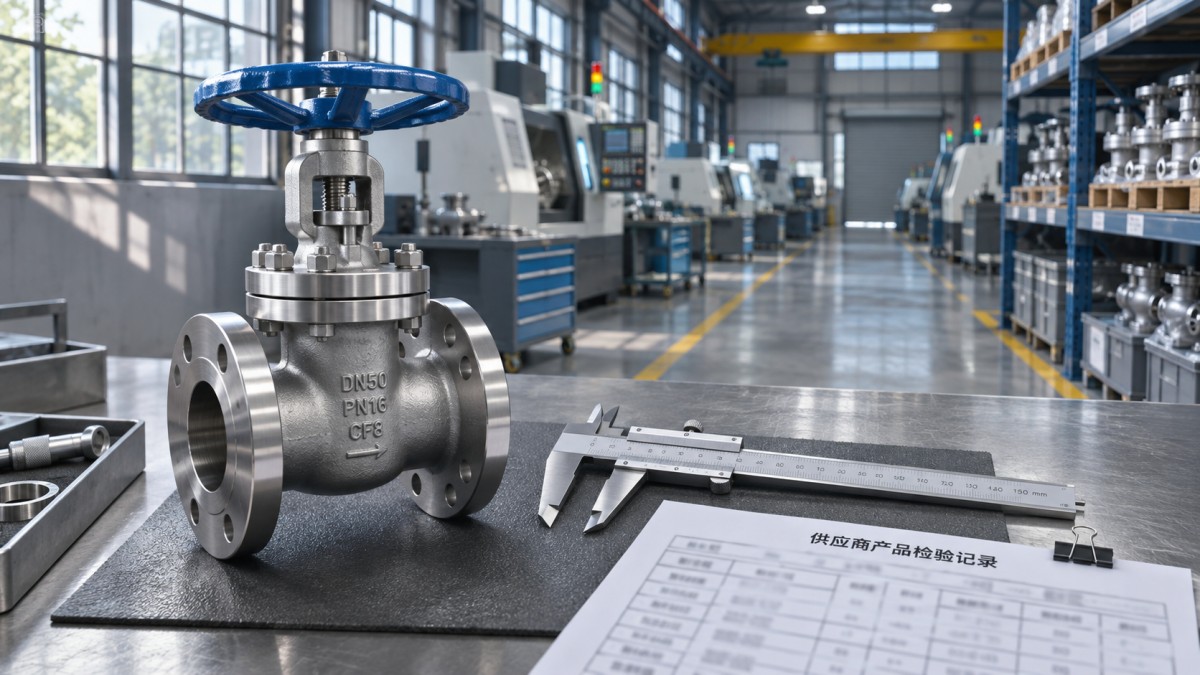
Choose a scorecard when you need a consistent view of measurable performance across suppliers. Choose an audit when you need evidence about how a supplier controls risk.
A scorecard can reveal late deliveries or rising defect rates, but it cannot independently prove that a manufacturer has an effective calibration system or traceable materials.
An audit can test those controls through interviews, document reviews, and observation. However, it represents conditions during a defined assessment period, not continuous performance.
Neither tool replaces engineering judgment. A favorable score or clean audit does not guarantee that every component complies with the purchase specification or will perform in service.
When Is a Supplier Scorecard Enough?
A scorecard may be proportionate for established suppliers of low-criticality items when specifications are clear, alternatives exist, and incoming performance data is reliable and current.
For example, a supplier of standard, noncritical fasteners might be monitored through delivery, acceptance, and responsiveness metrics, supported by incoming checks appropriate to the application.
Even then, procurement should define escalation triggers. Repeated late deliveries, a significant ownership change, or a shift in manufacturing location may justify deeper review.
Scorecards are especially useful for comparing performance over time and focusing discussions. They work best when suppliers understand the definitions, data sources, and review schedule.
Which Metrics Should a Scorecard Include?
Select metrics that reflect the purchase’s operational risks. A generic template may overlook documentation accuracy for electrical equipment or calibration requirements for measurement instruments.
- Delivery: Percentage of order lines received by the agreed date, using a documented rule for partial shipments and buyer-requested changes.
- Quality: Rejected lots, nonconforming units, or defects per million, with the denominator and inspection method clearly defined.
- Corrective action: Percentage of actions closed by the agreed date and effectiveness of actions checked after implementation.
- Documentation: Completeness and timeliness of required certificates, inspection records, and product-identification information.
- Responsiveness: Time to acknowledge critical issues and provide a credible containment or recovery plan.
Use enough metrics to expose meaningful risk, but avoid measuring only what is easy to count. A missing material certificate may matter more than a minor administrative delay.
Specify the reporting period and minimum sample size for each metric. One rejected shipment out of two should not be interpreted like fifty failures across thousands.
How Should Procurement Weight the Results?
Weights should reflect the consequences of failure. For a critical valve manufacturer, quality and traceability may deserve more weight than commercial responsiveness or routine delivery variation.
An illustrative scorecard might assign 35% to quality, 25% to delivery, 20% to documentation and traceability, 15% to corrective action, and 5% to responsiveness.
Those figures are starting points, not universal benchmarks. Agree on thresholds with engineering and quality teams, and adjust them for the component, contract, and operating environment.
Set non-negotiable gates alongside the weighted score. A strong delivery record must not offset an expired mandatory approval, falsified certificate, or unresolved critical safety finding.
When Does a Supplier Audit Justify the Cost?
An audit is warranted when failure could threaten safety, regulatory compliance, asset integrity, or production continuity, and procurement needs evidence beyond reported performance data.
It is also valuable before awarding business to an unproven manufacturer, approving a critical process change, or relying on a supplier with limited operational history.
Consider an audit when a component requires special processes, such as welding, heat treatment, coating, or calibration, whose effectiveness cannot be established through final inspection alone.
Other triggers include recurring nonconformities, unexplained changes in defect rates, questionable traceability, significant subcontracting changes, or a supplier’s inability to demonstrate corrective-action effectiveness.
The audit scope should follow the risk. A focused remote review may suffice for document controls, while observing manufacturing and testing may require an on-site visit.
What Evidence Should an Audit Examine?
Start with the actual purchase requirements, not a generic checklist. Identify the product, manufacturing site, relevant processes, applicable standards, and specific customer or regulatory obligations.
Then sample evidence that connects requirements to execution. For a pressure-containing component, this might mean tracing one finished item back to its material and inspection records.
- Management controls: Responsibilities, document control, internal audit results, and how management addresses recurring quality or delivery issues.
- Production capability: Equipment condition, process parameters, operator qualifications, capacity constraints, and controls over outsourced operations.
- Measurement: Calibration status, traceability of measurement standards where required, and actions taken when equipment is found out of tolerance.
- Product conformity: Incoming checks, in-process inspections, final testing, identification, segregation of nonconforming material, and release authorization.
- Traceability: Links between product markings, purchase orders, material records, test results, and certificates required by the specification.
- Corrective action: Root-cause analysis, containment, assigned owners, completion dates, and evidence that previous fixes remained effective.
Record what was sampled, where it was observed, and any limitations. An audit finding should describe the requirement, objective evidence, and the gap between them.
Auditors need appropriate technical competence and independence from the activity being assessed. Specialist support may be necessary for metrology, electrical safety, metallurgy, or environmental controls.
How Can Procurement Combine Both Tools?
Begin by segmenting purchases according to consequence of failure, supply disruption exposure, product complexity, and the availability of substitutes. Supplier spend alone is an incomplete risk measure.
Map each segment to an assessment level. The approach below is illustrative; contractual obligations, applicable law, and engineering requirements may call for additional controls.
- Lower risk: Qualify against basic requirements and monitor delivery, quality, and relevant documentation through a scorecard.
- Moderate risk: Add a structured questionnaire or targeted evidence review, then audit when performance or operational changes warrant it.
- High risk: Conduct a scoped prequalification audit where appropriate, monitor leading and lagging indicators, and schedule follow-up based on risk and findings.
- Critical failure or suspected misconduct: Escalate immediately, establish containment, and involve quality, engineering, legal, or compliance personnel as appropriate.
Use scorecard trends to direct audit effort. Repeated documentation delays, for instance, can lead auditors to examine record creation, approval, and release controls.
Feed audit findings back into supplier management without reducing them to a single number. Track severity, ownership, due dates, and evidence of effective closure separately.
After an audit, procurement should agree on containment for immediate exposure and a corrective-action plan for underlying causes. Verify completion before considering significant findings closed.
For critical findings, verification may require a follow-up visit, independent testing, or review of subsequent production records. A supplier’s written promise alone is not proof of effectiveness.
How Should Teams Verify Certifications and Compliance?
Begin with the destination market, intended application, and contract. Requirements vary by product and jurisdiction; no single certificate or marking establishes universal industrial compliance.
Check that a management-system certificate covers the relevant legal entity, manufacturing site, activities, and validity period. Where appropriate, verify its status with the issuing certification body.
ISO 9001 certification concerns a quality management system. It does not by itself certify that a particular product meets its technical specification or applicable safety requirements.
Likewise, CE marking relates to applicable European legislation and associated conformity obligations; it is not a general endorsement of quality or a universal third-party certificate.
For products requiring a UL certification, verify the applicable listing or certification, model, conditions of use, and manufacturer through the relevant UL certification directory.
Request test reports, declarations, material certificates, or inspection records when the purchase requires them. Confirm that each document identifies the correct product, revision, and applicable requirements.
Involve qualified compliance or legal specialists when obligations are unclear, particularly for equipment crossing borders or entering regulated facilities. Preserve verification records with the sourcing decision.
What Does Assessment Cost, and How Do You Measure Value?
Scorecards require reliable data, agreed definitions, system access, and staff time to investigate exceptions. Automation can reduce administration, but it cannot repair inaccurate source records.
Audits add preparation, technical expertise, supplier coordination, reporting, and follow-up. On-site visits may also involve travel, production disruption, and the cost of specialist assessors.
Estimate value against the specific exposure being managed: potential downtime, replacement lead time, inspection expense, rework, safety consequences, and the availability of alternative sources.
For example, auditing a sole-source power component manufacturer may be justified even at modest annual spend if a failure could delay a major commissioning schedule.
Track whether assessments lead to timely corrective actions, fewer repeat findings, improved data completeness, and earlier identification of delivery risks. Avoid attributing every improvement solely to the audit.
Review the assessment program periodically. Retire metrics that do not support decisions, revisit risk classifications, and increase scrutiny when supplier operations or purchase requirements change.
Conclusion: Match the Tool to the Risk
Scorecards show how suppliers are performing against agreed measures; audits test whether the processes behind that performance are credible and controlled. Each answers a different question.
Use scorecards for consistent monitoring, audits for targeted verification, and mandatory gates for requirements that cannot be traded against a favorable average. Escalate when evidence changes.
The best industrial supplier assessment tools are therefore not defined by software features or checklist length, but by their ability to support defensible, timely sourcing decisions.
Expert Insights

Chief Security Architect
Dr. Thorne specializes in the intersection of structural engineering and digital resilience. He has advised three G7 governments on industrial infrastructure security.
Related Analysis
Core Sector // 01
Security & Safety
- Facility Upgrade Solutions: Prioritizing Safety and Energy ImprovementsAuthor :Safety Compliance Lead

- Industrial Supplier Assessment Tools: Comparing Scorecards and AuditsAuthor :Safety Compliance Lead

- How to Build an Equipment Budget for EPC Projects Without Underestimating Lifecycle CostsAuthor :Safety Compliance Lead

- Selecting EPC Procurement Support Tools to Reduce Vendor and Delivery DelaysAuthor :Safety Compliance Lead

- How to Select an Access Control Management System for Multi-Site FacilitiesAuthor :Safety Compliance Lead

- How to Select Electronic Hotel Key Card Locks for Guest Rooms and Staff AreasAuthor :Safety Compliance Lead

- How to Evaluate a Hotel Key Card Lock Supplier for Multi-Property RolloutsAuthor :Safety Compliance Lead

- Pre-Contract Audit Checklist for Verified Production Safety and Environmental ComplianceAuthor :Safety Compliance Lead


