Global Sourcing of Industrial Equipment: A Supplier Vetting Checklist
Author
Date Published
Reading Time

A low equipment quote can lose its advantage when the shipment arrives without the required documentation, fails an acceptance test, or cannot be supported locally. Before comparing prices, screen suppliers against the equipment specification, destination-market requirements, manufacturing capability, delivery plan, and support commitments. A supplier that cannot substantiate a critical requirement should not progress on price alone.
This procurement reference for industrial equipment global sourcing turns those checks into a sequence: establish mandatory requirements, verify evidence, investigate delivery and financial exposure, then compare the complete cost of compliant bids. The depth of review should reflect the consequences of failure, not just the purchase value.
Start with the requirements a supplier must meet
Issue a specification that allows suppliers to quote the same scope. Identify the operating duty, capacity, interfaces, environmental conditions, utilities, installation constraints, expected service life, and site documentation needs. For measurement equipment, include the required accuracy and calibration expectations; for powered machinery, define supply characteristics and guarding requirements. State which drawings, manuals, certificates, and test records must accompany the equipment.
Separate mandatory conditions from preferences. For example, an agreed operating temperature range may be mandatory, while a preferred paint finish may be negotiable. Mark requirements that cannot be verified until production or testing, and specify the evidence needed at each stage. Without this distinction, a technically incomplete bid can appear cheaper simply because it excludes work.
Also establish who is responsible for determining applicable requirements in the destination market and at the installation site. Equipment obligations depend on the product, intended use, jurisdiction, and configuration. A general statement that an item is “internationally compliant” is not a substitute for a requirement-by-requirement review.
Supplier vetting checklist: evidence before promises
Ask each bidder to complete the same evidence schedule, but investigate the highest-risk claims first. Record the document owner, issue date, equipment model, manufacturing location, and any conditions attached to the evidence. The following checks provide a practical starting point.
- Confirm the legal entity and its role. Identify the contracting company, manufacturer, and production site. A distributor may be an appropriate supplier, but its authority to sell, provide warranty support, and obtain original parts should be clear.
- Match compliance documents to the offered configuration. Request relevant declarations, certificates, test reports, and the standards or regulations cited. Check model numbers, ratings, scope, validity, and issuing body where applicable. Resolve discrepancies before award.
- Assess production capability. Ask which processes are performed in-house, which are subcontracted, and where critical components originate. Review capacity, production controls, and the proposed inspection plan against the order.
- Examine quality records. Request a representative inspection and test plan, sample records, nonconformance procedures, and traceability arrangements. Confirm how changes and deviations are approved.
- Review financial and supply continuity. Use proportionate financial checks and ask about constraints affecting production, key sub-suppliers, and recovery from disruption. Identify evidence gaps that require commercial protection.
- Verify delivery and support. Obtain a milestone schedule, packing and transport assumptions, warranty terms, spare-parts availability, and the process for technical assistance after delivery.
For an established, low-risk purchase, current documents and a record of acceptable performance may be enough for an initial review. Safety-critical, custom-built, or production-constraining equipment may warrant a site audit, independent inspection, or witnessed testing. Decide the verification level before negotiations reach the point where schedule pressure makes unresolved risks harder to address.
Check compliance at the equipment level
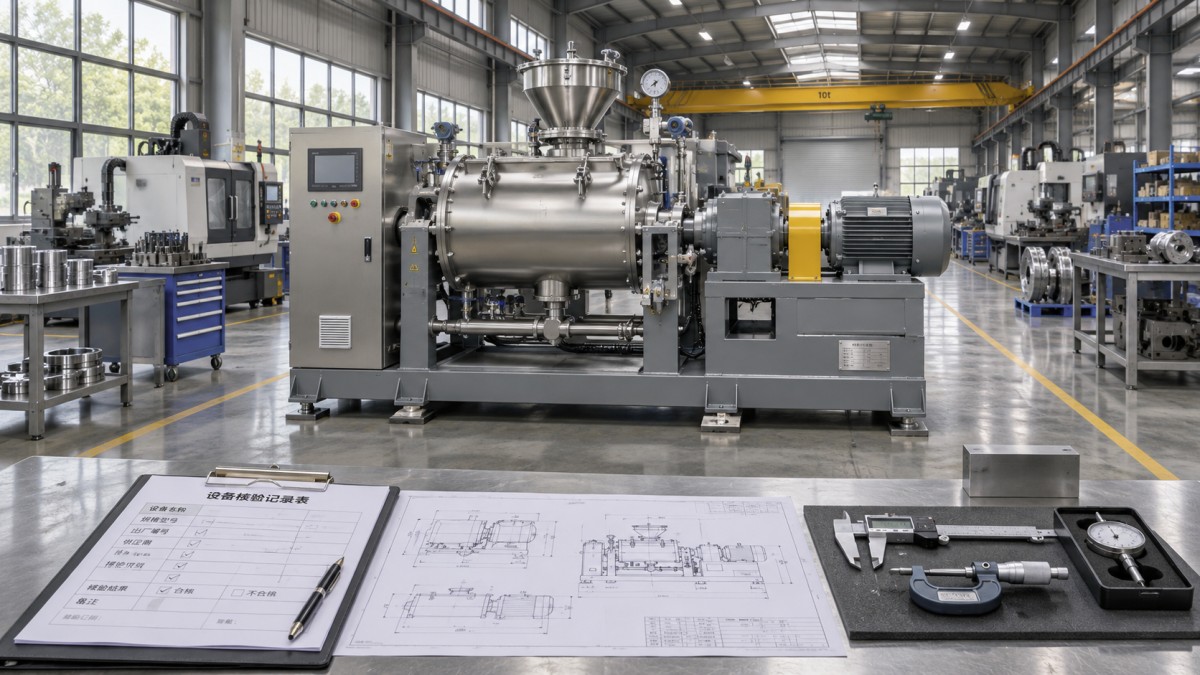
Management-system certification can indicate that a supplier follows documented processes; it does not by itself establish that a particular machine is compliant or fit for its intended duty. Likewise, a certificate covering one component does not automatically cover the assembled equipment. Trace each important claim to the exact model, rating, materials, and configuration being purchased.
Where a supplier refers to CE marking, request the applicable declaration and supporting information appropriate to the product. CE marking is not a universal certificate issued for every product by a single authority, and the applicable conformity process varies. Where UL certification is required by the specification or acceptance authority, verify the relevant listing or certification and its scope with the issuing organization. ISO references should identify the relevant standard and whether the claim concerns a management system, a test method, or a product requirement.
Ask engineering and the party responsible for installation to review gaps. A supplier may offer an acceptable base machine but exclude a site-required control interface, documentation language, protective device, or inspection. Record whether the supplier will include the missing item, quote it separately, or leave it to the buyer. Do not treat an ambiguous statement such as “available on request” as an included deliverable.
Determine whether the factory can deliver the specified quality
Capability claims become more useful when tied to the order. Request the proposed manufacturing route and identify operations that control critical characteristics: welding, heat treatment, machining, assembly, calibration, or pressure testing, as relevant. Ask how measuring equipment is controlled and calibrated, and how material identity is maintained when traceability is required.
A factory assessment should follow the product through the process rather than focus only on facilities. Look at receiving inspection, storage, work instructions, in-process checks, handling of nonconforming material, and final release. For outsourced operations, establish who selects and monitors the subcontractor and whether the buyer has inspection or approval rights. A capable main supplier can still be exposed by an uncontrolled critical subcontractor.
Agree on acceptance before production
Define measurable acceptance criteria and the evidence that will demonstrate them. Depending on the equipment, this might include dimensional reports, material records, functional checks, calibration results, or a factory acceptance test. Specify the test procedure, operating conditions, instruments, pass/fail criteria, and responsibilities for witnessing and retesting. For complex equipment, agree whether a site acceptance test is also required after installation.
Identify inspection hold points early enough to prevent work from proceeding before a required review. The contract should explain how a failed test is corrected, who pays for repeat testing, and how schedule effects are handled. Sampling may be reasonable for routine items, but the sampling method and treatment of rejected items need to be explicit.
Investigate financial exposure and supply-chain resilience
Financial review is not a prediction of failure. Its purpose is to identify exposure that the purchase terms or sourcing plan should address. Subject to access and confidentiality, review available financial statements, credit information, trade references, ownership changes, and payment behavior. Consider whether the supplier can fund materials and production until agreed payments are due. An unusually large order relative to its capacity deserves closer examination.
Map the dependencies that could delay the equipment: a sole-source casting, a specialized control component, an external test facility, or a cross-border finishing operation. Ask for lead times, alternatives, and the process for notifying the buyer when a critical source changes. An alternative is useful only if it meets the specification and can be approved in time; an unqualified substitute can create a different risk.
Where concerns remain, consider staged payments linked to verified milestones, an appropriate performance security, inspection rights, or a qualified second source. The commercial team should assess the cost and enforceability of these measures in the relevant jurisdictions. Avoid advancing a large payment merely because the supplier promises an accelerated slot without evidence that production resources are available.
Compare landed and operating costs, not just unit prices
Normalize bids to the same technical and commercial scope. Include the quoted equipment, required options, inspection, testing, documentation, packing, freight, insurance, import charges, installation support, commissioning, training, and initial spares where applicable. Add foreseeable operating and maintenance costs when they differ materially between offers. Keep uncertain items as stated assumptions rather than presenting estimates as confirmed prices.
Specify the agreed Incoterms rule and named place, then check the sales contract for responsibilities the rule does not settle, including payment, ownership transfer, warranty, and remedies. A quoted delivery date should be supported by a schedule for drawings, approvals, long-lead components, inspection, packing, and shipment. Compare the supplier’s assumptions with the project schedule rather than relying on a single headline lead time.
Test the after-sales commitment before award
A warranty has limited purchasing value if its scope and response process are unclear. Establish the start date and duration, covered failures, exclusions, notification method, response expectations, and remedy. Determine who removes and reinstalls a defective component, pays freight, supplies replacement parts, and authorizes field repairs. Check whether commissioning by an approved party is a condition of coverage.
Request a recommended spare-parts list with part numbers, expected lead times, storage requirements, and interchangeability information. For equipment likely to operate for many years, ask how the supplier manages obsolescence and whether drawings, software access, or diagnostic tools are needed for maintenance. Promised local support should be backed by a named service arrangement and a defined escalation route, not simply a sales contact.
Turn the findings into an award decision
Use a gate before scoring commercial offers: reject or hold bids with unresolved mandatory safety, compliance, or technical failures. Score the remaining suppliers against weighted criteria agreed before the final comparison, such as technical fit, verified quality capability, delivery confidence, total evaluated cost, and support. Keep evidence and assumptions beside each score so a high commercial rating cannot conceal a missing certificate or untested performance claim.
Red flags include documents that do not match the offered model, refusal to identify the manufacturing site, unexplained changes in critical sub-suppliers, vague acceptance criteria, or a schedule unsupported by production milestones. A flag does not always require immediate rejection: ask for clarification, set a deadline, and document the resolution. Escalate unresolved safety or regulatory questions to the responsible technical and compliance teams.
Before issuing the purchase order, transfer the agreed specification, deviations, test plan, document schedule, delivery milestones, warranty, and remedies into the contract or its controlled attachments. Record who approves changes after award. This closes a common gap between a supplier’s evaluated offer and what the factory is actually instructed to build.
Expert Insights

Chief Security Architect
Dr. Thorne specializes in the intersection of structural engineering and digital resilience. He has advised three G7 governments on industrial infrastructure security.
Related Analysis
- Nov 22, 2026McKinsey: India Needs Up to $400 Billion to Meet Steel Capacity Growth GoalAuthor :
- Nov 22, 2026Choosing Geotextile Fabric for Landfill Drainage and Liner ProtectionAuthor :Environmental Engineering Director
- Nov 21, 2026Japan's Steel Exports Could Fall to Lowest Level Since 1999 in 2026Author :
Core Sector // 01
Security & Safety
- Global Sourcing of Industrial Equipment: A Supplier Vetting ChecklistAuthor :Safety Compliance Lead

- Product Category Insights for Sourcing: Assessing Cost and Supply RiskAuthor :Safety Compliance Lead

- Machinery Components Sourcing: How to Evaluate Suppliers and Lead TimesAuthor :Safety Compliance Lead

- Industrial Supplier Insights: Assessing Capacity, Lead Times and RiskAuthor :Safety Compliance Lead

- Facility Upgrade Solutions: Prioritizing Safety and Energy ImprovementsAuthor :Safety Compliance Lead

- Industrial Supplier Assessment Tools: Comparing Scorecards and AuditsAuthor :Safety Compliance Lead

- How to Build an Equipment Budget for EPC Projects Without Underestimating Lifecycle CostsAuthor :Safety Compliance Lead

- Selecting EPC Procurement Support Tools to Reduce Vendor and Delivery DelaysAuthor :Safety Compliance Lead