How to Build an Equipment Budget for EPC Projects Without Underestimating Lifecycle Costs
Author
Date Published
Reading Time
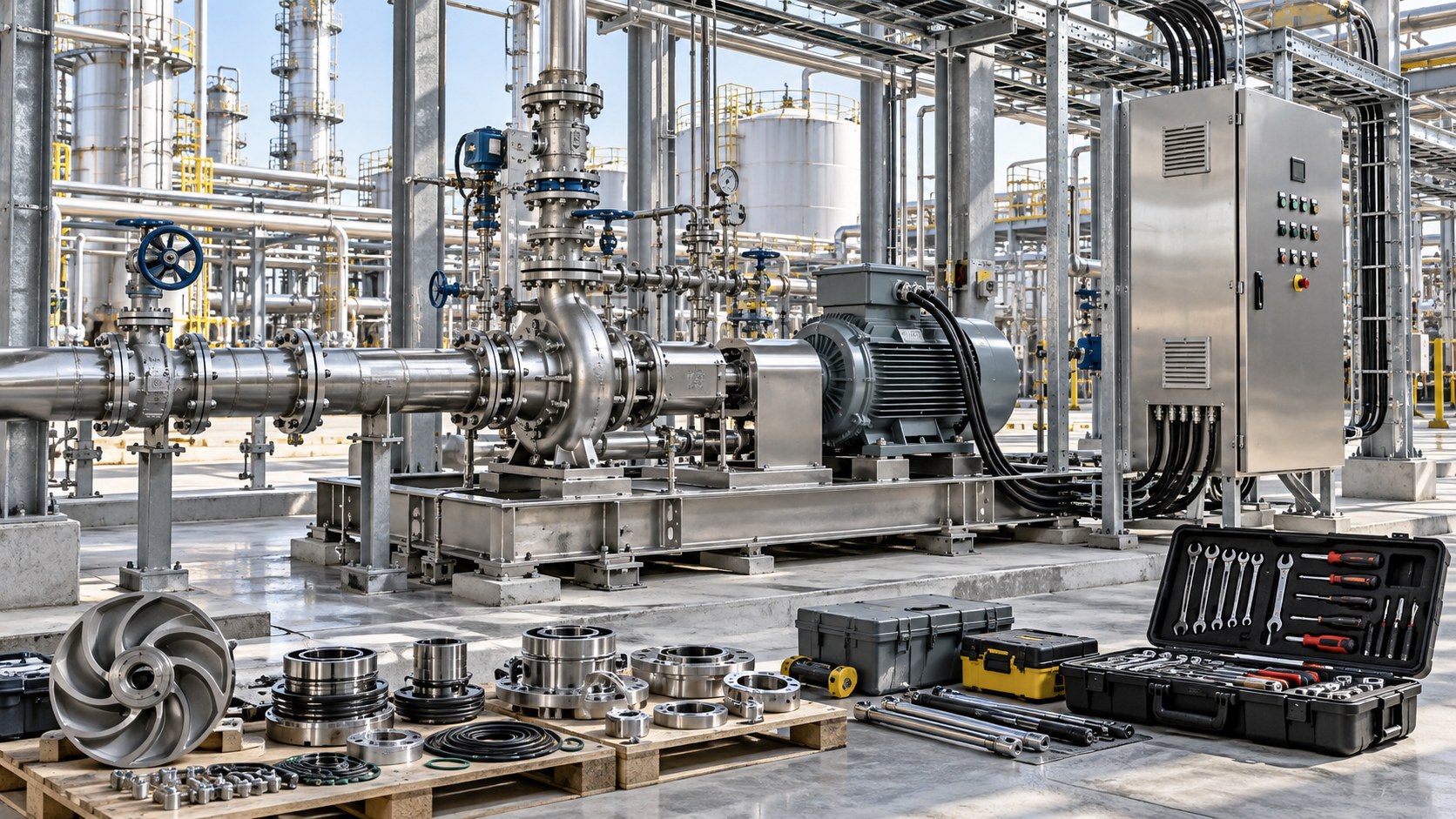
Equipment budgets fail when they treat the purchase order as the cost boundary. In an EPC project, the quoted equipment price is only one component of the financial commitment created by a technical selection. The chosen package also determines civil interfaces, electrical scope, controls integration, certification work, commissioning duration, operating consumption, spare-parts exposure, maintainability, and the cost of failure after handover.
A realistic budget therefore needs two views at the same time: the installed project cost required to place equipment into reliable service, and the lifecycle cost created over its intended operating period. Neither can be inferred safely from a supplier’s base quotation. The discipline behind EPC project equipment selection pricing is not finding the lowest unit price; it is identifying which costs are fixed by the selection before they become expensive variations, claims, or operating liabilities.
Separate the equipment price from the cost of having a functioning system
Suppliers do not always quote the same commercial boundary. One offer may include a skid, local panel, factory testing, and preservation for shipment. Another may show only the core machine, with instrumentation, drives, valves, cabling, commissioning support, and performance testing treated as exclusions. A comparison based on the line titled “equipment price” can therefore compare fundamentally different scopes.
Before commercial normalization, define an equipment cost breakdown structure that follows the physical and contractual path from factory to operating asset. A practical structure includes:
- Base supply: the equipment, standard accessories, factory assembly, and documents explicitly included in the vendor scope.
- Freight and delivery: export packing, transport, insurance, customs treatment where applicable, inland handling, lifting studies, and site unloading.
- Installation: foundations, structural steel, grouting, pipework, electrical works, field instruments, cabling, insulation, heat tracing, and access platforms.
- Interfaces: tie-in spools, adapters, signal conversion, control-system configuration, utility connections, and modifications to adjacent packages.
- Assurance and compliance: required certification, inspection, witness testing, hazardous-area documentation where relevant, material traceability, and local code review.
- Commissioning and acceptance: vendor attendance, calibration, loop checks, functional tests, performance testing, training, and initial operating consumables.
- Ownership costs: energy, routine maintenance, critical spares, service contracts, consumables, repairs, failure consequences, and end-of-life obligations.
Not every equipment category needs each cost item at the same depth. A standard low-voltage motor and a process-critical compressor do not create equivalent risks. Yet the logic must remain consistent: costs should be assigned to the equipment decision that causes them, even if they sit in another WBS code or will be paid after mechanical completion.
That assignment is essential because project budgets frequently understate equipment cost by placing consequential scope under “site installation,” “electrical,” or “owner’s operations.” The budget may appear acceptable at approval stage while the project team inherits an unfunded execution problem later.
Build the estimate around the operating duty, not the vendor’s standard configuration
Lifecycle cost cannot be judged until the required duty is stable enough to test the proposed equipment against it. The relevant question is not whether a product meets a nominal datasheet point. It is whether it will operate efficiently, safely, and maintainably across the actual duty envelope.
For rotating equipment, that means considering minimum, normal, and maximum flow; fluid condition; start-stop frequency; ambient conditions; control range; transient behavior; and required availability. A pump selected near the edge of its operating range may carry a lower initial price but require recirculation provisions, more frequent seal attention, or additional standby capacity. A motor selected only for rated load may have inadequate starting or overload margin. A transformer or switchgear arrangement that fits initial connected load may impose expensive future expansion constraints.
For instruments and analytical equipment, the installed environment is equally important. A low-cost transmitter can be expensive if process conditions demand special wetted materials, impulse piping, heat tracing, frequent calibration, or a higher ingress-protection and hazardous-area classification than assumed in the original quote. The core instrument price may be small relative to the field installation and maintenance burden it creates.
The estimate should therefore record the assumptions that drive the selection: design basis, utilities, environmental rating, classification requirements, performance guarantees, redundancy philosophy, maintainability requirements, expected maintenance access, and the definition of available operating support. If any of these remain unresolved, their cost should not disappear. It should be carried as a defined allowance linked to the unresolved assumption.
Normalize bids before comparing them
Bid normalization is where procurement pricing becomes decision-quality equipment economics. It requires a common technical and commercial baseline, not merely a spreadsheet that ranks totals.
Start with a scope matrix listing every required item and assigning it one of four statuses for each bidder: included, excluded, optional, or unclear. “By others,” “if required,” and “as per purchaser specification” should not be accepted as neutral language. Each phrase needs an owner and a value. Where supplier documentation conflicts with the requisition, the discrepancy should be logged as a commercial exposure rather than left for clarification after award.
A normalization model should also test differences that are easy to overlook:
- Whether quoted capacity and performance are guaranteed at stated site conditions.
- Whether controls, variable-speed drives, local panels, sensors, and communication protocols are included.
- Whether required materials, coatings, corrosion allowances, enclosure ratings, and seismic or wind provisions are aligned.
- Whether factory acceptance testing, third-party inspection, documentation, and certification are included at the required level.
- Whether preservation, special packing, site storage requirements, and warranty start dates suit the construction schedule.
- Whether commissioning support is priced as a fixed commitment or an open-ended daily rate.
- Whether recommended spare parts cover commissioning only, two years of operation, or an undefined period.
Technical deviations need monetary treatment where possible. If a lower-price bid excludes a field control panel, the estimate should add the cost of procurement, integration, testing, and schedule exposure for a separate panel. If it offers a different metallurgy, the evaluation should consider the expected operating environment and the cost of any protective measures or shortened replacement interval. A bid comparison that leaves deviations as narrative notes invites a price-led award despite a materially higher delivered cost.
Use lifecycle cost as a decision model, not a vague premium justification
Lifecycle costing is often invoked to defend a more expensive option without a transparent calculation. That weakens both procurement discipline and approval confidence. The model does not need false precision, but it must expose the variables that materially alter cost.
A useful structure is:
Lifecycle cost = installed cost + operating energy and consumables + planned maintenance + corrective maintenance + critical spares + downtime consequence + compliance and disposal cost − residual value
For options with different timing of expenditure, the future costs should be discounted using the project’s approved financial convention. The important point is consistency: use the same evaluation period, operating profile, energy-price assumption, availability expectation, and discount basis for each option. Do not compare one supplier’s energy use at full load with another’s at average operating load, or one warranty term with another’s assumed post-warranty maintenance cost.
Energy is often significant for continuously operated electrical and mechanical equipment, but it should not automatically dominate the evaluation. In intermittent services, maintenance access, calibration workload, replacement lead time, or the consequence of an unplanned shutdown may have greater influence. Likewise, redundancy can increase installed cost while reducing the expected cost of lost production or failed contractual performance. The correct comparison depends on the function of the equipment within the system, not its category alone.
Downtime should be treated carefully. It is not appropriate to invent a universal hourly loss figure. Instead, identify the credible failure mode, the restoration path, the availability of bypass or standby equipment, repair lead time, and the contractual or operational consequence. For a non-critical utility package, failure may be manageable through planned intervention. For equipment that interrupts a process train, safety function, or environmental control obligation, the cost exposure can be far greater than the repair invoice.
Commissioning is a budget phase, not an afterthought
Equipment that arrives on site is not necessarily ready for commissioning. Long-lead packages may be delivered months before energization, exposing them to storage, preservation, inspection, and warranty issues. Some equipment requires periodic shaft rotation, humidity control, heater energization, desiccant replacement, nitrogen blanketing, or firmware management during storage. If these requirements are not reflected in the construction plan and budget, the project can face avoidable degradation or warranty disputes.
Commissioning cost also increases when package boundaries are poorly defined. Typical gaps include responsibility for energization, control logic, protective relay settings, software licenses, calibration standards, utility flushing, lubrication, alignment checks, and performance-test instruments. A vendor may reasonably state that its package was supplied correctly while the project still cannot demonstrate an operating system because these interface activities were unbudgeted.
Define the acceptance path before award: pre-commissioning prerequisites, vendor attendance days, site test responsibilities, performance criteria, test duration, retest conditions, and the evidence required for handover. This is particularly important where liquidated damages, capacity guarantees, safety interlocks, emissions performance, or grid-connection requirements depend on final equipment behavior.
Protect the budget against supply-chain and contract exposure
Lifecycle cost is not confined to operation. A package with a long or uncertain replacement lead time can create a material availability risk even when its routine maintenance cost is low. The equipment budget should identify critical components whose failure would extend beyond the project’s acceptable outage window. Those items may require initial spares, framework service support, repairability provisions, or an alternative approved source.
Initial spare-parts lists deserve separate review. Suppliers commonly divide them into commissioning spares, two-year operating spares, capital spares, and special tools. Combining these into one unexamined lump sum causes two opposite errors: overbuying generic consumables while failing to secure the few components that control recovery time. The project team should connect spares selection to failure consequence, shelf life, storage condition, interchangeability, and supplier lead time.
Commercial terms also influence the real equipment cost. Currency exposure, milestone payments, freight responsibility, Incoterms, warranty commencement, limitation of liability, escalation clauses, and liquidated-damages provisions should be visible beside technical pricing. A low delivered-equipment price can become less attractive if payment is heavily front-loaded, warranty starts at shipment rather than commissioning, or the supplier retains broad rights to charge for site support.
Manage uncertainty explicitly rather than hiding it in a general contingency
Not all uncertainty belongs in one undifferentiated contingency line. Some uncertainties are technical maturity issues, such as incomplete process data or unconfirmed hazardous-area classification. Others are execution risks, such as access constraints, lifting complexity, seasonal site conditions, or unclear tie-in windows. Others are market exposures, including freight volatility, currency movement, and constrained manufacturing slots.
Each material uncertainty should have an owner, a decision date, and a defined cost basis. This makes contingency traceable and allows it to reduce as engineering matures. It also prevents a common distortion: a seemingly cheap selection absorbs a disproportionate share of unallocated contingency because its interfaces, documentation, or field requirements remain unclear.
At approval stage, present a base estimate and a risk-adjusted view. The base estimate should reflect defined scope. The risk-adjusted view should show the financial effect of unresolved items and credible adverse outcomes. Decision-makers can then distinguish between a genuinely economical option and an option that appears economical only because its risks have not yet been costed.
Turn the budget into an award and handover control document
An equipment budget should remain active after approval. Once a supplier is selected, the estimate becomes a control point for purchase order scope, change management, expediting, construction readiness, and handover planning. Any deviation that changes utilities, equipment footprint, controls architecture, materials, certification, or maintenance strategy should trigger a cost-and-schedule review, even if the vendor describes it as an “equivalent” substitution.
The most useful final record is not a single total. It is a decision file showing the selected option, normalized alternatives, installed-cost assumptions, lifecycle variables, risk allowances, interface responsibilities, required spares, and the conditions under which the economics remain valid. This creates an auditable link between engineering intent, procurement commitment, and operating expectations.
That link is what prevents underestimation. Equipment may be purchased once, but its selection governs years of operating cost, serviceability, compliance effort, and recovery capability. A budget that recognizes those consequences early is more likely to protect both EPC margin and the reliability expected from the completed asset.
Technical Specifications
- Air Handling Unit Supplier Checklist: Performance Data, Lead Times, and SupportAuthor :Environmental Engineering Director
- Buying Fiberglass Water Tanks Wholesale: Compare Quotes and Delivery CostsAuthor :Environmental Engineering Director
- Choosing an XLPE Power Cable Supplier: Test Reports, Traceability, and Lead TimesAuthor :Grid Infrastructure Analyst
Expert Insights

Chief Security Architect
Dr. Thorne specializes in the intersection of structural engineering and digital resilience. He has advised three G7 governments on industrial infrastructure security.
Related Analysis
- Oct 19, 2026Air Handling Unit Supplier Checklist: Performance Data, Lead Times, and SupportAuthor :Environmental Engineering Director
- Oct 18, 2026Buying Fiberglass Water Tanks Wholesale: Compare Quotes and Delivery CostsAuthor :Environmental Engineering Director
- Oct 17, 2026Choosing an XLPE Power Cable Supplier: Test Reports, Traceability, and Lead TimesAuthor :Grid Infrastructure Analyst
Core Sector // 01
Security & Safety
- How to Build an Equipment Budget for EPC Projects Without Underestimating Lifecycle CostsAuthor :Safety Compliance Lead

- Selecting EPC Procurement Support Tools to Reduce Vendor and Delivery DelaysAuthor :Safety Compliance Lead

- How to Select an Access Control Management System for Multi-Site FacilitiesAuthor :Safety Compliance Lead

- How to Select Electronic Hotel Key Card Locks for Guest Rooms and Staff AreasAuthor :Safety Compliance Lead

- How to Evaluate a Hotel Key Card Lock Supplier for Multi-Property RolloutsAuthor :Safety Compliance Lead

- Pre-Contract Audit Checklist for Verified Production Safety and Environmental ComplianceAuthor :Safety Compliance Lead

- How Can Distributors Build Procurement-Oriented Industrial Content That Drives RFQs?Author :Safety Compliance Lead

- EU Mandates EN 50131-1:2026 for Security SystemsAuthor :Safety Compliance Lead