Machinery Components Sourcing: How to Evaluate Suppliers and Lead Times
Author
Date Published
Reading Time
A reliable machinery components supplier can demonstrate that it understands the part, can manufacture it consistently, and has a credible route to deliver it when the buyer needs it. The lowest quote deserves consideration, but only after its scope, quality evidence, and delivery assumptions are comparable with those of competing bids.
For procurement teams, the level of scrutiny should follow the consequence of failure and the difficulty of replacement. A standard, readily available component for noncritical equipment may need a relatively simple check. A custom shaft, safety-related part, or component needed for a planned shutdown calls for closer review of manufacturing capacity, inspection records, material traceability, and the events that could delay delivery.
Start with a specification suppliers can quote against
Supplier evaluation is only meaningful when each bidder has the same requirements. A drawing or part number may be enough for a standard item, but custom or replacement components often need more context. Ambiguity can produce quotes that appear competitive while excluding essential machining, inspection, documentation, packaging, or delivery services.
Before issuing a request for quotation, establish the requirements that affect cost and manufacturability:
- Part definition: Drawing revision, dimensions, tolerances, material grade, surface finish, and any coating or heat treatment.
- Operating conditions: Loads, temperature, environment, duty cycle, and interfaces with mating parts, where these affect the design or material.
- Quality evidence: Required inspection reports, material certificates, test records, traceability, and acceptance criteria.
- Quantity and delivery: Order quantity, release schedule, required arrival date, delivery location, and whether partial shipments are acceptable.
- Commercial scope: Tooling, prototypes, packaging, freight, duties, warranty terms, and responsibility for nonconforming parts.
For an obsolete replacement component, resist treating the physical sample as a complete specification. Wear, previous repairs, and undocumented modifications can make an old part a poor guide to the original design. Agree who is responsible for verifying the dimensions, material, and fit before production starts.
Highlight requirements that suppliers must not change without approval. If alternatives are welcome, ask bidders to price the specified part and identify proposed substitutions separately. That keeps an attractive alternative from obscuring the cost or risk of meeting the original requirement.
Evaluate the supplier’s ability to make this part
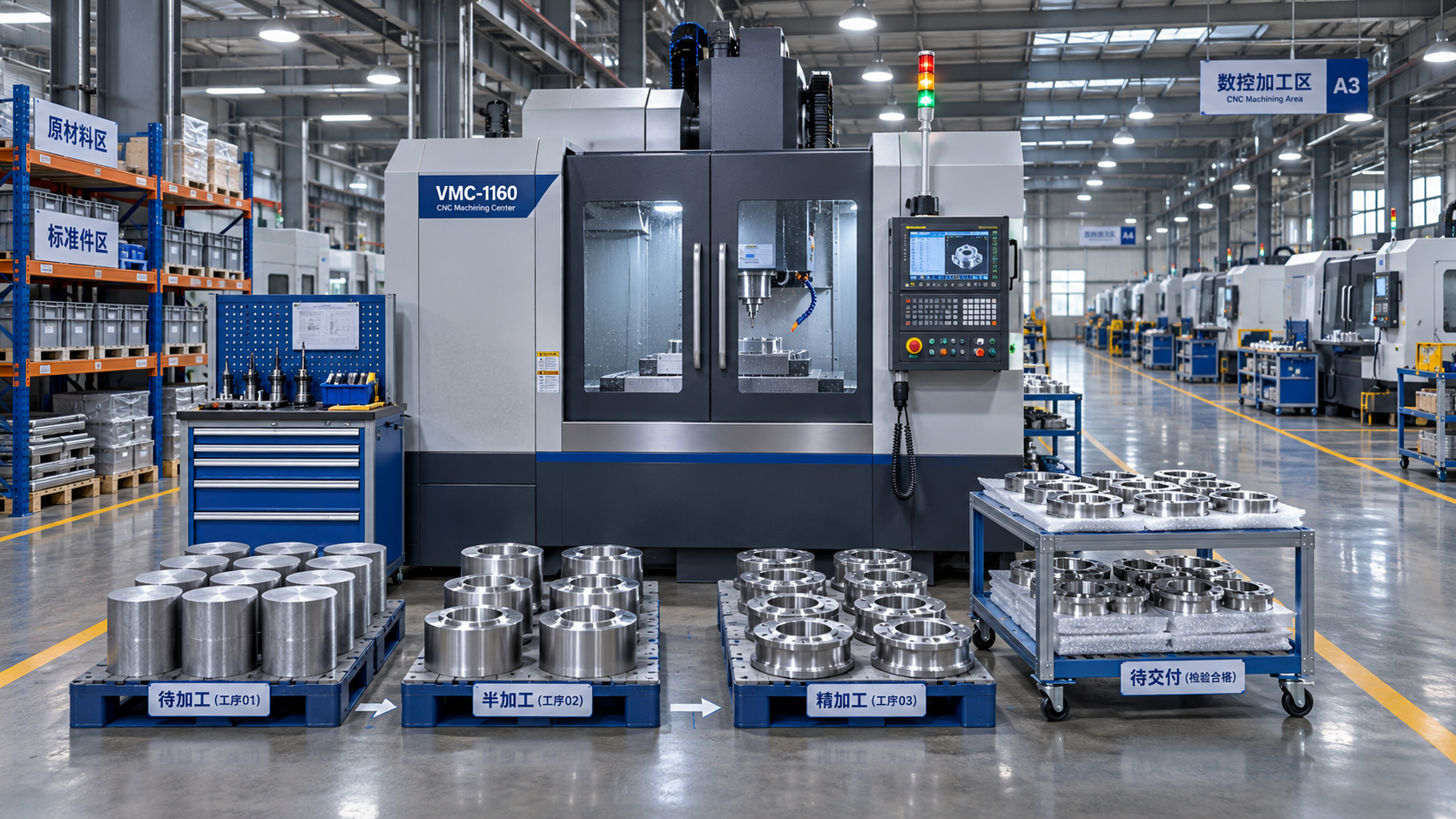
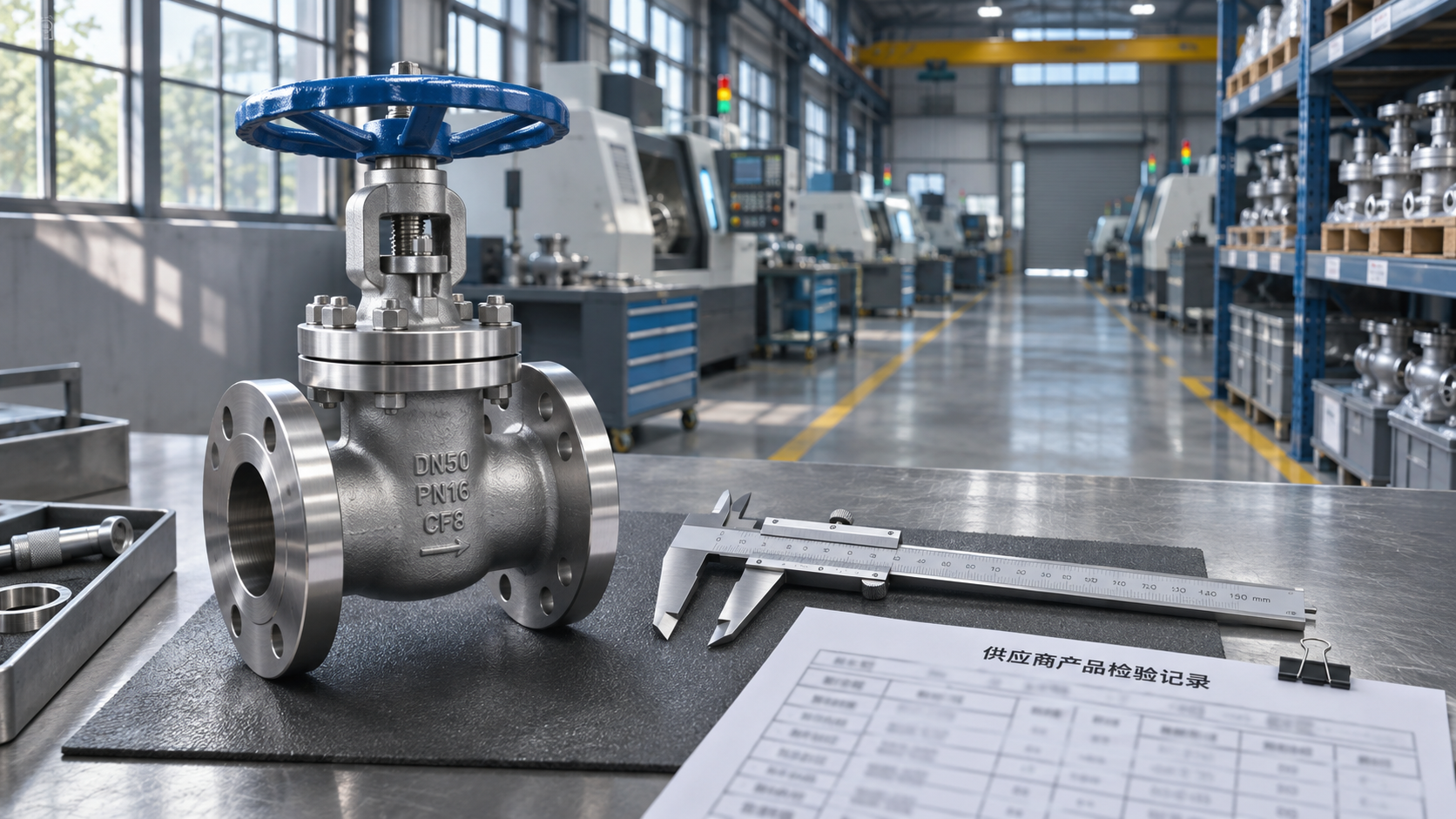
A supplier’s general capabilities list is a starting point. The more useful question is whether its production route suits the component under consideration. Ask which operations it will perform in-house, which will be subcontracted, and where final inspection will take place. For a machined component, that route might include raw material procurement, rough machining, heat treatment, finishing, coating, and dimensional inspection.
Subcontracting is not inherently a weakness. A specialist heat treater or coating provider may be well suited to the job. The buyer should nevertheless understand who controls the handoffs, how the supplier qualifies its subcontractors, and who takes responsibility if an outsourced operation causes a delay or defect.
Review capacity in relation to the requested schedule and quantity. A supplier may have the right equipment but limited access to it during the required production window. Ask for the proposed manufacturing sequence, expected bottlenecks, and any tooling or programming work needed before the order can enter production. For repeat purchases, discuss how the supplier would accommodate a change in demand and how much notice it would need.
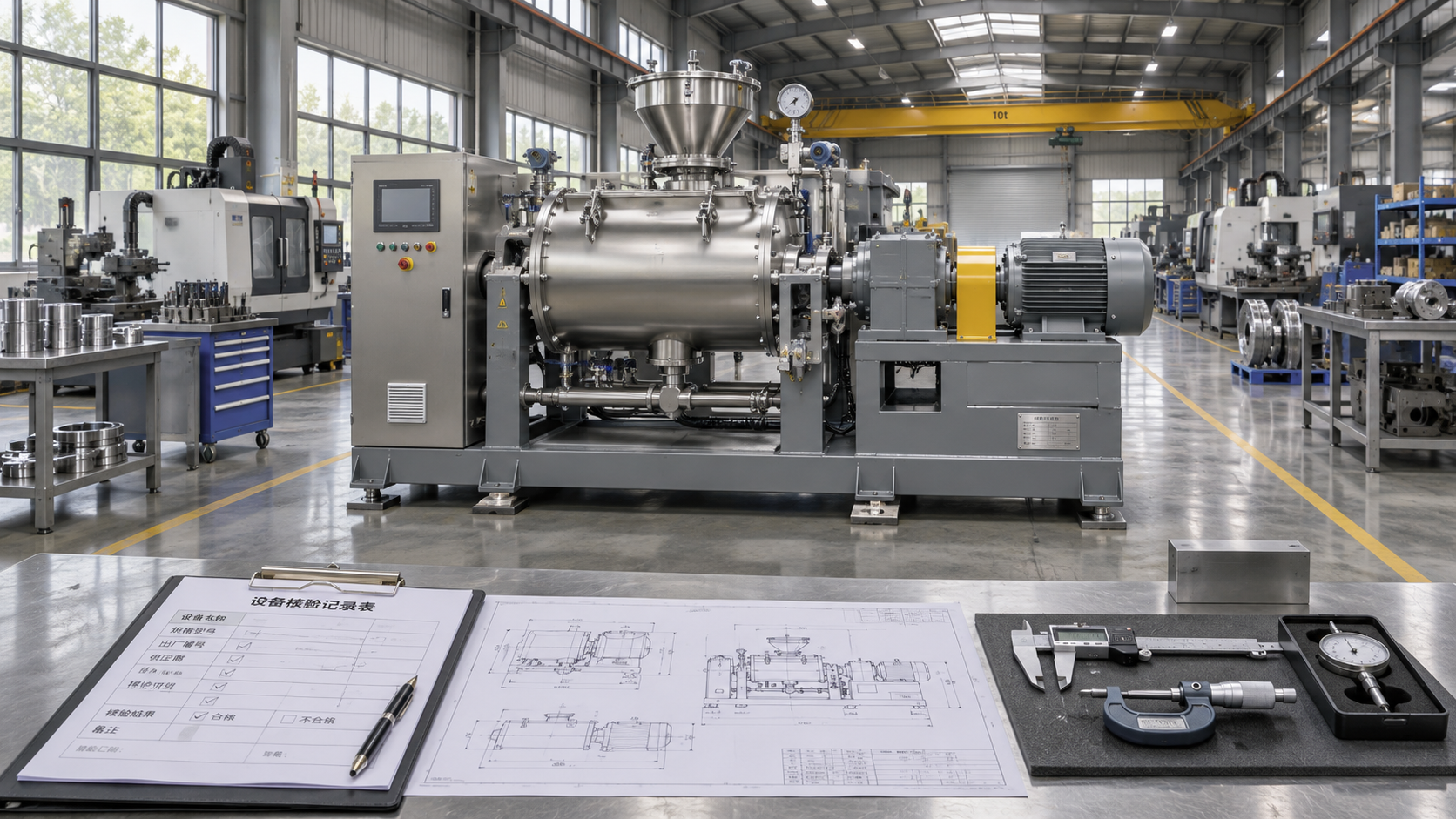
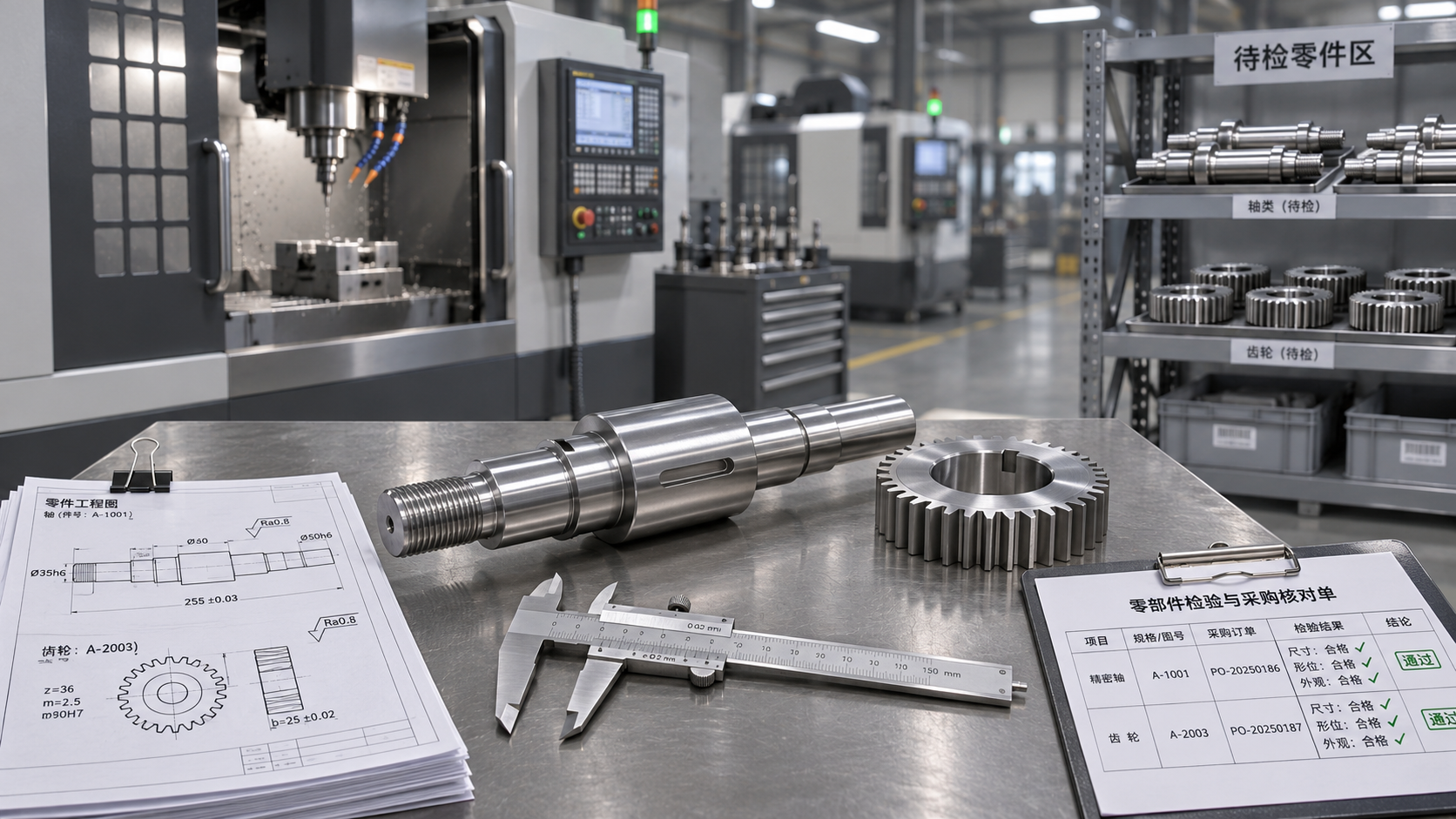
For critical or unfamiliar parts, a sample or first-article inspection can expose misunderstandings before the full batch is made. Define in advance which dimensions and characteristics will be checked, what records are required, who approves the results, and whether full production may begin before approval. The extra step adds time, so include it in the schedule rather than treating it as an informal precaution.
Evidence should be proportionate to the purchase. A buyer may review recent inspection records for a comparable process, audit a production site, or request a trial order. For a routine catalog item, verifying the manufacturer, part number, availability, and authorized supply channel may be more useful than commissioning an extensive audit.
Check quality claims against the order
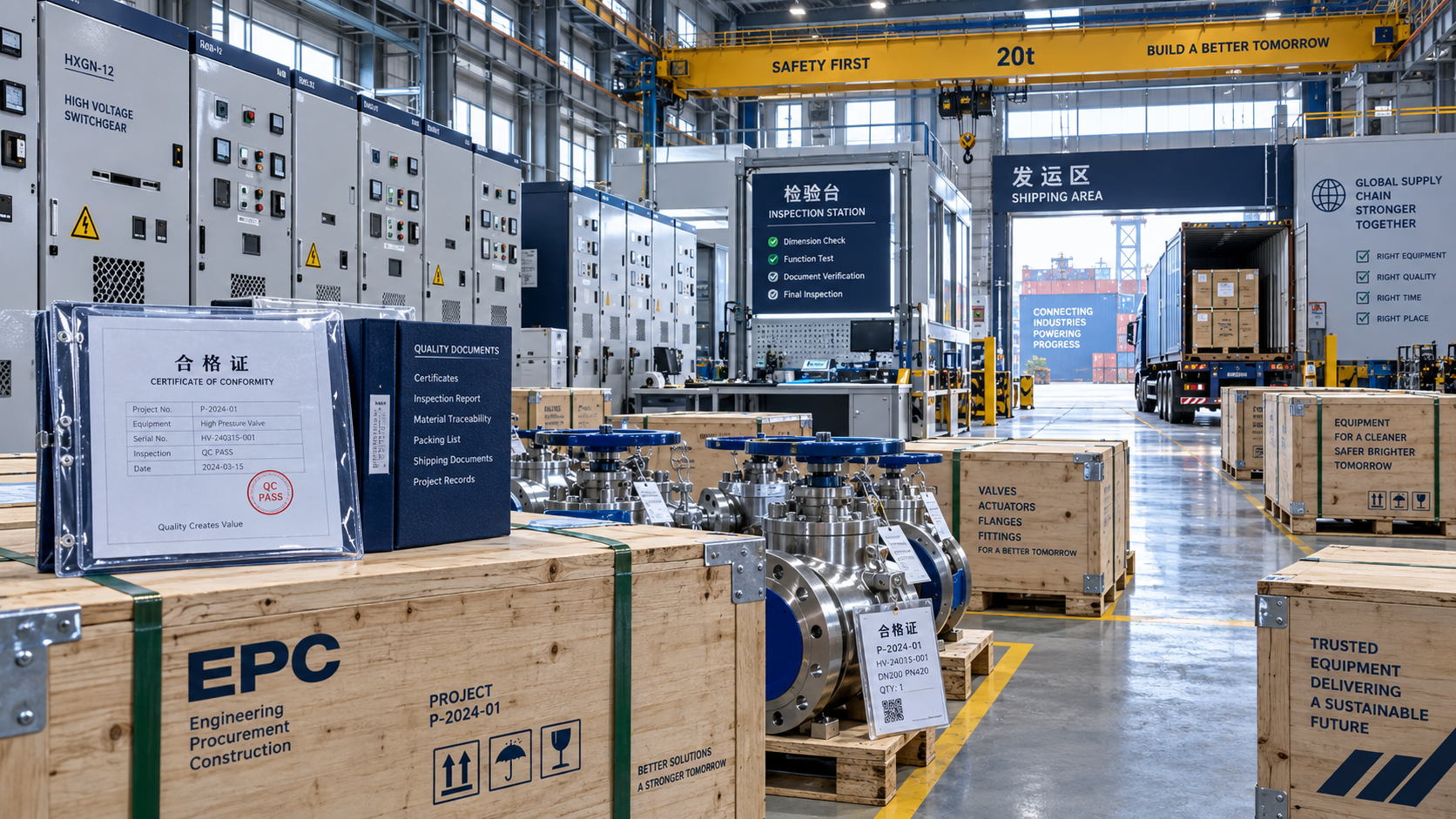
A quality management certification can support the assessment of a supplier’s systems, but it does not by itself establish that a particular batch meets the drawing. Check the certificate’s scope and validity, then identify the part-specific evidence needed at acceptance. Depending on the component, that may include dimensional results, material identification, heat-treatment records, coating inspection, or other agreed tests.
Traceability should connect the delivered parts to the relevant records. Agree on the level required: for some purchases a batch reference is sufficient; for others, individual identification may be justified. Ask how long records are retained and how a problem would be contained if a defect were discovered after delivery.
Regulatory markings and certifications also need context. Requirements depend on the product, its intended use, and the destination market. A marking associated with a finished machine or electrical assembly should not be assumed to apply automatically to every mechanical component. Specify the applicable obligations and the documents the supplier must provide for the actual purchase.
Turn the quoted lead time into a delivery plan
A lead time is useful only when its starting point and endpoint are clear. “Eight weeks” may refer to time from order acceptance to shipment, while the buyer needs the component at a site, cleared for receipt, before an installation window. It may also assume that drawings are approved, material is available, and payment or tooling authorization has been received.
Ask each supplier to break the schedule into activities and dependencies. A practical plan can include order review, engineering approval, material procurement, tooling, production, subcontracted processing, inspection, document review, packing, and transit. Identify which activities overlap and which cannot begin until the buyer takes action.
For example, an estimated production period of eight weeks followed by two weeks of transit gives a ten-week path to arrival only if production can start immediately and both estimates hold. If drawing approval takes another week before production starts, the buyer’s planned arrival moves to eleven weeks. Customs clearance, receiving inspection, or a failed acceptance test could add further time. These figures illustrate the calculation; the actual durations must come from the proposed order and route.
Separate the supplier’s ship date from the buyer’s required receipt date. Then work backward from the latter, allowing for transport, import procedures where applicable, site receiving, inspection, and any installation preparation. If the component is required for a shutdown, the meaningful deadline may be earlier still: the site may need an accepted part on hand before work begins.
Several questions help expose a fragile delivery promise:
- Is the raw material in stock, allocated to this order, or still to be purchased?
- Are machining slots and subcontracted processes reserved, or are they estimates based on current availability?
- Does the schedule include a sample, buyer approval, and any required rework?
- What events would trigger a revised date, and how quickly will the supplier report them?
- Can finished quantities be shipped in stages, and would partial delivery actually help the buyer?
A shorter quote is not necessarily unrealistic, but it should have an explanation. Existing stock, available tooling, or a simpler process may support it. If the shorter schedule depends on an unapproved material substitute or skips required inspection, it is a different offer and should be evaluated as such.
Compare the cost of a usable, on-time component
Unit price matters most when suppliers are offering equivalent parts under equivalent terms. Build a comparison that includes one-time tooling and setup, inspection, documentation, packaging, freight, duties where applicable, and payment terms. State the delivery point and identify who carries each transport cost. For repeat orders, separate initial costs from recurring prices so that a low first-order quote does not hide a less favorable replenishment cost.
Lead time has a cost as well, although it may not appear on the supplier’s quotation. An earlier delivery may require expedited freight or additional inventory; a later one may require a rental machine, a revised maintenance plan, or a change to the project sequence. Use the costs relevant to the buyer’s operation rather than applying a generic premium to every late part.
Quality terms can change the comparison. Check who pays for replacement, rework, return freight, or additional inspection if a part does not meet the agreed specification. A warranty is useful only when its coverage, duration, exclusions, and remedy are understood. It cannot recover a missed installation window, so delivery and acceptance controls remain important for time-sensitive purchases.
Where the lowest offer relies on unresolved assumptions, ask for a revised quote or record the assumption explicitly in the comparison. A procurement decision can then distinguish a genuine saving from a cost that may appear later as a variation, delay, or rejected component.
Choose controls that match the consequence of delay
Not every item justifies the same sourcing strategy. For a common component with interchangeable supply and low replacement consequences, price and availability may carry substantial weight. For a custom component with long material procurement or a narrow installation window, verified capacity and delivery visibility may justify a higher price.
Alternative suppliers can reduce dependence, but only if they are qualified to produce an acceptable part. Splitting an order between two untested sources may introduce additional tooling, inspection, and coordination costs. For a critical repeat item, qualifying a second source before it is urgently needed can be more useful than assuming another supplier can take over immediately.
Before placing the order, agree on milestones that reflect the actual risks: material allocation, drawing approval, completion of an outsourced process, first-article acceptance, and readiness to ship are examples. Set the reporting frequency and the escalation contact for a missed milestone. If the delivery window has little room for recovery, agree on the options early—partial shipment, an approved alternate process, or a revised installation sequence—so that both parties know which decisions can be made and who must authorize them.
Expert Insights

Chief Security Architect
Dr. Thorne specializes in the intersection of structural engineering and digital resilience. He has advised three G7 governments on industrial infrastructure security.
Related Analysis
- Nov 22, 2026McKinsey: India Needs Up to $400 Billion to Meet Steel Capacity Growth GoalAuthor :
- Nov 22, 2026Choosing Geotextile Fabric for Landfill Drainage and Liner ProtectionAuthor :Environmental Engineering Director
- Nov 21, 2026Japan's Steel Exports Could Fall to Lowest Level Since 1999 in 2026Author :
Core Sector // 01
Security & Safety
- Global Sourcing of Industrial Equipment: A Supplier Vetting ChecklistAuthor :Safety Compliance Lead

- Product Category Insights for Sourcing: Assessing Cost and Supply RiskAuthor :Safety Compliance Lead

- Machinery Components Sourcing: How to Evaluate Suppliers and Lead TimesAuthor :Safety Compliance Lead

- Industrial Supplier Insights: Assessing Capacity, Lead Times and RiskAuthor :Safety Compliance Lead

- Facility Upgrade Solutions: Prioritizing Safety and Energy ImprovementsAuthor :Safety Compliance Lead

- Industrial Supplier Assessment Tools: Comparing Scorecards and AuditsAuthor :Safety Compliance Lead

- How to Build an Equipment Budget for EPC Projects Without Underestimating Lifecycle CostsAuthor :Safety Compliance Lead

- Selecting EPC Procurement Support Tools to Reduce Vendor and Delivery DelaysAuthor :Safety Compliance Lead