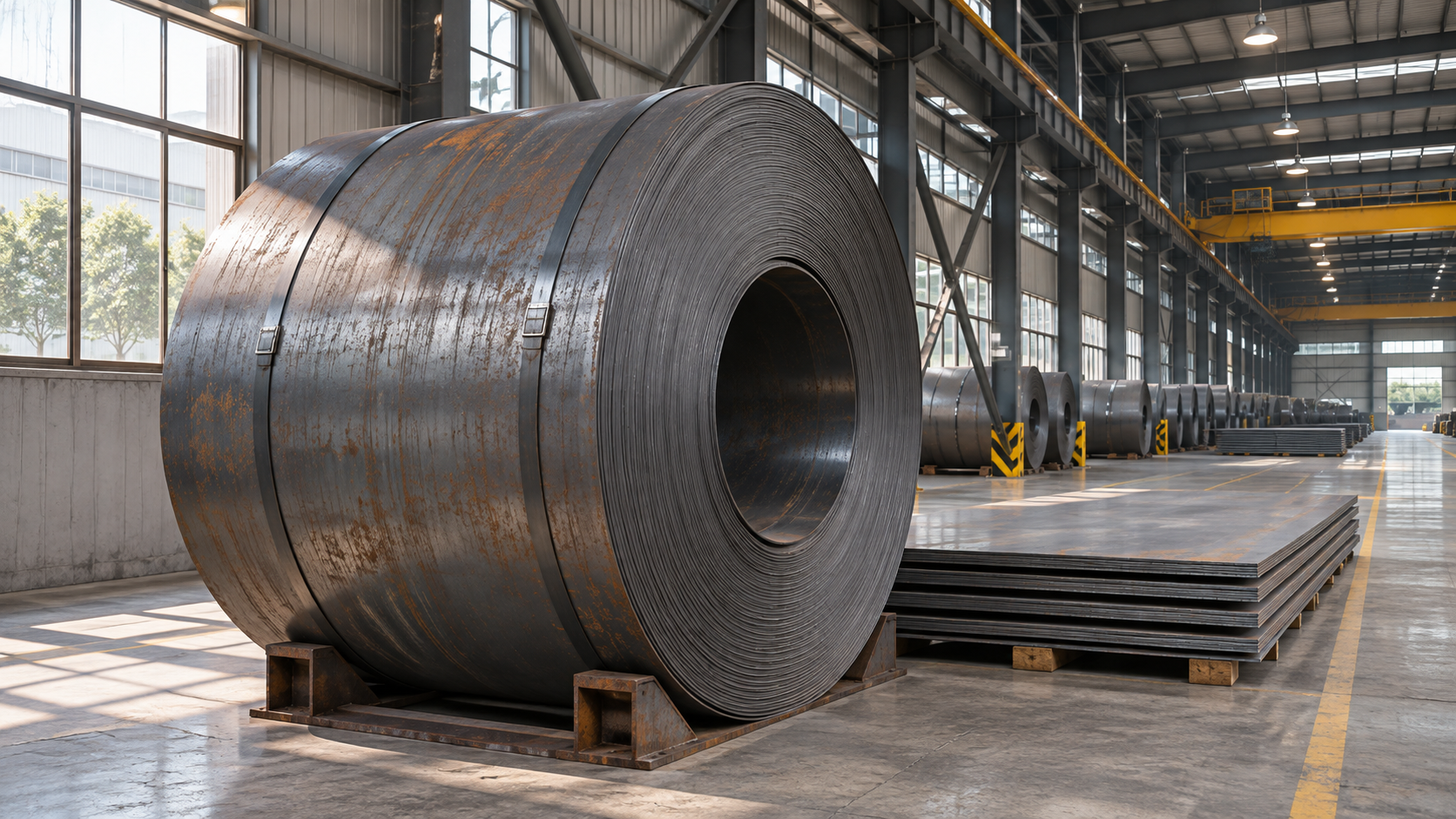
McKinsey: India Needs Up to $400 Billion to Meet Steel Capacity Growth Goal
Author
Date Published
Reading Time

India could need as much as $400 billion in investment to achieve its steel capacity growth target, according to a McKinsey report described by GMK Center. The event date is not specified in the information provided. The estimate puts a substantial financing question alongside India’s capacity ambition, with potential implications for steel producers, equipment suppliers, contractors and buyers. No new policy, regulation or trade rule is identified in the supplied account, so the immediate issue for the industry is how to assess the investment outlook and monitor any subsequent rules or project requirements.
Investment needed for India’s capacity ambition
GMK Center reports that McKinsey’s latest report estimates India needs up to $400 billion to achieve a substantial increase in steel production capacity. The investment would be directed mainly toward building new steel plants, expanding existing facilities and upgrading infrastructure.
According to the supplied account, the capacity growth is intended to meet increasing Indian demand from infrastructure and manufacturing while improving the country’s competitiveness in the global steel market. The information provided does not specify when the event occurred.

Where the investment requirement could reach the supply chain
Plant developers and equipment suppliers
Analysis suggests that the scale of the estimated investment makes project selection and financing central questions for steel producers considering new plants or additions to existing facilities. The estimate describes an aggregate funding need; the supplied information does not establish how much financing has been secured, which projects will proceed or when capacity might become available. For producers, the practical distinction matters: an investment estimate alone cannot establish an individual project’s budget, approval status or construction schedule.
Equipment suppliers and engineering contractors may encounter opportunities if investment decisions translate into orders. Their exposure would depend on the equipment and services specified for individual projects, as well as project financing and procurement schedules. They should therefore treat reported capacity ambitions as a reason to monitor prospective tenders, rather than as evidence that contracts have been awarded or delivery dates fixed.
From a compliance perspective, each prospective supplier could review the technical specifications, qualification criteria and contractual obligations actually included in a tender. The account supplied for this article identifies no new equipment standard, certification mandate or procurement rule. Any such requirement would need to be verified in the relevant project documents or authoritative publications before it is treated as applicable.
Manufacturers and steel buyers
For manufacturers and infrastructure buyers, a larger domestic steel capacity base could eventually affect sourcing options if the necessary projects are financed, built and brought into service. The effect on a particular buyer would depend on the products made available, their specifications, timing and commercial terms. The investment estimate by itself does not establish future availability of any particular grade or product, or indicate how prices will change.
Procurement teams may find it useful to distinguish a producer’s stated expansion plans from capacity that is operational and qualified for a specific application. If a new or expanded facility becomes a potential source, buyers could assess its product documentation, delivery commitments and ability to meet the requirements in their own purchase contracts. Where testing or certification is relevant to a purchase, the applicable documents would need to be checked against the actual specification rather than inferred from the investment announcement.
Analysis also suggests that buyers planning around long delivery commitments may need to revisit sourcing assumptions as individual projects develop. A delay in financing, construction or commissioning could alter when a prospective supplier is able to deliver. Those are possible project risks, not reported delays associated with the estimate.
Traders and supply chain service providers
Trading companies and logistics providers may also need to assess how prospective plant construction and infrastructure upgrades could affect future flows of equipment, materials and finished steel. The nature and timing of any change would depend on where investment is made and which projects proceed. The supplied information does not identify routes, facilities or trade measures, and it does not establish that existing trade flows have changed.
For a trader considering a future supply arrangement, the relevant work may include checking product specifications, origin and shipping documentation against the terms applicable to the transaction. Logistics providers could seek clearer delivery milestones and responsibilities as projects move from planning to procurement. These are routine areas for commercial review, not new obligations announced in the reported account.
What to verify before committing procurement plans
Separate funding estimates from approved projects
The $400 billion figure is useful as an indication of the investment scale reported by McKinsey, but it should not be used as a project schedule. Companies evaluating opportunities could track whether individual investments receive financing, whether owners issue procurement documents and whether construction or expansion milestones are confirmed. A prospective supplier can use those developments to distinguish an early commercial lead from an order with defined scope and delivery terms.
Because the event date and the underlying report details are not specified in the input, users of the figure should also verify the original report and its context before relying on it in an investment or purchasing decision. In particular, the supplied summary does not provide a timetable, a breakdown of the estimate or a description of how it was calculated.
Check the specification attached to each opportunity
If a plant or infrastructure project issues a tender, suppliers could compare its technical scope with their manufacturing or service capabilities. Relevant checks may include the requested product description, qualification evidence, inspection arrangements and documentation needed at delivery. Buyers considering steel from an expanded facility could similarly confirm whether the material offered matches their application and contract requirements.
No specific certification, test method or standard is identified in the supplied account. The appropriate response is therefore to verify the requirements in each tender or purchase agreement and seek clarification where the documents are incomplete. Preparing existing technical records may help a company respond efficiently, but the investment estimate does not itself create a new certification requirement.
Align delivery assumptions with project progress
Potential contractors and suppliers may wish to link quotations and capacity commitments to identifiable project milestones. For example, a commercial discussion can distinguish an indicative delivery window from a commitment made after an order, technical scope and schedule are agreed. This matters because the reported investment need covers both new construction and work at existing facilities, whose procurement needs may differ.
For buyers, the same principle applies to expected steel supply. It may be prudent to confirm when a proposed source can deliver the required product and what evidence will support acceptance. The information available does not establish commissioning dates or guarantee that planned capacity will be usable for a particular order.
Monitor any later policy and trade decisions
Companies with investment, procurement or trade exposure could watch for authoritative announcements and project documents that clarify how the capacity objective will be pursued. Matters to check include any applicable approval conditions, procurement criteria, technical requirements or trade measures that are subsequently issued. Their relevance would depend on the text and scope of the measure and the company’s activities.
This is a monitoring recommendation, not a statement that such measures have been announced. Until a specific rule or contract requirement can be identified and checked, businesses should avoid treating the reported funding estimate as a change to existing compliance or trade obligations.
A financing signal, with execution still to be established
From an industry perspective, the most useful reading of the report is that achieving the stated capacity ambition may require substantial investment across plants and supporting infrastructure. The estimate provides a basis for examining the scale of the challenge; it does not demonstrate that funds have been committed or that the capacity target will be met.
At this stage, it is more appropriate to understand the news as an investment and execution signal than as an implemented rule change. The supplied account identifies no policy text, implementation date, certification instruction or change in trade practice. Whether the estimate leads to specific project decisions or further policy measures remains to be observed.
Several kinds of subsequent information could materially improve an assessment: the underlying report and its assumptions, confirmed project financing, procurement schedules, and any official explanation of requirements applicable to projects or trade. Industry feedback and actual contracting activity could also help show how participants interpret the investment need. None of these developments is established by the information supplied here.
Reading the capacity target against commercial evidence
The reported estimate connects India’s steel capacity ambition with the funding needed for plants and infrastructure, and it gives suppliers and buyers a reason to review their longer-term assumptions. Its commercial significance will depend on decisions and documents that are not described in the supplied account. Businesses can monitor the outlook while keeping investment estimates, confirmed projects and applicable obligations separate in their planning.
Basis for this article and points still to check
This article is based on the user-provided news title, event-time information and summary, which attribute the investment estimate to a McKinsey report covered by GMK Center. The event date is not specified. No specific official source link was provided in the input, and the underlying report and any relevant official materials require continued verification.
For subsequent assessment, relevant source types could include official announcements, project procurement documents, trade authority information, standards publications and reporting on industry responses. Particular attention should be paid to any policy details, certification interpretations, tender changes, trade implementation and evidence of company execution that may emerge. Their existence or content cannot be confirmed from the supplied information.
Expert Insights

Chief Security Architect
Dr. Thorne specializes in the intersection of structural engineering and digital resilience. He has advised three G7 governments on industrial infrastructure security.
Related Analysis
- Nov 22, 2026McKinsey: India Needs Up to $400 Billion to Meet Steel Capacity Growth GoalAuthor :
- Nov 22, 2026Choosing Geotextile Fabric for Landfill Drainage and Liner ProtectionAuthor :Environmental Engineering Director
- Nov 21, 2026Japan's Steel Exports Could Fall to Lowest Level Since 1999 in 2026Author :
Core Sector // 01
Security & Safety
- McKinsey: India Needs Up to $400 Billion to Meet Steel Capacity Growth GoalAuthor :

- Japan's Steel Exports Could Fall to Lowest Level Since 1999 in 2026Author :

- EU Imposes Anti-Dumping Duties of Up to 27.9% on Cold-Rolled SteelAuthor :

- EU Imposes Anti-Dumping Duties on Cold-Rolled Steel From Five OriginsAuthor :

- US HRC Holds at $1,040 as Raw Material Costs and Section 232 Shift TradeAuthor :

- European Steel Industry Faces Rising Costs and Weak DemandAuthor :

- China Steel Market Softens as Tangshan Billet Price Falls to 2,860 YuanAuthor :

- SMU: Tight Supply Pushes North American Steel Prices HigherAuthor :