Metrology equipment for industrial measurement: what specs matter
Author
Date Published
Reading Time
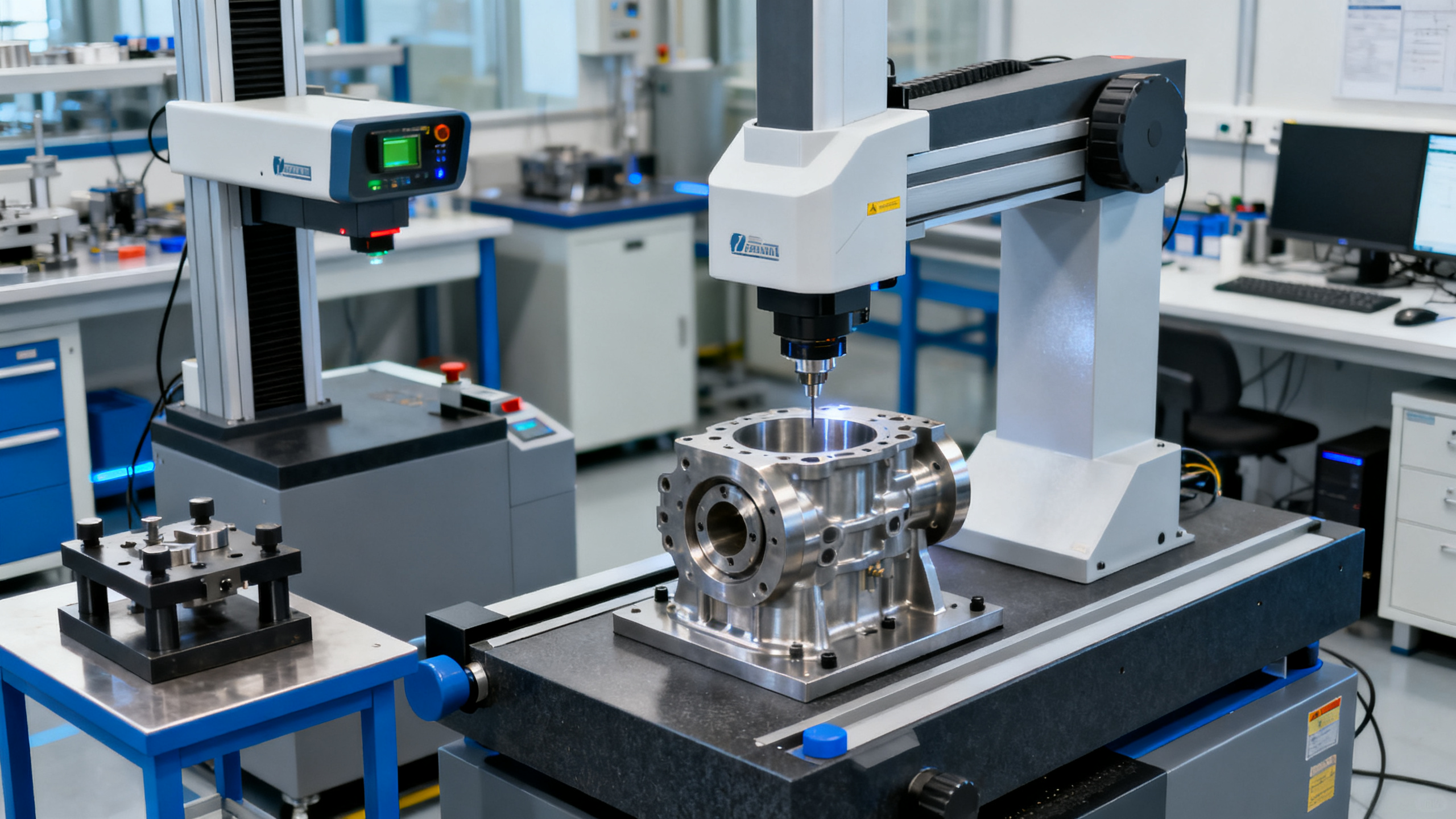
Choosing metrology equipment for industrial measurement is not just about accuracy claims—it is about ensuring repeatability, compliance, environmental stability, and long-term operational reliability. For technical evaluators, the right specifications directly affect inspection quality, process control, and procurement risk. This guide outlines the key performance criteria that matter most when comparing systems for demanding industrial applications.
Why a checklist approach works better for technical evaluation
When reviewing metrology equipment for industrial measurement, many teams start with a brochure headline such as “high precision” or “micron-level accuracy.” That is rarely enough. In industrial environments, two instruments with similar advertised precision can perform very differently once temperature variation, vibration, operator skill, part geometry, software workflow, and calibration discipline are introduced.
A checklist-based evaluation helps technical evaluators compare systems on measurable criteria rather than vendor language. It also reduces procurement risk by forcing early review of application fit, standards compliance, maintenance burden, and lifecycle cost. For EPC contractors, plant operators, and procurement directors, this structured method is especially important because a poor metrology decision can affect inspection throughput, product acceptance, warranty exposure, and audit readiness across multiple sites.
First-pass checklist: what to confirm before comparing models
Before analyzing detailed specifications, confirm the operating context. This step prevents overbuying highly specialized systems or selecting equipment that cannot survive the actual production environment.
- Define the measurement task clearly: dimensional inspection, surface profile, alignment, thickness, roundness, roughness, optical inspection, or multipoint geometry verification.
- Identify part size, material, reflectivity, tolerance band, and production volume.
- Confirm whether the equipment will be used in a metrology lab, on the shop floor, or in a mixed environment.
- Check required reporting standards, traceability expectations, and customer audit obligations.
- Review cycle-time targets, automation plans, and operator skill level.
- Determine acceptable downtime, calibration interval, and service response expectations.
These six items often eliminate unsuitable options quickly and keep the evaluation of metrology equipment for industrial measurement focused on application reality rather than catalog breadth.
Core specification checklist: the specs that matter most
1. Accuracy, uncertainty, and repeatability must be separated
Technical evaluators should never treat these terms as interchangeable. Accuracy indicates closeness to a known value, repeatability shows consistency under the same conditions, and measurement uncertainty expresses the confidence range around the result. In practical sourcing, uncertainty often matters more than a simple accuracy claim because it better reflects real inspection capability.
Ask vendors for test conditions, reference standards, and the specific method used to state uncertainty. If a system shows excellent repeatability but weak performance under changing conditions, it may still fail in production. For metrology equipment for industrial measurement, the most useful comparison question is: what uncertainty can be sustained on our actual part features, by our operators, in our environment?
2. Measurement range and resolution should match the part, not just the brochure
A wide measurement volume is valuable only if precision remains adequate across that range. Likewise, very fine resolution does not guarantee meaningful inspection if the mechanical structure, optics, or environmental conditions cannot support it. Verify usable range, minimum feature size, sensor standoff, accessibility for deep features, and any loss of performance near travel limits.
For high-mix manufacturing, flexibility across part sizes may matter more than extreme resolution. For tight-tolerance components, however, feature-level performance should take priority over general working envelope.
3. Environmental stability is a specification, not a side note
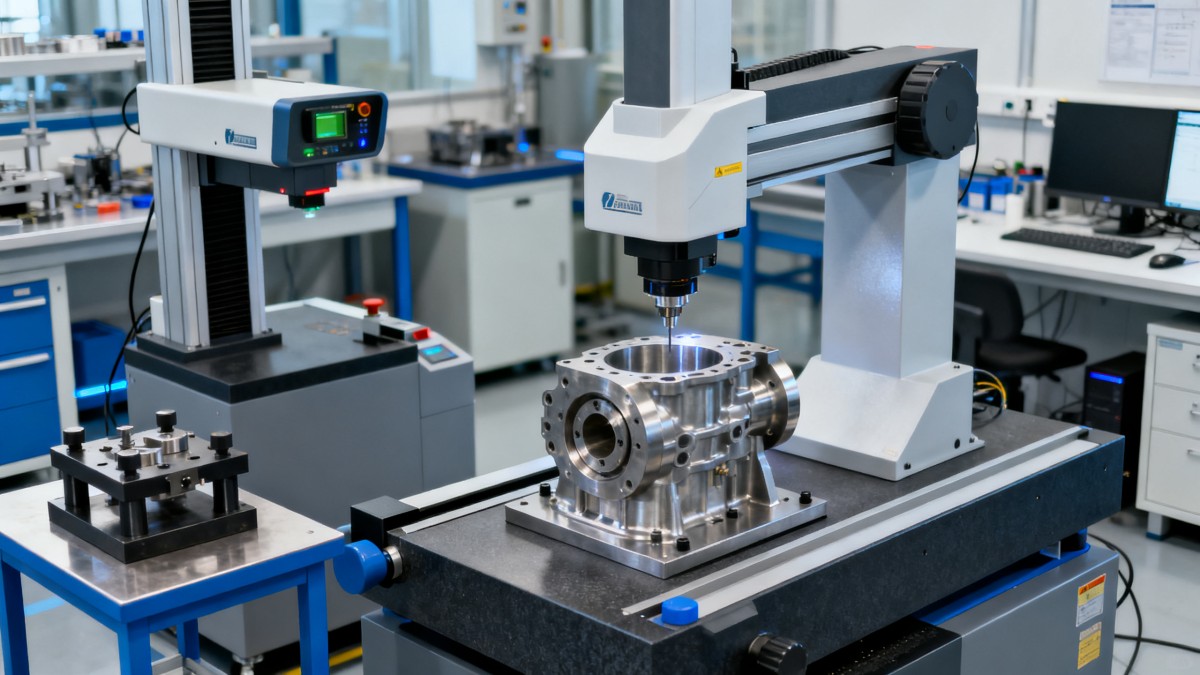
Some of the best metrology equipment for industrial measurement performs well only under tightly controlled laboratory conditions. If the target environment includes dust, vibration, coolant mist, temperature drift, or unstable foundations, those conditions must be considered part of the specification review. Technical teams should check operating temperature range, compensation functions, thermal stabilization time, ingress protection where relevant, and sensitivity to ambient lighting for optical systems.
Environmental mismatch is a common cause of hidden failure. A system that achieves top performance in demonstration mode but requires frequent requalification on the shop floor may create more quality risk than value.
4. Throughput and automation compatibility affect total value
A technically excellent system can still be the wrong choice if it slows inspection flow. Review measurement cycle time, loading method, fixture requirements, CNC or robotic integration options, auto-programming features, barcode or MES connectivity, and report generation speed. In many plants, the best metrology equipment for industrial measurement is the system that maintains enough precision while fitting the actual takt time and staffing model.
If unattended operation is planned, check recovery behavior after interruption, sensor drift alerts, and remote diagnostics. Automation without robust exception handling can increase false confidence rather than improve control.
5. Calibration traceability and compliance readiness should be verified early
Industrial measurement systems must support traceable calibration and defensible records. Confirm conformity with relevant ISO practices, calibration artifact availability, software audit trails, version control, and service documentation. For regulated or safety-sensitive sectors, also review how the vendor supports validation, periodic requalification, and documentation for external audits.
This is especially important when sourcing globally. A unit may be technically strong but difficult to certify consistently across regional sites if service capability, spare parts, or local accredited calibration support is weak.
6. Software usability and data integrity are part of performance
The hardware is only half of the evaluation. Measurement software determines programming speed, operator consistency, data export quality, and traceability. Review CAD import compatibility, GD&T functionality, SPC integration, user permissions, report templates, and cybersecurity controls. If operators need long training periods for basic tasks, the system may underperform despite excellent raw capability.
For technical evaluators, one useful test is to ask the vendor to measure a representative part and generate a production-style report using your preferred data structure. This reveals workflow friction that specification sheets do not show.
Quick comparison table for technical evaluators
The table below can be used as a practical screening guide when comparing metrology equipment for industrial measurement across suppliers or technologies.
Scenario-based checks: what changes by application
For shop-floor inspection
Prioritize ruggedness, fast setup, thermal compensation, and simple workflows. Portable systems, optical scanners, or shop-floor CMM configurations may be suitable, but only if operators can maintain consistent measurement routines under production pressure.
For laboratory-grade verification
Prioritize lowest uncertainty, environmental control requirements, calibration discipline, and detailed reporting. Here, throughput may be secondary to confidence level, especially for first-article inspection, dispute resolution, or final certification tasks.
For large parts or complex assemblies
Check line-of-sight limitations, alignment strategy, portability, and volumetric accuracy. Laser trackers, photogrammetry, or articulated systems may be considered, but fixture strategy and repositioning uncertainty must be reviewed carefully.
For automated inline measurement
Focus on repeatability under continuous operation, communication protocol compatibility, maintenance access, fault detection, and calibration recovery procedures. Inline metrology needs strong software governance as much as sensor quality.
Commonly overlooked issues that create hidden risk
- Ignoring fixture influence. Poor fixturing can distort results more than sensor limitations.
- Accepting generic sample demonstrations instead of testing actual production parts.
- Underestimating operator training time and programming complexity.
- Reviewing hardware only, while neglecting software licensing, update policy, and cybersecurity requirements.
- Failing to quantify cost of recalibration, probe replacement, downtime, and service travel.
- Assuming compliance labels alone guarantee process suitability for all sites or customer requirements.
These issues frequently explain why technically advanced metrology equipment for industrial measurement does not deliver expected value after installation.
A practical execution plan for procurement and evaluation teams
- Build a part-and-tolerance matrix covering the top measurement use cases.
- Rank requirements into must-have, preferred, and future-state categories.
- Request application-specific test data, not only standard specification sheets.
- Run a witness test using representative components and production-style reporting.
- Evaluate service coverage, calibration support, training plan, and spare-part availability by region.
- Model total cost of ownership over the expected lifecycle, including software and compliance upkeep.
This approach helps technical evaluators convert metrology selection from a product comparison exercise into a risk-controlled engineering decision.
FAQ: decision questions technical evaluators ask most
Is the highest-accuracy system always the best choice?
No. The best choice is the system that delivers sufficient uncertainty, repeatability, and throughput for the real application. Over-specifying can increase cost, training burden, and environmental sensitivity without improving inspection outcomes.
What is the biggest warning sign in vendor documentation?
A strong warning sign is a precision claim presented without test conditions, uncertainty method, or application context. Reliable suppliers of metrology equipment for industrial measurement should explain how performance is achieved and sustained.
How early should software integration be reviewed?
Immediately. Integration with SPC, MES, ERP, or quality databases affects implementation speed and long-term usability. Leaving this review until after hardware approval often creates expensive delays.
Final decision guide and next-step questions
The most effective way to evaluate metrology equipment for industrial measurement is to start with the job, then test each specification against operating reality. Focus first on uncertainty, repeatability, environmental suitability, throughput, traceability, and software integrity. After that, compare service depth, lifecycle cost, and implementation readiness.
If your organization is preparing to move forward, the first questions to raise with suppliers should be practical: which part families can the system measure with documented uncertainty, what environmental controls are required, how long does calibration remain valid, what training is needed by operator level, how does the software connect with your current quality stack, what spare parts are regionally stocked, and what total ownership cost should be expected over three to five years. Those answers will usually reveal more than headline specifications and lead to a safer, more defensible sourcing decision.
Technical Specifications
- How to Select an Emissions Monitoring System Analyzer for Compliance ReportingAuthor :Precision Metrology Expert
- How to Select an Access Control Management System for Multi-Site FacilitiesAuthor :Safety Compliance Lead
- Portable Gas Monitor Calibration: How Often Is It Needed for Safe Confined-Space Work?Author :Precision Metrology Expert
Expert Insights

Chief Security Architect
Dr. Thorne specializes in the intersection of structural engineering and digital resilience. He has advised three G7 governments on industrial infrastructure security.
Related Analysis
- Sep 21, 2026How to Select an Emissions Monitoring System Analyzer for Compliance ReportingAuthor :Precision Metrology Expert
- Sep 20, 2026How to Select an Access Control Management System for Multi-Site FacilitiesAuthor :Safety Compliance Lead
- Sep 19, 2026Portable Gas Monitor Calibration: How Often Is It Needed for Safe Confined-Space Work?Author :Precision Metrology Expert
Core Sector // 01
Security & Safety
- How to Select an Emissions Monitoring System Analyzer for Compliance ReportingAuthor :Precision Metrology Expert

- Portable Gas Monitor Calibration: How Often Is It Needed for Safe Confined-Space Work?Author :Precision Metrology Expert

- What to Check When Sourcing Vibration Meters Wholesale for Industrial MaintenanceAuthor :Precision Metrology Expert

- How to Select Process Control Instruments for Accuracy, Safety, and UptimeAuthor :Precision Metrology Expert

- What Should Standards Compliance Analysis Training Cover Before an Audit?Author :Precision Metrology Expert

- Why Do Pressure Instruments Fail in High-Vibration Sites?Author :Precision Metrology Expert

- Is FM Software Integration Needed for Overseas Instrument Maintenance?Author :Precision Metrology Expert

- What Are the Differences Between Lab and Field Testing Equipment?Author :Precision Metrology Expert