How to shortlist an Instruments & Measurement supplier quickly
Author
Date Published
Reading Time

Choosing the right Instruments & Measurement supplier can make or break project accuracy, compliance, and long-term operating reliability. For procurement teams under pressure to move fast, the key is knowing which signals matter most—from certifications and calibration capability to delivery stability and technical support. This guide shows how to shortlist qualified suppliers quickly without compromising performance, safety, or total procurement value.
Why shortlisting has become harder—and more important
The market for industrial instrumentation is changing quickly. Procurement teams are no longer evaluating an Instruments & Measurement supplier only on price and lead time. Today, they must also judge traceability, digital integration, calibration credibility, cybersecurity readiness for connected devices, and the supplier’s ability to support tighter compliance expectations across global projects.
This shift is being driven by several visible signals. Industrial plants are becoming more automated. Maintenance teams expect richer data from sensors, analyzers, transmitters, flow meters, and testing instruments. EPC contractors face higher risk when a low-cost supplier cannot provide stable documentation, factory acceptance support, or internationally recognized certificates. At the same time, procurement cycles are under pressure to move faster, which creates a dangerous gap: decisions must be made quickly, but the cost of choosing the wrong supplier has grown.
For buyers, that means shortlisting is no longer a basic filtering exercise. It is now a risk-control decision that affects commissioning speed, audit readiness, operational uptime, and lifecycle cost. A strong Instruments & Measurement supplier can reduce hidden costs across installation, validation, spare parts planning, and future plant expansion. A weak one can create months of delay through missing documents, unstable quality, or poor after-sales response.
The biggest market shifts shaping supplier evaluation
Several trends are changing how professional buyers should assess an Instruments & Measurement supplier. These trends matter because they redefine what “qualified” means in real projects, especially in energy, water, manufacturing, pharmaceuticals, mining, utilities, and process industries.
The practical meaning is clear: the best Instruments & Measurement supplier is not always the one with the lowest quote or the broadest catalog. It is the one that can perform consistently under project, compliance, and operational pressure.
Why these shifts are happening now
The underlying drivers are structural rather than temporary. First, digitalization has pushed measurement devices closer to the center of operational decision-making. Instrument outputs no longer serve only local indication; they feed automation, reporting, quality control, energy optimization, and predictive maintenance. That raises the cost of inaccurate or unstable data.
Second, regulatory expectations continue to tighten in many markets. Even when new laws are not introduced, customer audits are becoming stricter. A procurement team may be asked to prove traceability, show calibration status, or confirm product suitability for hazardous, hygienic, or critical-use environments. In that setting, a capable Instruments & Measurement supplier becomes part of compliance strategy, not just purchasing.
Third, global sourcing has increased both opportunity and complexity. Buyers can access more vendors than ever, but they also face wider variation in test methods, support quality, language clarity, and response discipline. The result is a more crowded market where fast shortlisting requires better filtering logic, not just more supplier options.
What a fast shortlist should actually test
To respond to these trends, procurement teams should build a fast-screen framework. This is different from a full supplier audit. The goal is speed with discipline: eliminate weak candidates early by checking the few signals that reveal real capability.
1. Certification and application fit
A serious Instruments & Measurement supplier should be able to provide relevant product and quality certifications without delay. More importantly, those certifications must match the intended use case. A pressure transmitter for a hazardous area, a sanitary flow meter for food processing, and an electrical test instrument for utility maintenance do not face the same requirements. Buyers should ask not only “Do you have certificates?” but also “Can you prove fit for this operating environment?”
2. Calibration competence and traceability
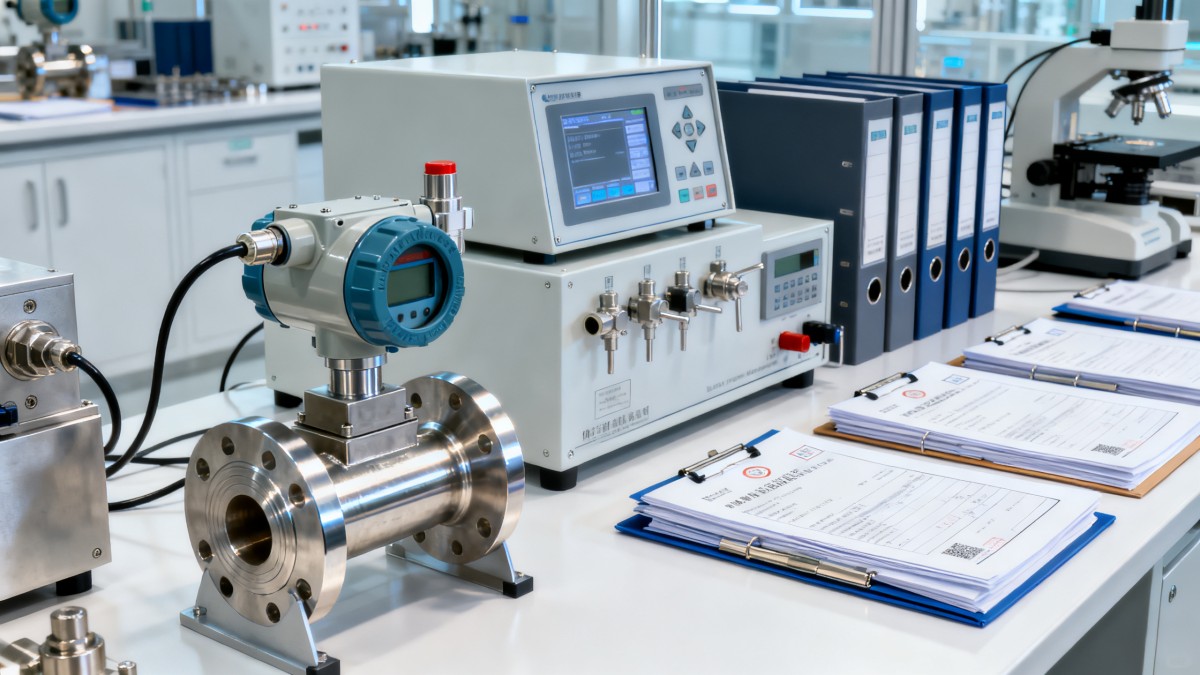
In today’s market, calibration is a major dividing line between catalog traders and dependable suppliers. If a supplier cannot explain calibration standards, uncertainty, intervals, or traceability routes, the risk is high. A qualified Instruments & Measurement supplier should clearly state whether calibration is in-house or outsourced, what standards are followed, and how records are maintained.
3. Documentation speed and accuracy
Fast procurement often fails because document review starts too late. Strong suppliers can quickly provide datasheets, IOM manuals, certificates, drawings, test reports, and packing details in organized form. This matters not only for approval but for installation, handover, and maintenance. If document control is slow during quotation, it usually remains slow after award.
4. Delivery realism
Lead time claims should be tested, not accepted at face value. Ask what is stocked, what is assembled to order, and what depends on upstream components. A reliable Instruments & Measurement supplier will distinguish standard lead time from current availability and explain risk points honestly.
5. Technical response quality
The speed and precision of pre-sales support often predict future service quality. If a supplier answers application questions with generic marketing language, that is a warning sign. Good suppliers can discuss signal output, environmental limits, accuracy classes, mounting constraints, and compatibility issues in practical terms.
Who feels the impact most across the buying process
These market changes affect multiple roles, not just procurement. That is why shortlist criteria should be aligned across technical, commercial, and operational stakeholders.
This cross-functional view is especially important when choosing an Instruments & Measurement supplier for plants that operate continuously or in safety-critical environments. In those settings, a poor shortlist can affect not just procurement efficiency but production continuity and incident exposure.
How to shortlist quickly without reducing rigor
A practical response to current market conditions is to use a staged evaluation model. Instead of reviewing everything at once, buyers can narrow the field through high-signal checks in the first 48 hours.
Stage 1: Eliminate obvious risk
Remove suppliers that cannot provide basic company information, relevant certifications, sample technical documents, and realistic delivery guidance. If an Instruments & Measurement supplier fails here, there is little reason to proceed.
Stage 2: Compare capability depth
Among the remaining candidates, compare calibration capability, application engineering support, and project references in similar industries. This is where many low-cost traders lose ground to suppliers with real technical infrastructure.
Stage 3: Test execution readiness
Before award, confirm communication discipline, documentation format, commercial terms, warranty handling, and escalation contacts. A supplier may look strong technically yet still create delay through weak execution management.
This staged method helps procurement teams move fast while staying aligned with broader industry changes. It also creates internal transparency, which is useful when procurement decisions are later reviewed by engineering, quality, or management.
Signals that deserve extra attention in the next buying cycle
Looking ahead, several signals will likely become even more important when evaluating an Instruments & Measurement supplier. One is digital service maturity: suppliers that can support configuration tools, remote diagnostics, and data interoperability will stand out. Another is regional service coverage, especially for international projects where local calibration or field support may be needed after installation.
Buyers should also watch how suppliers handle supply chain transparency. The strongest vendors are becoming more open about component origin, substitute risk, and production bottlenecks. In a volatile market, honesty about constraints is often a better predictor of performance than aggressive promises.
Finally, documentation quality is likely to remain a decisive trust signal. As industrial projects become more regulated and data-intensive, a dependable Instruments & Measurement supplier will need to function as a documentation partner as much as a hardware source.
Common shortlisting mistakes in a changing market
- Prioritizing unit price before checking calibration, traceability, and application fit
- Assuming a broad product catalog means real technical depth
- Treating certificates as a box-ticking exercise instead of verifying relevance and validity
- Ignoring after-sales structure until a commissioning or warranty problem occurs
- Skipping document review in early screening, then losing time later in approval workflows
Final judgment: what procurement teams should ask now
The core trend is not just that instrumentation is becoming more advanced. It is that supplier quality now has a wider operational impact than before. For that reason, shortlisting an Instruments & Measurement supplier quickly should not mean lowering standards. It should mean focusing immediately on the signals that best predict compliance strength, execution reliability, and long-term support value.
If your team wants to judge how these market shifts affect current sourcing plans, start with five questions: Can the supplier prove application-specific compliance? How credible is its calibration system? How stable is its lead-time communication? How strong is its technical response during pre-sales? And how well does it support documentation, service, and lifecycle continuity after delivery?
Those questions help separate superficial vendors from strategic partners. In a market where industrial reliability, audit pressure, and data quality all matter more, the right Instruments & Measurement supplier is the one that reduces uncertainty before, during, and after purchase.
Technical Specifications
- How to Select an Emissions Monitoring System Analyzer for Compliance ReportingAuthor :Precision Metrology Expert
- How to Select an Access Control Management System for Multi-Site FacilitiesAuthor :Safety Compliance Lead
- Portable Gas Monitor Calibration: How Often Is It Needed for Safe Confined-Space Work?Author :Precision Metrology Expert
Expert Insights

Chief Security Architect
Dr. Thorne specializes in the intersection of structural engineering and digital resilience. He has advised three G7 governments on industrial infrastructure security.
Related Analysis
- Sep 21, 2026How to Select an Emissions Monitoring System Analyzer for Compliance ReportingAuthor :Precision Metrology Expert
- Sep 20, 2026How to Select an Access Control Management System for Multi-Site FacilitiesAuthor :Safety Compliance Lead
- Sep 19, 2026Portable Gas Monitor Calibration: How Often Is It Needed for Safe Confined-Space Work?Author :Precision Metrology Expert
Core Sector // 01
Security & Safety
- How to Select an Emissions Monitoring System Analyzer for Compliance ReportingAuthor :Precision Metrology Expert

- Portable Gas Monitor Calibration: How Often Is It Needed for Safe Confined-Space Work?Author :Precision Metrology Expert

- What to Check When Sourcing Vibration Meters Wholesale for Industrial MaintenanceAuthor :Precision Metrology Expert

- How to Select Process Control Instruments for Accuracy, Safety, and UptimeAuthor :Precision Metrology Expert

- What Should Standards Compliance Analysis Training Cover Before an Audit?Author :Precision Metrology Expert

- Why Do Pressure Instruments Fail in High-Vibration Sites?Author :Precision Metrology Expert

- Is FM Software Integration Needed for Overseas Instrument Maintenance?Author :Precision Metrology Expert

- What Are the Differences Between Lab and Field Testing Equipment?Author :Precision Metrology Expert