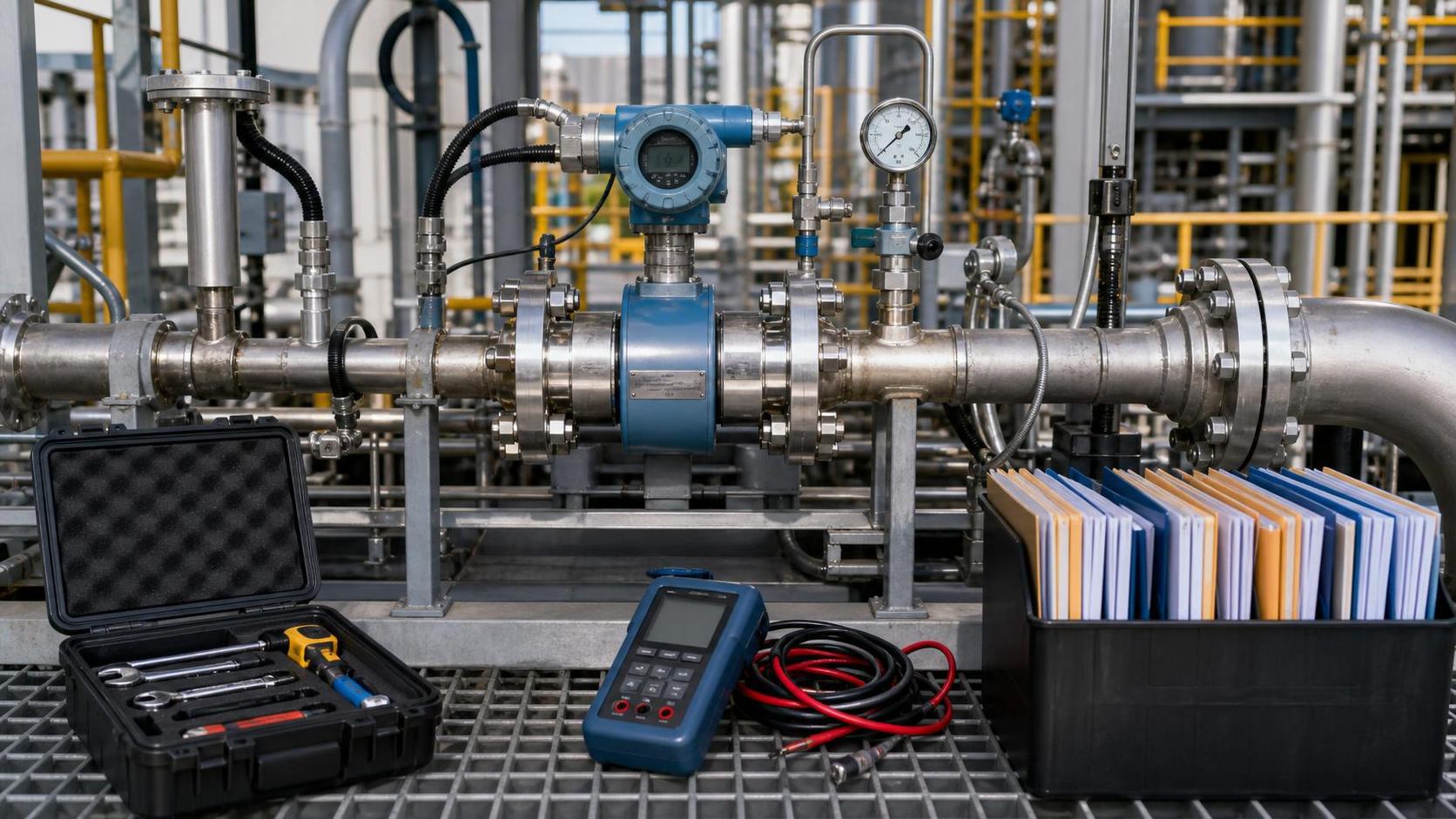
Instruments & Measurement OEM options that fit custom projects
Author
Date Published
Reading Time

For distributors, agents, and channel partners handling specialized industrial demand, Instruments & Measurement OEM solutions can unlock faster project alignment, stronger margin control, and better customer retention. From custom calibration needs to compliance-ready product adaptation, choosing the right OEM partner helps you serve complex applications with confidence while staying competitive in a market defined by precision, reliability, and technical trust.
In practical terms, Instruments & Measurement OEM cooperation is no longer limited to adding a logo or changing outer packaging. Industrial buyers now expect configurable specifications, documentation aligned with CE, UL, or ISO requirements, stable lead times, and responsive technical support across the full channel lifecycle. For distributors serving EPC contractors, plant upgrades, utility projects, or process industries, the right OEM structure can reduce quotation friction, shorten approval cycles by 1–3 weeks, and improve repeat business in technically demanding accounts.
This article explores how channel-focused OEM options fit custom projects, which selection criteria matter most, where risk typically appears, and how distributors can build a commercially strong and technically credible sourcing model in the Instruments & Measurement segment.
Why Instruments & Measurement OEM matters in custom industrial projects
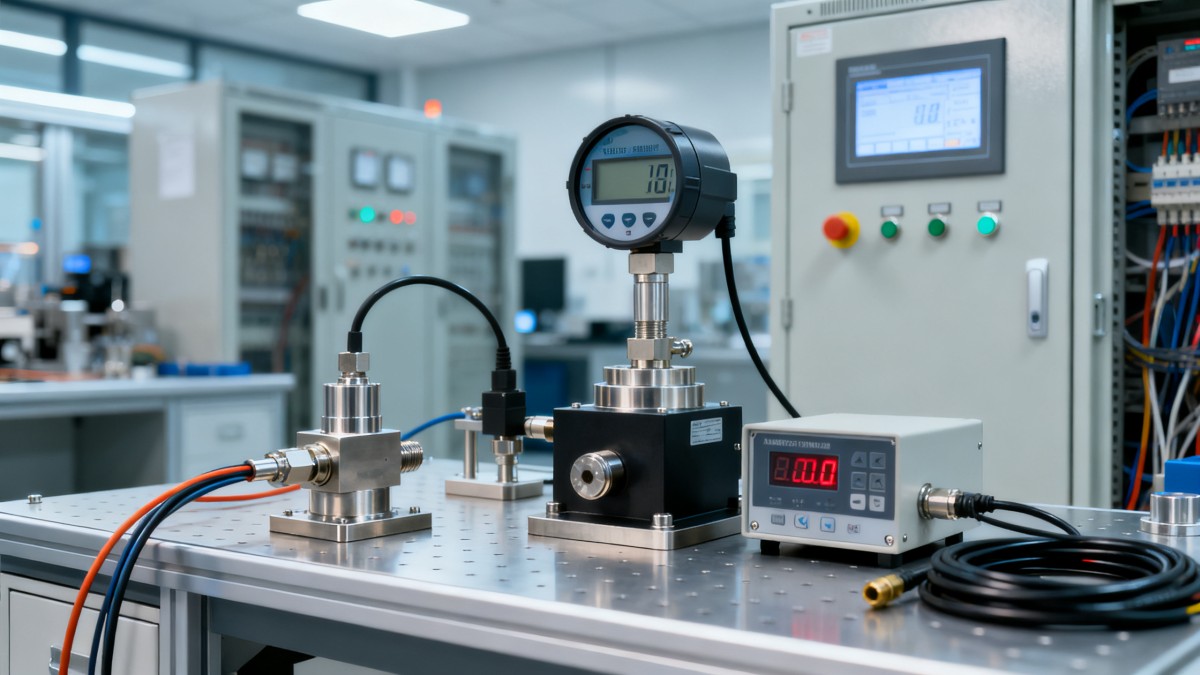
Custom industrial projects rarely operate with off-the-shelf assumptions. A water treatment skid may need transmitters adapted for corrosive environments, while a power distribution facility may require panel meters with specific communication protocols, enclosure ratings, and language-ready labels. In both cases, Instruments & Measurement OEM support helps distributors bridge the gap between generic catalog supply and project-specific compliance.
For channel partners, the value appears in 4 areas: technical fit, commercial control, supply continuity, and post-sale serviceability. When a distributor can offer calibrated ranges such as 0–10 bar, 0–25 bar, or 4–20 mA outputs with configurable housing, cable length, and mounting format, the sales conversation shifts from price-only competition to application suitability and lifecycle value.
Common project pressures faced by distributors and agents
Project-based procurement often runs on compressed schedules. End users may request technical drawings in 48–72 hours, sample validation within 7 days, and batch delivery in 3–5 weeks. Without an OEM partner capable of engineering review, documentation support, and flexible production planning, channel partners are left managing risk manually.
- Non-standard measuring ranges or signal outputs
- Calibration certificates required at shipment
- Panel, field, or hazardous-area installation constraints
- Buyer requests for private labeling or multilingual manuals
- Strict acceptance checks tied to deviation thresholds such as ±0.25%, ±0.5%, or ±1.0%
Where OEM options create real channel advantage
A capable Instruments & Measurement OEM partner gives distributors more than product variation. It creates a repeatable route to serve niche demand without carrying excessive stock across 20 or 30 low-rotation SKUs. Instead of over-investing in inventory, agents can work with modular configurations, pre-approved documentation sets, and negotiated minimum order quantities that match actual project flow.
This matters particularly in sectors where failure cost is high. In a refinery expansion, food process line, mining conveyor system, or municipal pumping station, incorrect specification can trigger rework, delay commissioning by 5–10 days, or cause expensive replacement labor. OEM adaptability lowers those risks when it is backed by technical validation and disciplined change control.
Typical OEM customization scope
The most practical OEM options in this category usually involve controlled customization rather than full redesign. That allows distributors to preserve speed and consistency while still meeting project-specific needs.
- Measurement range and sensing element adjustments
- Output signal selection, including analog and digital communication options
- Housing, thread, connector, and mounting changes
- Labeling, manuals, and package branding
- Factory calibration, batch testing, and traceable documentation
The table below outlines how common OEM options align with distributor needs in project sales and after-sales support.
The key takeaway is that useful Instruments & Measurement OEM cooperation is modular and controlled. Distributors benefit most when customization remains within validated production limits, because that protects lead time, consistency, and technical accountability.
How to evaluate an OEM partner for channel-based growth
Not every manufacturer offering customization is ready for distribution-led project business. A strong Instruments & Measurement OEM partner should support both engineering depth and channel discipline. That includes documentation accuracy, predictable communication, sample handling, warranty clarity, and a practical path for low- to medium-volume customization.
Five evaluation criteria that matter most
Distributors can simplify partner selection by scoring OEM candidates across 5 core dimensions instead of comparing only unit price. In many projects, a 3% to 8% higher product cost may still deliver better margin if it reduces site claims, accelerates approval, and protects repeat orders.
- Technical adaptability: Can the supplier handle range, output, material, and mounting changes without unstable quality?
- Documentation readiness: Are datasheets, drawings, calibration reports, and compliance files delivered accurately and on time?
- Lead time discipline: Can prototypes ship in 7–10 days and standard custom batches in 3–6 weeks?
- MOQ flexibility: Is there a workable threshold for pilot orders, often 10–50 units depending on product type?
- Service response: Are engineering questions answered within 24–48 hours and nonconformance cases managed through a clear process?
A practical partner assessment matrix
Before committing to a long-term OEM arrangement, channel partners should use a structured review. The matrix below helps compare suppliers on the points that affect quoting efficiency, project execution, and reputation in front of end users.
This matrix works best when combined with one live trial order. A pilot batch of 10–30 units often reveals more about documentation accuracy, packaging consistency, and engineering responsiveness than a polished supplier presentation.
Questions distributors should ask before signing
- What elements are fully customizable, and which require new tooling or extended validation?
- How is calibration performed, and is a shipment-level report available?
- What is the standard lead time for samples, first order, and repeat order?
- Which parts of the compliance file can be shared during bidding?
- How are warranty claims handled across regions and channel tiers?
Implementation models that fit custom project workflows
A good Instruments & Measurement OEM strategy is not just about product capability. It also depends on process design between the manufacturer and the channel partner. The smoother the workflow, the easier it becomes to quote accurately, avoid revision errors, and maintain delivery confidence across multiple project stakeholders.
A 5-step workflow for repeatable OEM project execution
Most successful channel programs follow a 5-step process that turns custom requests into controlled supply. This is especially effective when distributors handle mixed demand, such as one-off EPC orders, annual framework contracts, and urgent replacement requirements at the same time.
- Requirement capture: collect medium, range, output, environment, approvals, and installation details.
- Technical review: confirm feasibility, tolerance targets, and any deviation from standard design within 2–3 business days.
- Commercial alignment: lock MOQ, unit cost, sample terms, and delivery schedule.
- Sample or first-article validation: test fit, signal stability, labeling, and documentation package.
- Batch release and after-sales tracking: monitor inspection records, transit condition, and field feedback for 30–90 days.
This process becomes even more valuable when multiple parties are involved. In many infrastructure projects, the distributor serves as the commercial interface, the EPC team controls technical approval, and the site operator drives acceptance. Clear OEM process ownership prevents contradictory revisions and expensive shipment holds.
Lead time planning and stock strategy
Channel partners often lose margin by treating all OEM items as either full-stock or full-custom. A better model separates products into 3 operational groups: standard stock, configurable modules, and engineered specials. Standard stock supports urgent needs in 24–72 hours. Configurable modules typically ship in 2–4 weeks. Engineered specials may require 4–8 weeks depending on tooling, testing, and approvals.
That distinction improves cash flow. Instead of holding 100 fully built variants, a distributor may stock 10 core bodies, 6 connection types, and 3 output modules. With disciplined forecasting, this approach can reduce slow-moving inventory exposure while preserving fast response to custom demand.
Documentation should move with the product
In Instruments & Measurement OEM supply, the document package is often as important as the device itself. Distributors should ensure each order includes the exact revision of datasheet, wiring information, material declaration where needed, calibration evidence, and packing identification. Missing paperwork can delay site acceptance even when the hardware is technically correct.
Common mistakes, risk controls, and channel growth opportunities
Many OEM failures do not come from the instrument design. They result from unclear specifications, weak revision control, or unrealistic commercial assumptions. Distributors that manage these issues early usually protect both margin and reputation.
Frequent mistakes in custom OEM sourcing
- Approving a sample without confirming batch-level repeatability
- Assuming one certificate covers all regional or project compliance needs
- Overlooking installation details such as thread, ingress protection, or panel cutout size
- Using private label packaging without verifying traceability marking
- Accepting long lead times that undermine bid competitiveness
Risk controls that improve long-term account retention
A practical risk-control plan should include 6 checkpoints: approved specification sheet, drawing confirmation, sample signoff, document checklist, pre-shipment inspection, and post-installation feedback review. These checkpoints are simple, but they prevent recurring issues such as wrong output selection, mislabeled ranges, or missing calibration references.
For distributors aiming to grow strategic accounts, OEM capability also creates upsell potential. Once an end user trusts a channel partner for one custom sensor, gauge, analyzer interface, or panel meter family, it becomes easier to expand into related categories. The commercial value is not just the first order. It is the ability to become the preferred source across multiple measurement points and maintenance cycles over 12–36 months.
How to position OEM value in sales conversations
Instead of presenting Instruments & Measurement OEM only as customization, present it as risk reduction and operational fit. Buyers respond well when the offer is framed around shorter installation time, fewer approval delays, consistent readings, and easier maintenance planning. That language is especially effective with plant engineers, maintenance managers, and procurement teams balancing cost with operational continuity.
Distributors, agents, and industrial channel partners that treat OEM as a structured solution rather than a one-off request are better positioned to win complex projects, protect margin, and build durable customer loyalty. The most effective Instruments & Measurement OEM partnerships combine configurable products, disciplined documentation, realistic lead times, and responsive engineering support. If you are looking to strengthen your custom project pipeline, improve technical credibility, or expand your branded industrial offering, now is the right time to evaluate your sourcing model and move toward a more capable OEM framework. Contact us today to discuss your requirements, request a tailored solution, or explore more industrial measurement options for your channel business.
Technical Specifications
- How to Select an Emissions Monitoring System Analyzer for Compliance ReportingAuthor :Precision Metrology Expert
- How to Select an Access Control Management System for Multi-Site FacilitiesAuthor :Safety Compliance Lead
- Portable Gas Monitor Calibration: How Often Is It Needed for Safe Confined-Space Work?Author :Precision Metrology Expert
Expert Insights

Chief Security Architect
Dr. Thorne specializes in the intersection of structural engineering and digital resilience. He has advised three G7 governments on industrial infrastructure security.
Related Analysis
- Sep 21, 2026How to Select an Emissions Monitoring System Analyzer for Compliance ReportingAuthor :Precision Metrology Expert
- Sep 20, 2026How to Select an Access Control Management System for Multi-Site FacilitiesAuthor :Safety Compliance Lead
- Sep 19, 2026Portable Gas Monitor Calibration: How Often Is It Needed for Safe Confined-Space Work?Author :Precision Metrology Expert
Core Sector // 01
Security & Safety
- How to Select an Emissions Monitoring System Analyzer for Compliance ReportingAuthor :Precision Metrology Expert

- Portable Gas Monitor Calibration: How Often Is It Needed for Safe Confined-Space Work?Author :Precision Metrology Expert

- What to Check When Sourcing Vibration Meters Wholesale for Industrial MaintenanceAuthor :Precision Metrology Expert

- How to Select Process Control Instruments for Accuracy, Safety, and UptimeAuthor :Precision Metrology Expert

- What Should Standards Compliance Analysis Training Cover Before an Audit?Author :Precision Metrology Expert

- Why Do Pressure Instruments Fail in High-Vibration Sites?Author :Precision Metrology Expert

- Is FM Software Integration Needed for Overseas Instrument Maintenance?Author :Precision Metrology Expert

- What Are the Differences Between Lab and Field Testing Equipment?Author :Precision Metrology Expert