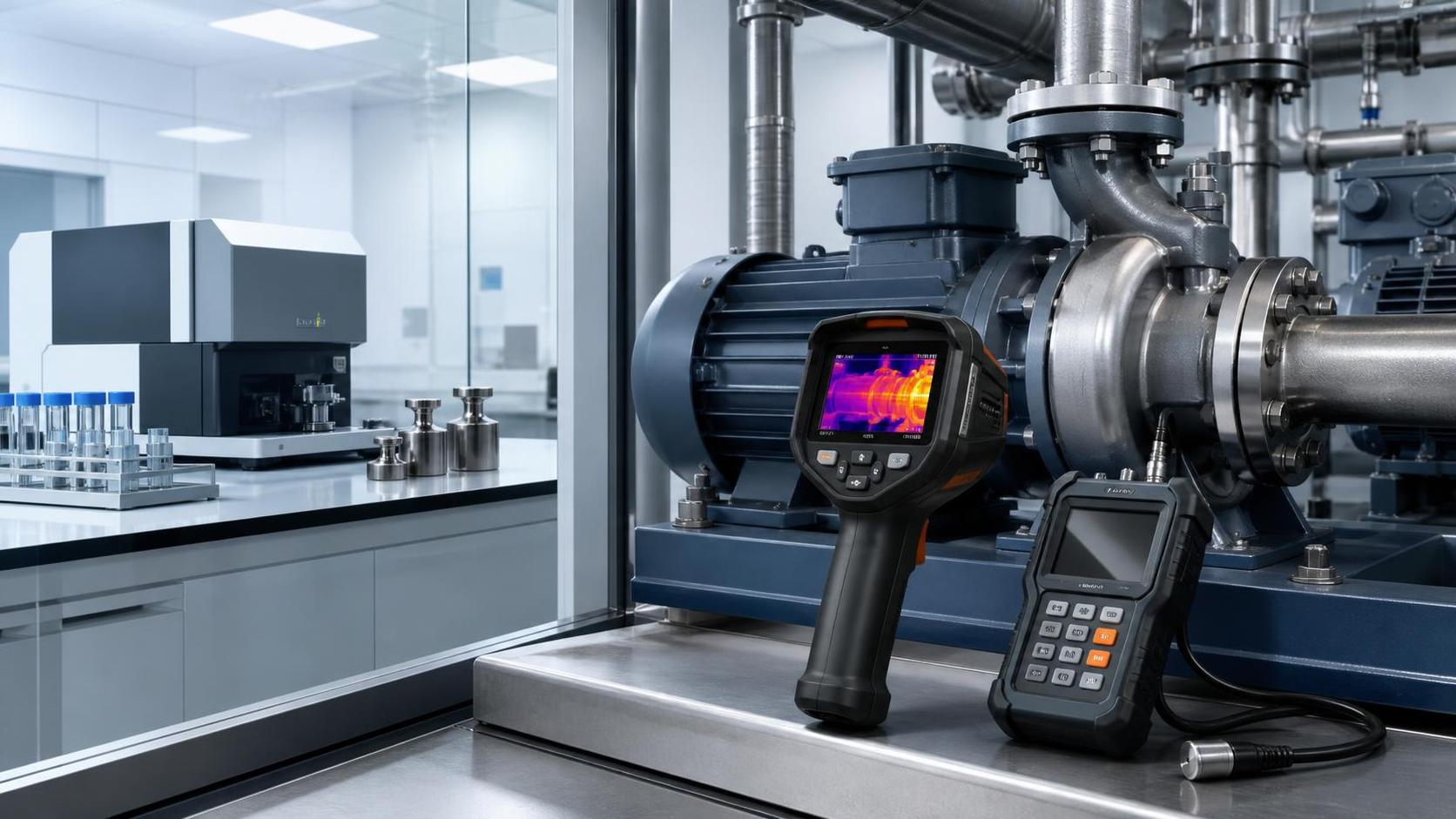
Instruments & Measurement OEM options that ease customization
Author
Date Published
Reading Time

For distributors, agents, and channel partners seeking faster market alignment, Instruments & Measurement OEM options can simplify customization without sacrificing compliance, accuracy, or delivery reliability. From private labeling to spec-specific modifications, the right OEM strategy helps meet diverse industrial requirements, support stronger pricing control, and reduce delays in technical sales processes. In sectors where calibration, certification, enclosure protection, signal compatibility, and traceable performance all matter, OEM planning is not just a branding decision. It becomes a practical method for aligning proven instrumentation platforms with local market needs while preserving engineering confidence.
What does Instruments & Measurement OEM really include?

The term Instruments & Measurement OEM covers more than logo placement on gauges, sensors, transmitters, analyzers, controllers, data acquisition devices, or calibration tools. In industrial practice, it often includes specification adjustments, firmware localization, connector changes, panel integration, packaging redesign, documentation updates, and compliance support tailored for a target market. The value lies in starting from an existing, validated platform instead of creating a device from zero.
Typical OEM customization levels can be grouped into three layers. The first is commercial customization, such as private label, manuals, carton design, and part numbering. The second is functional customization, including pressure range changes, signal output options like 4–20 mA or Modbus, display units, alarm settings, or housing material upgrades. The third is application-level customization, where the instrument is adapted for hazardous areas, food processing washdown, utility metering, environmental monitoring, power systems, or mobile machinery.
A strong Instruments & Measurement OEM program usually balances four factors: metrology integrity, regulatory fit, supply stability, and manageable customization scope. If any one of these is weak, the project may look attractive commercially but become difficult in installation, servicing, or certification reviews later.
When is Instruments & Measurement OEM the right choice instead of full custom development?
Many organizations assume that custom development provides maximum flexibility, but in industrial instrumentation that path often introduces longer validation cycles, higher non-recurring engineering costs, and additional compliance burden. Instruments & Measurement OEM becomes the better option when the core sensing or measuring technology already exists and only market-fit modifications are needed.
This approach is especially effective in several situations. One is when a regional market needs different electrical interfaces, language packs, or approvals than the original standard product. Another is when a product line expansion is required quickly, such as adding temperature transmitters, flow indicators, digital panel meters, or portable calibrators under an established house brand. It is also useful when end users demand familiar industrial standards like CE, UL, ISO-aligned manufacturing controls, ingress protection, or material traceability, but there is no business case for developing a new instrument platform internally.
Full custom development may still be justified when the application requires proprietary sensing methods, highly unusual environmental resistance, or unique system architecture. Yet for most general industrial use cases, Instruments & Measurement OEM reduces launch risk because the base product has already been field-tested. That can significantly shorten quotation cycles and improve confidence in after-sales support.
How can OEM customization be done without creating compliance or accuracy problems?
This is one of the most important questions in any Instruments & Measurement OEM project. Industrial buyers rarely accept cosmetic customization if it introduces uncertainty in calibration, safety, EMC behavior, or durability. The safest route is to separate what can be changed freely from what must stay within validated boundaries.
Low-risk changes usually include branding, label content, packaging, quick-start guides, software language, and accessory bundles. Medium-risk changes may involve connector types, cable lengths, mounting hardware, or display configuration, provided the original electrical and mechanical validation still applies. High-risk changes include sensor element substitutions, pressure-wetted material changes, firmware logic affecting measurement output, explosion-proof enclosure modifications, or power architecture revisions. These often require new testing and sometimes updated certifications.
To keep an Instruments & Measurement OEM program reliable, several controls are worth confirming early:
- Calibration method and traceability documentation
- Revision control for drawings, firmware, and labels
- Certification scope for CE, UL, RoHS, EMC, or hazardous-area approvals
- Defined acceptance criteria for accuracy, repeatability, drift, and environmental performance
- Clear change-notification procedures for components and subassemblies
The practical takeaway is simple: customization should happen around a controlled core. That is how Instruments & Measurement OEM options preserve both speed and technical trust.
Which selection criteria matter most when comparing Instruments & Measurement OEM partners?
Choosing the right partner is rarely about unit price alone. A lower quote can quickly lose value if lead times vary, calibration records are incomplete, or technical files are hard to obtain during a project review. A better comparison framework looks at engineering depth, quality systems, customization discipline, and lifecycle support.
A dependable Instruments & Measurement OEM partner should be able to explain design limits clearly. That includes minimum order logic for customized items, standard turnaround for samples, recertification implications, spare parts continuity, and how mixed batches are controlled. It is also useful to verify whether the supplier has experience across multiple industrial environments such as water treatment, process automation, electrical distribution, environmental monitoring, or machinery condition sensing. Cross-industry familiarity often leads to better recommendations and fewer avoidable specification mistakes.
The table below provides a practical evaluation structure.
What are the common risks and misconceptions in Instruments & Measurement OEM projects?
A frequent misconception is that OEM always means faster delivery. In reality, Instruments & Measurement OEM can accelerate go-to-market only when the requested changes fit within an established option structure. If every order introduces fresh engineering review, artwork revision, firmware edits, and approval questions, speed advantages disappear quickly.
Another risk is assuming that one certification covers every variant. A base model may be compliant, while a modified cable, enclosure window, power module, or mounting arrangement changes the certification status. Documentation gaps also cause trouble. If labeling, serial number logic, and revision history are not aligned, field support becomes harder and warranty disputes become more likely.
There is also the margin trap. Some projects appear attractive because the initial OEM price is low, yet total cost increases through sample rounds, packaging revisions, retesting, expedited freight, or fragmented inventory. A successful Instruments & Measurement OEM strategy therefore evaluates total delivered value rather than simply the first quotation.
A useful way to reduce risk is to standardize 70% to 80% of the platform and only customize the points that directly influence market acceptance. This keeps the offer differentiated without making operations difficult.
How should cost, lead time, and rollout planning be approached?
Cost and timing in Instruments & Measurement OEM depend heavily on whether the project is based on stocked options or engineering changes. Private labeling and standard documentation edits may move quickly. Mechanical, electrical, or software changes often need prototypes, test reports, and formal release milestones.
A practical rollout plan usually includes five steps. First, define the target application conditions: media, range, temperature, ingress protection, power supply, communication protocol, and installation style. Second, identify which requirements are mandatory and which are commercial preferences. Third, request a controlled option matrix rather than an open-ended custom promise. Fourth, validate with pilot units in realistic field conditions. Fifth, lock the technical file before scaling volume orders.
For many industrial channels, the most efficient path is a phased model. Phase one uses near-standard Instruments & Measurement OEM variants to enter the market quickly. Phase two introduces higher-value modifications after real installation feedback is gathered. This approach lowers forecasting risk and helps prevent over-customization before demand is proven.
Quick FAQ reference
The most effective Instruments & Measurement OEM strategy is one that combines proven measurement performance with carefully limited customization. That balance supports faster commercialization, clearer compliance management, and better lifecycle stability across industrial sectors. Before moving forward, map the exact application requirements, separate cosmetic requests from technical necessities, and confirm what remains covered by existing validation. With a disciplined approach, OEM customization can become a scalable growth tool instead of a source of engineering friction.
Technical Specifications
- How to Select an Emissions Monitoring System Analyzer for Compliance ReportingAuthor :Precision Metrology Expert
- How to Select an Access Control Management System for Multi-Site FacilitiesAuthor :Safety Compliance Lead
- Portable Gas Monitor Calibration: How Often Is It Needed for Safe Confined-Space Work?Author :Precision Metrology Expert
Expert Insights

Chief Security Architect
Dr. Thorne specializes in the intersection of structural engineering and digital resilience. He has advised three G7 governments on industrial infrastructure security.
Related Analysis
- Sep 21, 2026How to Select an Emissions Monitoring System Analyzer for Compliance ReportingAuthor :Precision Metrology Expert
- Sep 20, 2026How to Select an Access Control Management System for Multi-Site FacilitiesAuthor :Safety Compliance Lead
- Sep 19, 2026Portable Gas Monitor Calibration: How Often Is It Needed for Safe Confined-Space Work?Author :Precision Metrology Expert
Core Sector // 01
Security & Safety
- How to Select an Emissions Monitoring System Analyzer for Compliance ReportingAuthor :Precision Metrology Expert

- Portable Gas Monitor Calibration: How Often Is It Needed for Safe Confined-Space Work?Author :Precision Metrology Expert

- What to Check When Sourcing Vibration Meters Wholesale for Industrial MaintenanceAuthor :Precision Metrology Expert

- How to Select Process Control Instruments for Accuracy, Safety, and UptimeAuthor :Precision Metrology Expert

- What Should Standards Compliance Analysis Training Cover Before an Audit?Author :Precision Metrology Expert

- Why Do Pressure Instruments Fail in High-Vibration Sites?Author :Precision Metrology Expert

- Is FM Software Integration Needed for Overseas Instrument Maintenance?Author :Precision Metrology Expert

- What Are the Differences Between Lab and Field Testing Equipment?Author :Precision Metrology Expert