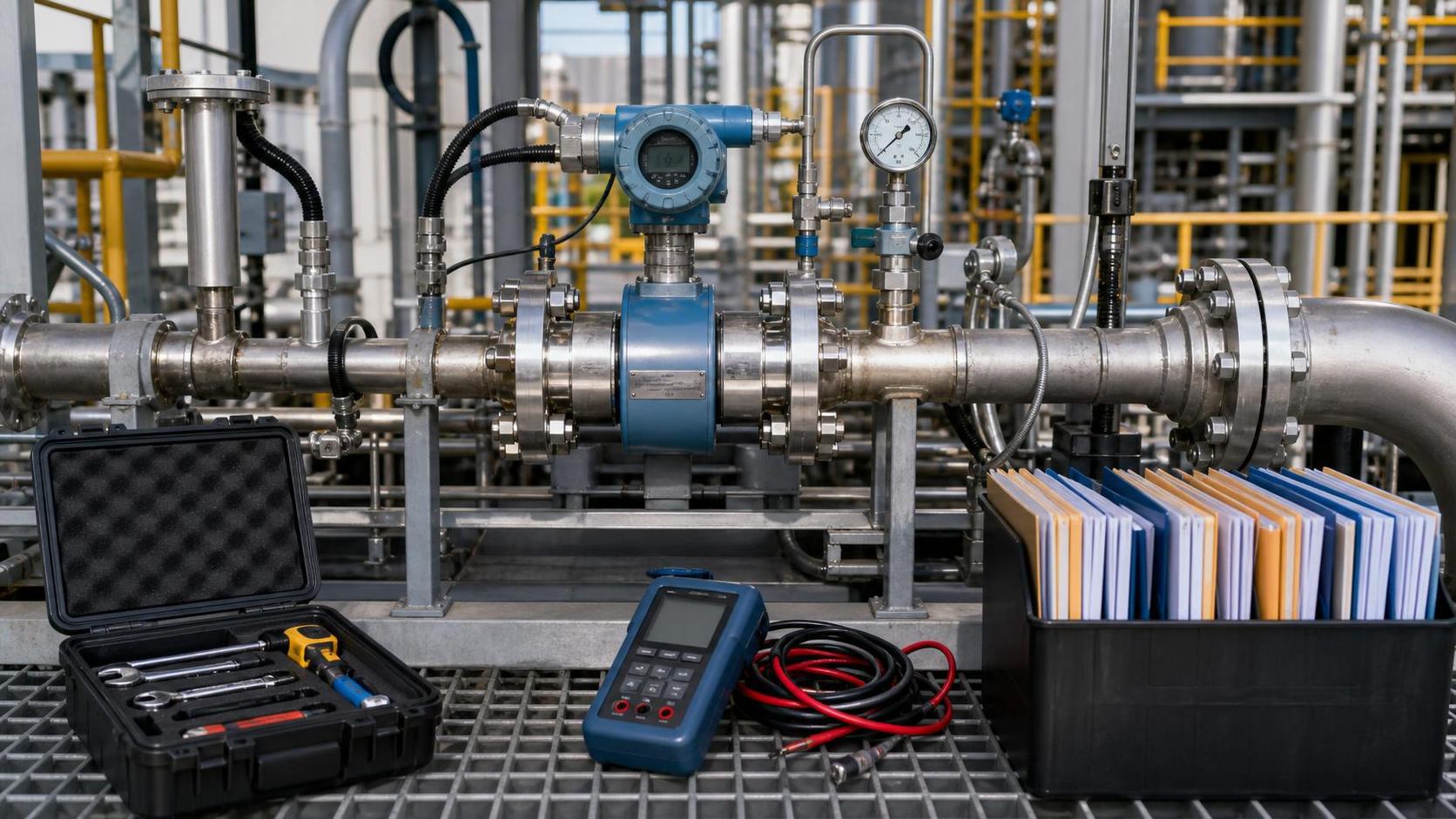
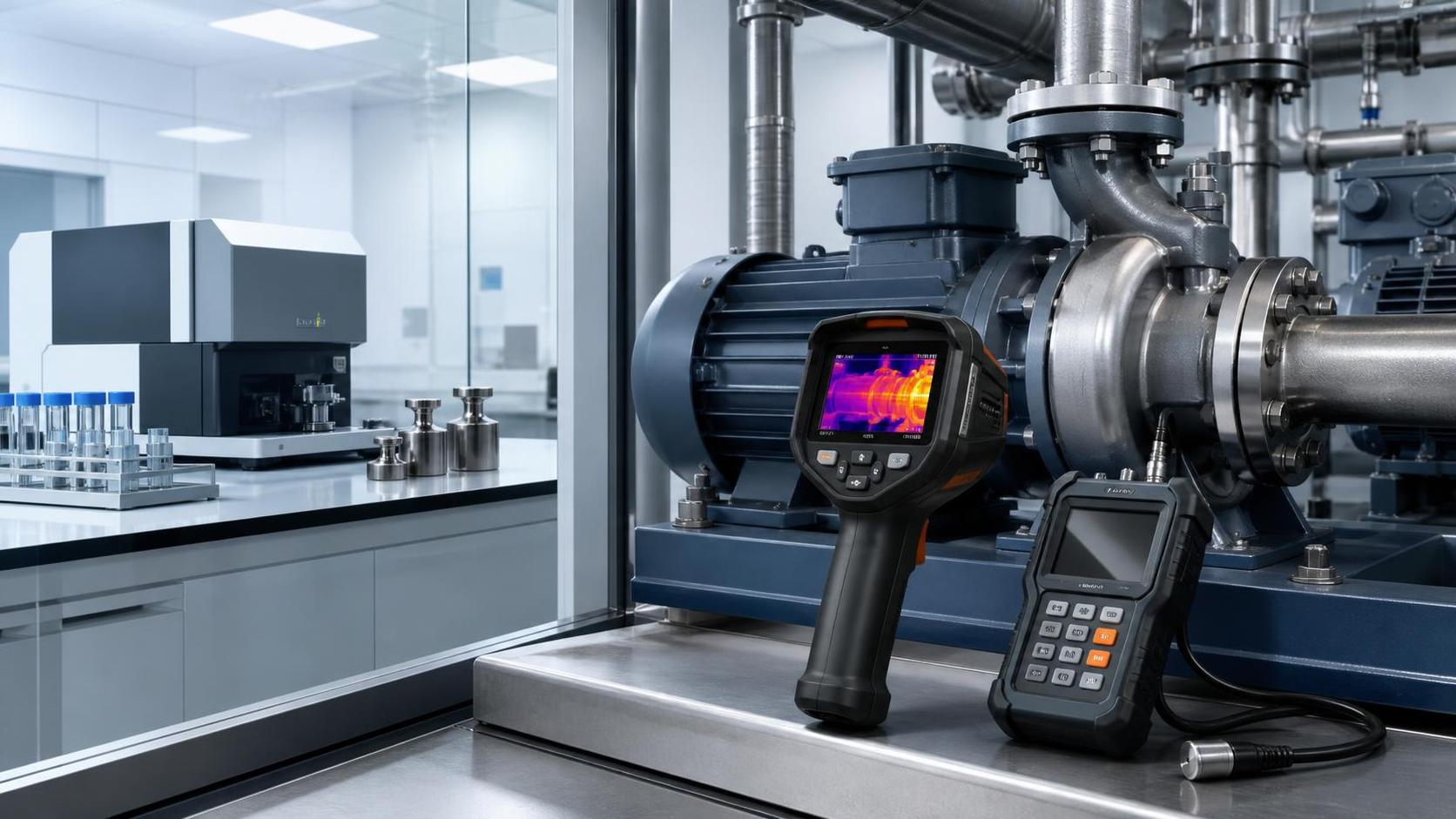
How to compare metrology equipment suppliers for plant accuracy
Author
Date Published
Reading Time

Choosing among metrology equipment suppliers for industrial measurement is a high-stakes decision for quality control and safety leaders. Beyond price, the right partner must prove calibration accuracy, standards compliance, data reliability, and long-term service capability. This guide explains how to compare suppliers with confidence so your plant can protect process integrity, reduce risk, and maintain consistent accuracy.
In industrial environments, measurement error rarely stays isolated. A drift of ±0.02 mm in dimensional inspection, an unstable pressure reading, or an unverified calibration interval can trigger scrap, rework, delayed audits, or safety exposure across multiple production stages. For quality teams and safety managers, the supplier decision therefore affects not only instrument performance, but also traceability, uptime, and regulatory readiness.
When assessing metrology equipment suppliers for industrial measurement, the most reliable comparisons combine technical fit, service depth, documentation quality, and lifecycle economics. Plants that buy on initial unit cost alone often discover hidden costs within 6–18 months through recalibration delays, weak application support, incompatible software, or poor spare parts availability. A structured comparison model reduces that risk.
Start with the Accuracy Risk Profile of Your Plant
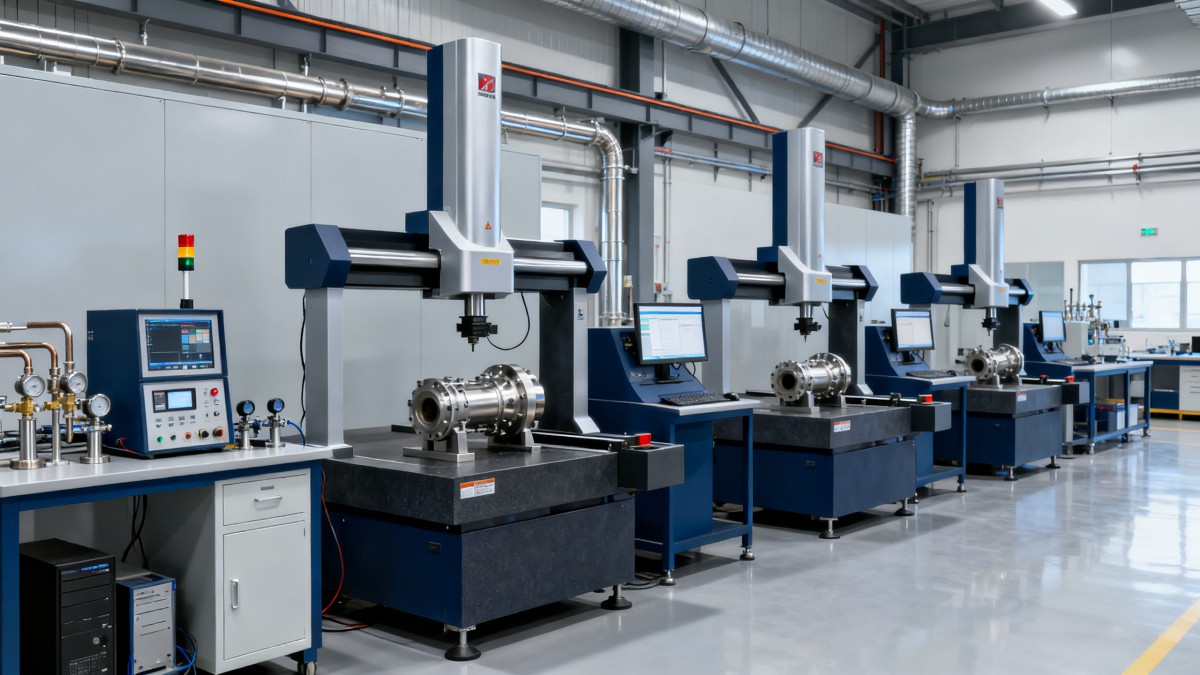
Before contacting vendors, define what accuracy means in your operating context. A food packaging line, turbine component workshop, pharmaceutical utility plant, and metal fabrication facility can all use industrial measurement tools, but their tolerance bands, environmental conditions, and traceability needs differ significantly. A supplier that is strong in laboratory-grade dimensional control may not be equally strong in harsh field measurement or process safety instrumentation.
A useful first step is to classify plant measurement by 3 layers: product quality, process control, and safety-critical verification. For example, a QC team may require repeatability within ±1–5 microns for machined parts, while a utilities team may prioritize stable pressure or flow verification over a 12-month interval. Safety leaders may focus on proof of calibration, alarm integrity, and audit-ready records rather than raw resolution alone.
Map equipment categories to operational consequences
Supplier evaluation becomes easier when each equipment category is tied to a business consequence. Coordinate measuring systems, laser measurement devices, torque tools, pressure calibrators, temperature references, thickness gauges, and electrical test instruments all influence different failure modes. In many plants, 4–6 instrument families account for the majority of compliance risk and customer complaints.
- Dimensional metrology: impacts scrap rate, assembly fit, and final inspection release.
- Process measurement: affects yield stability, energy use, and batch consistency.
- Safety verification tools: support shutdown systems, alarms, and permit-to-operate readiness.
- Portable field instruments: influence maintenance speed and confidence during troubleshooting.
Define minimum comparison criteria before requesting quotations
Many procurement teams request quotes too early and receive technically uneven proposals. Build a comparison sheet with at least 6 criteria: required accuracy, calibration traceability, environmental operating range, software compatibility, service response time, and recommended recalibration interval. This prevents suppliers from competing on incomplete scope and helps plant stakeholders judge offers on equal terms.
The table below shows a practical way to classify plant needs before engaging metrology equipment suppliers for industrial measurement.
This type of pre-qualification prevents a common mistake: comparing a high-resolution instrument from one supplier against a rugged, field-oriented device from another without recognizing that the intended use is different. A better decision starts with fit-for-purpose measurement, not the most impressive specification sheet.
Compare Suppliers on Technical Proof, Not Marketing Claims
Once plant needs are defined, the next step is to test how each supplier proves performance. Serious metrology equipment suppliers for industrial measurement should be able to explain measurement uncertainty, traceability route, calibration method, environmental limitations, and operator training needs in clear terms. If a supplier cannot translate specifications into plant usage conditions, the risk of mismatch rises quickly.
Review calibration traceability and uncertainty statements
Accuracy claims should always be backed by calibration documentation. Ask whether calibration is traceable to recognized national or international standards, whether uncertainty is stated on the certificate, and whether the method is appropriate for your use case. For many industrial audits, it is not enough to see “calibrated”; you need to see who performed it, when, under what conditions, and with what acceptance criteria.
As a rule, if your process tolerance is tight, your measuring system should have a clear margin over the acceptance band. Many plants use internal rules such as a 4:1 or 10:1 ratio between process tolerance and measurement capability, depending on application criticality. The exact rule varies, but the supplier should be able to discuss this intelligently rather than offering generic precision language.
Check software, data export, and record integrity
Modern supplier comparison is no longer limited to instrument hardware. Data integrity matters just as much. Quality control leaders should ask whether the supplier supports CSV, PDF, SPC, MES, or ERP-compatible export formats; whether user permissions can be controlled; and whether measurement data can be retained for 12–36 months without manual file handling. Weak reporting systems often create more audit pain than minor hardware limitations.
Questions to ask during a technical review
- What is the stated accuracy and under which environmental conditions was it validated?
- What is the recommended calibration frequency for a 2-shift or 3-shift operation?
- Can the supplier provide sample certificates and uncertainty details before purchase?
- Which operator skill level is required for stable results within the first 30 days?
- How are firmware updates, backups, and data exports managed?
The following comparison table can help procurement, QA, and safety stakeholders score suppliers on measurable criteria rather than subjective impressions.
A supplier that scores well across these dimensions is more likely to support consistent plant accuracy over time. In contrast, a lower-cost option with incomplete documentation or weak data handling can increase nonconformance investigation time, slow customer response, and burden internal teams with manual work.
Evaluate Service Infrastructure Across the Full Equipment Lifecycle
For most facilities, the supplier relationship continues long after commissioning. Lifecycle support often determines whether a metrology purchase strengthens operational control or becomes an intermittent source of downtime. This is especially important for plants running 2 shifts, 24/5 schedules, or continuous processes where instrument availability directly affects line clearance and maintenance planning.
Look beyond delivery lead time
Standard lead times for industrial measurement equipment can range from 2–4 weeks for common handheld devices to 8–16 weeks for more specialized systems. But lead time is only one service variable. Ask about commissioning support, training duration, spare parts stock, loaner availability, and recalibration turnaround. A supplier with a 1-week faster delivery but a 4-week repair cycle may not be the better choice.
Assess training and operator adoption risk
Measurement reliability depends heavily on operator consistency. If a system requires advanced setup, fixture alignment, environmental stabilization, or software interpretation, training quality becomes critical. Many plants underestimate the difference between a 2-hour product demo and a structured 1–3 day onboarding program with verification checks, work instructions, and refresher support after the first month.
Lifecycle checkpoints that should be clarified in writing
- Initial installation scope and whether acceptance testing is included.
- Recommended preventive maintenance frequency, such as quarterly or semiannual checks.
- Average recalibration turnaround, for example 5–10 working days.
- Availability of replacement units during repair or certification periods.
- Escalation path for critical failures affecting production release or safety verification.
For quality control and safety management, the practical question is simple: if the instrument drifts, fails, or requires urgent recalibration, how quickly can the supplier restore confidence in the measurement system? Suppliers that answer with a defined process are safer choices than those that respond only with general service assurances.
Use a Weighted Procurement Model to Make the Final Decision
A disciplined supplier decision should combine cross-functional input from QA, production, maintenance, safety, and procurement. In many industrial organizations, the most effective method is a weighted scorecard that ranks suppliers across 5–8 factors. This reduces internal disagreement and creates a defensible record for budget approval, audit review, or future standardization across multiple sites.
Example of a practical scoring structure
Not every plant uses the same weights, but a typical industrial model may assign 25% to technical suitability, 20% to calibration and traceability quality, 15% to service response, 15% to data integration, 15% to total cost of ownership, and 10% to training and documentation. A low purchase price should not outweigh weak technical fit if the equipment influences product release or safety-critical checks.
Total cost of ownership should include at least 4 cost layers over a 3–5 year period: acquisition, calibration, maintenance, and downtime exposure. In some cases, a supplier with a 12% higher purchase price may deliver a lower lifecycle cost if recalibration is faster, consumables are standardized, and reporting labor is reduced.
Common comparison mistakes to avoid
- Comparing nominal accuracy without checking uncertainty and operating conditions.
- Ignoring software compatibility until after installation.
- Accepting service promises without documented turnaround times.
- Skipping operator training budget even for complex systems.
- Using one global supplier for every instrument type without validating application depth.
When a pilot purchase makes sense
If two suppliers appear close in capability, a pilot can reduce uncertainty. A 30–60 day evaluation with defined test parts, repeatability checks, operator usability review, and reporting validation often reveals gaps that are not visible in quotations. For higher-value systems, this step can prevent costly standardization on a platform that later proves difficult to maintain.
Selecting metrology equipment suppliers for industrial measurement is ultimately a plant risk decision as much as a purchasing decision. The strongest partners demonstrate fit to tolerance, traceable calibration, dependable service, clean data handling, and realistic support over the full equipment lifecycle. For quality control professionals and safety managers, that combination protects audit readiness, process integrity, and day-to-day operational confidence.
If your team is reviewing measurement suppliers for a new line, a plant upgrade, or a cross-site standardization project, a structured evaluation framework can shorten decision time and reduce hidden risk. Consult Global Industrial Core to discuss supplier screening criteria, technical comparison priorities, and fit-for-purpose industrial measurement solutions tailored to your facility. Contact us today to get a customized sourcing perspective and explore more metrology and plant accuracy solutions.
Technical Specifications
- How to Select an Emissions Monitoring System Analyzer for Compliance ReportingAuthor :Precision Metrology Expert
- How to Select an Access Control Management System for Multi-Site FacilitiesAuthor :Safety Compliance Lead
- Portable Gas Monitor Calibration: How Often Is It Needed for Safe Confined-Space Work?Author :Precision Metrology Expert
Expert Insights

Chief Security Architect
Dr. Thorne specializes in the intersection of structural engineering and digital resilience. He has advised three G7 governments on industrial infrastructure security.
Related Analysis
- Sep 21, 2026How to Select an Emissions Monitoring System Analyzer for Compliance ReportingAuthor :Precision Metrology Expert
- Sep 20, 2026How to Select an Access Control Management System for Multi-Site FacilitiesAuthor :Safety Compliance Lead
- Sep 19, 2026Portable Gas Monitor Calibration: How Often Is It Needed for Safe Confined-Space Work?Author :Precision Metrology Expert
Core Sector // 01
Security & Safety
- How to Select an Emissions Monitoring System Analyzer for Compliance ReportingAuthor :Precision Metrology Expert

- Portable Gas Monitor Calibration: How Often Is It Needed for Safe Confined-Space Work?Author :Precision Metrology Expert

- What to Check When Sourcing Vibration Meters Wholesale for Industrial MaintenanceAuthor :Precision Metrology Expert

- How to Select Process Control Instruments for Accuracy, Safety, and UptimeAuthor :Precision Metrology Expert

- What Should Standards Compliance Analysis Training Cover Before an Audit?Author :Precision Metrology Expert

- Why Do Pressure Instruments Fail in High-Vibration Sites?Author :Precision Metrology Expert

- Is FM Software Integration Needed for Overseas Instrument Maintenance?Author :Precision Metrology Expert

- What Are the Differences Between Lab and Field Testing Equipment?Author :Precision Metrology Expert