Which industrial measurement equipment specifications affect accuracy
Author
Date Published
Reading Time
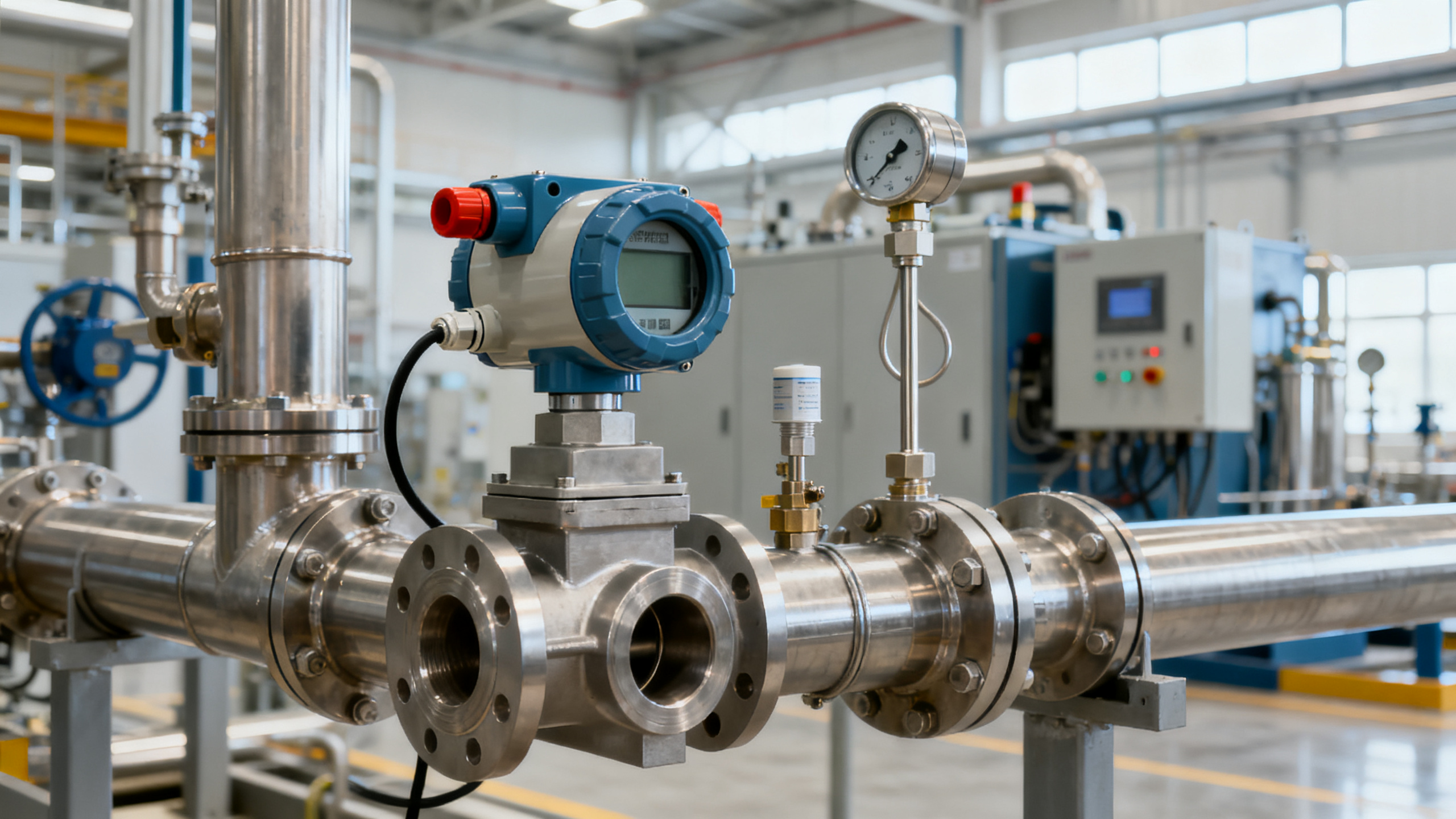
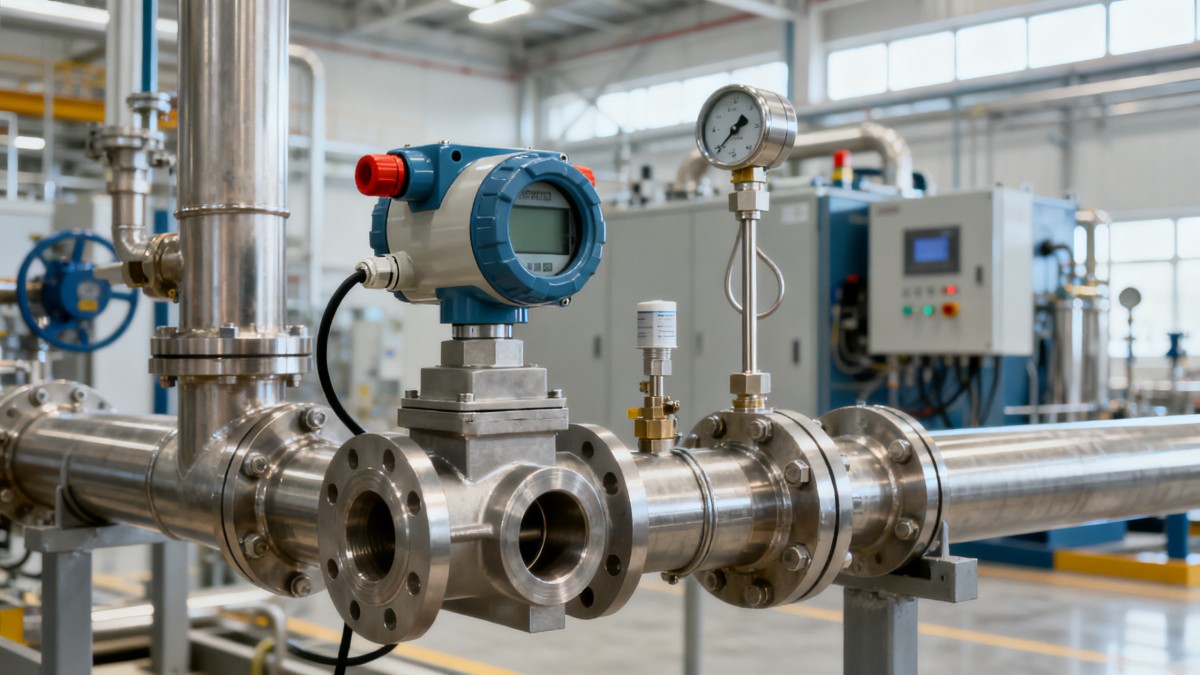
When evaluating precision, reliability, and compliance in harsh industrial environments, industrial measurement equipment specifications can make the difference between stable operations and costly errors. For technical evaluators, understanding which parameters directly influence accuracy is essential to selecting instruments that meet process demands, calibration standards, and long-term performance expectations across complex industrial applications.
What has changed in recent years is not only the technology inside sensors, transmitters, analyzers, and meters, but also the standard by which buyers judge them. Technical evaluation teams are no longer reviewing industrial measurement equipment specifications only to compare nominal accuracy values on a datasheet. They are increasingly assessing whether those specifications remain valid under vibration, temperature swings, electromagnetic interference, process contamination, digital integration demands, and tighter audit expectations. In other words, the market has shifted from “best stated precision” to “best sustained accuracy in real operating conditions.”
Why accuracy discussions are changing across industrial measurement
Several industry signals explain this shift. First, facilities are under pressure to reduce waste, energy loss, and unplanned downtime. A small measurement deviation in flow, pressure, temperature, or level can now have direct cost implications. Second, compliance requirements have become more demanding in sectors involving emissions, hazardous environments, quality control, and product traceability. Third, digital plants expect measurement devices to feed analytics systems, meaning poor field accuracy can quickly become poor decision-making at the enterprise level.
For technical evaluators, this means industrial measurement equipment specifications must be read as a performance system rather than a single headline number. A device listed as highly accurate in a laboratory may perform very differently when exposed to installation stress, fluid turbulence, process noise, or long calibration intervals. The key trend is that accuracy is being judged over time, in context, and under operational load.
The specifications that most directly affect real-world accuracy
Among all industrial measurement equipment specifications, a handful consistently shape actual field accuracy more than others. Technical teams increasingly prioritize the following parameters during evaluation:
- Reference accuracy and whether it is expressed as percentage of reading, full scale, or span
- Repeatability, because stable repeated results often matter as much as initial accuracy
- Linearity and hysteresis, especially in control-critical processes
- Resolution and sensitivity in low-signal applications
- Temperature coefficient and thermal drift
- Long-term stability and calibration interval performance
- Response time in dynamic process conditions
- Environmental protection ratings, such as ingress, corrosion, and vibration resistance
- Electromagnetic compatibility in electrically noisy environments
- Installation requirements, mounting orientation, straight pipe runs, grounding, and signal conditioning
The trend behind this list is important: accuracy is increasingly seen as conditional. The specification sheet is still essential, but evaluators now ask under what assumptions each value was obtained. That question often reveals whether a device is suitable for a refinery skid, water treatment line, power distribution facility, food processing train, or high-vibration mechanical system.
A practical trend table for reading industrial measurement equipment specifications
The table below reflects how technical evaluation priorities are evolving. It can help teams interpret industrial measurement equipment specifications with a stronger focus on operational accuracy rather than brochure-level performance.
What is driving tighter scrutiny of these specifications
A major driver is the convergence of metrology with operational intelligence. Plants increasingly depend on measurement data not only for local indication, but for predictive maintenance, energy balancing, environmental reporting, and remote asset monitoring. That wider use raises the cost of inaccuracy. A drifting transmitter can now distort dashboards, alarms, maintenance triggers, and compliance records all at once.
Another driver is the growing diversity of industrial conditions. Instruments are being deployed in more compact systems, skid-based modules, mobile equipment, hybrid utility networks, and retrofitted brownfield sites. In such environments, industrial measurement equipment specifications related to mechanical stress, electrical noise immunity, and mounting constraints become more significant than they once were.
There is also a procurement shift. Buyers are under pressure to standardize vendors and reduce maintenance overhead. That encourages a closer look at long-term stability, calibration burden, and diagnostic capability. In many cases, the most accurate option on day one is not the most accurate option after twelve months in service.
How these changes affect technical evaluators, procurement, and operations
For technical evaluators, the first impact is methodological. Evaluation now requires cross-checking datasheet claims with installation reality. It is no longer enough to compare only the top-line specification. Teams should verify process media characteristics, ambient conditions, expected signal interference, maintenance resources, and the calibration framework available on site.
For procurement teams, the implication is that price comparisons must be adjusted for specification quality. Two devices may appear equivalent if both list similar accuracy, but differences in stability, drift, ingress protection, material compatibility, and diagnostics can produce very different lifecycle outcomes. In sectors where failure or measurement bias creates safety, environmental, or contractual exposure, this distinction becomes decisive.
Operations teams feel the effect in the form of downtime, false alarms, poor control, or product inconsistency. The modern trend is that inaccurate measurement is less often caused by outright device failure and more often by hidden specification mismatch. A meter selected without enough attention to turndown ratio, conductivity range, pressure pulsation tolerance, or thermal compensation may continue operating while quietly degrading decision quality.
The most overlooked specification interactions
One of the most important trend observations is that accuracy-relevant specifications do not act independently. Technical evaluators should pay close attention to interactions, especially in complex systems.
- A strong nominal accuracy value can be undermined by poor thermal stability.
- Excellent repeatability may still produce bad reporting if calibration drift is high.
- Fast response time can introduce instability if filtering and process dynamics are not aligned.
- High sensor sensitivity may become a disadvantage in noisy electrical environments.
- A robust enclosure rating does not guarantee chemical compatibility with the process medium.
This is why the evaluation of industrial measurement equipment specifications increasingly resembles system engineering rather than item selection. The more automated and data-dependent a facility becomes, the more these interactions matter.
Signals that a specification set is likely to support better accuracy over time
In current market practice, certain signals suggest that a device has been designed for durable accuracy rather than marketing appeal. These signals include clear specification conditions, transparent drift values, documented environmental limitations, traceable calibration options, and built-in diagnostics that alert users to contamination, sensor aging, or wiring issues. Technical evaluators should treat vague or overly simplified datasheets as a warning sign, especially when the application is safety-critical or audit-sensitive.
Another positive signal is alignment with internationally recognized standards and testing frameworks. While compliance labels do not replace technical analysis, they often indicate disciplined design and verification practices. In sectors governed by CE, UL, ISO, or industry-specific process requirements, accuracy is inseparable from documented conformity and installation discipline.
How to judge specification relevance by application stage
A useful way to improve decisions is to evaluate industrial measurement equipment specifications according to where the instrument will create value or risk in the process lifecycle.
What technical teams should do next
The strongest response to current market change is to update evaluation criteria. Instead of asking only “Which instrument is most accurate?”, teams should ask “Which industrial measurement equipment specifications will preserve accuracy under our actual operating profile?” That reframing usually leads to better outcomes.
A practical review process should include: defining the real measurement range instead of the theoretical maximum; mapping environmental stressors; checking calibration resources and interval expectations; validating installation constraints; and confirming whether digital outputs, diagnostics, and compliance documentation support the wider facility strategy. These steps help convert specification review into risk reduction.
FAQ for evaluators reviewing industrial measurement equipment specifications
Is published accuracy the most important specification?
Not by itself. Published accuracy matters, but repeatability, drift, temperature effects, and installation sensitivity often determine whether that accuracy can be maintained in service.
Why do two instruments with similar accuracy perform differently on site?
Because industrial measurement equipment specifications may differ in environmental tolerance, response behavior, stability, signal immunity, and process compatibility. These differences often appear only in real operating conditions.
Which specification is most commonly underestimated?
Long-term stability is often underestimated. A device that drifts slowly can create substantial error before anyone notices, especially in plants with long maintenance cycles.
Final judgment for decision-makers
The direction of the market is clear: industrial measurement equipment specifications are being evaluated less as static product data and more as predictors of operational truth. Accuracy now depends on environmental resilience, stability over time, system compatibility, and evidence-backed compliance just as much as on nominal metrology performance. For technical evaluators, the opportunity is to move beyond checkbox comparison and build a more realistic framework for selection.
If your organization wants to judge how these trends affect a specific project, focus on a short set of questions: under what exact conditions will the instrument operate, which specifications most influence error in that environment, how will drift be detected, and what evidence supports long-term accuracy? Those answers will do more than improve procurement decisions—they will strengthen safety, efficiency, and confidence across the entire industrial measurement chain.
Technical Specifications
- How to Select an Emissions Monitoring System Analyzer for Compliance ReportingAuthor :Precision Metrology Expert
- How to Select an Access Control Management System for Multi-Site FacilitiesAuthor :Safety Compliance Lead
- Portable Gas Monitor Calibration: How Often Is It Needed for Safe Confined-Space Work?Author :Precision Metrology Expert
Expert Insights

Chief Security Architect
Dr. Thorne specializes in the intersection of structural engineering and digital resilience. He has advised three G7 governments on industrial infrastructure security.
Related Analysis
- Sep 21, 2026How to Select an Emissions Monitoring System Analyzer for Compliance ReportingAuthor :Precision Metrology Expert
- Sep 20, 2026How to Select an Access Control Management System for Multi-Site FacilitiesAuthor :Safety Compliance Lead
- Sep 19, 2026Portable Gas Monitor Calibration: How Often Is It Needed for Safe Confined-Space Work?Author :Precision Metrology Expert
Core Sector // 01
Security & Safety
- How to Select an Emissions Monitoring System Analyzer for Compliance ReportingAuthor :Precision Metrology Expert

- Portable Gas Monitor Calibration: How Often Is It Needed for Safe Confined-Space Work?Author :Precision Metrology Expert

- What to Check When Sourcing Vibration Meters Wholesale for Industrial MaintenanceAuthor :Precision Metrology Expert

- How to Select Process Control Instruments for Accuracy, Safety, and UptimeAuthor :Precision Metrology Expert

- What Should Standards Compliance Analysis Training Cover Before an Audit?Author :Precision Metrology Expert

- Why Do Pressure Instruments Fail in High-Vibration Sites?Author :Precision Metrology Expert

- Is FM Software Integration Needed for Overseas Instrument Maintenance?Author :Precision Metrology Expert

- What Are the Differences Between Lab and Field Testing Equipment?Author :Precision Metrology Expert