How to Choose pH Meters for Water Treatment: Accuracy, Sensors, and Maintenance
Author
Date Published
Reading Time
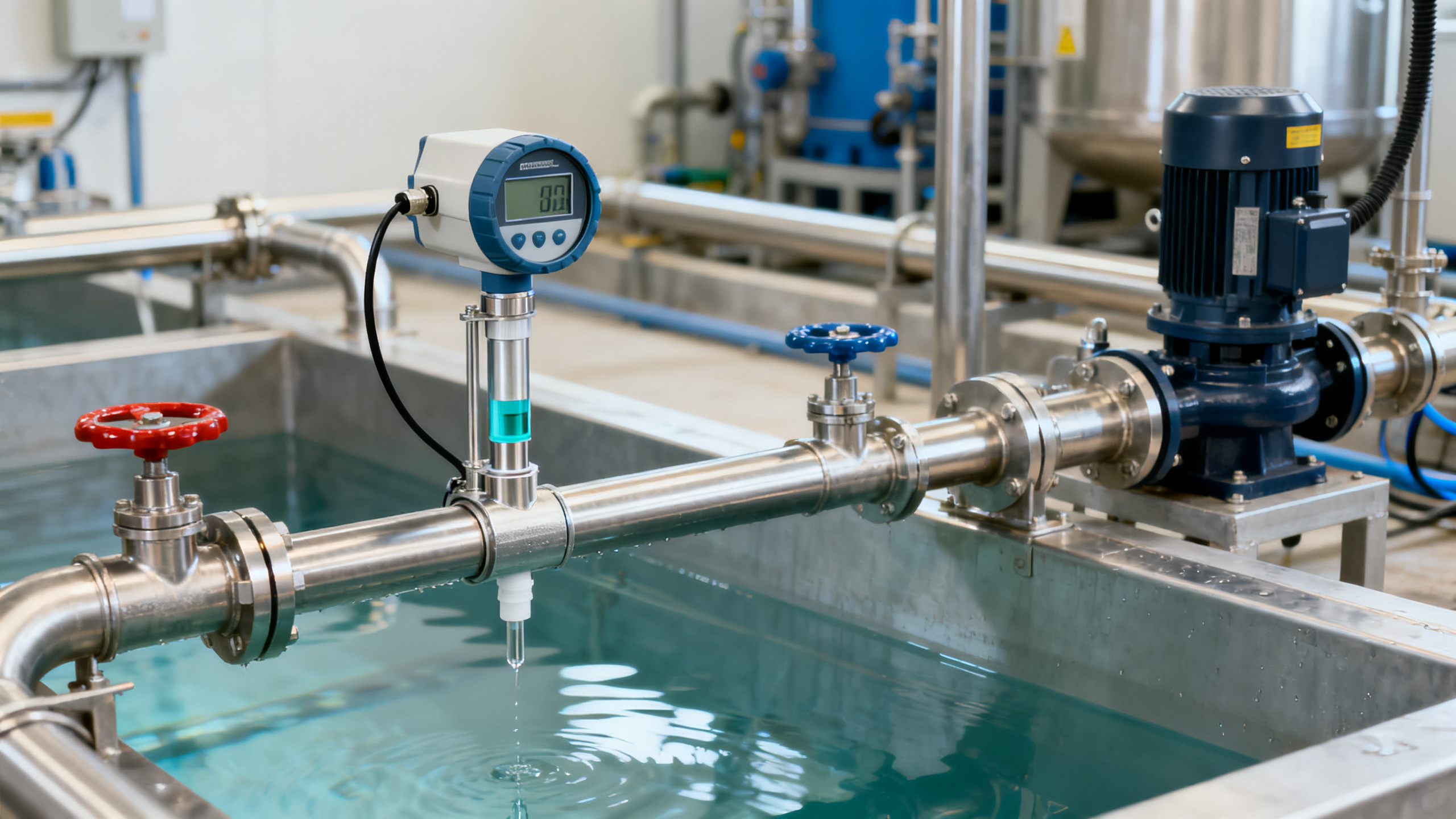
How to Choose pH Meters for Water Treatment: Accuracy, Sensors, and Maintenance
Choosing the right ph meters for water treatment is not a paperwork exercise. For technical evaluators, the meter ends up affecting dosing control, discharge compliance, operator workload, and how often the team gets called back to troubleshoot readings that “look wrong.” A meter that performs well in a clean lab sample can become unreliable fast in raw water, wastewater, high-solids streams, or chemically aggressive treatment loops.
The practical question is not simply which unit has the best headline specification. It is whether the instrument will hold calibration, survive the process, integrate into your control philosophy, and stay maintainable over time. That usually narrows the field faster than spec-sheet marketing does.
If you are screening options for municipal treatment, industrial process water, cooling towers, boiler feed, neutralization skids, or effluent monitoring, this is the checklist I would work through before approving a model.
Start with the actual water, not the instrument catalog
A surprising number of bad selections happen because the buying team starts by comparing display features, communications, or price, while the process chemistry gets reduced to “water treatment.” That label is too broad to be useful.
Before comparing suppliers, pin down the real application conditions:
- Is the sample clean, turbid, oily, scaling, or loaded with suspended solids?
- What is the normal pH band, and how often does it swing outside that range?
- What are the temperature conditions and pressure conditions at the measurement point?
- Will the sensor see chlorine, sulfides, solvents, surfactants, or other chemical stressors?
- Is this continuous online control, grab-sample verification, or compliance documentation?
This part matters because sensor fouling mechanisms differ. A wastewater basin, a demineralized water loop, and a dosing skid can all require very different electrode designs even if the nominal pH range overlaps.
Do not overvalue advertised accuracy without asking how it is maintained
Accuracy is usually the first line item everyone checks, but on its own it can be misleading. A meter may advertise strong measurement accuracy under controlled conditions, yet drift quickly in the field because the reference junction plugs, temperature compensation is poorly matched, or calibration discipline is unrealistic for the site.
For selection work, I would look at three things together:
- The meter’s stated measurement accuracy and resolution.
- The sensor’s expected drift behavior in your actual process.
- How often your team can realistically calibrate and clean it.
If a process only needs stable control around a narrow operating band, long-term stability may be more valuable than chasing the tightest published accuracy number. In neutralization systems, repeated false corrections caused by unstable readings can be more expensive than modest measurement error.
Ask vendors how the instrument handles slope diagnostics, offset diagnostics, and calibration history. Those features do not replace good maintenance, but they do make it easier to catch a degrading sensor before it starts driving bad process decisions.
Sensor selection usually matters more than the transmitter
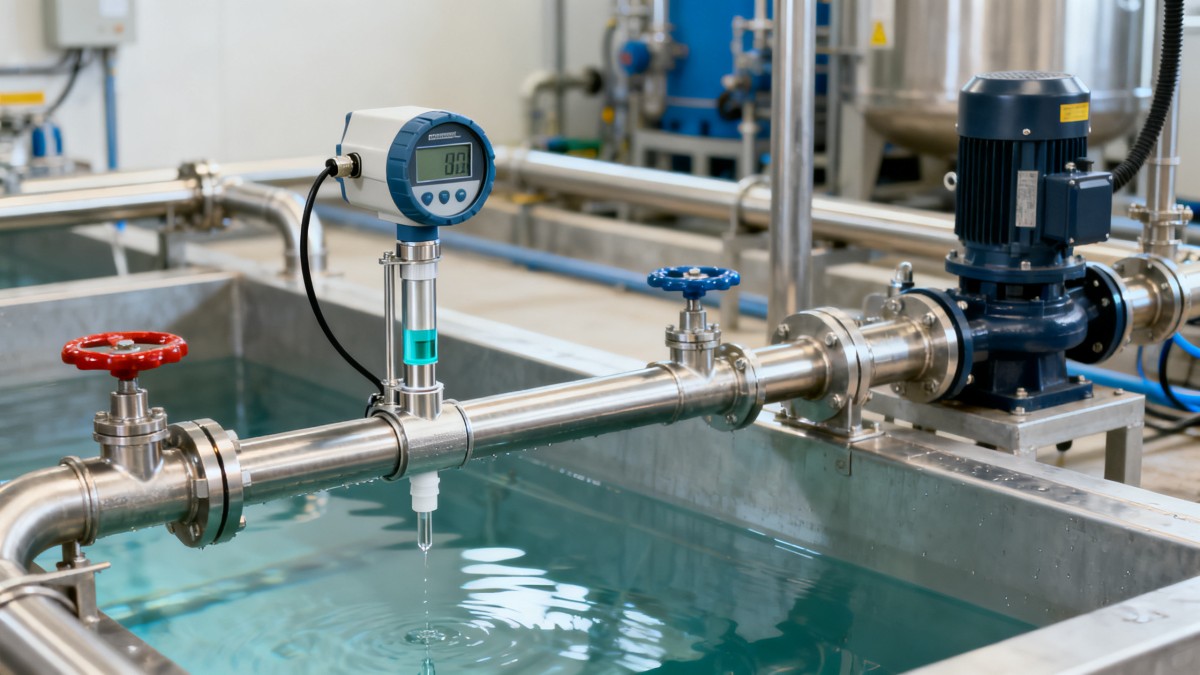
In many water treatment projects, the transmitter gets more meeting time than the electrode. That is backwards. If the sensor is mismatched to the stream, the transmitter can be excellent and the reading will still be unreliable.
Points worth checking:
- Reference junction design: In dirty or high-solids applications, junction clogging is a common failure mode. A sensor intended for clean water may not last in sludge-adjacent service.
- Glass formulation: Some electrodes respond better in low-conductivity water, while others are built for harsh industrial chemistry. This is application specific and should be verified against supplier documentation.
- Body material: CPVC, PVDF, glass, and stainless steel housings each have different chemical and mechanical limits. Compatibility should be checked against the process media and installation environment.
- Temperature element integration: Automatic temperature compensation is standard on many industrial systems, but confirm sensor and transmitter compatibility rather than assuming it.
A common mistake is selecting one “standard” pH sensor across the whole plant for spare-parts convenience. That can work only if the water streams are genuinely similar. In mixed facilities, standardization sometimes creates avoidable failures.
Installation location can make a good meter look bad
If the sample point is poorly chosen, you may spend months blaming the instrument for a hydraulic or process issue. pH meters for water treatment need representative flow, stable immersion, and a place where operators can service them without shutting down half the system.
Check the installation method early: inline, submersible, insertion, or flow cell. Each has tradeoffs. Flow cells can improve service access and sample conditioning, but they add tubing, valves, and possible lag time. Immersion installations are simpler, but exposure to debris and coatings can increase maintenance. Inline mounting reduces sample handling but can complicate removal and calibration access.
Also look at cable routing, ingress protection, washdown exposure, and whether the instrument enclosure matches the area classification. If the meter is going into a hazardous location, any claim about compliance with relevant standards must be checked against official certification documents, not just a brochure summary.
Maintenance burden should be priced into the decision
This is where low purchase price often stops looking attractive. Some systems are cheap to buy and expensive to live with. If the site has limited instrumentation staff or high labor costs, maintenance frequency can outweigh the initial instrument cost pretty quickly.
When comparing options, ask very direct questions:
One field reality: teams often underestimate calibration discipline. If the process environment is tough and the maintenance culture is inconsistent, a meter that tolerates neglect slightly better may outperform a more sophisticated unit on actual site results.
Check low-conductivity and chemically difficult applications carefully
Not all water behaves the same from a pH measurement perspective. Low-conductivity water, such as high-purity or deionized streams, can be especially challenging. Response instability, noise, and reference issues may appear even when the instrument is installed correctly. If your treatment process includes ultrapure water, boiler makeup, or similar service, do not assume a general-purpose sensor will perform acceptably.
Likewise, streams with heavy oxidizers, solvents, sulfides, or coating tendencies deserve extra scrutiny. This is where supplier application engineering support becomes valuable. Ask for documented suitability for comparable service conditions. If the claim is broad but unsupported, treat it cautiously.
Integration and control strategy are part of the selection
A pH meter rarely operates alone in treatment systems. It usually feeds alarms, chemical dosing control, SCADA visibility, compliance reporting, or redundancy logic. So confirm the boring parts before purchase: output signals, digital communications, local display readability, data logging, and configuration security.
For industrial buyers, compatibility with the existing automation architecture is usually non-negotiable. A meter that requires custom integration work can become expensive very quickly. If the process is compliance-sensitive, also look at audit trail needs, calibration records, and whether the system supports the documentation practices your site already follows. Requirements vary by facility and jurisdiction, so this should be confirmed internally rather than assumed from generic vendor literature.
Do not treat certifications as a marketing footnote
For technical evaluators working in regulated or multinational environments, compliance review belongs in the selection stage, not after the purchase order. Depending on project scope and destination market, you may need to verify CE marking, UL listing, ingress protection rating, EMC compliance, or alignment with site-level ISO-controlled procurement procedures. The required set is project specific.
The practical check is simple: ask for current certificates, declarations, and relevant test documentation. Do not rely on a catalog icon. If the meter will be part of a larger skid or EPC package, document exactly which component carries which approval. This avoids unpleasant surprises during inspection or handover.
Put vendor support under the microscope
When pH measurement works, nobody talks about it. When it fails, everyone wants answers immediately. That is why support quality matters more than many teams admit during procurement.
Useful screening questions include spare lead times, local service capability, calibration guidance, startup support, and whether the supplier can provide application-specific recommendations rather than a generic product sheet. For global projects, regional availability matters. A strong instrument with weak after-sales coverage can create avoidable operating risk.
A short final filter before you approve a model
Before signing off, I would want clear answers to these five questions:
- Has the sensor design been matched to the real fouling and chemistry profile of the stream?
- Can the site maintain the calibration and cleaning routine this meter actually needs?
- Will the installation point produce representative and serviceable measurements?
- Does the meter integrate cleanly with existing control and documentation requirements?
- Are compliance documents, replacement parts, and support arrangements already verified?
If any of those answers are weak, the selection is probably not ready yet. In water treatment, reliable pH measurement usually comes from sensible matching of sensor, process, maintenance practice, and installation detail. That is what separates a meter that stays invisible for the right reasons from one that keeps generating work orders.
Technical Specifications
- How to Select Electronic Hotel Key Card Locks for Guest Rooms and Staff AreasAuthor :Safety Compliance Lead
- How to Select Lab Instruments for Reliable Chemical Analysis WorkflowsAuthor :Precision Metrology Expert
- How to Size a UPS for Server Rooms: Load, Runtime, and Redundancy FactorsAuthor :Grid Infrastructure Analyst
Expert Insights

Chief Security Architect
Dr. Thorne specializes in the intersection of structural engineering and digital resilience. He has advised three G7 governments on industrial infrastructure security.
Related Analysis
- Sep 17, 2026How to Select Electronic Hotel Key Card Locks for Guest Rooms and Staff AreasAuthor :Safety Compliance Lead
- Sep 16, 2026How to Select Lab Instruments for Reliable Chemical Analysis WorkflowsAuthor :Precision Metrology Expert
- Sep 15, 2026How to Size a UPS for Server Rooms: Load, Runtime, and Redundancy FactorsAuthor :Grid Infrastructure Analyst
Core Sector // 01
Security & Safety
- How to Size a Wafer Butterfly Valve for HVAC Chilled-Water and Heating LoopsAuthor :Environmental Engineering Director

- How Pressure Class and Joint Design Affect Long-Term Performance of Ductile Iron Pipes in Drainage InfrastructureAuthor :Environmental Engineering Director

- How Ductile Iron Pipe Joints Affect Installation Reliability and Leak ControlAuthor :Environmental Engineering Director

- How to Size Effluent Treatment Equipment for Variable Industrial Wastewater LoadsAuthor :Environmental Engineering Director

- US Battery Push Raises New Entry Rules for SuppliersAuthor :Environmental Engineering Director

- EU EMC Rule Tightens for Water Treatment ExportsAuthor :Environmental Engineering Director

- EU REACH Restriction Targets PFAS Water Treatment ImportsAuthor :Environmental Engineering Director

- EU Mandates EN 14113:2026 for Water Treatment ExportsAuthor :Environmental Engineering Director