How to Size a Rinse Fill Cap Machine for Your Bottle Format and Target Output
Author
Date Published
Reading Time
How to Size a Rinse Fill Cap Machine for Your Bottle Format and Target Output
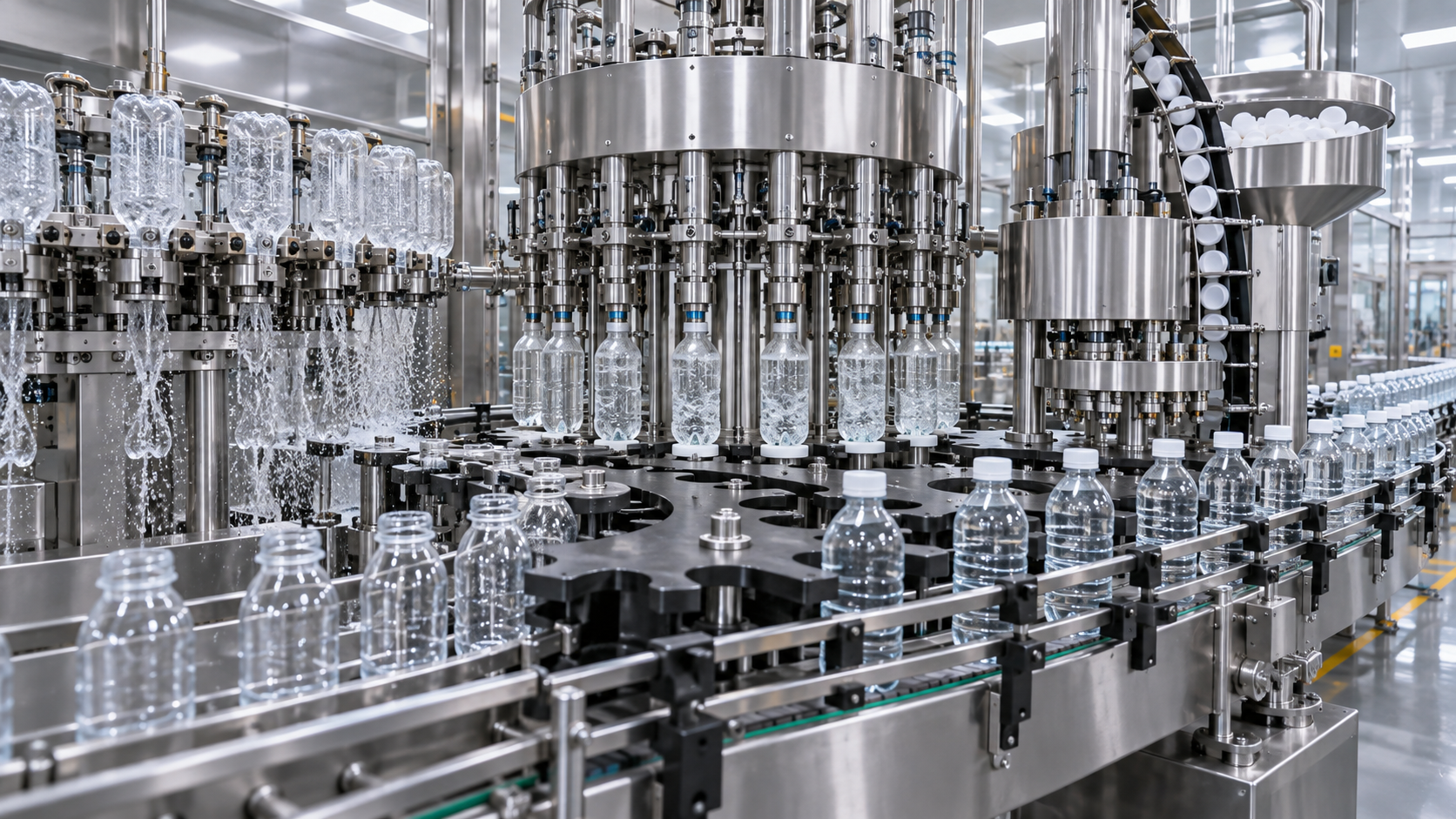
Sizing a rinse fill cap machine is a critical engineering decision that affects line efficiency, product integrity, and long-term operating cost.
Technical evaluators must match bottle geometry, rinse requirements, filling accuracy, cap specifications, and target throughput with realistic production conditions.
The correct machine is rarely defined by its advertised maximum speed. It is defined by its stable output across normal bottles, normal operators, normal changeovers, and expected downtime.
A properly sized system should meet demand without forcing every station to run continuously at its mechanical limit. That margin protects product quality and maintenance intervals.
This guide explains the calculations, bottle-format checks, machine configurations, and supplier questions needed to specify a reliable rinse fill cap machine.
Start With Required Net Output, Not the Machine Name
The first sizing input is required saleable output, expressed as bottles per hour, shift, day, or year. Avoid starting with a supplier’s nominal bottles-per-minute rating.
Begin by calculating the production requirement from annual demand, planned operating days, scheduled shifts, and available production hours per shift.
For example, a facility requiring 24 million bottles annually across 250 operating days must produce 96,000 saleable bottles per day.
If the line operates two eight-hour shifts, the theoretical average requirement is 6,000 bottles per hour before allowing for breaks, changeovers, rejects, and downtime.
That theoretical figure is not the required machine speed. A rinse fill cap machine must be sized against the speed needed during productive running time.
Use planned line efficiency rather than assuming continuous availability. For a new or moderately complex line, an overall equipment effectiveness assumption between 70% and 85% is usually more realistic.
At 75% effective runtime, a line needing 6,000 bottles per hour on paper requires a nominal production capability of approximately 8,000 bottles per hour.
Technical evaluators should also separate sustained output from short-term peak output. A machine may demonstrate high speed briefly while operating less reliably over a full production shift.
Request supplier performance data that identifies the tested bottle, product, closure, fill level, operating duration, reject rate, and measured output conditions.
Calculate the Required Machine Speed With Real Operating Losses
A practical sizing calculation should include planned downtime, unplanned downtime, speed losses, product losses, start-up rejects, and scheduled format changes.
A useful formula is: required nominal bottles per hour equals required saleable bottles per hour divided by expected line efficiency and acceptable quality yield.
Quality yield accounts for bottles rejected because of underfill, overfill, cap defects, misapplied closures, damaged containers, or failed inspection checks.
Suppose the target is 6,000 saleable bottles per hour, expected efficiency is 78%, and yield is 99%. The required nominal rate becomes about 7,770 bottles per hour.
In this case, selecting a machine rated exactly at 8,000 bottles per hour leaves minimal contingency for future demand growth or performance variation.
Many facilities therefore specify a nominal machine capacity 10% to 25% above the calculated requirement, depending on product complexity and expansion plans.
More margin is justified when containers are lightweight, unstable, unusually tall, highly contoured, or sensitive to transfer vibrations at elevated conveyor speeds.
Less margin may be appropriate for a mature product family with established formats, stable utilities, consistent materials, and reliable upstream bottle supply.
Do not use excessive speed margin as a substitute for correct engineering. Oversized systems can increase investment, complexity, wear, utility consumption, and changeover difficulty.
Assess Bottle Geometry Before Selecting Rinser, Filler, and Capper Architecture
Bottle format determines far more than guide-rail settings. It affects container handling, pitch selection, starwheel design, neck support, rinsing access, filling accuracy, and cap application.
Collect dimensional drawings and production samples for every current and planned bottle format before requesting quotations or approving a machine layout.
Key dimensions include overall height, body diameter, base diameter, neck finish, neck-ring profile, shoulder geometry, label-panel position, weight, and center-of-gravity characteristics.
The neck finish is especially important because many rotary machines use neck handling to transport bottles through rinsing, filling, capping, and discharge.
Neck-handling systems can improve stability and reduce change parts, but they require compatible support-ring dimensions and enough structural strength around the neck area.
Base-supported systems may be necessary for bottles without a suitable support ring, unusual neck geometries, heavy glass containers, or containers requiring special orientation.
Assess the bottle’s stability at line speed. Lightweight PET bottles with narrow bases may require enhanced guides, controlled acceleration, bottle pucks, or lower operating speeds.
Square, oval, asymmetric, or heavily embossed bottles may need orientation control. Their friction characteristics can also influence starwheel transfer reliability and scuffing risk.
Ask suppliers to identify all required change parts, their lead times, storage needs, tooling cost, and expected changeover duration for each bottle family.
Match the Rinsing Process to Contamination Risk and Product Requirements
The rinsing stage should be specified according to bottle cleanliness requirements, not included automatically because the machine is called a rinse fill cap machine.
Empty bottles may require air rinsing, filtered-water rinsing, ionized-air treatment, product-compatible liquid rinsing, or no internal rinse process at all.
Air rinsing is commonly used to remove loose particles from containers supplied in controlled conditions. It can reduce water use and simplify wastewater handling.
Water rinsing may be appropriate where dust, storage contamination, or manufacturing debris is a concern, provided drainage and microbiological controls are properly designed.
For sensitive products, rinse water quality must be defined. Consider filtration, UV treatment, ozonation, recirculation controls, conductivity monitoring, and sanitation procedures.
Determine whether bottles need inversion during rinsing. Inversion can improve removal of particles and liquid drainage, but it increases mechanical handling requirements.
Rinse time depends on nozzle configuration, flow rate, bottle volume, inversion angle, and required coverage. Faster production often requires more rinse stations rather than shorter exposure.
Specify whether the system needs drip containment, air blow-off, bottle drainage time, or a dry-bottle condition before filling. These details affect turret design and machine footprint.
Technical teams should document rinse validation criteria, such as particle removal performance, microbiological limits, residual moisture limits, or verified rinse-fluid contact time.
Select Filling Technology Based on Product Behavior and Accuracy Requirements
Filling technology should be selected around the product’s physical behavior, hygienic requirements, foaming tendency, viscosity, particulates, carbonation, and allowable fill-volume variation.
Gravity filling is commonly suitable for free-flowing still liquids when volume control and hygienic design requirements are moderate.
Vacuum or level filling can provide consistent visual fill levels in rigid containers, although product characteristics and bottle dimensional variation must be carefully considered.
Flowmeter filling supports accurate volumetric control and can suit a broad range of liquid products. It often offers useful flexibility across varying bottle sizes.
Piston filling is generally preferred for viscous products, products with suspended solids, or applications where accurate dosing is more important than very high rotary speed.
Pressure or counter-pressure filling is required for carbonated beverages and other products that need controlled pressure conditions to limit foaming and carbon dioxide loss.
Foaming products often determine the actual output ceiling. A filler may have enough valves for the target rate but still require slower filling or longer settling time.
Calculate fill-valve requirements by dividing the required bottles per minute by the target output per valve, then add capacity for realistic filling-cycle constraints.
For instance, a 160-bottle-per-minute target with each valve delivering eight bottles per minute suggests at least 20 filling valves under ideal operating conditions.
In practice, engineers should evaluate fill duration, bottle transfer pitch, bowl pressure stability, product temperature, cleaning cycles, and valve accessibility before choosing the valve count.
Size the Capping System Around Closure Design and Application Risk
Capping performance must be evaluated as a separate engineering discipline. A high-speed filler does not guarantee reliable closure handling or acceptable application torque.
Provide detailed cap drawings, material specifications, liner information, tamper-evident band design, thread profile, cap diameter, cap height, and approved torque range.
The cap feeder must be selected for the closure’s shape and material behavior. Lightweight caps, irregular closures, and static-prone materials may require specialized sorting equipment.
Determine whether the capper uses magnetic heads, mechanical chucks, pick-and-place systems, snap capping, roll-on heads, or other closure-specific technology.
For threaded closures, torque control is essential. Under-torqued caps may leak or loosen, while over-torqued caps can damage threads, compromise liners, or create difficult opening experiences.
Cap application quality should be verified through torque testing, bridge-break performance, cap-height checks, visual inspection, and leak testing where appropriate.
Consider the required reject strategy. Defective closures should be detected and removed without creating bottle jams or allowing incomplete packages to reach downstream equipment.
If induction sealing, shrink sleeving, or overcap application follows capping, confirm that the rinse fill cap machine discharge arrangement supports downstream equipment timing and accumulation.
Check Whether Rotary or Linear Equipment Fits the Production Profile
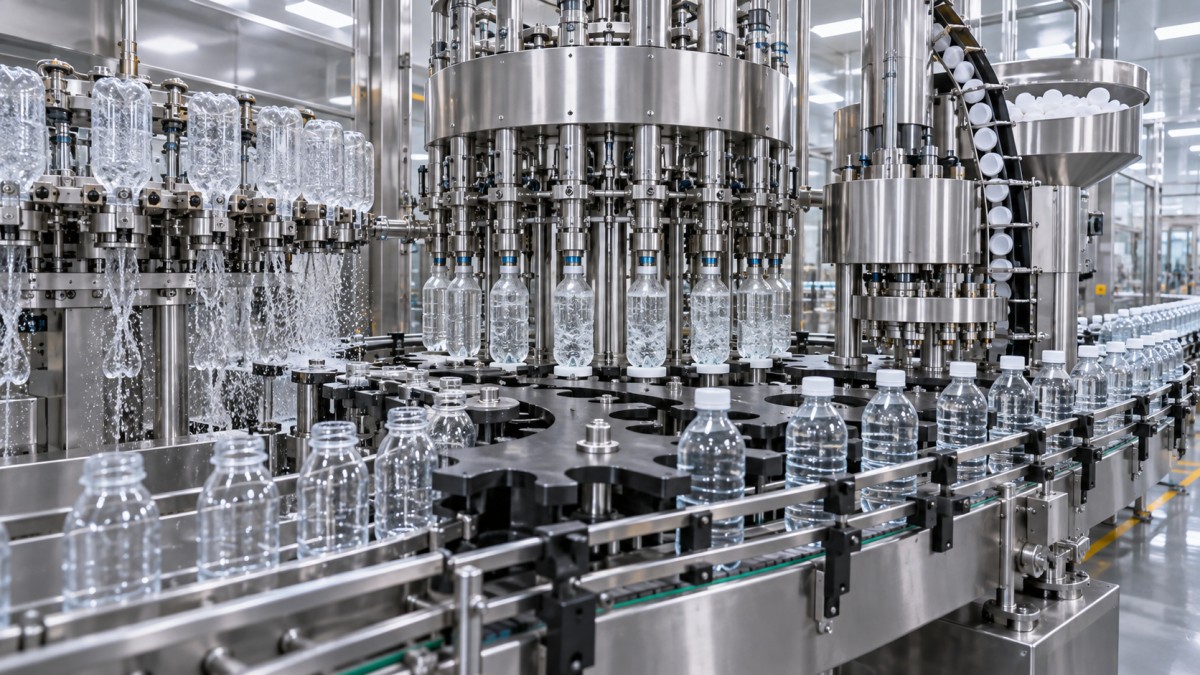
Rotary monobloc machines integrate rinsing, filling, and capping around a common carousel. They are often preferred for sustained medium and high-speed bottling applications.
They can reduce conveyor transfers between operations, improve synchronization, and provide a compact process layout when bottle handling is compatible with rotary architecture.
However, rotary systems may require more format-specific change parts and can involve greater investment for low-volume operations with frequent package changes.
Linear systems can offer simpler access, modular expansion, and flexible handling for diverse formats. They may be better suited to lower speeds or frequent product changes.
The best choice depends on required output, number of bottle types, sanitation requirements, available floor space, maintenance capability, and planned future production mix.
Do not compare systems only by bottles per minute. Compare usable output, changeover labor, cleaning duration, spare-part complexity, operator access, and lifecycle support.
Build Buffer Capacity and Line Integration Into the Specification
A rinse fill cap machine is only as productive as the surrounding line. Upstream bottle supply and downstream labeling, packing, and palletizing must match its effective output.
Evaluate every connected machine at the intended production rate, including depalletizers, unscramblers, air conveyors, date coders, inspectors, labelers, case packers, and palletizers.
Buffer conveyors absorb short stoppages and prevent minor interruptions from immediately stopping the filler. Their required length depends on speed, restart time, and process sensitivity.
Too little accumulation causes frequent filler stoppages. Too much accumulation can increase bottle scuffing, destabilize lightweight containers, and consume valuable floor space.
Establish clear control interfaces for line speed coordination, machine-ready signals, fault states, reject tracking, emergency stops, and production data collection.
For regulated or quality-sensitive applications, ensure that serial communication, audit trails, recipe control, user access management, and electronic records meet site requirements.
Utilities must also be sized early. Confirm electrical load, compressed-air demand, water consumption, drainage capacity, product supply pressure, clean-in-place connections, and ventilation requirements.
Evaluate Hygiene, Cleanability, and Material Compatibility
Machine capacity has limited value if cleaning procedures are slow, incomplete, or difficult to validate. Hygienic design should be assessed during initial technical evaluation.
Review product-contact materials, surface finish, weld quality, dead-leg risks, drainability, gasket compatibility, valve design, and accessibility for inspection.
For food, beverage, pharmaceutical, chemical, or personal-care products, confirm compatibility between product chemistry and stainless steel grades, elastomers, plastics, and lubricants.
Ask whether the filler supports clean-in-place, clean-out-of-place, sterilize-in-place, or manual cleaning. Required sanitation frequency affects available production time and annual capacity.
Define acceptance requirements for cleaning validation, microbiological control, allergen changeovers, cross-contamination prevention, and chemical-rinse disposal before finalizing the design.
Machine enclosures, guarding, drainage, and access doors should support safe cleaning without making routine maintenance unnecessarily difficult or time-consuming.
Use Factory Acceptance Testing to Verify the Sizing Assumptions
Factory acceptance testing is where nominal capacity claims should become measurable evidence. The test protocol should reflect the actual bottle, cap, product, and target operating conditions.
Whenever possible, provide production-grade bottles and closures rather than relying only on supplier samples. Packaging variation often appears only with commercial materials.
Define the required test duration. A short demonstration may identify basic mechanical issues, but a sustained run is more useful for evaluating speed stability and reject behavior.
Acceptance criteria should include sustained output, fill accuracy, torque consistency, cap-placement quality, rinse performance, reject rate, product loss, and unplanned stoppages.
Record all machine adjustments made during testing. If a target rate requires repeated manual intervention, the demonstrated result may not represent stable production capability.
Also verify changeover procedures during the acceptance test. A machine that achieves output but requires extended tooling changes may not support the intended production schedule.
Prepare a Better Request for Quotation and Make a Defensible Decision
A strong request for quotation gives suppliers enough operational detail to propose equipment that can be evaluated on comparable technical and commercial terms.
Include required net output, desired nominal speed, annual operating hours, bottle drawings, closure drawings, product data, rinse method, filling method, utility conditions, and sanitation requirements.
State every planned bottle format, expected future formats, changeover targets, available footprint, elevation constraints, automation interfaces, applicable standards, and documentation requirements.
Request a clear list of exclusions, supplied change parts, recommended spares, service response arrangements, commissioning scope, training, warranty terms, and performance guarantees.
For global industrial procurement, verify compliance requirements early, including CE marking, UL-related electrical requirements where applicable, ISO-aligned quality practices, and local safety obligations.
Compare proposals using lifecycle criteria rather than purchase price alone. Evaluate energy and water use, maintenance labor, spare-part costs, cleaning time, uptime support, and upgrade potential.
A technically defensible selection documents the assumptions behind speed, efficiency, yield, format flexibility, and downstream integration. That record is valuable during commissioning and later capacity reviews.
Conclusion: Size for Stable Production, Not Maximum Demonstration Speed
The right rinse fill cap machine is sized from saleable output requirements, then adjusted for realistic efficiency, quality yield, bottle behavior, filling dynamics, and capping performance.
Bottle geometry and closure design should be validated as early as throughput calculations. These physical details often determine whether a line can sustain its intended rate.
Technical evaluators should prioritize documented performance at representative operating conditions, practical changeover capability, hygienic design, and integration with the complete packaging line.
When capacity calculations, format data, process requirements, and acceptance testing align, the selected machine becomes a dependable production asset rather than an optimistic speed specification.
Technical Specifications
- Air Handling Unit Supplier Checklist: Performance Data, Lead Times, and SupportAuthor :Environmental Engineering Director
- Buying Fiberglass Water Tanks Wholesale: Compare Quotes and Delivery CostsAuthor :Environmental Engineering Director
- Choosing an XLPE Power Cable Supplier: Test Reports, Traceability, and Lead TimesAuthor :Grid Infrastructure Analyst
Expert Insights

Chief Security Architect
Dr. Thorne specializes in the intersection of structural engineering and digital resilience. He has advised three G7 governments on industrial infrastructure security.
Related Analysis
- Oct 19, 2026Air Handling Unit Supplier Checklist: Performance Data, Lead Times, and SupportAuthor :Environmental Engineering Director
- Oct 18, 2026Buying Fiberglass Water Tanks Wholesale: Compare Quotes and Delivery CostsAuthor :Environmental Engineering Director
- Oct 17, 2026Choosing an XLPE Power Cable Supplier: Test Reports, Traceability, and Lead TimesAuthor :Grid Infrastructure Analyst
Core Sector // 01
Security & Safety
- Buying Fiberglass Water Tanks Wholesale: Compare Quotes and Delivery CostsAuthor :Environmental Engineering Director

- How to Select Industrial pH Meters for Continuous Wastewater Process ControlAuthor :Environmental Engineering Director

- How to Size a Rinse Fill Cap Machine for Your Bottle Format and Target OutputAuthor :Environmental Engineering Director

- How to Size a Heavy-Duty Submersible Sewage Pump for High-Solids Lift StationsAuthor :Environmental Engineering Director

- How to Size a Wafer Butterfly Valve for HVAC Chilled-Water and Heating LoopsAuthor :Environmental Engineering Director

- How Pressure Class and Joint Design Affect Long-Term Performance of Ductile Iron Pipes in Drainage InfrastructureAuthor :Environmental Engineering Director

- How Ductile Iron Pipe Joints Affect Installation Reliability and Leak ControlAuthor :Environmental Engineering Director

- How to Size Effluent Treatment Equipment for Variable Industrial Wastewater LoadsAuthor :Environmental Engineering Director