EU Tightens PFOA Rules for Membranes and Seals
Author
Date Published
Reading Time
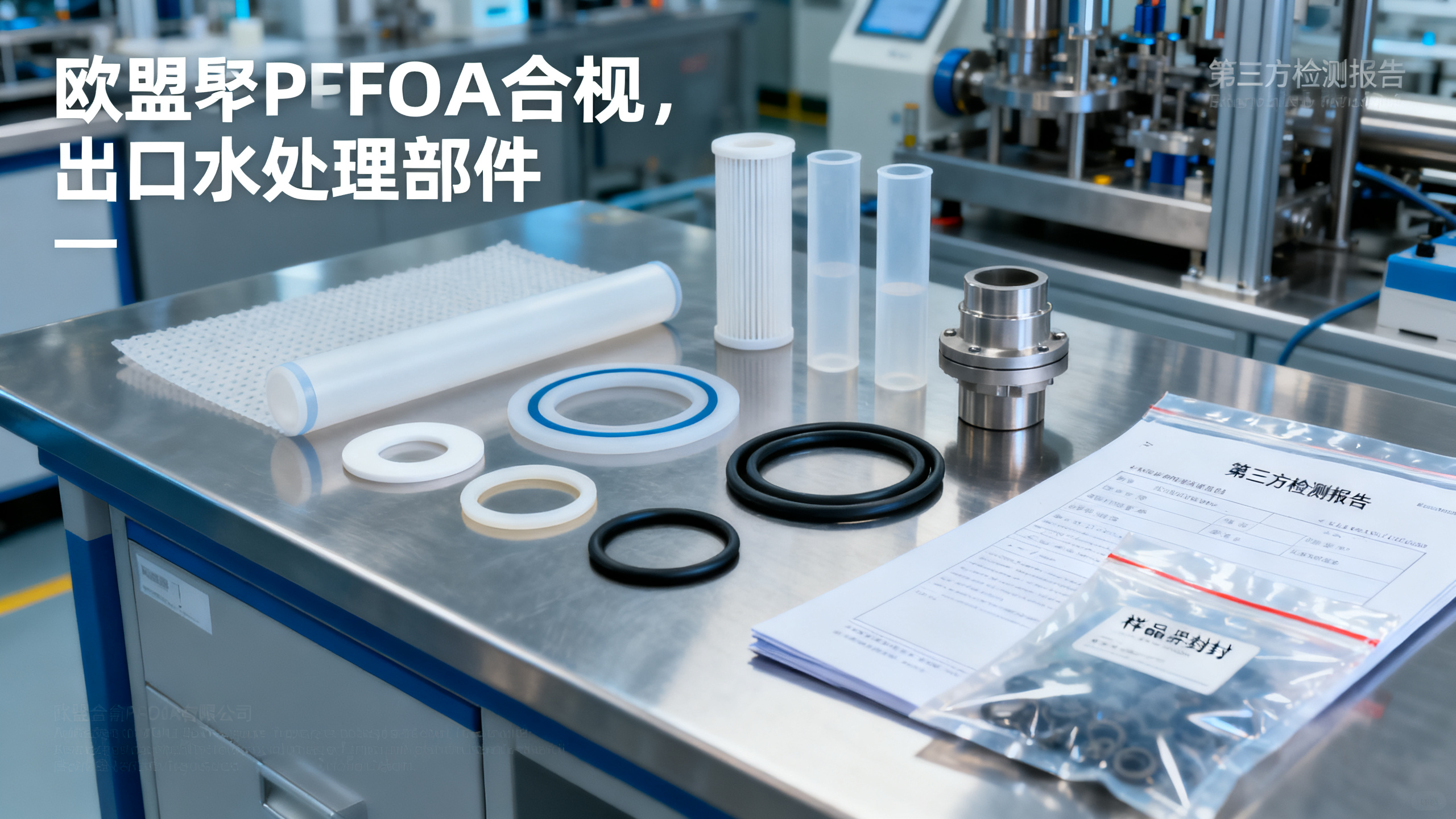
On August 1, 2026, the European Commission formally added PFOA, its salts, and related substances to the REACH Annex XVII restriction list, with the measure set to take effect on November 1, 2026. For companies involved in industrial water treatment and bearings and seals, this is not a narrow regulatory update but a direct compliance issue tied to export readiness, because fluoropolymer filter membranes, gaskets, O-rings, and similar components will now require alternative material declarations and third-party PFAS test reports. For overseas importers, the immediate concern is market access: Chinese-made water treatment system components without compliance documentation may face EU customs refusal or costly remediation.
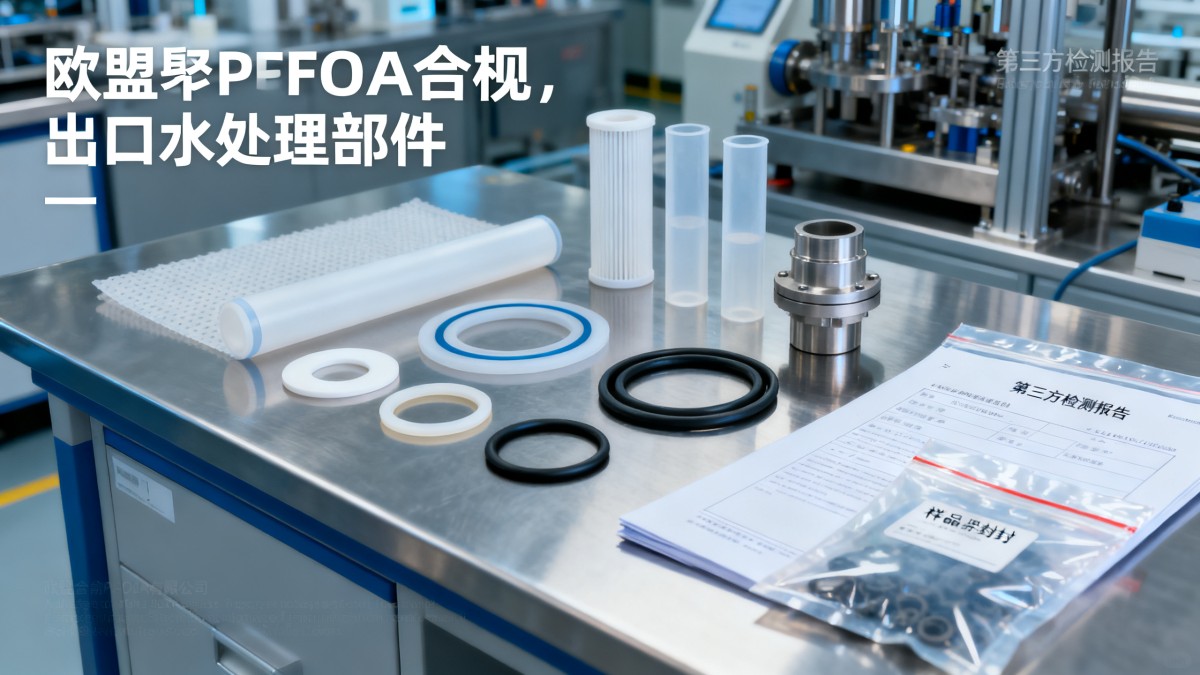
What the new restriction confirms
The confirmed facts are limited but commercially significant. The European Commission formally included PFOA and related substances in REACH Annex XVII on August 1, 2026, and the restriction becomes effective on November 1, 2026. The products named as directly affected in the provided information are components used in Industrial Water Treatment and Bearings & Seals, including fluoropolymer filter membranes containing PFOA, sealing gaskets, and O-rings. The same information also confirms that these components must be supported by alternative material declarations and third-party PFAS testing reports. It further states that overseas importers may face EU customs rejection or high compliance rectification costs if Chinese-made water treatment system components do not have the required proof of compliance.
Where the pressure will show up first
Export transactions may face a documentation bottleneck
From an industry perspective, direct trading companies are likely to feel the change first at the documentation stage. The issue is not limited to whether a product can be shipped, but whether supporting declarations and test records are ready in time for customs and buyer review. What deserves closer attention is that a component-level compliance gap can affect the acceptance of a broader system shipment.
Manufacturers will need to revisit material claims
For processing and manufacturing businesses, the impact is likely to center on fluoropolymer membranes, gaskets, O-rings, and other parts named in the update. Analysis shows that the practical risk lies in material traceability and the ability to substantiate substitution claims, because the requirement is not only about avoiding restricted substances but also about presenting alternative material declarations and third-party PFAS test reports in a usable form.
Importers and buyers carry market-entry risk
For overseas importers and procurement teams, the pressure point is commercial exposure tied to customs clearance and corrective action costs. Observably, the information provided frames the risk in operational terms: components without compliance proof may be denied entry into the EU or trigger expensive remediation. That means importer due diligence may move upstream, with more scrutiny on supplier files before orders are confirmed or delivered.
Supply-chain service providers may face tighter coordination demands
Service providers supporting export fulfillment, quality coordination, and cross-border delivery may also need closer document alignment among manufacturers, traders, and overseas customers. The effect is likely to appear in pre-shipment review, handover timing, and communication around whether a part is adequately supported for EU entry.
What companies should review now
Check which parts fall into the immediate review scope
Companies should first identify whether the products they export into the EU include the categories specifically mentioned in the update, especially fluoropolymer filter membranes, sealing gaskets, and O-rings used in industrial water treatment systems or in bearings and seals applications. This is the most direct starting point for determining where compliance exposure may sit.
Verify whether existing files match the stated proof requirements
The provided information makes two documentation points explicit: alternative material declarations and third-party PFAS testing reports. What deserves closer attention is whether current product files already contain these materials in a form acceptable to customers and border review, or whether the business is still relying on older internal statements that may no longer be enough.
Separate policy wording from shipment execution
Analysis shows that a regulation taking effect on November 1, 2026, creates a practical distinction between policy publication and shipment readiness. Companies should pay attention to how order dates, production timing, and customs entry timing line up against the effective date, because the operational question is often whether the relevant supporting documents are complete when goods move, not simply whether the rule has been announced.
Prepare for customer and supplier communication earlier
Suppliers, exporters, and overseas buyers may need earlier alignment on what evidence is required for affected components. From an industry perspective, this is especially relevant where one missing file for a membrane or sealing part could delay acceptance of a larger system delivery. Communication on document scope, testing status, and substitution statements may become as important as the product specification itself.
Why this reads as more than a routine update
Observably, this development is best understood as a concrete compliance trigger rather than a distant policy signal. The effective date is already defined, the affected product types are already identified in the provided information, and the documentation expectation has been stated with enough clarity to affect transaction behavior. At the same time, it is more appropriate to understand this as an ongoing industry dynamic rather than a fully closed outcome, because the operational burden will depend on how companies translate the restriction into supplier controls, testing arrangements, and border-facing documentation.
How the market is likely to frame it for now
At this stage, the industry significance lies in compliance revalidation rather than in any confirmed shift in end-market demand. Analysis shows that the immediate issue is whether exporters, manufacturers, and importers can prove that affected membranes and sealing components meet the new restriction requirements. It is more appropriate to understand this as a near-term compliance change with longer-term supply-chain implications, especially for businesses shipping components into the EU that are embedded in larger industrial water treatment systems.
Basis of this article and what still needs checking
This article is based on the user-provided news title, event date, and event summary. For developments of this kind, relevant source categories typically include official regulatory notices, company compliance statements, industry association updates, authoritative media coverage, and standards-related documents. The specific official source link was not provided in the input, so it still needs to be verified on an ongoing basis. Follow-up attention should remain on any later official wording, implementation clarifications, and how affected companies document alternative materials and third-party PFAS testing for EU-bound shipments.
Technical Specifications
- How to Select Electronic Hotel Key Card Locks for Guest Rooms and Staff AreasAuthor :Safety Compliance Lead
- How to Select Lab Instruments for Reliable Chemical Analysis WorkflowsAuthor :Precision Metrology Expert
- How to Size a UPS for Server Rooms: Load, Runtime, and Redundancy FactorsAuthor :Grid Infrastructure Analyst
Expert Insights

Chief Security Architect
Dr. Thorne specializes in the intersection of structural engineering and digital resilience. He has advised three G7 governments on industrial infrastructure security.
Related Analysis
- Sep 17, 2026How to Select Electronic Hotel Key Card Locks for Guest Rooms and Staff AreasAuthor :Safety Compliance Lead
- Sep 16, 2026How to Select Lab Instruments for Reliable Chemical Analysis WorkflowsAuthor :Precision Metrology Expert
- Sep 15, 2026How to Size a UPS for Server Rooms: Load, Runtime, and Redundancy FactorsAuthor :Grid Infrastructure Analyst
Core Sector // 01
Security & Safety
- How to Size a Wafer Butterfly Valve for HVAC Chilled-Water and Heating LoopsAuthor :Environmental Engineering Director

- How Pressure Class and Joint Design Affect Long-Term Performance of Ductile Iron Pipes in Drainage InfrastructureAuthor :Environmental Engineering Director

- How Ductile Iron Pipe Joints Affect Installation Reliability and Leak ControlAuthor :Environmental Engineering Director

- How to Size Effluent Treatment Equipment for Variable Industrial Wastewater LoadsAuthor :Environmental Engineering Director

- US Battery Push Raises New Entry Rules for SuppliersAuthor :Environmental Engineering Director

- EU EMC Rule Tightens for Water Treatment ExportsAuthor :Environmental Engineering Director

- EU REACH Restriction Targets PFAS Water Treatment ImportsAuthor :Environmental Engineering Director

- EU Mandates EN 14113:2026 for Water Treatment ExportsAuthor :Environmental Engineering Director