How to Size a Heavy-Duty Submersible Sewage Pump for High-Solids Lift Stations
Author
Date Published
Reading Time
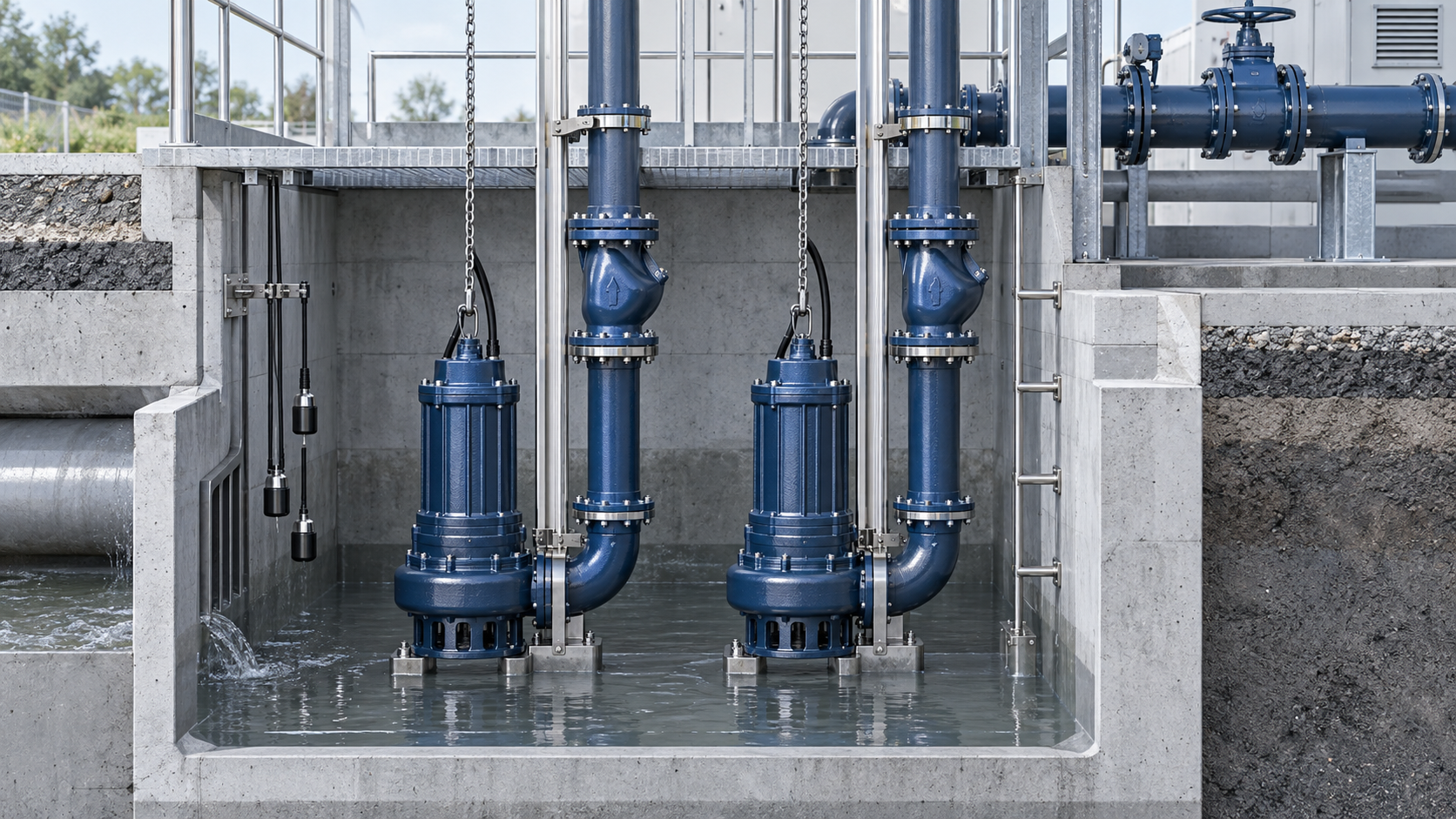
Sizing a heavy duty submersible sewage pump begins with a system calculation, but a reliable selection also depends on solids handling, motor loading, controls, and maintenance realities.
For technical evaluators, the correct pump is not simply the largest model that reaches the required head. It must operate efficiently without repeated clogging, overheating, vibration, or premature wear.
This guide provides a practical selection framework for high-solids lift stations, helping engineers compare hydraulic duty, impeller geometry, materials, redundancy, and compliance requirements before procurement.
Start with the Actual Lift-Station Duty, Not a Catalog Flow Rate
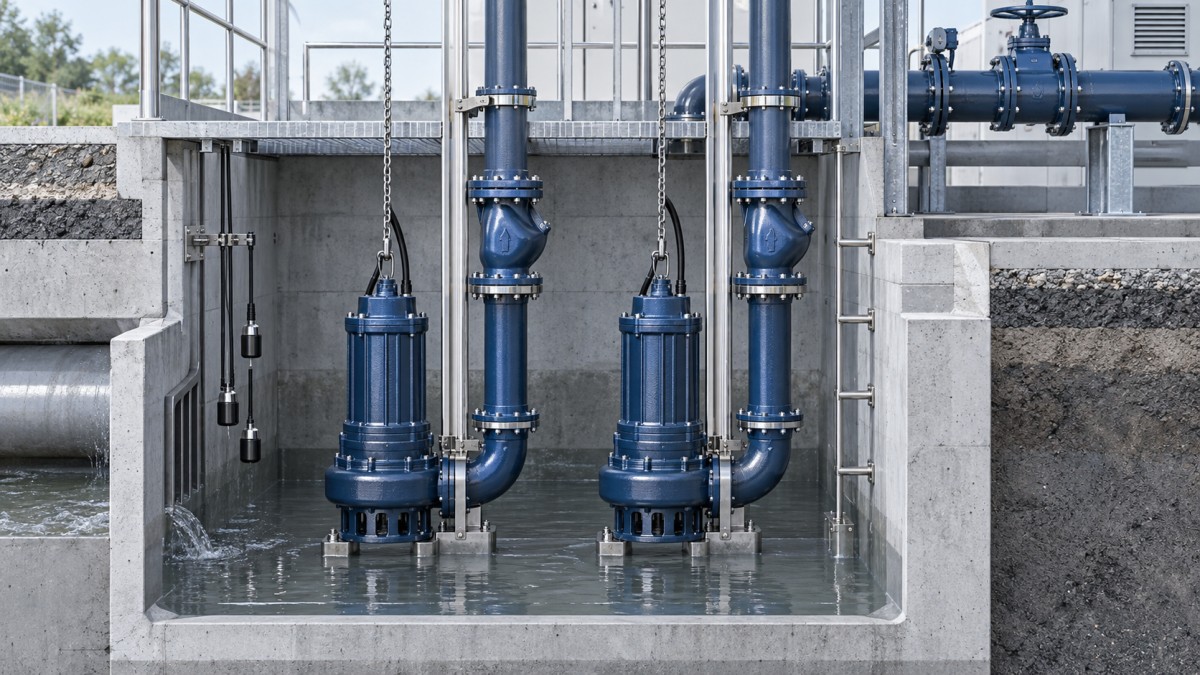
The central search intent behind heavy duty submersible sewage pump sizing is determining whether a proposed pump can move real wastewater solids at the required flow and head.
Begin by defining the design flow profile. Collect minimum, average, peak hourly, and peak instantaneous inflow rates, rather than relying only on a historical monthly wastewater volume.
High-solids stations often receive variable influent from industrial sites, food processing facilities, commercial developments, stormwater intrusion, or municipal collection networks with changing occupancy patterns.
A pump selected only for average flow may cycle excessively during low demand and fail to recover wet-well levels during peak inflow, creating overflow risk.
Establish the required duty point as flow at total dynamic head. Then identify the normal operating range surrounding that point, including seasonal and future expansion conditions.
Technical evaluators should also confirm the maximum allowable wet-well level, emergency storage volume, inflow duration, and the time available for pumps to restore normal level.
These values determine whether one pump can meet normal demand and whether parallel operation is necessary when extreme inflow, maintenance outages, or standby failures occur.
Calculate Total Dynamic Head Under Real Operating Conditions
Total dynamic head, or TDH, is the primary hydraulic input for selecting a heavy duty submersible sewage pump. It combines static lift, friction loss, and minor losses.
Static head is the vertical elevation difference between the pumping water level and the discharge point. Use actual operating water levels, not only drawings or nominal elevations.
Friction head results from wastewater moving through discharge piping, force mains, valves, bends, fittings, and other restrictions. It increases substantially as flow rises.
Use recognized calculation methods, such as Hazen-Williams or Darcy-Weisbach, with pipe roughness assumptions appropriate for wastewater service and projected internal scaling conditions.
Minor losses should include check valves, isolation valves, elbows, tees, reducers, meters, air-release devices, and discharge structures. Small omissions can materially affect short force mains.
For high-solids wastewater, confirm whether settled solids, grease accumulation, fibrous buildup, or reduced pipe diameter will increase friction losses over the station lifecycle.
Plot the system curve against the manufacturer pump curve. The intersection defines the operating point and reveals whether the pump could run too far left or right.
Define Solids Characteristics Before Selecting the Hydraulic End
Solids concentration alone does not describe pumping difficulty. Technical evaluators should identify the size, shape, abrasiveness, fibrous content, density, and variability of material entering the wet well.
Municipal sewage may contain rags, wipes, plastics, hair, grit, and grease. Industrial influent can introduce sludge, metal particles, food waste, fibers, or chemical residues.
Ask operations personnel about actual blockage history. Repeated failures frequently reveal a solids problem that is absent from flow records, design drawings, and basic wastewater specifications.
Free passage is a critical pump parameter because it represents the largest spherical solid expected to pass through the impeller and hydraulic passages without obstruction.
However, a large free-passage rating alone does not guarantee reliable rag handling. Long fibrous materials can wrap around impeller vanes, shaft seals, and cutter components.
For severe ragging service, consider non-clog impellers, vortex designs, channel impellers, cutter systems, or self-cleaning hydraulic geometries designed specifically for fibrous wastewater.
Selection should account for the solids burden at worst-case conditions, including low-flow detention periods when grease and solids may accumulate before pump starts.
Choose the Impeller Type for Reliability, Efficiency, and Maintenance
Impeller selection directly affects clog resistance, hydraulic efficiency, wear performance, and service requirements. The appropriate design depends on the wastewater composition and duty point.
Single-channel and two-channel impellers can provide strong efficiency with substantial passage size. They are commonly used where solids are significant but relatively predictable.
Vortex impellers keep much of the liquid outside the impeller itself, reducing direct contact with solids. They generally trade some efficiency for improved passage reliability.
Cutter pumps can shred stringy debris before it enters downstream piping. They can suit certain difficult applications, but cutting mechanisms require careful wear and power evaluation.
Recessed impellers may be valuable where abrasive solids or fragile materials are present. Their hydraulic arrangement can reduce contact, though efficiency may be lower.
Do not specify an impeller solely because it is marketed as non-clog. Review manufacturer performance data, passage dimensions, test conditions, and documented application references.
A heavy duty submersible sewage pump should be selected for the station’s failure mode, whether that is ragging, abrasion, long force-main velocity, solids deposition, or corrosion.
Check Pump Curve Position, Efficiency, and Motor Reserve
Once the system curve and solids-handling requirements are defined, evaluate how the selected pump operates across its expected range, rather than at one calculated duty point.
The preferred duty point is usually near the pump’s best efficiency region, where hydraulic losses, vibration, recirculation, and unnecessary motor loading are minimized.
Operating far left of the best efficiency point can cause internal recirculation, heat buildup, unstable operation, and elevated radial loads on bearings and seals.
Operating too far right can overload the motor, increase velocity through passages, raise wear rates, and reduce the available margin if friction losses change.
Review brake horsepower across the full usable curve. The motor must not exceed its rated capacity at any anticipated operating point, including low-head startup conditions.
Motor reserve is especially important where wet-well levels vary widely, discharge valves are adjusted, future flows increase, or piping modifications alter the system resistance.
Evaluate motor cooling requirements as well. Some submersible designs require adequate immersion, while jacket-cooled units can operate under more demanding wet-well conditions.
Size the Force Main to Maintain Solids Transport Velocity
Pump sizing cannot be separated from force-main design. A pump may meet flow and head requirements yet still allow solids to settle if discharge velocity remains too low.
Many wastewater systems target a minimum scouring velocity near two feet per second, although the correct value depends on solids characteristics, pipe geometry, and local standards.
Excessively high velocity is also undesirable because it increases friction loss, energy consumption, surge potential, abrasion, and wear in bends, valves, and fittings.
Review normal single-pump velocity, parallel-pump velocity, minimum-flow velocity, and the consequences of each pump operating alone after maintenance or equipment failure.
Where low flow is unavoidable, consider operational strategies such as periodic flushing cycles, alternating pumps, variable-speed control, or force-main cleaning provisions.
Long force mains demand additional scrutiny because solids deposition, air accumulation, pressure transients, and friction uncertainty become more significant over distance.
Confirm that air-release valves, isolation points, cleanouts, and maintenance access are compatible with the pump selection and not treated as separate downstream details.
Use Controls and Redundancy to Protect the Hydraulic Selection
A correctly sized pump can still perform poorly if level controls, sequencing logic, alarms, and standby capacity do not match the station’s operating risks.
For duplex stations, each pump should normally handle peak design flow independently when reliability requirements demand duty-standby operation rather than shared normal capacity.
For larger stations, staged parallel operation may be more economical. Pump sequencing should prevent excessive starts, limit simultaneous loading, and distribute runtime across identical units.
Variable-frequency drives can improve control where inflow changes significantly, but they require review of minimum speed, cooling, solids velocity, harmonics, and motor compatibility.
Include high-level alarms, backup power strategy, telemetry, runtime monitoring, seal-leak detection, temperature protection, and fault reporting in the technical evaluation.
Emergency operating conditions should be calculated separately. A station without reliable standby power may require more storage, faster pump recovery, or a temporary bypass connection.
Redundancy decisions should reflect consequence of failure, response time, site access, environmental exposure, and regulatory requirements rather than relying on a generic N-plus-one statement.
Specify Materials, Seals, and Ratings for Severe Wastewater Service
Hydraulic capacity does not establish durability. Heavy-duty sewage pumping requires materials and sealing arrangements that tolerate corrosion, abrasion, moisture ingress, and repeated thermal cycling.
Cast iron housings are common, but exposed components may require upgraded coatings, stainless steel hardware, hardened wear parts, or specialized alloys for corrosive influent.
Where grit is present, inspect impeller material, wear-ring design, clearance adjustment, and replaceable components. Abrasion can reduce efficiency before an obvious failure occurs.
Mechanical seal systems should be evaluated for material compatibility, barrier arrangements, leakage monitoring, and service accessibility. Seal failure often indicates a broader operational issue.
Verify enclosure and hazardous-area requirements, including IP rating, insulation class, cable construction, thermal protection, and applicable ATEX, IECEx, UL, CE, or local standards.
For critical infrastructure, request test certificates, performance curves, dimensional drawings, motor data, recommended spare parts, and documented factory quality-control procedures before approval.
These documents allow evaluators to compare competing pumps on lifecycle suitability instead of accepting a nominal flow-and-head claim without supporting evidence.
Build a Procurement Comparison That Supports a Defensible Decision
A procurement comparison should translate engineering requirements into measurable acceptance criteria. This prevents a lower-cost offering from appearing equivalent while omitting critical reliability provisions.
Include required flow, TDH, operating range, solids passage, impeller type, motor rating, efficiency, material grades, seal arrangement, controls, and certification requirements.
Ask suppliers to state the guaranteed duty point, allowable operating range, maximum absorbed power, minimum submergence, weight, lifting arrangement, and recommended maintenance interval.
Also compare local service capability, spare-parts lead times, repair turnaround, warranty conditions, factory testing scope, and availability of field commissioning support.
Lifecycle cost should include energy use, expected maintenance, unplanned blockage response, replacement parts, downtime exposure, and potential environmental compliance consequences.
For mission-critical lift stations, a slightly higher initial pump price can be justified when it reduces overflow risk, callout frequency, energy waste, and repeated wet-well intervention.
Document assumptions clearly. A defensible selection record should show how inflow data, system head, solids analysis, standards, and risk tolerance led to the final pump choice.
Conclusion: Select for the Whole Pumping System, Not the Nameplate
The best heavy duty submersible sewage pump is the unit that consistently handles actual wastewater solids at the required duty point throughout realistic operating conditions.
Technical evaluators should prioritize accurate TDH, solids behavior, impeller suitability, curve position, motor reserve, force-main velocity, controls, materials, and maintainability as one connected decision.
When those factors are verified with manufacturer data and site-specific operating evidence, the resulting lift station is more reliable, easier to maintain, and better prepared for future demand.
Technical Specifications
- How to Size a Heavy-Duty Submersible Sewage Pump for High-Solids Lift StationsAuthor :Environmental Engineering Director
- Selecting High-Temperature Gaskets for Steam, Flanges, and Thermal CyclingAuthor :Heavy Industry Strategist
- How to Select an Emissions Monitoring System Analyzer for Compliance ReportingAuthor :Precision Metrology Expert
Expert Insights

Chief Security Architect
Dr. Thorne specializes in the intersection of structural engineering and digital resilience. He has advised three G7 governments on industrial infrastructure security.
Related Analysis
- Sep 23, 2026How to Size a Heavy-Duty Submersible Sewage Pump for High-Solids Lift StationsAuthor :Environmental Engineering Director
- Sep 22, 2026Selecting High-Temperature Gaskets for Steam, Flanges, and Thermal CyclingAuthor :Heavy Industry Strategist
- Sep 21, 2026How to Select an Emissions Monitoring System Analyzer for Compliance ReportingAuthor :Precision Metrology Expert
Core Sector // 01
Security & Safety
- How to Size a Heavy-Duty Submersible Sewage Pump for High-Solids Lift StationsAuthor :Environmental Engineering Director

- How to Size a Wafer Butterfly Valve for HVAC Chilled-Water and Heating LoopsAuthor :Environmental Engineering Director

- How Pressure Class and Joint Design Affect Long-Term Performance of Ductile Iron Pipes in Drainage InfrastructureAuthor :Environmental Engineering Director

- How Ductile Iron Pipe Joints Affect Installation Reliability and Leak ControlAuthor :Environmental Engineering Director

- How to Size Effluent Treatment Equipment for Variable Industrial Wastewater LoadsAuthor :Environmental Engineering Director

- US Battery Push Raises New Entry Rules for SuppliersAuthor :Environmental Engineering Director

- EU EMC Rule Tightens for Water Treatment ExportsAuthor :Environmental Engineering Director

- EU REACH Restriction Targets PFAS Water Treatment ImportsAuthor :Environmental Engineering Director