How to Size Effluent Treatment Equipment for Variable Industrial Wastewater Loads
Author
Date Published
Reading Time
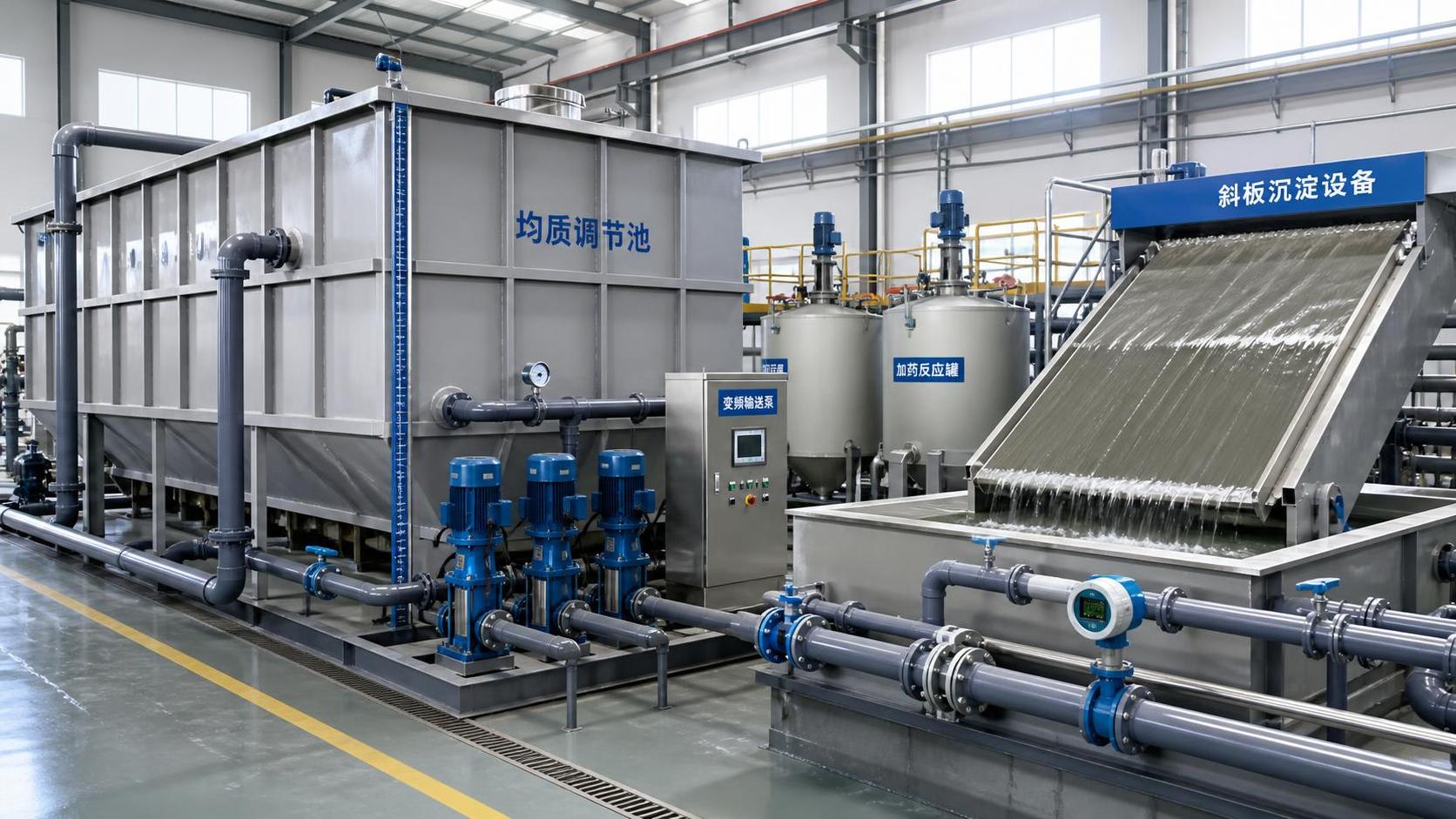
Effluent treatment equipment should be sized around the load pattern that can actually reach the treatment plant, including short-duration discharges, cleaning events, batch dumps, production changeovers, and periods when equalization is unavailable. A system selected only from average daily flow can appear adequate on paper while suffering hydraulic bypass, unstable chemistry, solids washout, or permit-risk conditions during normal plant operation.
The starting point is a design basis that separates hydraulic variability from contaminant variability. Flow may rise because of washdown, cooling-water ingress, rainwater intrusion, shift overlap, or vessel cleaning. At the same time, pH, temperature, suspended solids, oils, dissolved metals, chemical oxygen demand, salinity, and toxic compounds may change independently of flow. Each treatment stage responds differently to these changes. Tanks absorb volume, chemical systems respond to mass loading, and biological systems require enough reaction time and stable feed conditions.
Build the Design Basis From Operating Events
Begin with a wastewater inventory arranged by source rather than relying on a single combined sewer sample. Process drains, equipment washwater, laboratory discharge, floor washdown, boiler blowdown, cooling-tower bleed, regeneration waste, and stormwater should be mapped separately where practical. For each source, record the discharge mechanism, expected volume, frequency, duration, temperature, pH range, and likely pollutant profile.
A daily total is useful for estimating storage and disposal volumes, but it does not define the required capacity of pumps, screens, separators, reaction tanks, clarifiers, membrane systems, or filters. A line that releases a concentrated washwater batch in twenty minutes creates a different design condition from the same volume discharged evenly over eight hours.
Production records often reveal variability that conventional sampling misses. Batch recipes, cleaning schedules, maintenance shutdowns, shift patterns, seasonal output, and planned expansion should be reviewed alongside wastewater data. If an unusual discharge is foreseeable, it belongs in the design evaluation even if it occurs infrequently. The treatment plant has to survive the event, isolate it, or receive it at a controlled rate.
Define at least three operating cases: routine flow, expected peak flow, and credible upset flow. The routine case supports normal operating cost estimates. The expected peak governs much of the hydraulic equipment selection. The upset case tests whether containment, diversion, alarms, and emergency storage are sufficient. These cases should state both flow rate and pollutant mass rate. A high-flow but dilute event may overload clarification hydraulically, while a small but concentrated event may consume neutralization chemical or inhibit biological treatment.
Use Equalization as a Process Control Tool
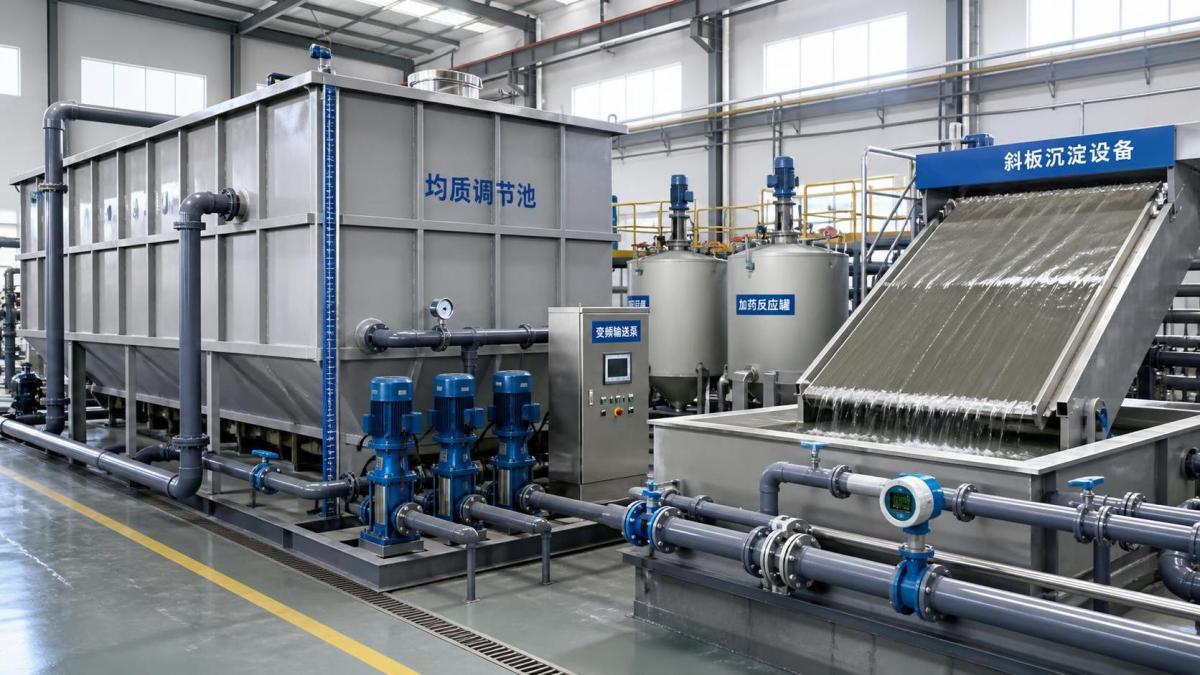
For variable industrial loads, equalization is frequently the component that determines whether downstream treatment can be sized reasonably. Its function is not merely to hold water. A properly designed equalization basin moderates flow, pollutant concentration, temperature, and pH before they reach sensitive unit operations.
The required volume depends on the difference between inflow and the controlled discharge rate over time. A simple daily-flow division is inadequate because it ignores the timing of incoming batches. Develop a time-based hydraulic balance using the shortest interval supported by plant information, often minutes or hours for highly variable discharge. Plot cumulative influent volume against cumulative discharge volume. The maximum gap between those curves indicates the working storage requirement, before allowing for operating level range, freeboard, sediment accumulation, cleaning access, and emergency retention where needed.
Equalization tanks also require mixing suited to the wastewater. Without mixing, solids settle, oils collect at the surface, and concentration spikes can pass through when a pump starts. Mechanical mixers, recirculation pumps, or coarse-bubble air mixing may be suitable depending on viscosity, solids content, volatility, and treatment objectives. Air mixing should be evaluated carefully where volatile compounds, foam, odor, or oxidation-sensitive constituents are present. A covered tank with appropriate vent treatment may be necessary in some applications.
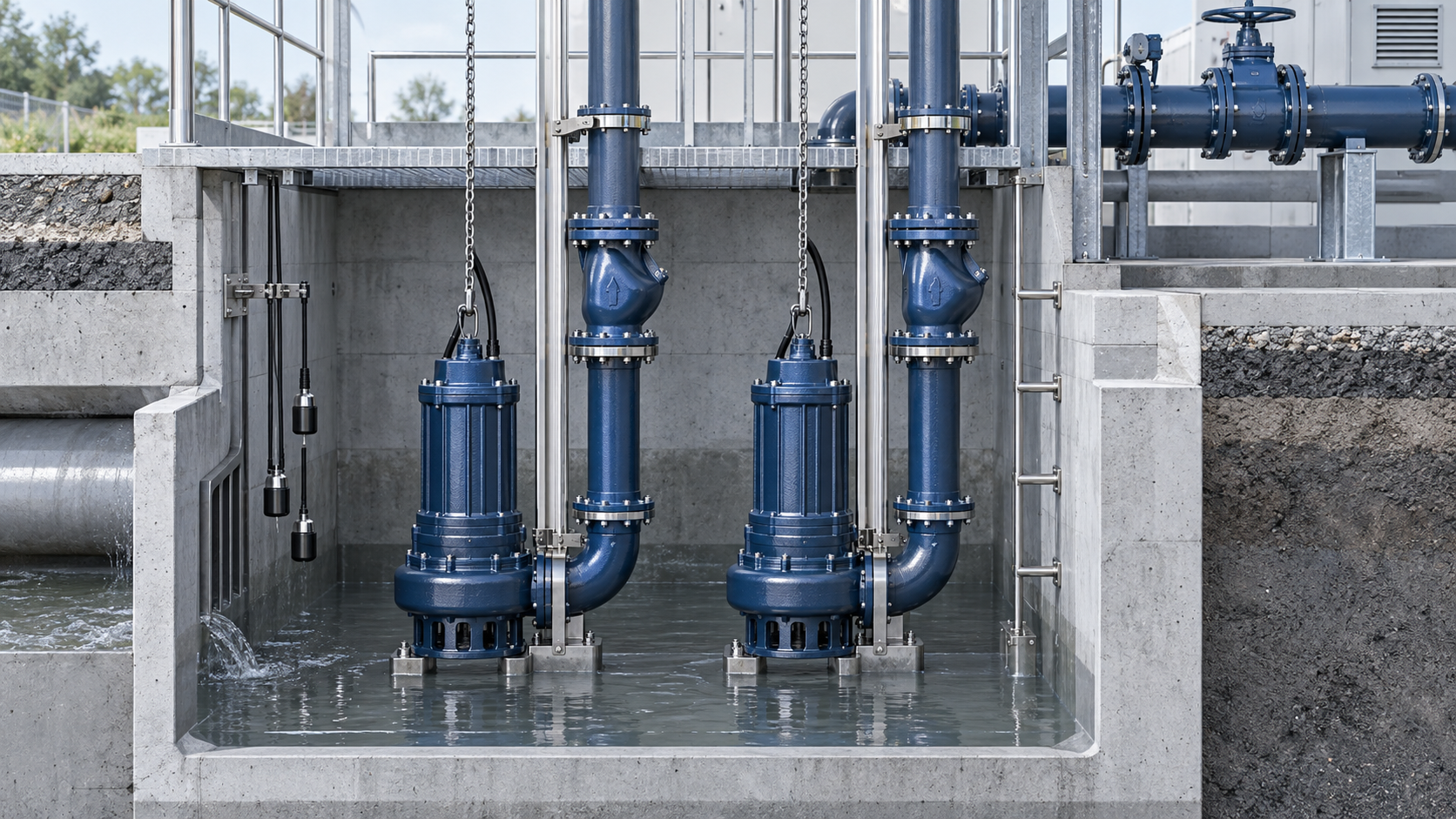
The outlet should be controlled to provide a stable feed to downstream equipment. Variable-speed transfer pumps and level-based controls are common, but the pump curve must be checked across the actual static head, pipe friction, minimum operating level, and anticipated future connections. Selecting a pump only by nominal maximum flow can create poor turndown, overheating at low flow, or excessive shear for flocculated solids.
Translate Discharge Limits Into Unit Process Loads
Effluent limits are end-of-pipe requirements; equipment sizing requires converting them into unit-process duties. Establish the applicable discharge destination first: municipal sewer, surface water, reuse system, centralized treatment facility, or a subsequent internal process. The governing conditions may differ for pH, temperature, oil and grease, solids, metals, nutrient compounds, organics, residual oxidants, and toxicity indicators. Sampling location, averaging period, and flow-proportional versus composite sampling arrangements also affect the practical design target.
For each relevant constituent, calculate influent mass loading across the selected operating cases. The general relationship is concentration multiplied by flow, with unit conversions applied consistently. This calculation should be performed using credible high concentrations and credible high flows, not necessarily both absolute maxima combined without justification. Combining unrelated worst cases can lead to unnecessary oversizing, while using average concentration with peak flow can understate the duty of chemical and biological processes.
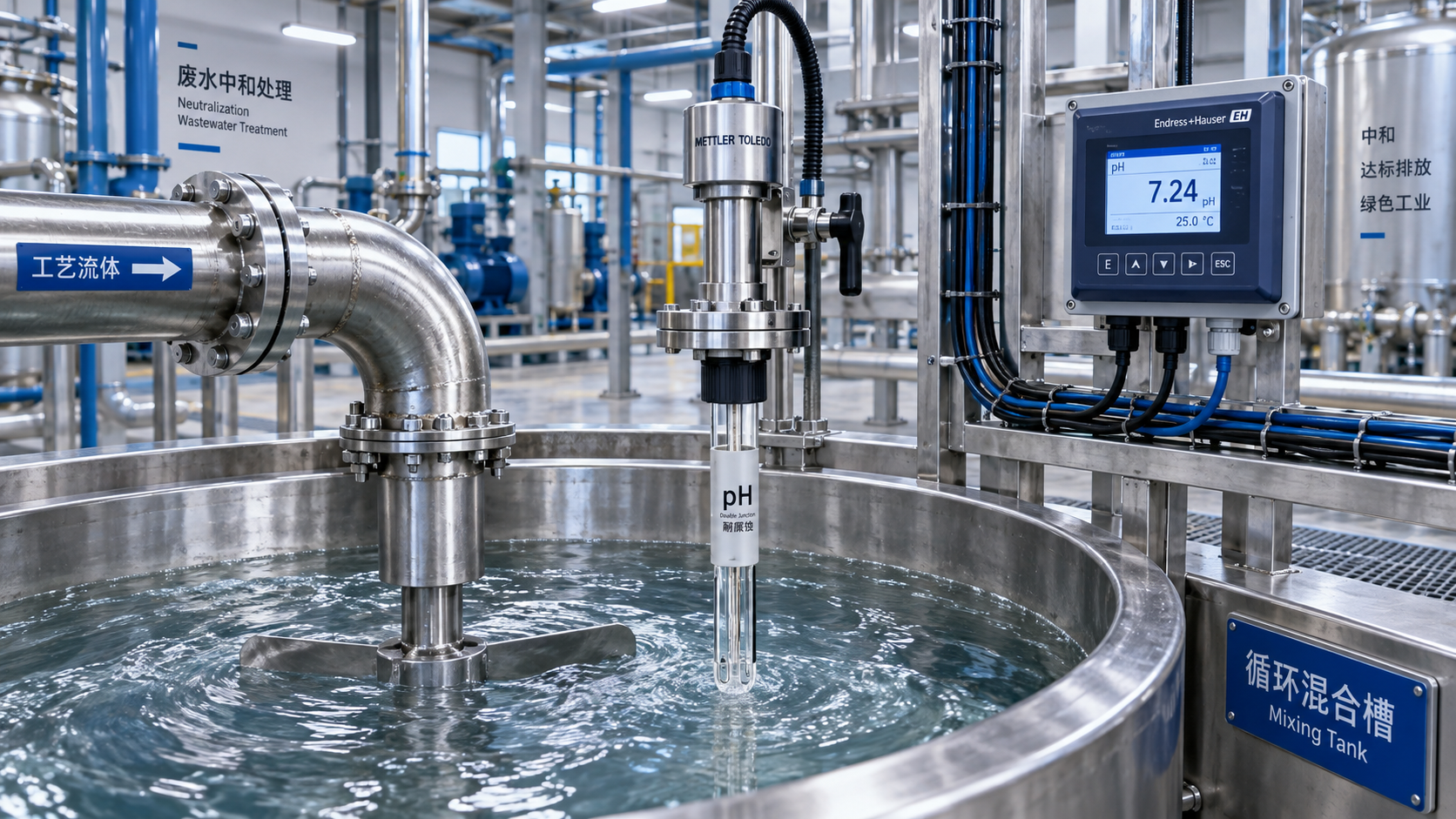
Neutralization equipment should be selected from acidity or alkalinity demand rather than pH alone. Two wastewaters can have the same pH and require very different chemical quantities because buffering capacity differs. Bench testing or titration data is useful for estimating acid or caustic demand, reaction time, and the effect of mixing. The control design should account for probe cleaning, calibration, response lag, reagent concentration, and the possibility of overshoot during sudden batch releases.
Where precipitation removes dissolved metals, the sizing basis should include pH adjustment, precipitant dose, coagulant or polymer demand, mixing energy, flocculation time, and sludge production. A compact reaction tank may provide sufficient nominal detention time but still perform poorly if feed enters in slugs, chemical injection is poorly distributed, or flocs are exposed to excessive turbulence before separation.
For oil-bearing wastewater, identify whether oil is free, dispersed, emulsified, or chemically stabilized. Gravity separation may handle free oil, but stable emulsions can require chemical treatment, dissolved-air flotation, membranes, or another process arrangement. Temperature, detergents, surfactants, and pump shear can change oil behavior significantly. Equipment should be evaluated with representative wastewater rather than a visually similar but unrepresentative sample.
Choose Hydraulic Capacity at Each Bottleneck
The plant’s rated capacity is not a single number. Screens, lift stations, equalization transfer pumps, chemical reaction vessels, solids separators, filters, membrane skids, sludge equipment, and discharge pumps each have their own limiting hydraulic condition. A treatment train should be reviewed as a sequence of bottlenecks.
Preliminary screening and grit removal need enough capacity to pass the design peak without flooding upstream drains. Their maintenance arrangement matters as much as open-area calculation. A manually cleaned screen may be acceptable for intermittent, low-debris waste only when safe isolation and access are available. For fibrous material, packaging debris, or high solids, screen geometry and backup bypass arrangements should be considered early because retrofits are difficult in confined pits.
Clarifiers and lamella separators are sensitive to surface overflow rate, solids loading, influent distribution, sludge withdrawal capacity, and hydraulic short-circuiting. Design calculations should use the wastewater characteristics after coagulation and flocculation, not raw influent assumptions. A separator can meet a nominal flow rating yet release solids when high floc volume, changing density, or carryover from the reaction stage exceeds the sludge handling rate.
Membrane systems require separate consideration of instantaneous flux, net permeate demand, recovery, cleaning cycles, and feedwater pretreatment. Available membrane area declines between cleanings, and transmembrane pressure rises as fouling develops. Capacity should therefore be checked under an expected operating condition rather than only against the clean-water rating. If the plant cannot tolerate reduced production during cleaning, parallel trains, buffer storage, or standby modules may be warranted.
Biological treatment should be sized with particular caution when industrial loads vary sharply. Hydraulic retention time, organic loading, biomass concentration, aeration capacity, nutrient balance, salinity, temperature, inhibitory compounds, and sludge age interact. Equalization and gradual feed control are often more valuable than simply increasing aeration basin volume. Where toxic or poorly characterized streams are possible, segregating them for testing or separate treatment can protect the main biological process.
Allow for Redundancy Where Failure Has Immediate Consequences
Redundancy should be assigned by failure consequence, maintenance access, lead time for replacement parts, and the ability to store untreated water during an outage. Pumps often need a duty-and-standby arrangement when influent cannot be stopped. Chemical metering may require installed standby pumps, especially where neutralization or dechlorination is mandatory before discharge. Instrument redundancy may be justified for measurements that directly initiate diversion, chemical dosing, or discharge permission.
Redundant treatment trains are not always necessary. A single clarifier or membrane skid may be acceptable when upstream storage can hold wastewater during maintenance and the discharge schedule can be paused. The decision should be documented against a defined outage duration, not described generically as “adequate backup.”
Instrumentation should match the control risk. Continuous flow measurement is usually needed where transfer rates govern downstream loading. Level transmitters, high-high level switches, pH measurement, conductivity, turbidity, dissolved oxygen, oxidation-reduction potential, and pressure monitoring may be relevant depending on the process. Online analyzers require sample conditioning, calibration access, maintenance planning, and a clear response when readings are invalid. An analyzer without an action logic is only an indication device.
Account for Materials, Layout, and Sludge From the Start
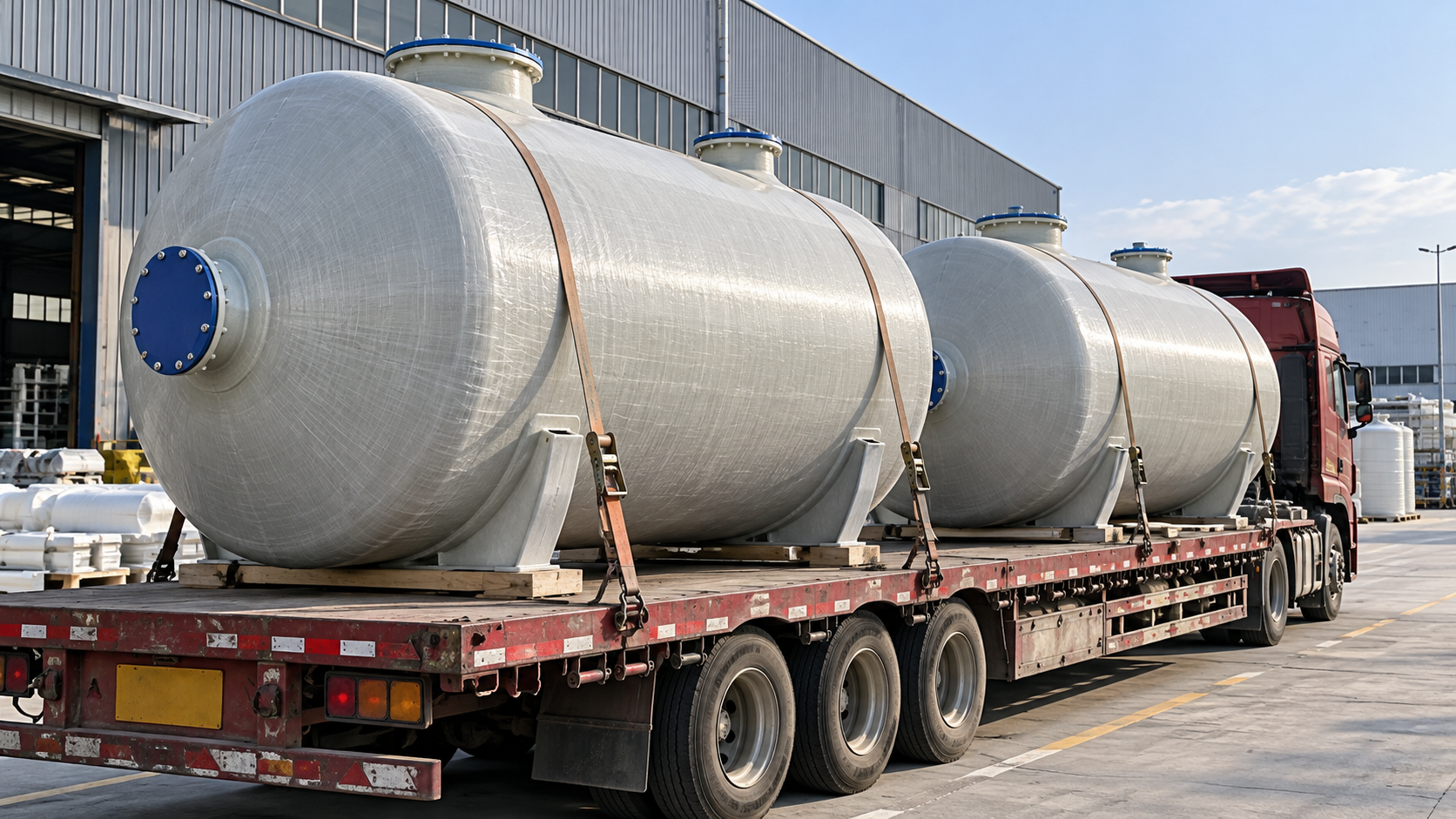
Material selection must reflect wastewater chemistry, temperature, external environment, and cleaning agents. Carbon steel may be suitable for some protected structures but can be unsuitable for corrosive or chloride-rich service. Stainless steel grades, lined steel, high-density polyethylene, polypropylene, fiberglass-reinforced plastic, and concrete with compatible protective systems each have different limitations. Gaskets, valve seats, pump elastomers, fasteners, cable jackets, and instrument wetted parts need the same chemical compatibility review as the tank shell.
Layout affects actual capacity and maintainability. Provide access for mixer removal, pump lifting, filter media replacement, membrane handling, sludge container exchange, and chemical delivery. Chemical storage requires compatible secondary containment, fill connections, venting arrangements, and enough clearance to prevent incompatible transfers. Pipework should include flushing points, isolation valves, sample points, drain routes, and supports that tolerate vibration and thermal movement.
Sludge is a design output, not an afterthought. Precipitation, coagulation, flotation, clarification, and biological treatment can all generate solids requiring thickening, dewatering, storage, testing, and off-site routing. Estimate wet sludge volume as well as dry solids mass, because tankage, pumps, conveyors, and containers are governed by the physical material handled. A dewatering device sized only for average sludge production can force treatment shutdowns when solids accumulate after a peak event.
Evaluate Expansion Without Paying for Unused Treatment Capacity
Future growth should be represented as defined scenarios, such as an added production line, a new cleaning chemical, longer operating hours, or a changed discharge destination. Avoid assigning a vague oversized margin to every component. Some elements are inexpensive to enlarge later, while civil structures, underground piping, electrical distribution, and building space are disruptive to modify after commissioning.
A practical approach is to reserve footprint, hydraulic tie-in points, electrical capacity, control-system spare capacity, and structural allowance for a later treatment module. Tanks can sometimes be divided into compartments, allowing an unused section to become additional equalization or reaction volume when required. The original design must still perform reliably at the initial condition; future provisions should not create stagnant zones or poor hydraulics in the interim.
Before release for fabrication, reconcile the process design with piping and instrumentation diagrams, civil levels, equipment elevations, utility availability, chemical delivery constraints, control narratives, and discharge-monitoring requirements. Factory testing may verify individual equipment functions, but site commissioning must confirm flow pacing, chemical response, alarm setpoints, sludge removal, and stable performance through representative operating events. The final acceptance basis should reflect the variable wastewater conditions used to size the system, rather than a brief test at steady flow.
Technical Specifications
- Air Handling Unit Supplier Checklist: Performance Data, Lead Times, and SupportAuthor :Environmental Engineering Director
- Buying Fiberglass Water Tanks Wholesale: Compare Quotes and Delivery CostsAuthor :Environmental Engineering Director
- Choosing an XLPE Power Cable Supplier: Test Reports, Traceability, and Lead TimesAuthor :Grid Infrastructure Analyst
Expert Insights

Chief Security Architect
Dr. Thorne specializes in the intersection of structural engineering and digital resilience. He has advised three G7 governments on industrial infrastructure security.
Related Analysis
- Oct 19, 2026Air Handling Unit Supplier Checklist: Performance Data, Lead Times, and SupportAuthor :Environmental Engineering Director
- Oct 18, 2026Buying Fiberglass Water Tanks Wholesale: Compare Quotes and Delivery CostsAuthor :Environmental Engineering Director
- Oct 17, 2026Choosing an XLPE Power Cable Supplier: Test Reports, Traceability, and Lead TimesAuthor :Grid Infrastructure Analyst
Core Sector // 01
Security & Safety
- Buying Fiberglass Water Tanks Wholesale: Compare Quotes and Delivery CostsAuthor :Environmental Engineering Director

- How to Select Industrial pH Meters for Continuous Wastewater Process ControlAuthor :Environmental Engineering Director

- How to Size a Rinse Fill Cap Machine for Your Bottle Format and Target OutputAuthor :Environmental Engineering Director

- How to Size a Heavy-Duty Submersible Sewage Pump for High-Solids Lift StationsAuthor :Environmental Engineering Director

- How to Size a Wafer Butterfly Valve for HVAC Chilled-Water and Heating LoopsAuthor :Environmental Engineering Director

- How Pressure Class and Joint Design Affect Long-Term Performance of Ductile Iron Pipes in Drainage InfrastructureAuthor :Environmental Engineering Director

- How Ductile Iron Pipe Joints Affect Installation Reliability and Leak ControlAuthor :Environmental Engineering Director

- How to Size Effluent Treatment Equipment for Variable Industrial Wastewater LoadsAuthor :Environmental Engineering Director