EU EMC Rule Tightens for Water Treatment Exports
Author
Date Published
Reading Time
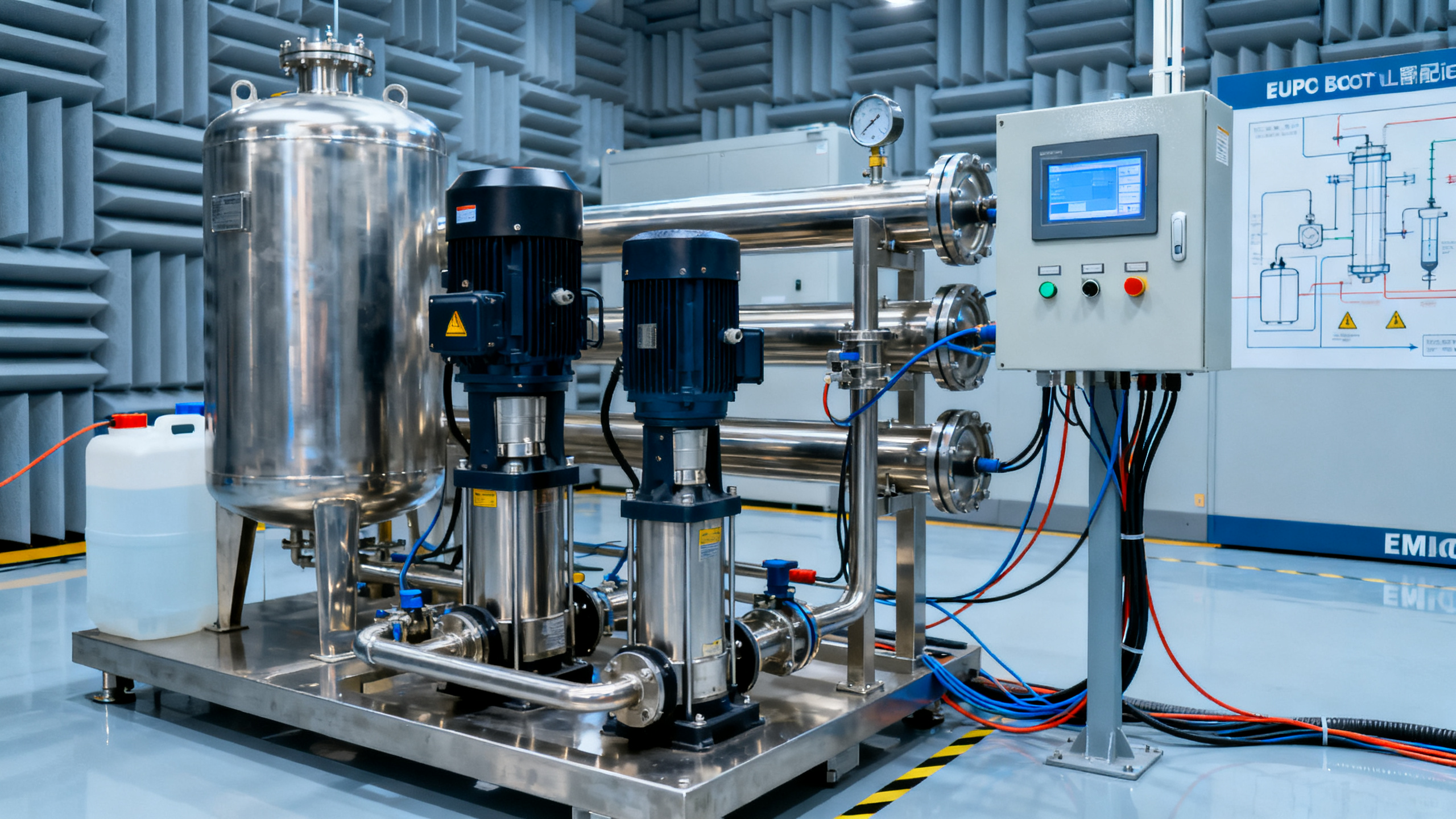
On August 15, 2026, EN 61000-6-4:2026 becomes mandatory for Industrial Water Treatment equipment exported to the EU, replacing the 2019 edition. The change matters because it does not only update a technical reference; it resets the compliance basis for market access by tightening radiated emission limits in the 30-1000 MHz range and adding conducted emission testing requirements for key components such as variable-frequency-driven water treatment pump sets and intelligent dosing controllers. For exporters, manufacturers, testing providers, procurement teams, and delivery planners, this is an immediate compliance and certification issue rather than a routine standards update.
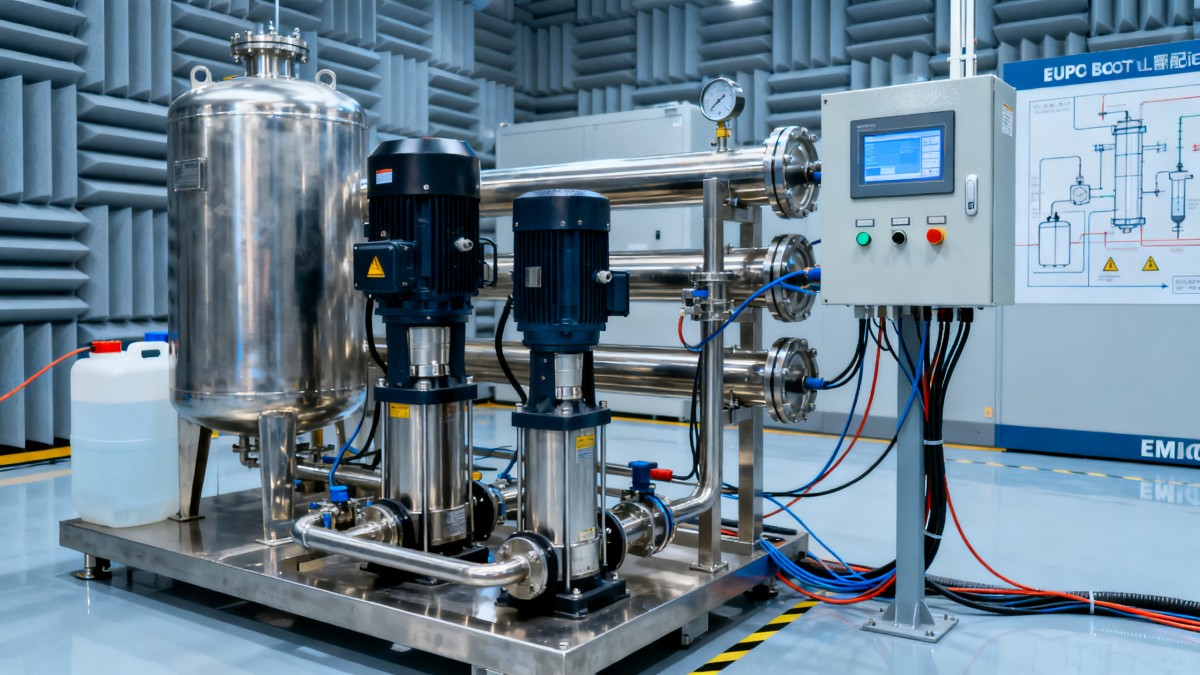
What Has Taken Effect on August 15
According to the event information provided, a notice was published in the Official Journal of the European Union (OJEU) on August 10, 2026, confirming that EN 61000-6-4:2026, the industrial emission standard, would become mandatory on August 15, 2026. The 2026 version replaces the 2019 edition.
The confirmed changes include stricter radiated emission limits in the 30-1000 MHz band and new conducted emission testing requirements for key components, including variable-frequency-driven water treatment pump sets and intelligent dosing controllers.
The standard directly applies to Industrial Water Treatment export equipment. Products without certification under the new version will not be able to enter the EU market.
Where the Pressure Moves Across the Export Chain
Market access risk shifts directly to exporters and equipment vendors
Exporters and finished-equipment suppliers are likely to be affected first because the new standard is tied directly to EU market entry. The main impact is on certification status, shipment eligibility, and delivery readiness for Industrial Water Treatment products. What deserves closer attention is whether products already prepared under the 2019 version can still support current sales and delivery arrangements once the new rule is in force; based on the provided information, products lacking certification under EN 61000-6-4:2026 cannot enter the EU market.
Design and manufacturing teams face a narrower compliance margin
Manufacturing and engineering teams may be affected because the rule change tightens radiated emission limits and expands conducted emission testing to specific components. In practice, this can influence technical files, internal validation work, component selection, and the timing of conformity review. Analysis shows that products using variable-frequency-driven pump sets or intelligent dosing controllers warrant particular review because those components are specifically named in the event summary.
Testing and certification workflows become a gating factor
Certification-related businesses and testing service providers are likely to see immediate relevance from the new requirements. The impact is concentrated in test planning, report validity, and the alignment of documentation with the 2026 edition rather than the superseded 2019 version. From an industry perspective, the practical issue is not only whether testing is completed, but whether reports and certificates reflect the correct edition for EU-bound Industrial Water Treatment equipment.
Procurement and delivery planning need closer document control
Procurement teams, project delivery managers, and channel partners may be affected because component choices and shipment schedules now depend more directly on updated compliance evidence. The key business links are supplier qualification, order confirmation, acceptance documentation, and export delivery timing. Observably, where EU projects involve controlled technical documentation, teams will need to pay closer attention to whether tenders, purchase specifications, and shipment files are still aligned with the replaced 2019 edition or already updated to EN 61000-6-4:2026.
What Companies Should Review Now
Check whether existing certificates still support EU shipments
Analysis shows that companies exporting Industrial Water Treatment equipment should first review whether current certificates and test reports are tied to the 2019 edition and whether that creates an immediate gap for EU market access after August 15, 2026. This is especially relevant for products already in sales, delivery, or pre-shipment stages.
Reassess component-level compliance for specified assemblies
What deserves closer attention is the named scope of new conducted emission testing requirements. Equipment built around variable-frequency-driven water treatment pump sets and intelligent dosing controllers should be reviewed against current technical files, test coverage, and supporting compliance records to determine whether additional certification work is required.
Update technical and commercial documents in parallel
From an industry perspective, compliance review should not stop at laboratory testing. Companies should also examine product dossiers, declarations used in trade or project documentation, customer-facing technical submissions, and bid materials that may still cite the replaced standard edition. The event information does not provide detailed enforcement practice, so this should be treated as a documentation risk to monitor rather than a confirmed procedural outcome.
Track execution signals beyond the effective date
Observably, the effective date is clear, but the event summary does not provide detailed implementation guidance on transition handling, review timing, or document acceptance in specific commercial scenarios. Companies should therefore keep watching for updated certification language, market acceptance practice, tender document revisions, and any clarifying statements that affect how the rule is applied in actual transactions.
Why This Looks Like an Immediate Compliance Signal
Analysis shows that this development is better understood as a rule already moving into execution rather than a distant policy direction. The effective date is fixed, the previous edition is replaced, and the consequence for uncertified products is stated in market-access terms. At the same time, it is also reasonable to treat the next phase as one that still requires observation, because the provided information does not define how all downstream actors will update their certification reviews, procurement files, or delivery controls in practice.
From an industry perspective, the significance lies less in the existence of another EMC revision and more in the fact that Industrial Water Treatment equipment is directly within scope, while certain key components are explicitly drawn into tighter testing expectations. That combination turns the change into an operational issue for export business, not only a standards-monitoring issue for compliance teams.
How This News Is Best Understood at This Stage
The most balanced reading is that EN 61000-6-4:2026 has become an enforceable market-entry condition for relevant Industrial Water Treatment exports to the EU as of August 15, 2026, and that recertification is now a live issue for affected products. Analysis shows that the immediate concern is certification validity and shipment readiness, while the next area to watch is how the new requirement is reflected in technical submissions, supplier documents, testing workflows, and customer acceptance processes.
It is more appropriate to understand this as a confirmed compliance change with ongoing execution details still worth monitoring, rather than as a general policy signal with no near-term business effect.
Basis of This Article and What Still Needs Verification
This article is generated from the user-provided news title, event date, and event summary concerning the mandatory implementation of EN 61000-6-4:2026 for Industrial Water Treatment equipment exports on August 15, 2026.
For developments of this type, commonly relevant source categories include official notices, regulator publications, trade or customs authority updates, industry association information, standardization documents, certification-related materials, and reporting from authoritative media. No specific official source link was provided in the input, so the exact official link still requires follow-up verification.
Further observation is still needed on implementation detail, certification interpretation, tender document updates, market feedback, and how affected companies execute compliance adjustments in practice.
Technical Specifications
- Air Handling Unit Supplier Checklist: Performance Data, Lead Times, and SupportAuthor :Environmental Engineering Director
- Buying Fiberglass Water Tanks Wholesale: Compare Quotes and Delivery CostsAuthor :Environmental Engineering Director
- Choosing an XLPE Power Cable Supplier: Test Reports, Traceability, and Lead TimesAuthor :Grid Infrastructure Analyst
Expert Insights

Chief Security Architect
Dr. Thorne specializes in the intersection of structural engineering and digital resilience. He has advised three G7 governments on industrial infrastructure security.
Related Analysis
- Oct 19, 2026Air Handling Unit Supplier Checklist: Performance Data, Lead Times, and SupportAuthor :Environmental Engineering Director
- Oct 18, 2026Buying Fiberglass Water Tanks Wholesale: Compare Quotes and Delivery CostsAuthor :Environmental Engineering Director
- Oct 17, 2026Choosing an XLPE Power Cable Supplier: Test Reports, Traceability, and Lead TimesAuthor :Grid Infrastructure Analyst
Core Sector // 01
Security & Safety
- Buying Fiberglass Water Tanks Wholesale: Compare Quotes and Delivery CostsAuthor :Environmental Engineering Director

- How to Select Industrial pH Meters for Continuous Wastewater Process ControlAuthor :Environmental Engineering Director

- How to Size a Rinse Fill Cap Machine for Your Bottle Format and Target OutputAuthor :Environmental Engineering Director

- How to Size a Heavy-Duty Submersible Sewage Pump for High-Solids Lift StationsAuthor :Environmental Engineering Director

- How to Size a Wafer Butterfly Valve for HVAC Chilled-Water and Heating LoopsAuthor :Environmental Engineering Director

- How Pressure Class and Joint Design Affect Long-Term Performance of Ductile Iron Pipes in Drainage InfrastructureAuthor :Environmental Engineering Director

- How Ductile Iron Pipe Joints Affect Installation Reliability and Leak ControlAuthor :Environmental Engineering Director

- How to Size Effluent Treatment Equipment for Variable Industrial Wastewater LoadsAuthor :Environmental Engineering Director