EU Mandates EN 14113:2026 for Water Treatment Exports
Author
Date Published
Reading Time

On August 6, 2026, the European Commission put the revised EN 14113:2026 standard for industrial water treatment equipment into effect, replacing EN 14113:2013 and making certification under the new standard a direct market-access requirement for CE marking. For exporters, importers, distributors, and project buyers dealing with industrial water treatment systems, this is not a routine standards update: it immediately affects whether equipment can enter the EU market and whether downstream customs clearance, distribution access, and final project acceptance can proceed.
What the New Standard Now Covers
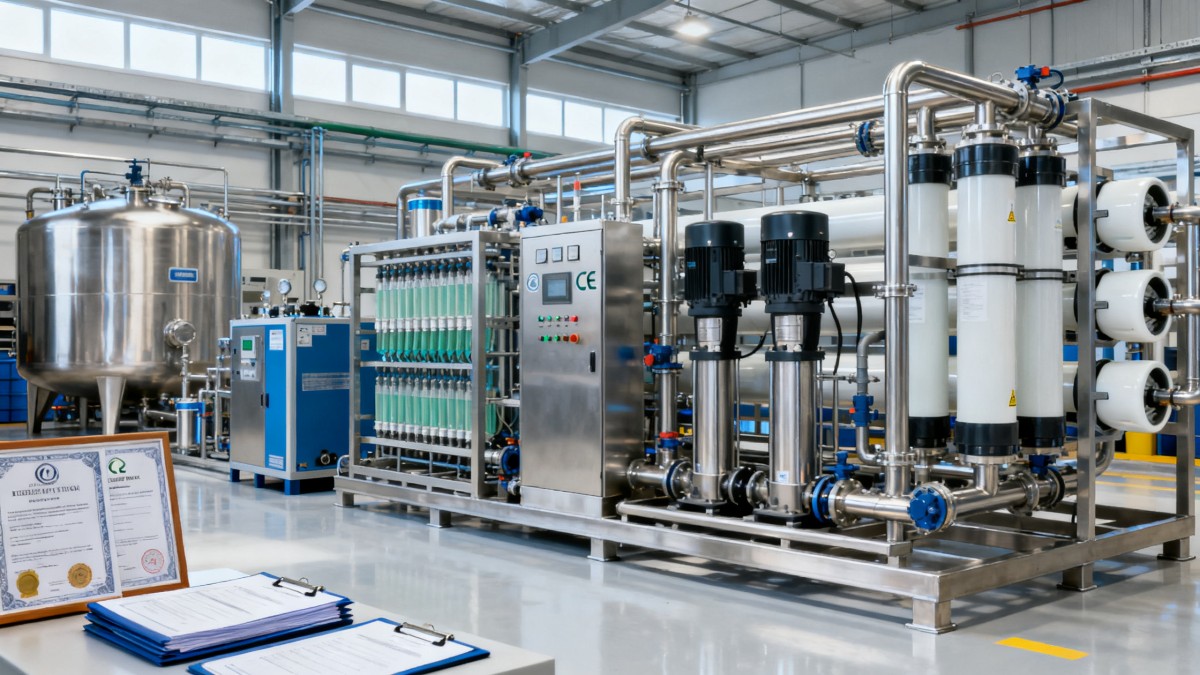
According to the provided information, EN 14113:2026 replaces the previous EN 14113:2013 version as of August 6, 2026. The revised standard expands its scope to include membrane-based systems, ozone treatment systems, and electrochemical treatment systems. It also adds new provisions covering microbial inactivation performance verification and limits on material leachates.
The same information states that this standard serves as a mandatory basis for CE marking. Products that have not obtained certification under the new requirements can no longer enter the EU market from the effective date onward.
Where the Pressure Will Be Felt First
Export transactions face an immediate compliance threshold
From an industry perspective, companies directly exporting industrial water treatment equipment to the EU are the first group affected because market entry is now tied to certification under EN 14113:2026. The main impact is likely to appear in shipment readiness, export documentation alignment, and customer acceptance of products intended for EU delivery.
EU buyers and import-side channels must reassess admissibility
Purchasers, importers, and distribution channels serving the EU market are also exposed because uncertified products cannot enter the market from the effective date. The practical issue is not only whether equipment can be ordered, but whether it can clear customs, move through authorized sales channels, and remain acceptable for downstream use.
Project delivery and acceptance may become a control point
For terminal project stakeholders using industrial water treatment equipment, the stated impact extends to final project acceptance. Analysis shows that equipment selection, delivery timing, and acceptance documentation may draw closer scrutiny where the product falls within the newly expanded scope or where the new microbial inactivation and material leachate provisions are relevant.
What Companies Should Watch in Practical Terms
Check whether current product lines now fall within scope
What deserves closer attention is whether existing membrane, ozone, and electrochemical treatment equipment was previously handled outside the practical compliance focus created by EN 14113:2013 but is now clearly covered under EN 14113:2026. This is a product-by-product question rather than a broad commercial one.
Review evidence related to the newly added technical provisions
Observably, the added requirements on microbial inactivation performance verification and material leachate limits shift attention toward the adequacy of supporting test and compliance materials. Companies involved in export, sourcing, and project delivery should focus on whether their existing technical files and certification status match the revised standard's stated requirements.
Separate the legal trigger from operational follow-through
Analysis shows that the regulatory trigger is already clear: uncertified products cannot enter the EU market. The operational follow-through is where businesses may still need close coordination, especially around customs documentation, distributor access conditions, and project acceptance expectations in live transactions.
Prepare customer and supplier communication around timing and status
For companies already serving EU-facing orders, a practical priority is communication. Buyers, channel partners, and upstream suppliers may need confirmation on certification status, affected product categories, and whether delivery commitments remain aligned with the new entry requirement.
Why This Looks Like More Than a Routine Revision
This section is an editorial observation based only on the provided information. It is more appropriate to understand this as an immediate compliance change with longer-term signaling value, rather than as a development that still sits mainly in the observation stage. The reason is straightforward: the revised standard is already in force, certification is tied to CE marking, and non-certified products are barred from entering the EU market.
At the same time, continued attention is still warranted because the practical impact may vary across equipment categories, transaction stages, and project acceptance scenarios. Observably, the expansion of scope and the addition of new technical provisions indicate that the compliance discussion is moving beyond narrow equipment classification toward broader performance and material-related scrutiny.
How the Industry Should Read This Now
In practical terms, this update should be read as an active market-access requirement for industrial water treatment equipment going into the EU, not merely as a standards revision to monitor from a distance. For Chinese exporters in particular, the information provided points to a direct compliance barrier that can affect customs clearance, distribution entry, and final project acceptance.
A balanced reading is that the result is already clear at the regulatory level, while the full business impact still depends on how individual companies, product categories, and counterparties align with EN 14113:2026 in ongoing trade and delivery processes.
Basis of This Article and What Still Needs Verification
This article is based on the user-provided news title, event date, and event summary regarding the entry into force of EN 14113:2026 on August 6, 2026. For this type of development, commonly relevant source categories would include official notices, company statements, industry association information, authoritative media reporting, and standard-setting documentation.
No specific official source link was provided in the input, so the exact official source document still needs to be continuously verified. Follow-up attention should remain on any further official wording, implementation interpretation, certification-related guidance, and transaction-level confirmation affecting customs, distribution, and project acceptance.
Technical Specifications
- How to Select an Emissions Monitoring System Analyzer for Compliance ReportingAuthor :Precision Metrology Expert
- How to Select an Access Control Management System for Multi-Site FacilitiesAuthor :Safety Compliance Lead
- Portable Gas Monitor Calibration: How Often Is It Needed for Safe Confined-Space Work?Author :Precision Metrology Expert
Expert Insights

Chief Security Architect
Dr. Thorne specializes in the intersection of structural engineering and digital resilience. He has advised three G7 governments on industrial infrastructure security.
Related Analysis
- Sep 21, 2026How to Select an Emissions Monitoring System Analyzer for Compliance ReportingAuthor :Precision Metrology Expert
- Sep 20, 2026How to Select an Access Control Management System for Multi-Site FacilitiesAuthor :Safety Compliance Lead
- Sep 19, 2026Portable Gas Monitor Calibration: How Often Is It Needed for Safe Confined-Space Work?Author :Precision Metrology Expert
Core Sector // 01
Security & Safety
- How to Size a Wafer Butterfly Valve for HVAC Chilled-Water and Heating LoopsAuthor :Environmental Engineering Director

- How Pressure Class and Joint Design Affect Long-Term Performance of Ductile Iron Pipes in Drainage InfrastructureAuthor :Environmental Engineering Director

- How Ductile Iron Pipe Joints Affect Installation Reliability and Leak ControlAuthor :Environmental Engineering Director

- How to Size Effluent Treatment Equipment for Variable Industrial Wastewater LoadsAuthor :Environmental Engineering Director

- US Battery Push Raises New Entry Rules for SuppliersAuthor :Environmental Engineering Director

- EU EMC Rule Tightens for Water Treatment ExportsAuthor :Environmental Engineering Director

- EU REACH Restriction Targets PFAS Water Treatment ImportsAuthor :Environmental Engineering Director

- EU Mandates EN 14113:2026 for Water Treatment ExportsAuthor :Environmental Engineering Director