How to vet industrial components manufacturers for grid projects
Author
Date Published
Reading Time
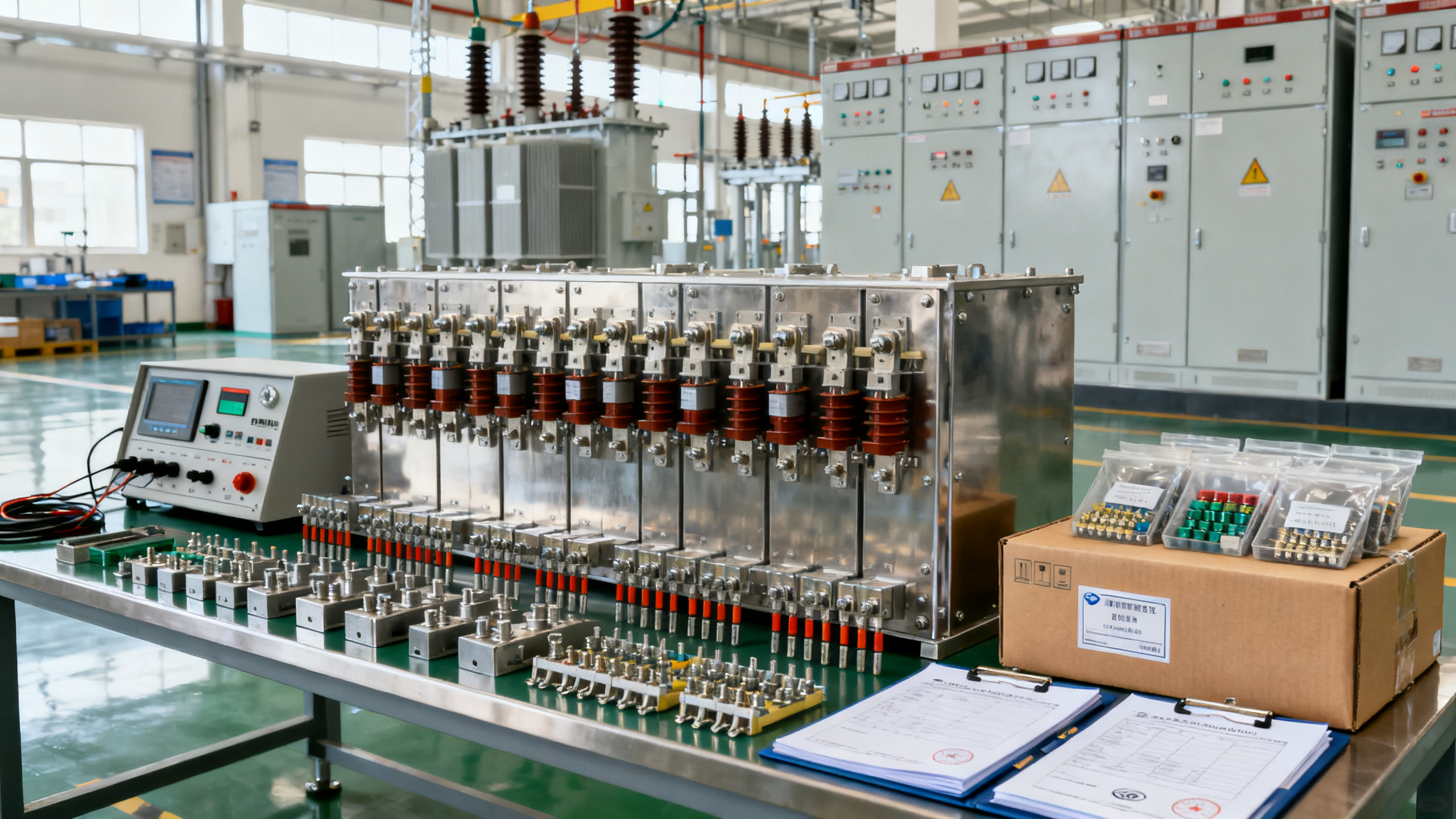
Choosing the right industrial components manufacturers for electrical infrastructure can determine whether a grid project stays compliant, resilient, and on schedule. For project managers and engineering leads, effective vetting goes beyond price—it requires checking certifications, production capacity, quality systems, and long-term reliability. This guide outlines a practical framework to help you assess suppliers with confidence and reduce procurement risk in critical electrical infrastructure projects.
What should project teams verify first when screening industrial components manufacturers for electrical infrastructure?
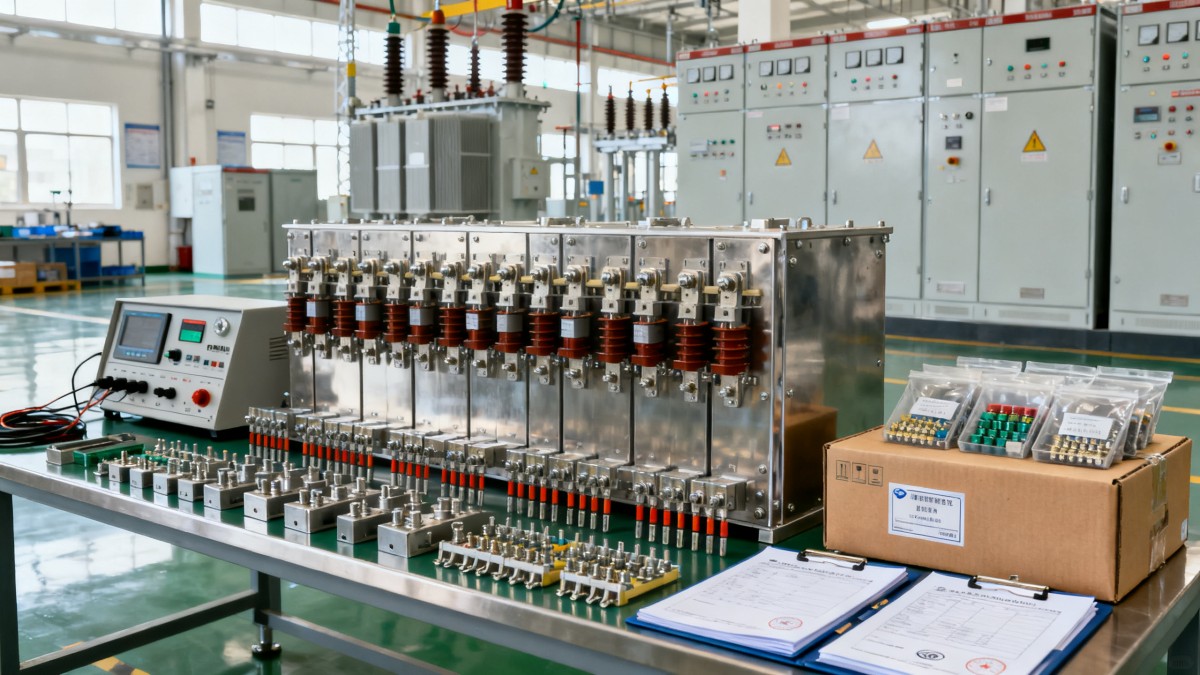
Early supplier screening should focus on project fit, not just catalog breadth. In grid projects, a manufacturer may appear capable on paper yet fail under strict utility specifications, EPC documentation requirements, or regional compliance rules. The most reliable industrial components manufacturers for electrical infrastructure can demonstrate repeatable quality, stable lead times, and experience with mission-critical power applications.
For project managers, the key question is simple: can this supplier support technical approval, commercial control, and delivery execution at the same time? A good vetting process should uncover whether the manufacturer understands substation environments, cable routing constraints, enclosure requirements, protection schemes, corrosion exposure, and maintenance access needs before the purchase order is issued.
- Confirm whether the supplier has produced comparable components for switchgear, substations, transformer stations, renewable interconnections, or transmission and distribution upgrades.
- Check whether technical files include drawings, material data, inspection plans, and traceability records suitable for EPC review and owner approval.
- Review whether the manufacturer can support pre-shipment inspection, factory acceptance coordination, packaging standards, and export documentation.
- Assess whether the supplier communicates clearly on deviations, substitutions, engineering change control, and warranty responsibilities.
At Global Industrial Core, supplier evaluation is approached as a risk management exercise. That means looking beyond headline claims and focusing on the operational details that affect schedule certainty, field performance, and lifecycle cost in electrical infrastructure procurement.
How do you build a practical vetting framework for grid project procurement?
A structured framework helps engineering and procurement teams compare manufacturers consistently. Without one, decisions often drift toward the lowest apparent price, even when hidden risks sit in documentation gaps, poor process control, or weak after-sales support. The framework below can be used for industrial components manufacturers for electrical infrastructure across multiple component categories.
The following table summarizes a practical evaluation matrix for prequalification and bid-stage review.
This type of matrix makes supplier comparison more objective. It also helps procurement teams justify award recommendations internally, especially when the best-value manufacturer is not the cheapest bidder but presents lower execution risk.
A five-step review path
- Define the application clearly, including voltage environment, exposure conditions, maintenance expectations, and installation interfaces.
- Issue a technical checklist with mandatory documentation requests rather than relying on generic brochures.
- Score suppliers across compliance, manufacturing, quality, logistics, and commercial transparency.
- Conduct clarification meetings to test responsiveness and technical depth.
- Approve conditionally if needed, linking award to missing documents, sample review, or inspection milestones.
Which certifications and compliance records matter most?
Compliance review is one of the most common failure points in sourcing. Many industrial components manufacturers for electrical infrastructure present broad quality claims, yet project teams need document-level evidence that components meet contract, market, and installation requirements. The exact list varies by region and component type, but the logic stays consistent: verify the product, the process, and the traceability chain.
Core records to request
- Quality management certificates such as ISO 9001 when relevant to the manufacturing operation.
- Product test reports, routine inspection records, or type-related evidence aligned with the applicable component standard.
- Material certificates for conductive parts, metallic structures, coatings, seals, or insulating materials where project specifications demand them.
- Calibration status for measurement devices used in critical inspection activities.
- Traceability procedures showing how batches, serials, and nonconformances are controlled.
Project leaders should also distinguish between a company-level certificate and a product-level compliance record. A factory may hold a management certificate, yet a specific component may still lack the test evidence or material verification your project requires.
The table below helps separate commonly requested records by procurement purpose.
When documentation is incomplete, teams should not assume the gap is minor. Missing records often signal weak document control or limited experience with utility-grade procurement. Both can cause delays far downstream.
How do technical capability and production discipline affect supplier reliability?
A manufacturer’s real value becomes visible in process control. For electrical infrastructure, dimensional mismatch, coating inconsistency, poor terminal integrity, or packaging damage can stall installation crews and trigger change orders. That is why experienced buyers look closely at how industrial components manufacturers for electrical infrastructure actually produce, inspect, and release goods.
Technical signals worth validating
- In-house testing capability for critical dimensions, conductivity-related properties, torque checks, sealing performance, or coating thickness where applicable.
- Controlled incoming inspection for raw materials and outsourced parts.
- Revision management for drawings, BOM changes, and customer-specific deviations.
- Packaging methods designed for export movement, moisture control, and handling protection.
- A clear escalation path when quality escapes or schedule risks appear.
If possible, ask for sample inspection reports and anonymized production records. These reveal more than brochures. A disciplined supplier can usually show how an order moved from raw material receipt to final inspection, labeling, packing, and shipment release.
Why capacity planning matters
For fast-track grid projects, capacity is not just about total output. It is about whether the manufacturer can reserve production slots, manage engineering changes, and absorb expediting without disrupting quality. A factory with strong technical ability but unstable planning may still become a schedule risk.
Global Industrial Core often advises project teams to ask direct questions about production loading, key bottlenecks, outsourced operations, and contingency arrangements. These details help distinguish a stable manufacturing partner from a supplier that may overpromise under bid pressure.
How should project managers compare bids beyond unit price?
In electrical infrastructure procurement, the cheapest line item can become the costliest project decision. The total cost of supplier underperformance may include re-approval time, late shipment, site labor disruption, corrective procurement, and reputational pressure from missed energization dates. Comparing industrial components manufacturers for electrical infrastructure requires a whole-project view.
Use a weighted commercial and technical comparison rather than a single-price ranking. This is especially important when component failure or mismatch affects switching safety, enclosure integrity, grounding continuity, measurement accuracy, or maintenance accessibility.
Bid comparison checkpoints
- Normalize scope first. Confirm whether each bidder priced the same material grade, finish, accessories, testing, packaging, and documentation.
- Quantify deviation risk. A lower bid with unresolved exceptions often carries hidden approval and installation exposure.
- Score delivery realism. Short quoted lead times are attractive only if backed by actual material availability and production allocation.
- Review lifecycle impact. Corrosion resistance, maintainability, spare support, and field interchangeability can change the true value equation.
When budgets are tight, teams may consider equivalent alternatives. That can be reasonable, but only if the substitute matches critical interfaces, environmental resistance, and approval requirements. Substitution should be an engineering decision, not a spreadsheet shortcut.
What common mistakes cause procurement risk in electrical infrastructure projects?
Most supplier failures are predictable. They often begin with incomplete technical definition, weak supplier questioning, or assumptions that a general industrial supplier can automatically serve power grid conditions. Project teams can avoid many of these problems by treating vetting as a front-end control activity rather than a paperwork exercise.
Frequent procurement mistakes
- Accepting generic certificates without linking them to the actual product, batch, or inspection scope.
- Overlooking environmental conditions such as salinity, UV exposure, dust, vibration, or thermal cycling.
- Failing to confirm drawing revision status before mass production starts.
- Assuming delivery dates are firm without checking raw material lead times or bottleneck processes.
- Evaluating only commercial teams and not testing the responsiveness of engineering and quality personnel.
A disciplined review process protects project managers from last-minute surprises. It also creates a stronger basis for internal approval, owner communication, and contractor coordination when sourcing decisions are challenged later.
FAQ: what do buyers ask about industrial components manufacturers for electrical infrastructure?
How many suppliers should be prequalified for a grid project package?
For most packages, keeping two to four technically acceptable suppliers creates a workable balance. Too few can weaken commercial leverage and contingency planning. Too many can overload clarification cycles and slow decisions. The right number depends on component criticality, regional approval conditions, and schedule pressure.
What is the best way to verify lead time claims?
Ask for a manufacturing timeline broken into engineering release, material procurement, fabrication, inspection, packing, and shipment readiness. Then test whether the timeline matches the supplier’s current loading and known bottlenecks. Reliable industrial components manufacturers for electrical infrastructure can usually explain where schedule risk sits and how they mitigate it.
When should samples or pilot batches be requested?
Samples are especially useful when the component has site-fit implications, custom interfaces, coating requirements, or material performance concerns. A pilot batch can also help validate labeling, packaging, and documentation quality before full-scale release. This is often cheaper than correcting mismatches in the field.
Are local suppliers always better for electrical infrastructure projects?
Not necessarily. Local suppliers may offer easier communication and shorter logistics paths, but global suppliers may provide deeper technical specialization or stronger process control. The decision should weigh approval confidence, lifecycle reliability, delivery resilience, and service accessibility rather than geography alone.
Why work with Global Industrial Core when vetting suppliers?
Project managers and engineering leads often face the same problem: too many supplier claims, not enough decision-grade clarity. Global Industrial Core supports industrial sourcing decisions with a focused view across electrical and power grid systems, compliance-sensitive procurement, and heavy-industry component evaluation. This helps teams move faster without reducing technical discipline.
If you are reviewing industrial components manufacturers for electrical infrastructure, GIC can help you structure supplier comparisons, identify documentation gaps, and prioritize the technical and commercial questions that matter most before award. That includes support around parameter confirmation, product selection logic, likely delivery constraints, customization considerations, certification requirements, sample planning, and quotation discussions aligned with project risk.
- Need help building a supplier shortlist for a substation, switchgear, or grid modernization package?
- Need a second review of technical deviations, compliance records, or manufacturing capability claims?
- Need support comparing delivery risk, inspection requirements, and long-term reliability across bidders?
Contact Global Industrial Core to discuss your application, required standards, target schedule, and sourcing constraints. A better supplier decision at the vetting stage can prevent costly delays and performance issues long after the equipment reaches site.
Technical Specifications
- How to Select an Emissions Monitoring System Analyzer for Compliance ReportingAuthor :Precision Metrology Expert
- How to Select an Access Control Management System for Multi-Site FacilitiesAuthor :Safety Compliance Lead
- Portable Gas Monitor Calibration: How Often Is It Needed for Safe Confined-Space Work?Author :Precision Metrology Expert
Expert Insights

Chief Security Architect
Dr. Thorne specializes in the intersection of structural engineering and digital resilience. He has advised three G7 governments on industrial infrastructure security.
Related Analysis
- Sep 21, 2026How to Select an Emissions Monitoring System Analyzer for Compliance ReportingAuthor :Precision Metrology Expert
- Sep 20, 2026How to Select an Access Control Management System for Multi-Site FacilitiesAuthor :Safety Compliance Lead
- Sep 19, 2026Portable Gas Monitor Calibration: How Often Is It Needed for Safe Confined-Space Work?Author :Precision Metrology Expert
Core Sector // 01
Security & Safety
- How to Size a UPS for Server Rooms: Load, Runtime, and Redundancy FactorsAuthor :Grid Infrastructure Analyst

- How to Choose a Step-Down Transformer for a Control Panel: Key Sizing FactorsAuthor :Grid Infrastructure Analyst

- How Often Should Overseas Power Systems Undergo Safety Inspections?Author :Grid Infrastructure Analyst

- How to Choose Panels for Extreme-Cold Industrial Sites?Author :Grid Infrastructure Analyst

- What Should a Cross-Border EPC Equipment Procurement Reference Include?Author :Grid Infrastructure Analyst

- How to Compare Low-Voltage Equipment for Panel IntegrationAuthor :Grid Infrastructure Analyst

- IEC-Compliant Power Infrastructure: Key Design and Verification RequirementsAuthor :Grid Infrastructure Analyst

- Updated EN 61000-6-4:2026 Raises EMC Compliance Bar for EU-Bound Industrial EquipmentAuthor :Grid Infrastructure Analyst