How to request an Electrical & Power quotation that compares fairly
Author
Date Published
Reading Time

A fair Electrical & Power quotation is not just about the lowest price—it is about comparing scope, compliance, performance, and lifecycle value on equal terms. For procurement teams, a clear RFQ can prevent hidden costs, technical mismatches, and supplier ambiguity. This guide explains how to structure your request so every bid is transparent, comparable, and aligned with industrial project requirements.
In industrial procurement, the cost gap between two bids may be only 5% to 12%, while the risk gap can be far larger if one supplier has excluded testing, protection settings, documentation, or site support. That is why an Electrical & Power quotation should be treated as a technical and commercial package, not a single line-item price.
Whether you are sourcing switchgear, transformers, cable systems, power distribution panels, backup power packages, or balance-of-plant electrical components, the quality of your quotation request directly affects bid accuracy, lead time visibility, and project delivery confidence. For EPC contractors, plant operators, and procurement managers, fair comparison starts long before suppliers submit numbers.
Why fair quotation comparison matters in Electrical & Power procurement
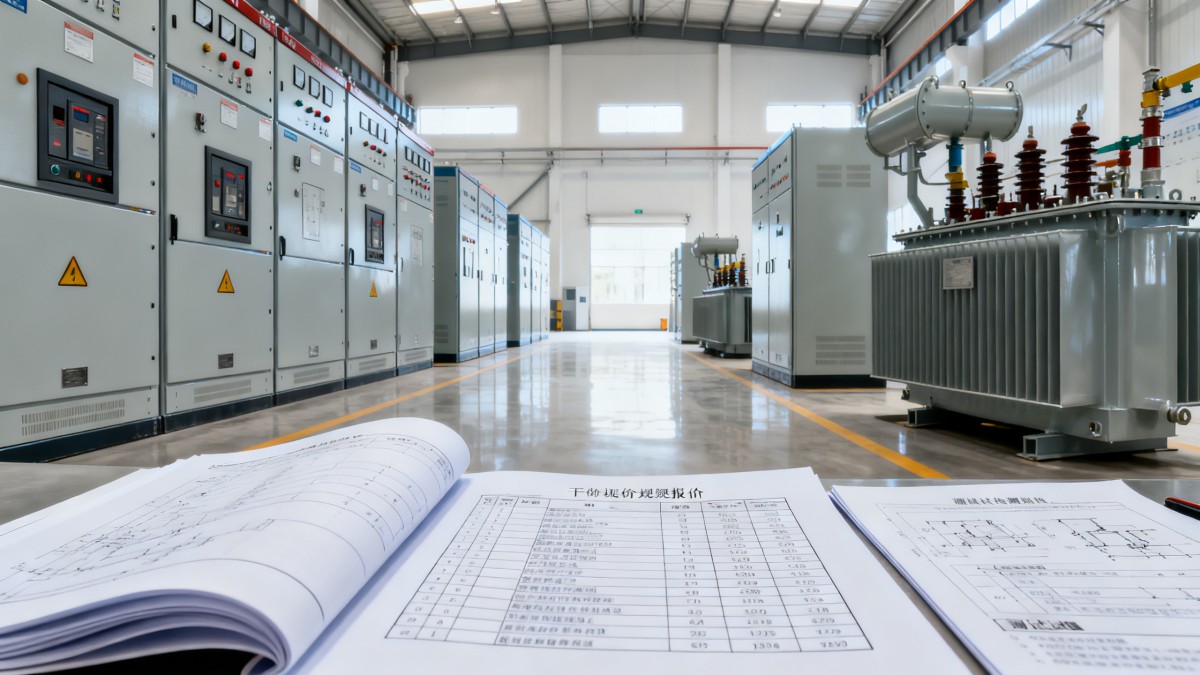
An Electrical & Power quotation often includes more than equipment supply. It may cover engineering review, protection coordination, FAT support, special packing, commissioning assistance, spare parts, and warranty obligations ranging from 12 to 24 months. If these elements are not requested in a consistent format, suppliers will make different assumptions, and the bids will not be directly comparable.
This problem is common in medium-voltage and low-voltage projects, where one vendor prices a complete tested assembly and another prices only the base hardware. On paper, the second offer may appear 8% cheaper. In practice, missing type test evidence, cable glands, metering devices, or relay programming can add cost later and delay installation by 2 to 6 weeks.
What makes quotations unfair to compare
Most quotation gaps come from four sources: incomplete technical scope, undefined standards, unclear commercial terms, and inconsistent service boundaries. Procurement teams often receive one supplier proposal with detailed BOM and another with only a summary total. Without a common bid template, commercial evaluation becomes subjective and technical risk remains hidden.
Typical hidden-cost triggers
- Exclusion of protection relays, meters, CTs, VTs, or internal wiring
- Different enclosure ratings such as IP31 versus IP54
- Alternative conductor material, for example aluminum instead of copper
- No inclusion of FAT, routine testing, or third-party inspection support
- Freight terms that shift logistics and insurance risk to the buyer
- Lead times based on standard production instead of project-specific customization
The table below shows why two bids with similar pricing may represent very different procurement outcomes when evaluated beyond initial capex.
The key lesson is simple: a fair Electrical & Power quotation requires bid normalization. Price should be judged only after scope, standards, testing, documents, and commercial conditions are aligned line by line.
How to structure an RFQ for comparable Electrical & Power quotations
A strong RFQ should remove guesswork. In most industrial projects, an RFQ package with 6 to 10 clearly defined sections produces better supplier responses than a short email request. The objective is not to make the RFQ longer; it is to make assumptions visible and measurable.
1. Define technical scope with measurable detail
Start with the exact equipment category and application: for example, 11kV switchgear for process plant distribution, 415V motor control center for water treatment, or 2MVA dry-type transformer for indoor installation. Include electrical ratings such as voltage, frequency, short-circuit withstand level, ingress protection, ambient temperature, altitude, and duty cycle.
Whenever possible, specify threshold values instead of generic wording. “High temperature” is unclear; “ambient 45°C continuous, 50°C peak” is usable. “Outdoor use” is broad; “outdoor, IP54, coastal atmosphere, stainless hardware required” is much better for quotation accuracy.
Minimum technical data checklist
- System voltage, frequency, and earthing arrangement
- Load profile in kW, kVA, and expected power factor
- Short-circuit rating and protection philosophy
- Site conditions: indoor/outdoor, humidity, altitude, dust, corrosive exposure
- Required standards such as IEC, UL, CE, or project-specific specifications
- Required documentation: GA, SLD, datasheets, test reports, manuals, spare parts list
2. Standardize the commercial bid format
If each supplier submits a different proposal format, comparison time can double. Ask vendors to quote using the same pricing schedule with separate lines for base equipment, mandatory accessories, optional items, testing, packing, freight, commissioning, and recommended spares. This helps procurement identify whether a lower total is due to genuine efficiency or simply missing scope.
A good practice is to request at least 5 commercial disclosures: Incoterms, currency validity, payment terms, manufacturing lead time, and warranty period. For larger packages, also request liquidated damages assumptions, document approval cycle dependencies, and any price adjustment conditions linked to copper, steel, or freight volatility.
The following RFQ structure can improve consistency across supplier responses and reduce clarification cycles by 20% to 30% in many project environments.
Suppliers respond better when the RFQ tells them exactly how to present deviations. Ask them to mark every exception against the specification rather than hiding changes in footnotes. This single step can save multiple rounds of technical clarification.
3. Request explicit deviations, not silent substitutions
An Electrical & Power quotation becomes risky when alternatives are offered without visibility. A different breaker brand, lower insulation class, smaller busbar section, or lower enclosure rating may still function, but it changes the procurement decision. Require a formal deviation schedule listing all substitutions, technical impacts, lead-time effects, and commercial adjustments.
For critical infrastructure, even small changes can affect spare parts strategy, interoperability, maintenance training, and local code acceptance. A substitution that saves 3% on purchase price may increase lifecycle complexity for the next 10 to 15 years.
What procurement teams should compare beyond price
Once the quotations arrive, the evaluation process should follow a weighted model rather than a lowest-bid shortcut. For many industrial buyers, a practical framework is 40% technical compliance, 25% commercial value, 20% delivery confidence, and 15% service and documentation. The exact weight can vary by project, but the principle remains consistent: technical fit comes first.
Technical compliance and performance fit
Check whether each supplier quoted the same fault level, insulation level, temperature rise limit, protection functions, and accessory package. In motors, drives, and power distribution systems, small mismatches can affect network stability, uptime, and expansion compatibility. Compare nameplate ratings and supporting drawings, not just proposal summaries.
Core comparison questions
- Does the quoted equipment meet the specified voltage class and short-circuit level?
- Are all mandatory accessories included, or listed as optional extras?
- Does the design match the site environment for temperature, dust, vibration, or corrosion?
- Are testing scope and acceptance criteria clearly defined?
Lead time realism and project integration
In the Electrical & Power sector, lead time is often quoted optimistically. Ask suppliers to split total delivery into engineering, material procurement, manufacturing, testing, and dispatch. A realistic 16-week schedule with 4 milestone gates is generally more valuable than a 10-week promise with no detail. This is especially important for custom panels, transformers, and project-specific assemblies.
Procurement should also review hold points such as drawing approval, FAT attendance, and export packing readiness. If the supplier lead time starts only after approval of drawings, a 2-week delay in review can push final delivery without the buyer realizing it during award stage.
Lifecycle cost, service, and spare strategy
A fair Electrical & Power quotation must include serviceability. Ask whether consumables, relays, fan units, sensors, breakers, and control cards are locally available. Confirm recommended spare parts for 2-year and 5-year operation. For remote sites or continuous-process plants, the cost of one unplanned outage can exceed the original purchase savings.
Warranty terms should also be normalized. Compare not only the duration but also the trigger point: shipment date, commissioning date, or handover date. An 18-month warranty from shipment may be less favorable than 12 months from commissioning if transport and site readiness are delayed.
Common RFQ mistakes that distort Electrical & Power quotations
Many procurement inefficiencies come from avoidable RFQ errors. These do not always lead to obvious bid rejection, but they reduce quotation quality and create ambiguity that surfaces later during engineering, expediting, or commissioning.
Mistake 1: Asking for a quote without an operating context
If suppliers do not know whether the equipment will run in a cement plant, data center, desalination unit, mining site, or utility substation, they may quote to a generic standard. The result can be technically compliant on paper but unsuitable in real duty conditions.
Mistake 2: Mixing must-have features with optional enhancements
Procurement teams should clearly separate mandatory requirements from options. If remote monitoring, arc-flash mitigation, harmonic filtering, or redundant power paths are optional, state that in a separate line. Otherwise suppliers may include or exclude them inconsistently, making fair comparison impossible.
Mistake 3: Ignoring documentation and testing scope
Documentation often affects schedule as much as hardware does. Drawings, test certificates, material data, manuals, and packing lists should be part of the quotation request. In regulated or safety-sensitive environments, the absence of proper documentation can delay site acceptance by several days or even weeks.
Mistake 4: Awarding too early on unit price alone
A low unit price for cable, switchgear, or transformer supply may look attractive, but if delivery risk, accessory exclusions, or support limitations are not accounted for, total project cost can rise later. Fair award decisions need technical review, commercial normalization, and risk scoring before final selection.
A practical checklist for better quotation requests
For procurement teams that need a repeatable process, the most effective approach is to build a short internal checklist. This can be used across multiple categories, from panel boards and UPS systems to transformers and cable packages. Consistency improves supplier response quality and reduces internal review time.
Seven-point quotation request checklist
- Confirm full equipment scope, quantity, and application environment
- State all required standards, certifications, and testing expectations
- Issue a fixed commercial bid format for all suppliers
- Require a separate deviations and exclusions sheet
- Request lead time by milestone, not only total weeks
- Normalize warranty, service, and spare parts proposals
- Score bids using technical, commercial, delivery, and support criteria
This process does not need to be complicated. Even a 2-page RFQ template with defined sections can significantly improve the fairness of an Electrical & Power quotation review. What matters is clarity, consistency, and discipline in supplier communication.
A well-structured quotation request protects both budget and project execution. It helps procurement teams identify real value, not just lower headline pricing, and it gives engineering stakeholders the confidence that the selected offer will perform under actual site conditions. If you need support evaluating suppliers, refining RFQ language, or building a more comparable sourcing framework for Electrical & Power packages, contact Global Industrial Core to get tailored guidance, review your quotation strategy, and explore more sourcing solutions.
Technical Specifications
- How to Select an Emissions Monitoring System Analyzer for Compliance ReportingAuthor :Precision Metrology Expert
- How to Select an Access Control Management System for Multi-Site FacilitiesAuthor :Safety Compliance Lead
- Portable Gas Monitor Calibration: How Often Is It Needed for Safe Confined-Space Work?Author :Precision Metrology Expert
Expert Insights

Chief Security Architect
Dr. Thorne specializes in the intersection of structural engineering and digital resilience. He has advised three G7 governments on industrial infrastructure security.
Related Analysis
- Sep 21, 2026How to Select an Emissions Monitoring System Analyzer for Compliance ReportingAuthor :Precision Metrology Expert
- Sep 20, 2026How to Select an Access Control Management System for Multi-Site FacilitiesAuthor :Safety Compliance Lead
- Sep 19, 2026Portable Gas Monitor Calibration: How Often Is It Needed for Safe Confined-Space Work?Author :Precision Metrology Expert
Core Sector // 01
Security & Safety
- How to Size a UPS for Server Rooms: Load, Runtime, and Redundancy FactorsAuthor :Grid Infrastructure Analyst

- How to Choose a Step-Down Transformer for a Control Panel: Key Sizing FactorsAuthor :Grid Infrastructure Analyst

- How Often Should Overseas Power Systems Undergo Safety Inspections?Author :Grid Infrastructure Analyst

- How to Choose Panels for Extreme-Cold Industrial Sites?Author :Grid Infrastructure Analyst

- What Should a Cross-Border EPC Equipment Procurement Reference Include?Author :Grid Infrastructure Analyst

- How to Compare Low-Voltage Equipment for Panel IntegrationAuthor :Grid Infrastructure Analyst

- IEC-Compliant Power Infrastructure: Key Design and Verification RequirementsAuthor :Grid Infrastructure Analyst

- Updated EN 61000-6-4:2026 Raises EMC Compliance Bar for EU-Bound Industrial EquipmentAuthor :Grid Infrastructure Analyst