How to read an Electrical & Power quotation without missing costs
Author
Date Published
Reading Time
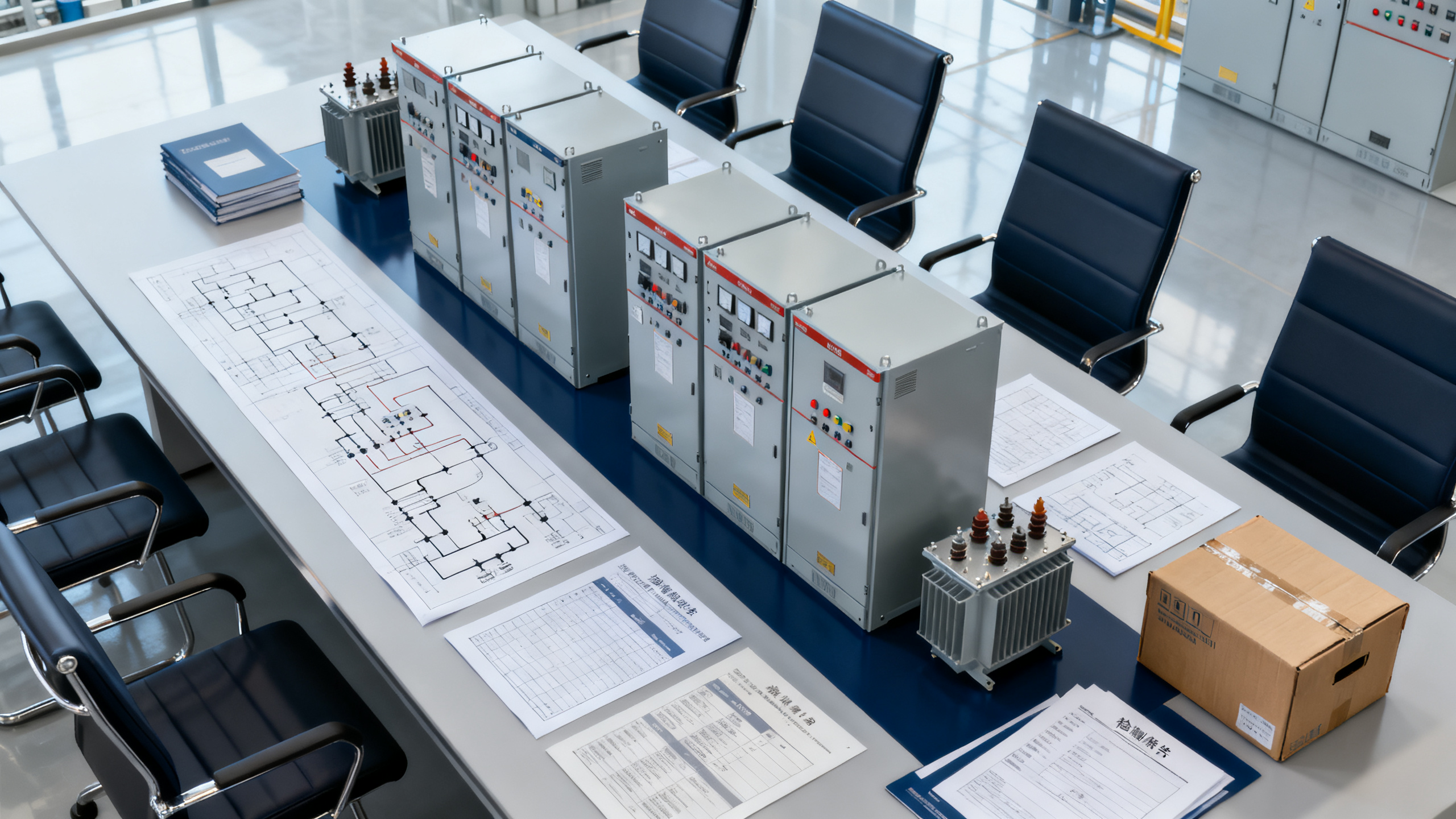
An Electrical & Power quotation can look straightforward yet hide costs that later disrupt budgets, approvals, and project timelines. For financial decision-makers, knowing how to read each line beyond the headline price is essential to avoid scope gaps, compliance surprises, and lifecycle expenses. This guide shows you how to review an Electrical & Power quotation with greater confidence, clarity, and cost control.
What financial approvers should look for first in an Electrical & Power quotation
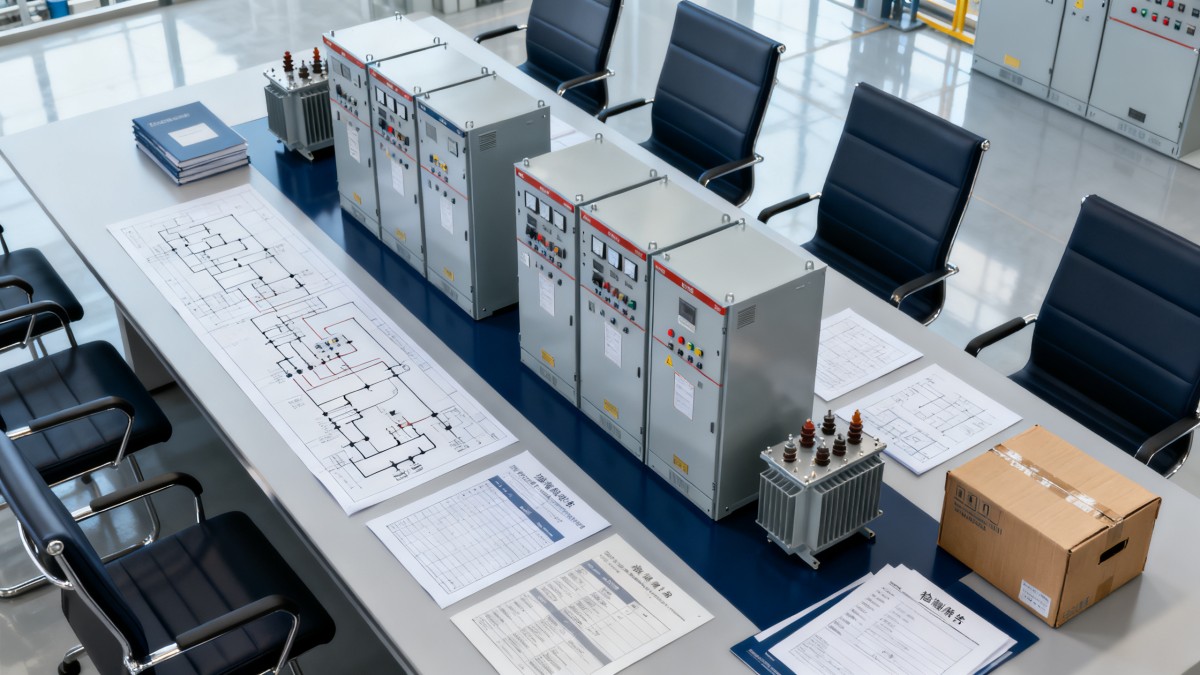
If you approve budgets, the most important truth is simple: the lowest quoted number is rarely the lowest total cost. An Electrical & Power quotation often reflects only part of what the supplier will ultimately charge, while other costs sit in exclusions, assumptions, technical notes, freight terms, commissioning clauses, or compliance requirements.
Your job is not to validate every engineering detail personally. Your job is to identify whether the quotation is commercially complete, technically aligned with the project, and financially predictable. A good review should tell you three things quickly: what is included, what is missing, and what could become a change order later.
Before comparing suppliers, confirm whether each quote is based on the same scope, standards, delivery conditions, and project responsibilities. If one supplier includes testing, documentation, installation support, and warranty while another only prices equipment supply, the price gap is not a true saving. It is a scope difference.
For finance teams, a quotation should be read as a risk document as much as a price document. Hidden cost exposure usually appears in five areas: incomplete scope, compliance upgrades, logistics, site works, and lifecycle obligations. If these areas are not clarified early, approval decisions become vulnerable to overruns after purchase order release.
Start with scope clarity, because most missed costs begin there
The first review step is to check whether the quotation clearly defines the supply scope. In Electrical & Power projects, scope can include switchgear, transformers, UPS systems, protection relays, cables, busbars, panels, grounding materials, power monitoring devices, enclosures, software licenses, testing, documentation, and start-up support. A short commercial summary may hide a long list of missing items.
Look for exact references to drawings, datasheets, bill of quantities, load schedules, single-line diagrams, and revision numbers. If the quotation does not tie back to controlled project documents, there is a real chance the supplier priced against an outdated or incomplete basis. That creates budget risk even if the unit rates look competitive.
Pay close attention to wording such as “as per available information,” “by others,” “if required,” or “excluded unless specified.” These phrases often signal scope uncertainty. In practice, they mean the supplier has protected its own risk by leaving room to charge later once the project detail becomes clearer.
Finance approvers should also ask whether auxiliary items are included. In many cases, the expensive surprise is not the core equipment itself but cable glands, lugs, control wiring, mounting accessories, earthing kits, interconnecting materials, software configuration, labeling, or spare parts required for handover. These are small lines individually but significant in aggregate.
Do not approve based on equipment price alone; check commercial structure
Many Electrical & Power quotations look attractive because the equipment line appears low, but the commercial structure shifts cost elsewhere. Review whether the quote separates material cost, engineering, factory acceptance testing, packaging, shipping, insurance, duties, site supervision, installation, commissioning, and training. A financially sound quotation makes these elements visible rather than burying them.
Check the currency, tax treatment, and validity period. A quotation valid for only a short window may expose your project to raw material swings, exchange rate changes, or regulatory updates if approvals take longer than expected. For large industrial purchases, this matters particularly when copper, aluminum, steel, or semiconductor components affect price stability.
Incoterms also deserve careful review. If one quote is EXW and another is DDP, the price difference cannot be compared directly. Freight, customs clearance, inland transportation, port handling, and cargo insurance may sit outside the supplier’s number. For financial control, always convert quotations to a common landed-cost basis before judging value.
Payment terms can create hidden cost too. A supplier asking for a large advance may not change the nominal quote, but it affects working capital, financing cost, and exposure if manufacturing delays occur. Likewise, milestone definitions should be clear. “Delivery” can mean shipped from factory, arrived at site, or accepted after inspection. Each version changes cash-flow risk.
Check compliance carefully, because non-compliance becomes a budget issue fast
In Electrical & Power procurement, compliance is not only an engineering requirement. It is a cost-control issue. If the quoted product does not meet required standards, certifications, utility rules, or site-specific safety obligations, the project may face redesign, retesting, delayed approvals, or replacement costs later.
Review whether the quotation explicitly states compliance with required standards such as IEC, UL, CE, ISO-related quality systems, or local grid and authority regulations. If a quote says “designed in accordance with” rather than “certified to” or “tested to,” ask for clarification. That wording difference can have practical implications for acceptance and liability.
Also check enclosure ratings, short-circuit ratings, insulation class, temperature rise limits, arc-flash considerations, IP or NEMA protection, hazardous area suitability where relevant, and seismic or environmental conditions if your project requires them. A supplier may quote a technically workable product that still fails the actual site requirement, forcing later upgrades.
Documentation is part of compliance cost. Make sure the quotation includes test certificates, type test references, routine test reports, as-built drawings, operation manuals, wiring diagrams, inspection records, and declaration documents if your project needs them. Missing documentation can delay energization or final acceptance even when the equipment itself is physically delivered.
Watch for installation, commissioning, and interface gaps
One of the most common reasons an Electrical & Power quotation leads to budget escalation is the assumption that someone else will handle site work. Suppliers may provide equipment only, while the buyer assumes termination, erection, cable pulling, configuration, integration, protection setting, and commissioning support are included. Those assumptions can become expensive once site execution starts.
Read carefully for phrases such as “installation by customer,” “cabling by others,” “civil works excluded,” “termination not included,” or “commissioning support on request.” These exclusions are normal in many projects, but they must be priced elsewhere in the total budget. A quotation is not incomplete simply because it excludes site works; it becomes risky when those exclusions are not recognized.
Interface responsibility is equally important. Ask who is responsible for communication protocols, SCADA integration, BMS links, relay coordination data, synchronization logic, third-party panel interfacing, and field verification. If the quote covers a component but not the interface, the project can still fail operationally or absorb unplanned engineering hours.
For financial approvers, a useful question is this: “What must still be purchased, contracted, or engineered after this order is placed in order to make the system operable?” If the answer is long or uncertain, then the quotation price is not yet a dependable budgeting figure.
Read the assumptions and exclusions more closely than the headline summary
Suppliers often place the most commercially important limitations in the assumptions and exclusions section. This section may look routine, but it is where hidden cost risk is usually documented. Financial approvers should treat it as essential, not optional reading.
Typical exclusions may include taxes, unloading, storage at site, cranes, scaffolding, special tools, consumables, protective devices upstream or downstream, civil foundations, fire-stopping materials, cable trays, software integration, authority fees, and repeat visits caused by site unpreparedness. None of these items are unusual, but each can alter project cost materially.
Assumptions can be even more dangerous than exclusions because they appear reasonable until reality changes. For example, a supplier may assume standard ambient temperature, unrestricted site access, one-time mobilization, normal working hours, or a fixed cable route distance. If actual conditions differ, variation claims often follow.
A disciplined review compares every assumption against site reality and internal project planning. If a quotation assumes ideal conditions that your project cannot provide, the gap should be costed before approval rather than after delivery. That single step can prevent many avoidable overruns.
Consider total cost of ownership, not only purchase price
Finance-led decisions are strongest when they move beyond capex and consider lifecycle cost. In Electrical & Power systems, a lower purchase price may lead to higher energy losses, more maintenance, shorter service life, weaker warranty protection, or difficult spare-parts availability. These long-term costs do not always show up clearly in the initial quotation.
Ask whether the quoted equipment has efficiency implications, maintenance intervals, calibration needs, consumable replacement requirements, and software or licensing renewals. For example, transformers, UPS systems, power quality devices, and monitoring platforms can differ meaningfully in operating cost over time even when upfront pricing appears close.
Warranty terms matter too. Review duration, coverage boundaries, response times, exclusions for improper installation, and whether on-site labor is included. A 24-month warranty on parts only is not equivalent to a warranty that includes field service and replacement support. Financially, those are different risk positions.
Spare parts strategy should also be visible. If the quotation excludes recommended spares, ask whether they are necessary for operational continuity or warranty compliance. Delaying spare procurement can look like a saving at approval stage but create high downtime cost later if replacement lead times are long.
How to compare multiple quotations without making a false price judgment
When several suppliers submit offers, the right method is not to compare totals line by line in isolation. Build a comparison matrix that standardizes scope, specification compliance, documentation, logistics basis, payment terms, warranty, lead time, after-sales support, and exclusions. Only then can price differences be interpreted correctly.
A useful approach is to classify each quotation into three categories: fully aligned, partially aligned, and non-aligned. A fully aligned quote matches the requested technical and commercial basis. A partially aligned quote may still be viable, but only after pricing the gaps. A non-aligned quote should not drive approval simply because it is cheap.
It also helps to assign commercial risk scores. For example, a quote with short validity, broad exclusions, unclear testing scope, and site support as optional should receive a higher risk weighting than a slightly more expensive quote with clear inclusions and stronger execution support. Financial decisions improve when visible price and hidden risk are judged together.
If your procurement team can quantify the cost of known gaps, convert each offer into an “evaluated total cost” rather than relying on supplier totals. This often changes the ranking and gives finance, procurement, and engineering a more defensible approval basis.
Questions financial approvers should ask before signing off
Even without deep technical specialization, finance leaders can ask a short set of high-value questions that expose hidden cost risk. First, is this quotation based on the latest approved technical documents and project revision? Second, what major items, services, or responsibilities are excluded? Third, what assumptions could trigger variation charges later?
Fourth, are freight, duties, insurance, taxes, and site delivery conditions fully defined? Fifth, what certifications, testing, and compliance documents are included? Sixth, what parts of installation, integration, and commissioning remain outside this scope? Seventh, what warranty, service response, and spare-parts commitments are provided?
Eighth, how does this supplier’s lead time affect project schedule cost? A lower quote can become more expensive if delayed delivery drives contractor standby charges or pushes energization milestones. Ninth, are there any licensing, software, or recurring service fees after supply? Tenth, what is the estimated total installed and operational cost, not just the purchase order value?
These questions do not replace engineering review, but they strengthen financial governance. They also create a clearer audit trail showing that approval was based on complete commercial understanding rather than headline price alone.
A practical approval mindset for better cost control
The most effective way to read an Electrical & Power quotation is to treat it as a complete project commitment, not a product tag. Financial approvers add the most value when they challenge ambiguity early, push for scope transparency, and ensure comparisons are made on a like-for-like basis.
In many industrial projects, budget overruns do not come from dramatic supplier misconduct. They come from ordinary omissions, optimistic assumptions, unclear interfaces, and incomplete commercial alignment. Those issues are preventable if the quotation review process is disciplined enough before approval.
A strong quotation is not simply the cheapest. It is the one that gives the business the highest confidence in cost predictability, compliance, delivery reliability, and operational readiness. For capital-intensive environments, that distinction matters more than small savings on the first page.
When finance, procurement, and engineering review an Electrical & Power quotation together using the same checklist, approvals become faster, negotiations become sharper, and post-award surprises become less frequent. That is the real value of reading beyond the price line.
Conclusion
An Electrical & Power quotation should never be approved on headline cost alone. For financial decision-makers, the real task is to verify scope completeness, commercial structure, compliance coverage, site responsibility, assumptions, and lifecycle impact. Hidden costs usually exist where details are vague.
If you want better budget control, compare quotations on a normalized basis, challenge exclusions early, and ask what it will truly cost to deliver a working, compliant, supportable system. The more complete the quotation understanding, the stronger the approval decision and the lower the risk of expensive surprises later.
Technical Specifications
- How to Select an Emissions Monitoring System Analyzer for Compliance ReportingAuthor :Precision Metrology Expert
- How to Select an Access Control Management System for Multi-Site FacilitiesAuthor :Safety Compliance Lead
- Portable Gas Monitor Calibration: How Often Is It Needed for Safe Confined-Space Work?Author :Precision Metrology Expert
Expert Insights

Chief Security Architect
Dr. Thorne specializes in the intersection of structural engineering and digital resilience. He has advised three G7 governments on industrial infrastructure security.
Related Analysis
- Sep 21, 2026How to Select an Emissions Monitoring System Analyzer for Compliance ReportingAuthor :Precision Metrology Expert
- Sep 20, 2026How to Select an Access Control Management System for Multi-Site FacilitiesAuthor :Safety Compliance Lead
- Sep 19, 2026Portable Gas Monitor Calibration: How Often Is It Needed for Safe Confined-Space Work?Author :Precision Metrology Expert
Core Sector // 01
Security & Safety
- How to Size a UPS for Server Rooms: Load, Runtime, and Redundancy FactorsAuthor :Grid Infrastructure Analyst

- How to Choose a Step-Down Transformer for a Control Panel: Key Sizing FactorsAuthor :Grid Infrastructure Analyst

- How Often Should Overseas Power Systems Undergo Safety Inspections?Author :Grid Infrastructure Analyst

- How to Choose Panels for Extreme-Cold Industrial Sites?Author :Grid Infrastructure Analyst

- What Should a Cross-Border EPC Equipment Procurement Reference Include?Author :Grid Infrastructure Analyst

- How to Compare Low-Voltage Equipment for Panel IntegrationAuthor :Grid Infrastructure Analyst

- IEC-Compliant Power Infrastructure: Key Design and Verification RequirementsAuthor :Grid Infrastructure Analyst

- Updated EN 61000-6-4:2026 Raises EMC Compliance Bar for EU-Bound Industrial EquipmentAuthor :Grid Infrastructure Analyst