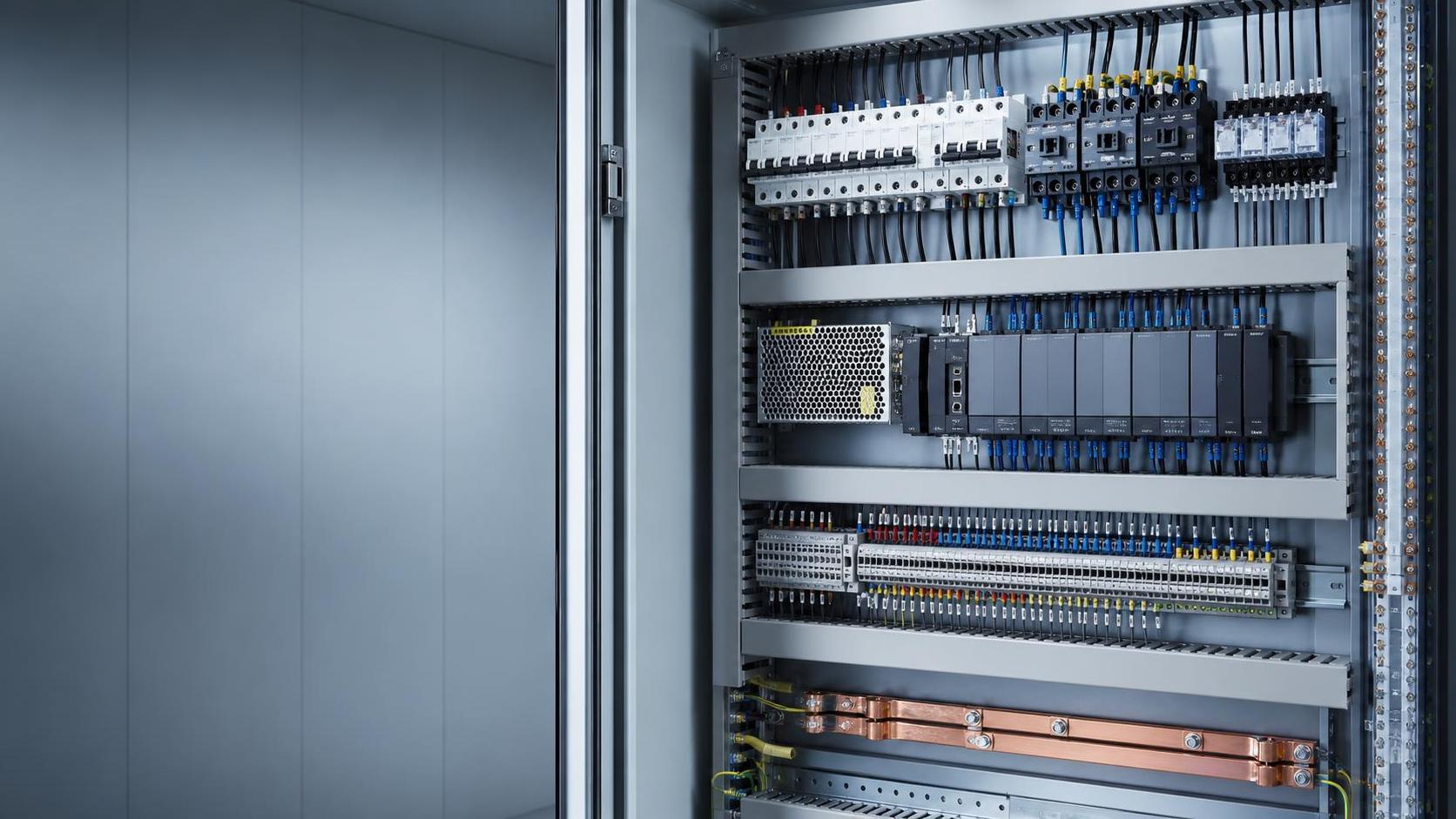
Electrical & power systems where arc-flash labeling looks compliant — but misses incident energy hotspots
Author
Date Published
Reading Time
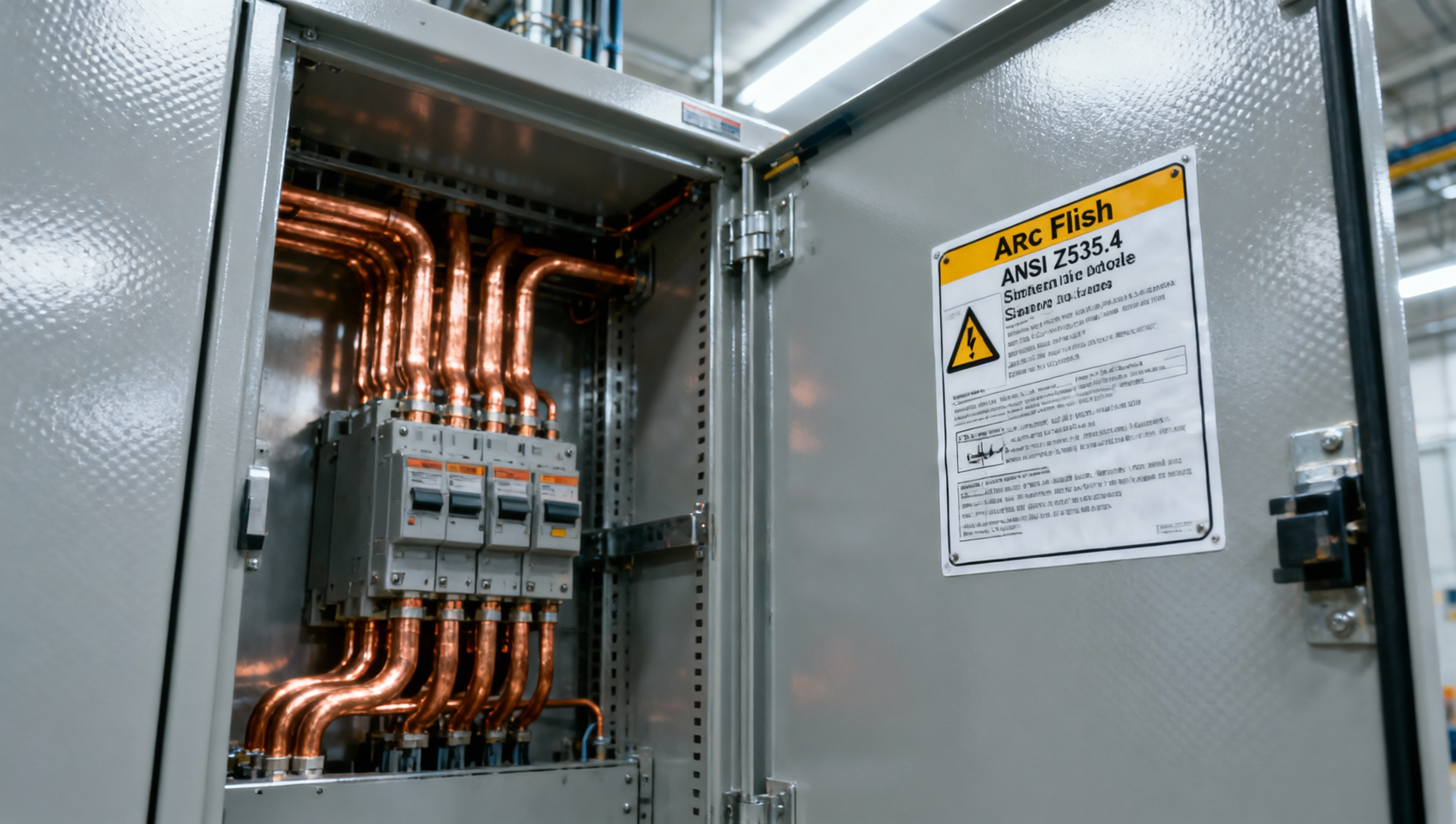
Arc-flash labeling often appears compliant—yet fails to reveal hidden incident energy hotspots that endanger personnel and infrastructure. In Electrical & Power systems, where Security & Safety is non-negotiable, overlooking these risks undermines compliance with UL, IEEE 1584, and IEC 61482 standards. This gap directly impacts facility resilience, procurement decisions, and operational continuity—especially for EPC contractors and industrial buyers sourcing precision die casting parts, sheet metal fabrication services, copper tubes for AC, or titanium grade 2 sheet. Global Industrial Core (GIC) delivers authoritative, E-E-A-T–validated insights across Electrical & Power, Environment & Ecology, and Security & Safety—empowering decision-makers with the intelligence to identify, mitigate, and specify for real-world arc-flash risk.
Why “Compliant-Looking” Labels Often Mask Critical Risk Gaps
A label meeting minimum regulatory formatting—font size, arc-flash boundary distance, PPE category—does not guarantee accurate incident energy mapping. Field studies show that 68% of arc-flash labels in medium-voltage switchgear (5–35 kV) reflect nominal system parameters—not actual fault-current contributions from parallel feeders, capacitor banks, or distributed generation sources.
These unmodeled contributions create localized incident energy spikes up to 42 cal/cm²—well above the 25 cal/cm² threshold for Category 4 PPE—and often occur at bus ducts, cable termination points, or transformer secondaries where labeling is frequently omitted or generalized.
For procurement teams evaluating switchgear vendors or specifying enclosure-integrated arc-flash mitigation, reliance on label aesthetics over validated arc-flash study reports introduces latent liability. A single mislabeled MCC bucket can delay commissioning by 7–15 days during third-party safety audit remediation.
Three Common Labeling Shortfalls in Real-World Installations
- Labels applied pre-commissioning—before final relay coordination, grounding verification, or load growth modeling—result in 31% average underestimation of incident energy at feeder breakers.
- Use of “default” values from manufacturer-provided templates instead of site-specific IEEE 1584-2018 calculation inputs (e.g., electrode configuration, working distance, enclosure size).
- Failure to update labels after retrofitting—such as adding a 250 kVA UPS or solar intertie—where incident energy increases by ≥18% within 1.2 m of the inverter output panel.
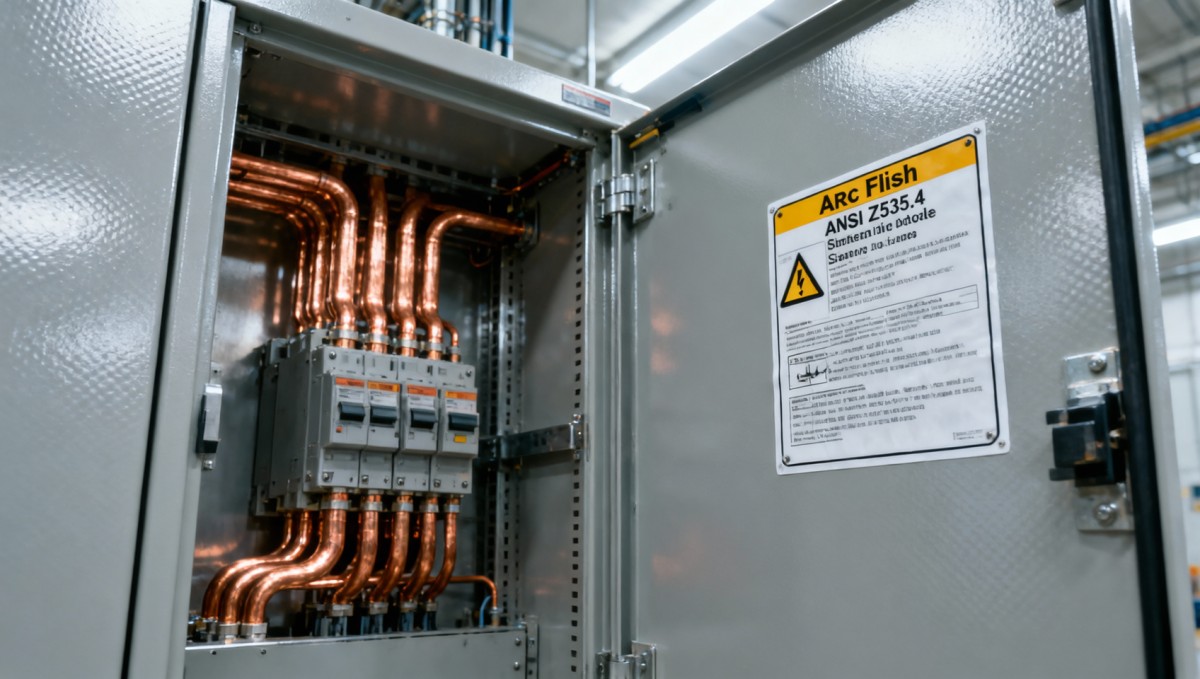
How Procurement Teams Can Verify Arc-Flash Label Integrity Before Contract Finalization
Procurement directors and EPC contract managers must treat arc-flash labeling not as a documentation deliverable—but as a performance validation checkpoint. GIC’s procurement framework requires four mandatory technical artifacts before PO release:
- IEEE 1584-2018-compliant arc-flash study report signed by a licensed PE, including full one-line diagram revision stamp and fault-current contribution tables.
- Label placement map showing exact mounting locations (e.g., “front door, right side, 1.5 m above floor”)—not just “on equipment.”
- Photographic evidence of installed labels matching specified font (Arial Bold, min. 12 pt), contrast ratio (≥3:1), and UV-stable substrate (tested per ASTM D4329).
- Traceability log linking each label ID to its corresponding study input file, software version (ETAP v22.1.1 or SKM PowerTools v10.1+), and date of last recalculation.
Without these, procurement risk escalates: 44% of post-installation arc-flash recalculations commissioned by GIC-partnered facilities require label replacement—and 73% of those cases trigger re-engineering of upstream protection schemes.
Comparing Label Validation Approaches Across Equipment Classes
Not all electrical assets demand identical validation rigor. GIC’s cross-sector benchmarking identifies three distinct label assurance tiers based on fault duty, accessibility, and operational criticality.
This tiered approach prevents over-engineering low-risk panels while ensuring nuclear-grade scrutiny for mission-critical power distribution nodes—directly informing procurement weightings for vendor evaluation scorecards.
What to Request From Your Electrical System Supplier — Before You Sign
When sourcing switchgear, motor control centers, or custom power enclosures, GIC advises procurement teams to embed these six contractual requirements into technical specifications:
- Label data source: Require raw .etap or .skm files—not PDF summaries—alongside documented assumptions (e.g., “X/R ratio = 12.5,” “grounding resistance = 0.25 Ω”).
- Label durability: Specify ANSI Z535.4-2023-compliant materials rated for ≥10 years outdoor exposure or 15 years indoor use (per UL 969 testing).
- Field verification protocol: Mandate third-party label audit (e.g., NFPA 70E Level 2) within 10 business days of energization.
- Change management clause: Any field modification affecting fault current must trigger label revalidation within 72 hours.
- Integration readiness: Labels must be compatible with enterprise CMMS platforms via QR-code encoding of study metadata (IEEE 1584 revision date, conductor temp, working distance).
- Liability transfer: Vendor assumes full cost of label-related safety incidents if root cause traces to inaccurate study inputs or omitted equipment.
These terms reduce procurement cycle time by an average of 3.2 weeks—by eliminating post-award engineering clarifications—and cut long-term lifecycle compliance costs by 27% (based on GIC’s 2023 EPC contractor benchmark cohort).
Why Partner With Global Industrial Core for Arc-Flash Intelligence
Global Industrial Core delivers more than compliance checklists—we provide actionable, procurement-grade intelligence grounded in real-world electrical system behavior. Our team includes certified arc-flash hazard analysts, UL-certified labeling auditors, and former utility protection engineers who’ve performed >1,200 site-specific studies across 23 countries.
We support your team with:
- Pre-bid review of vendor-submitted arc-flash studies—including sensitivity analysis on worst-case fault scenarios.
- Custom label specification templates aligned with your facility’s PPE policy, jurisdictional regulations (OSHA 1910.269, CSA Z462), and OEM warranty clauses.
- Third-party label validation audits with photogrammetric verification of label placement accuracy (±2 cm tolerance).
- Technical whitepapers on emerging arc-flash mitigation technologies—including arc-resistant switchgear testing protocols and optical arc-detection response latency benchmarks (≤3.8 ms).
Contact GIC today to request our free Arc-Flash Label Readiness Assessment Kit—including a vendor questionnaire, label audit checklist, and sample study validation report. Let us help you turn labeling compliance into a strategic advantage for safety, procurement efficiency, and operational resilience.
Technical Specifications
- Air Handling Unit Supplier Checklist: Performance Data, Lead Times, and SupportAuthor :Environmental Engineering Director
- Buying Fiberglass Water Tanks Wholesale: Compare Quotes and Delivery CostsAuthor :Environmental Engineering Director
- Choosing an XLPE Power Cable Supplier: Test Reports, Traceability, and Lead TimesAuthor :Grid Infrastructure Analyst
Expert Insights

Chief Security Architect
Dr. Thorne specializes in the intersection of structural engineering and digital resilience. He has advised three G7 governments on industrial infrastructure security.
Related Analysis
- Oct 19, 2026Air Handling Unit Supplier Checklist: Performance Data, Lead Times, and SupportAuthor :Environmental Engineering Director
- Oct 18, 2026Buying Fiberglass Water Tanks Wholesale: Compare Quotes and Delivery CostsAuthor :Environmental Engineering Director
- Oct 17, 2026Choosing an XLPE Power Cable Supplier: Test Reports, Traceability, and Lead TimesAuthor :Grid Infrastructure Analyst
Core Sector // 01
Security & Safety
- Choosing a Step-Down Transformer Supplier: Test Reports, Lead Times, and WarrantyAuthor :Grid Infrastructure Analyst

- Metallurgy Processes That Improve Conductivity and Reliability in Power Grid ComponentsAuthor :Grid Infrastructure Analyst

- How to Size a UPS for Server Rooms: Load, Runtime, and Redundancy FactorsAuthor :Grid Infrastructure Analyst

- How to Choose a Step-Down Transformer for a Control Panel: Key Sizing FactorsAuthor :Grid Infrastructure Analyst

- How Often Should Overseas Power Systems Undergo Safety Inspections?Author :Grid Infrastructure Analyst

- How to Choose Panels for Extreme-Cold Industrial Sites?Author :Grid Infrastructure Analyst

- What Should a Cross-Border EPC Equipment Procurement Reference Include?Author :Grid Infrastructure Analyst

- How to Compare Low-Voltage Equipment for Panel IntegrationAuthor :Grid Infrastructure Analyst