AS/NZS 62368-3:2026 Adopts UL 62368-3:2026 for Industrial Power Adapters
Author
Date Published
Reading Time
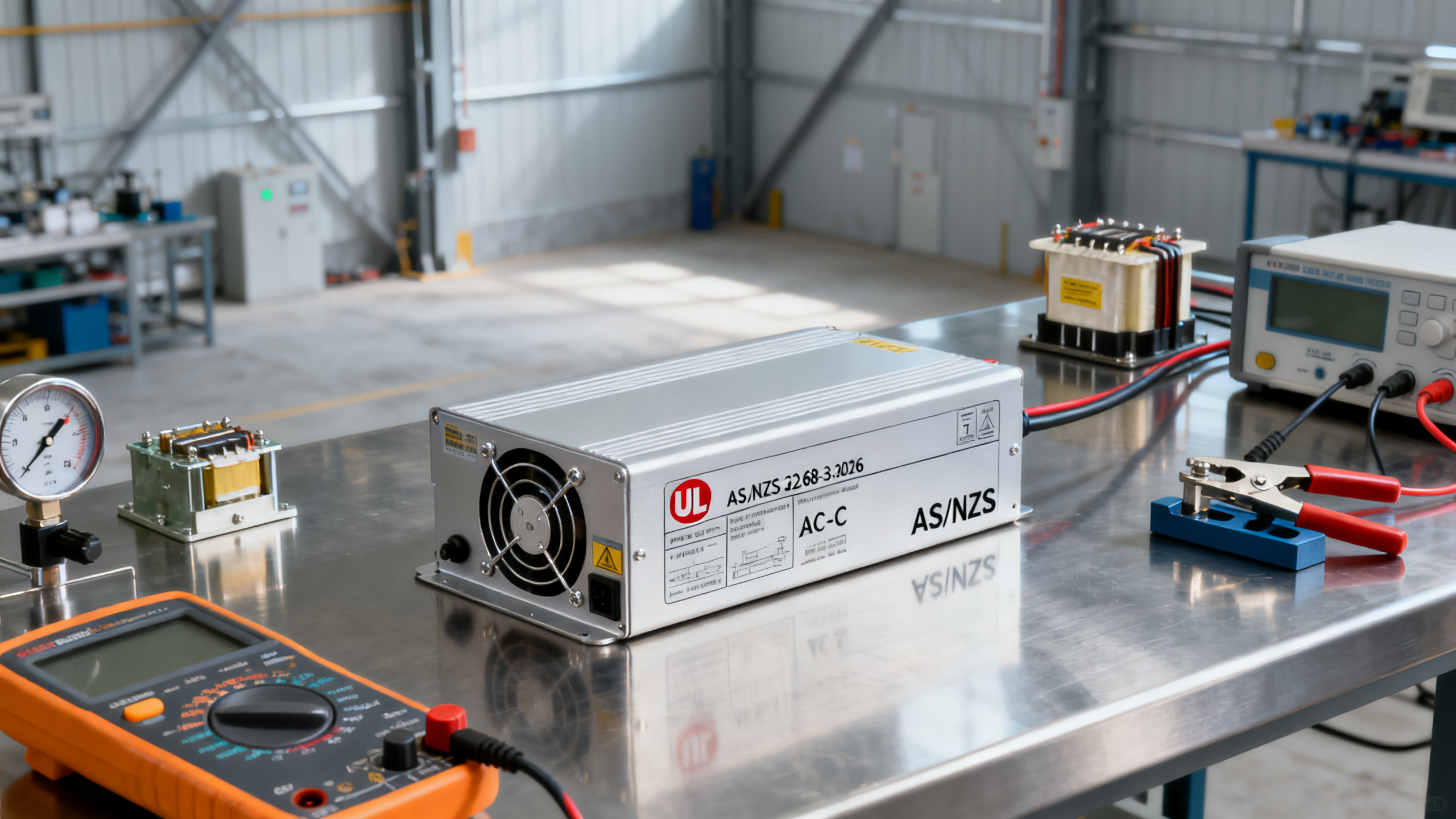
Australia’s Standards Australia (SA) and New Zealand’s Standards New Zealand (SNZ) jointly published AS/NZS 62368-3:2026 on 9 May 2026, mandating dual isolation (SELV + PELV) and full-load leakage current
Event Overview
On 9 May 2026, Standards Australia and Standards New Zealand released AS/NZS 62368-3:2026. The standard fully adopts UL 62368-3:2026’s power supply safety architecture. It requires industrial power adapters to meet dual isolation (Safety Extra-Low Voltage and Protected Extra-Low Voltage) and limit full-load leakage current to less than 0.1 mA. The standard will become mandatory on 1 December 2026.
Industries Affected by This Update
Direct Exporters (e.g., Chinese power module manufacturers)
These companies supply industrial power adapters to Australian and New Zealand end customers or OEMs. They are affected because their products must comply with AS/NZS 62368-3:2026 prior to market entry after 1 December 2026. Non-compliant units may be rejected at customs or withdrawn post-importation.
Contract Manufacturers & ODMs
Firms producing power adapters under private labels or OEM agreements for ANZ-based brands must revise design specifications and test protocols. The dual-isolation requirement impacts transformer layout, creepage/clearance distances, and insulation system validation — potentially affecting time-to-market and BOM cost.
Distribution & Channel Partners
Importers, regional distributors, and e-commerce platforms selling industrial power supplies in Australia or New Zealand must verify product certification status against the new standard. Stock clearance of pre-2026-compliant units may require active inventory management before the enforcement date.
Third-Party Testing & Certification Bodies
Laboratories accredited for ANZ market access (e.g., SAI Global, Intertek, TÜV SÜD) will need to align test plans and reporting templates with AS/NZS 62368-3:2026. This includes updated procedures for leakage current measurement under full-load conditions and verification of dual-isolation architecture.
What Relevant Companies or Practitioners Should Monitor and Do Now
Track official implementation guidance from SA and SNZ
While the standard is published, SA and SNZ may issue transitional arrangements, interpretation notes, or conformity assessment bulletins ahead of 1 December 2026. Monitoring official communications ensures alignment with accepted test methods and documentation expectations.
Review product lines designated for ANZ export
Focus on industrial-grade AC-DC adapters rated above 50 V output or intended for use in factory automation, medical support equipment, or outdoor infrastructure. These categories are most likely subject to immediate review due to higher risk profiles and stricter SELV/PELV boundary enforcement.
Distinguish between regulatory signal and operational readiness
The publication of AS/NZS 62368-3:2026 is a formal regulatory milestone, but actual compliance verification depends on laboratory capacity, certification turnaround times, and importer due diligence. Businesses should not assume automatic acceptance of existing UL 62368-3:2026 test reports without SA/SNZ endorsement or local accreditation confirmation.
Initiate internal design and testing prep now
Start revising schematics and PCB layouts to accommodate dual-isolation barriers; engage accredited labs early for pre-assessment of leakage current performance at full load; and update technical files to include isolation voltage testing records and insulation coordination analysis — all ahead of formal submission.
Editorial Perspective / Industry Observation
Observably, AS/NZS 62368-3:2026 represents more than a technical refresh — it reflects a convergence toward harmonized high-safety architecture for industrial power supplies across North America and Oceania. Analysis shows this adoption strengthens de facto alignment between UL and ANZ regulatory frameworks, reducing fragmentation but raising the bar for legacy designs. From an industry perspective, it functions primarily as a forward-looking signal: while enforcement begins in late 2026, its implications for R&D timelines, component sourcing, and certification budgets are already material. Continued attention is warranted as SA and SNZ clarify recognition pathways for overseas test data and transitional compliance options.
Conclusively, AS/NZS 62368-3:2026 does not introduce entirely novel safety concepts, but it codifies stricter application thresholds — especially around leakage current limits and isolation integrity — for industrial power adapters entering Australia and New Zealand. It is best understood not as an isolated compliance event, but as part of a broader trend toward convergent, risk-based safety architecture in regulated power electronics markets. Stakeholders should treat it as a binding technical requirement with clear deadlines, not as optional guidance or a distant policy discussion.
Source: Standards Australia (SA), Standards New Zealand (SNZ)
Note: Transitional provisions, recognition of existing certifications, and lab accreditation updates remain under observation and are not yet confirmed in publicly available documents.
Technical Specifications
- Air Handling Unit Supplier Checklist: Performance Data, Lead Times, and SupportAuthor :Environmental Engineering Director
- Buying Fiberglass Water Tanks Wholesale: Compare Quotes and Delivery CostsAuthor :Environmental Engineering Director
- Choosing an XLPE Power Cable Supplier: Test Reports, Traceability, and Lead TimesAuthor :Grid Infrastructure Analyst
Expert Insights

Chief Security Architect
Dr. Thorne specializes in the intersection of structural engineering and digital resilience. He has advised three G7 governments on industrial infrastructure security.
Related Analysis
- Oct 19, 2026Air Handling Unit Supplier Checklist: Performance Data, Lead Times, and SupportAuthor :Environmental Engineering Director
- Oct 18, 2026Buying Fiberglass Water Tanks Wholesale: Compare Quotes and Delivery CostsAuthor :Environmental Engineering Director
- Oct 17, 2026Choosing an XLPE Power Cable Supplier: Test Reports, Traceability, and Lead TimesAuthor :Grid Infrastructure Analyst
Core Sector // 01
Security & Safety
- Choosing a Step-Down Transformer Supplier: Test Reports, Lead Times, and WarrantyAuthor :Grid Infrastructure Analyst

- Metallurgy Processes That Improve Conductivity and Reliability in Power Grid ComponentsAuthor :Grid Infrastructure Analyst

- How to Size a UPS for Server Rooms: Load, Runtime, and Redundancy FactorsAuthor :Grid Infrastructure Analyst

- How to Choose a Step-Down Transformer for a Control Panel: Key Sizing FactorsAuthor :Grid Infrastructure Analyst

- How Often Should Overseas Power Systems Undergo Safety Inspections?Author :Grid Infrastructure Analyst

- How to Choose Panels for Extreme-Cold Industrial Sites?Author :Grid Infrastructure Analyst

- What Should a Cross-Border EPC Equipment Procurement Reference Include?Author :Grid Infrastructure Analyst

- How to Compare Low-Voltage Equipment for Panel IntegrationAuthor :Grid Infrastructure Analyst