Fuling, Chongqing Targets $20B Advanced Materials Cluster; Light Alloy Auto Parts Export Certification Accelerates
Author
Date Published
Reading Time
Chongqing’s Fuling District has launched a strategic initiative to build a $20 billion advanced materials industrial cluster, with a focused push on light alloy automotive components. Though the exact launch date remains unconfirmed, the initiative is now operational and driving tangible standardization and export readiness activities—particularly in surface treatment protocols for lightweight structural parts. Its impact spans global automotive supply chains, especially where regulatory harmonization and market access for powertrain and sealing components are tightly coupled to material performance and finishing quality.
Event Overview
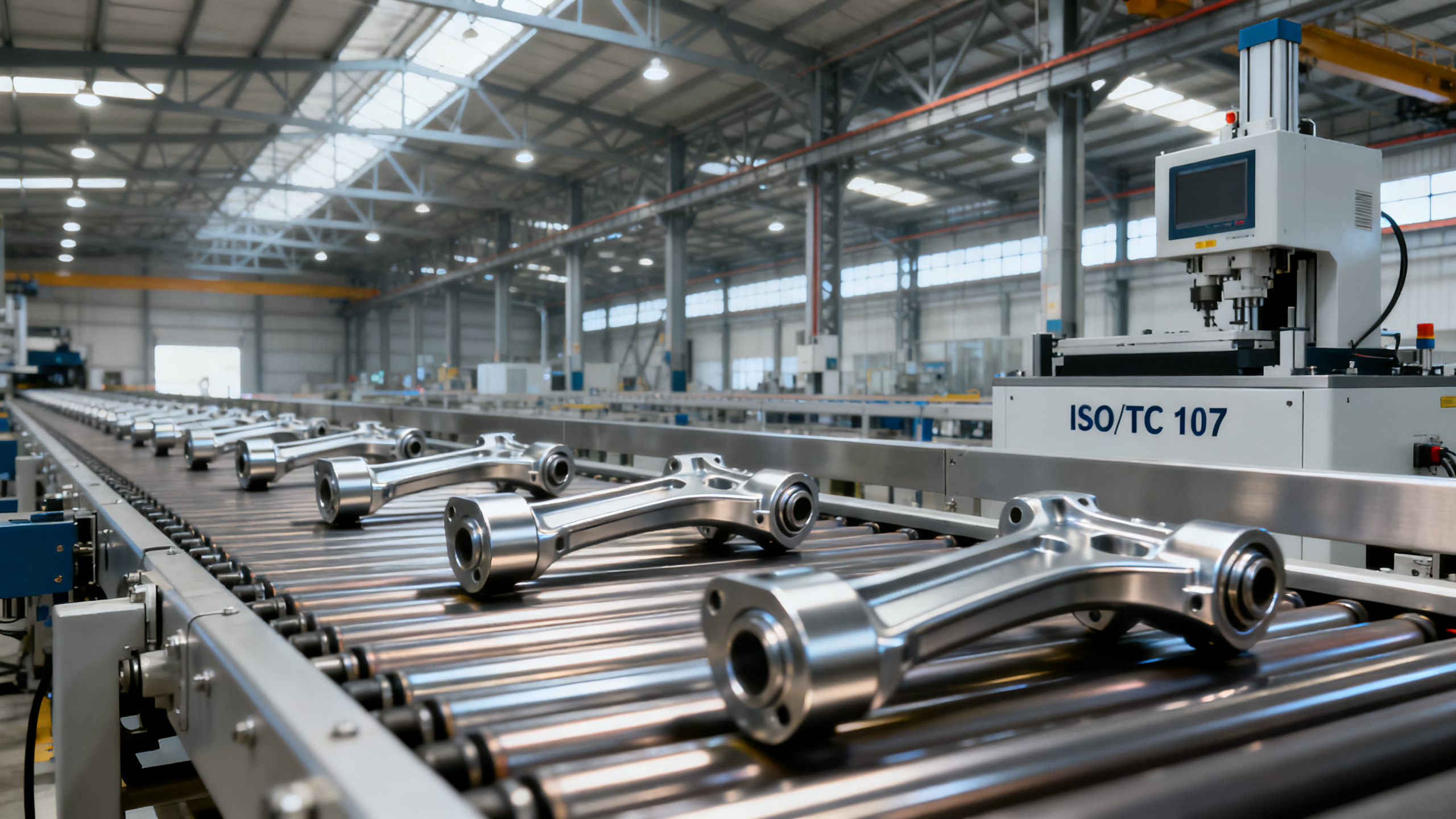
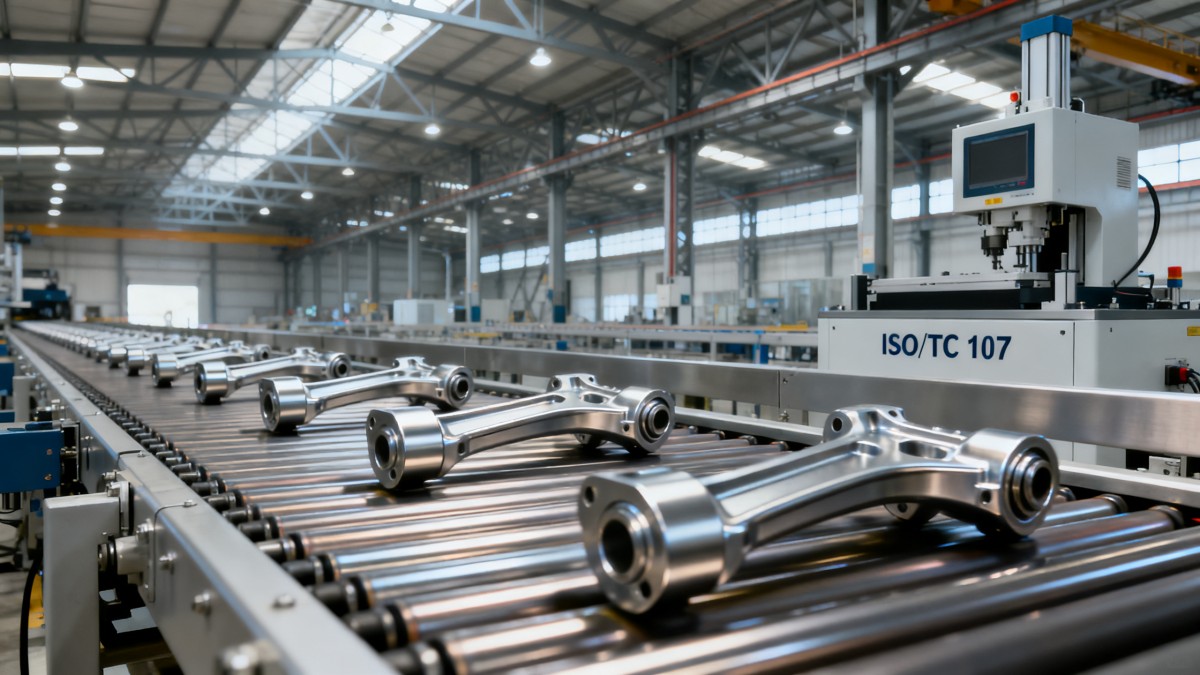
Fuling District is prioritizing the development of a vertically integrated light alloy automotive components industry chain, covering aluminum alloy die-cast housings, magnesium alloy shock tower mounts, and titanium alloy suspension control arms. The district-led standard GB/T XXXX–2026 — Surface Treatment Specifications for Lightweight Alloy Structural Components for Automotive Applications has been formally submitted to ISO/TC 107 (Surface and Interface Analysis) for international review and potential adoption as an ISO standard.
Industries Affected
Direct Exporters & Trading Enterprises
Companies exporting Power Transmission and Bearings & Seals components made from light alloys into North America and the EU face recurring technical barriers—especially inconsistent surface treatment validation requirements across OEMs. If approved, the ISO version of GB/T XXXX–2026 would serve as a unified reference for coating adhesion, corrosion resistance, and interfacial compatibility testing. This could reduce repeated audits, cut certification lead times by an estimated 30–40%, and lower third-party verification costs per product family.
Raw Material Procurement Enterprises
Suppliers sourcing primary aluminum, magnesium ingots, or titanium sponge for downstream component makers may see increased demand for certified feedstock traceable to surface-treatment-compliant alloy chemistries (e.g., controlled Fe/Si ratios in Al-Si-Cu alloys). However, current procurement contracts rarely specify such metallurgical parameters—meaning buyers will need to revise technical data sheets and supplier qualification criteria within 12–18 months if the ISO standard advances.
Component Manufacturing Enterprises
Manufacturers of die-cast housings, shock towers, and suspension links must align production processes—including cleaning, conversion coating, and electroplating lines—with the test methods and pass/fail thresholds defined in GB/T XXXX–2026. Observably, this standard emphasizes real-time process monitoring over end-of-line inspection, suggesting a shift toward integrated quality management systems rather than batch-based compliance checks.
Supply Chain Service Providers
Third-party testing labs, certification bodies (e.g., TÜV, SGS), and logistics firms offering pre-shipment conformity assessment services will likely expand capacity for ISO/TC 107-aligned surface analysis (e.g., XPS, salt spray + cyclic corrosion testing per ISO 14993). Demand for bilingual (EN/CN) audit reports referencing both GB/T and emerging ISO clauses is expected to rise—especially among Tier 2 suppliers lacking in-house metrology infrastructure.
Key Considerations & Recommended Actions
Monitor ISO/TC 107 Ballot Timeline Closely
The draft standard entered the ISO Committee Draft (CD) stage in Q2 2024. Stakeholders should track its progression through the Draft International Standard (DIS) and Final Draft International Standard (FDIS) phases—any major objections during DIS could trigger substantive revision, delaying implementation beyond 2026.
Conduct Gap Assessments Against GB/T XXXX–2026 Clauses
Manufacturers should benchmark existing surface treatment SOPs against the standard’s Annex A (mandatory test matrix) and Annex B (recommended process controls). Early identification of deviations—such as non-standardized phosphating bath temperature tolerances or missing post-treatment drying validation—enables phased investment in equipment upgrades.
Engage Proactively with Fuling’s Industry Coordination Office
Fuling has established a cross-enterprise working group to support pilot implementations. Participation offers early access to interpretation guidance, joint validation studies with Chinese and EU labs, and preferential access to local subsidy programs for ISO-aligned R&D investments.
Editorial Perspective / Industry Observation
This initiative is better understood not as a standalone standardization effort—but as a coordinated infrastructure play. Fuling’s dual focus on cluster-scale manufacturing scale-up *and* upstream standard-setting reflects a broader trend: regional industrial policy in China increasingly targets ‘certification sovereignty’—the ability to shape global technical rules while de-risking export dependency. Analysis shows that only ~12% of China’s light alloy auto parts exports currently meet full OEM-specific surface treatment specs for Tier 1 integrators in Germany and the U.S.; GB/T XXXX–2026, if ISO-adopted, may narrow that gap faster than tariff reductions alone.
Conclusion
The Fuling-led standardization drive signals a maturing phase in China’s advanced materials value chain—one where technical interoperability, not just cost or volume, becomes the decisive competitive lever. Its success hinges less on final ISO approval and more on whether global OEMs voluntarily adopt it as a de facto benchmark. A rational observation is that even partial uptake would accelerate convergence across regional surface treatment expectations—making it a pivotal, albeit incremental, step toward globally recognized process credibility.
Source Attribution
Official announcements issued by the Fuling District Government (Chongqing Municipal People’s Government portal, May 2024); draft standard documentation filed with SAC/TC 243 (National Technical Committee on Nonferrous Metals); ISO/TC 107 CD stage notification (ISO Project Number: ISO/CD XXXX, registered 15 April 2024). Note: Final ISO designation number and publication timeline remain pending; ongoing tracking advised.
Technical Specifications
- Air Handling Unit Supplier Checklist: Performance Data, Lead Times, and SupportAuthor :Environmental Engineering Director
- Buying Fiberglass Water Tanks Wholesale: Compare Quotes and Delivery CostsAuthor :Environmental Engineering Director
- Choosing an XLPE Power Cable Supplier: Test Reports, Traceability, and Lead TimesAuthor :Grid Infrastructure Analyst
Expert Insights

Chief Security Architect
Dr. Thorne specializes in the intersection of structural engineering and digital resilience. He has advised three G7 governments on industrial infrastructure security.
Related Analysis
- Oct 19, 2026Air Handling Unit Supplier Checklist: Performance Data, Lead Times, and SupportAuthor :Environmental Engineering Director
- Oct 18, 2026Buying Fiberglass Water Tanks Wholesale: Compare Quotes and Delivery CostsAuthor :Environmental Engineering Director
- Oct 17, 2026Choosing an XLPE Power Cable Supplier: Test Reports, Traceability, and Lead TimesAuthor :Grid Infrastructure Analyst
Core Sector // 01
Security & Safety
- Does Power Transmission Maintenance Differ in Desert and Arctic Sites?Author :Heavy Industry Strategist

- Can Industrial Engineering Solutions Reduce Petrochemical Downtime?Author :Heavy Industry Strategist

- What Drives Industrial Roller Chains Price: Material, Pitch, Load, and Supplier FactorsAuthor :Heavy Industry Strategist

- How to Choose a Three Phase Soft Starter for Pumps, Fans, and ConveyorsAuthor :Heavy Industry Strategist

- How to Evaluate a Conveyor Roller Belts Manufacturer for Load, Speed, and Service LifeAuthor :Heavy Industry Strategist

- Power Transmission Systems Pricing: 7 Cost Drivers Buyers Should CompareAuthor :Heavy Industry Strategist

- India Expands BIS ISI Rule for Imported Belts and ChainsAuthor :Heavy Industry Strategist

- Zero Backlash Jaw Coupling Selection Guide: Torque, Misalignment, and Servo PerformanceAuthor :Heavy Industry Strategist