Dongning Black Fungus Output to Exceed $390M; Demand Rises for Food-Grade Stainless Steel Conveyor Belts
Author
Date Published
Reading Time
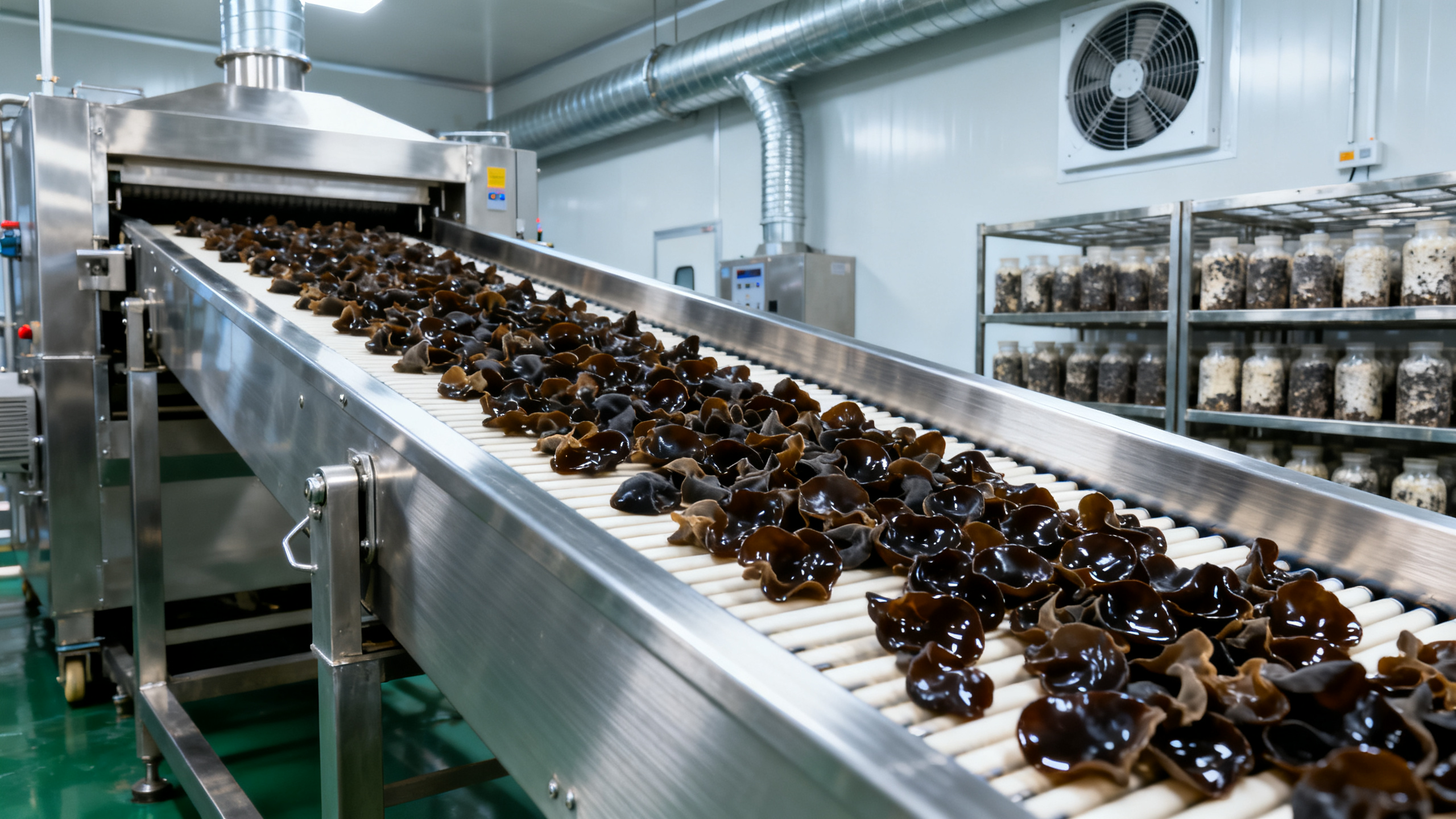
Recent policy-driven upgrades in China’s edible fungus industry—particularly in Dongning City, designated the 'Black Fungus Capital of China'—are accelerating demand for high-compliance food processing equipment. Though no official effective date has been announced for the latest regulatory alignment efforts, the 2026 production target and associated infrastructure rollout signal a structural shift toward export-oriented, standards-aligned manufacturing. This development directly impacts global supply chains serving halal-certified food processors in Southeast Asia and the Middle East, where traceability, material safety, and hygiene validation are now non-negotiable.
Event Overview
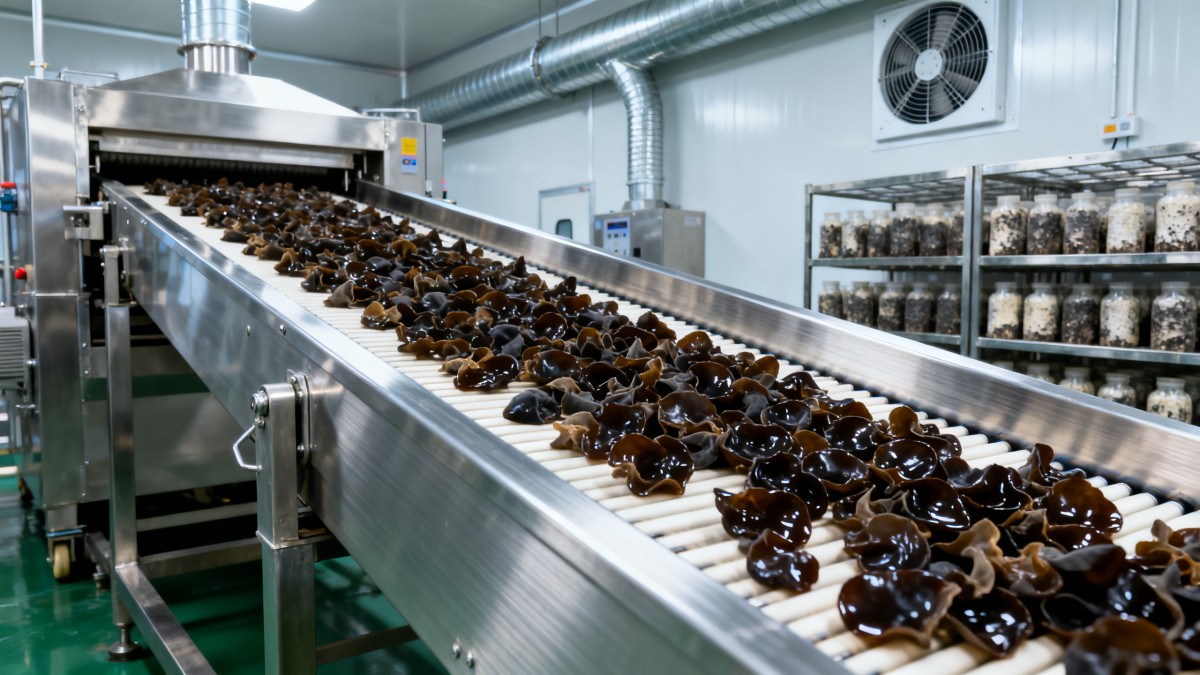
Dongning City is projected to achieve black fungus output exceeding USD 390 million by 2026, supported by a 150,000-mu (10,000-hectare) green food raw material base. Its integrated cultivation system features full environmental control (temperature, humidity, light), cleanroom-grade sorting and packaging lines, and temperature-controlled logistics. These operational enhancements have triggered concentrated procurement of FDA 21 CFR Part 117– and EU Regulation (EC) No 1935/2004–compliant stainless steel conveyor belts, laminar airflow shower systems, and inline metal detection units.
Industries Affected
Direct Export Trading Enterprises
Exporters specializing in food-grade industrial equipment face intensified competition but also expanded opportunity: rising inbound inquiries from halal-certified facilities in Indonesia, Malaysia, Saudi Arabia, and the UAE reflect growing trust in Chinese-made compliance-ready systems. Impact manifests as increased pre-shipment documentation requirements (e.g., material declarations, third-party hygiene validation reports) and tighter lead-time expectations for certified configurations.
Raw Material Procurement Firms
Suppliers of austenitic stainless steel (e.g., AISI 304/316), food-grade lubricants, and HEPA-filtered air handling components report stronger order visibility—especially for batches with full RoHS, REACH, and NSF/ANSI 51 traceability. However, procurement teams must now verify supplier conformity statements against specific clauses of FDA 21 CFR Part 117 Subpart B (Current Good Manufacturing Practice) and EU 1935/2004 Annex I migration limits—not just generic 'food-safe' claims.
Equipment Manufacturing Enterprises
Domestic OEMs producing conveying, sorting, and inspection systems are shifting from component-level compliance to full-system validation—including risk assessments per ISO 14971 and hygienic design reviews aligned with EHEDG Doc. Type EL. The trend favors vertically integrated manufacturers capable of bundling belts, drives, controls, and validation support—rather than those offering modular parts only.
Supply Chain Service Providers
Freight forwarders, customs brokers, and certification consultants are seeing higher demand for harmonized export services: e.g., dual-standard labeling (FDA + EU), halal logistics coordination (temperature-controlled, segregation-compliant transit), and expedited CE/FDA equivalence assessments. Notably, service providers lacking domain expertise in food contact material (FCM) regulations report declining win rates on tenders involving multi-market deployments.
Key Considerations and Recommended Actions
Verify Equipment Certification Scope Rigorously
Many suppliers claim 'FDA-compliant' belts—but actual certification may cover only static material testing, not dynamic performance under thermal cycling or cleaning-in-place (CIP) conditions. Buyers should request test reports referencing FDA 21 CFR 178.3570 (for belts) and EN 10204 3.1 certificates with lot-specific chemistry data.
Prioritize Modular Hygienic Design Over Aesthetic Finish
Observably, end users in ASEAN and GCC markets increasingly reject polished surfaces without validated drainability or crevice-free construction. Procurement decisions should reference EHEDG Guideline No. 27 (conveyors) rather than relying solely on surface roughness (Ra) values.
Engage Early with Halal Certification Bodies
While stainless steel itself is inherently halal, ancillary components (lubricants, adhesives, gaskets) require formal certification. Companies targeting Middle Eastern buyers should initiate halal audits before finalizing bill-of-materials—especially for polymer-based belt coatings or sensor housings.
Editorial Insight / Industry Observation
This is not merely a regional agricultural upgrade—it signals a broader recalibration in how Chinese food equipment manufacturers position themselves globally. Analysis shows that Dongning’s coordinated investment across cultivation, post-harvest handling, and cold chain reflects a deliberate move from 'low-cost supplier' to 'standards-integrated partner'. Current more relevant interpretation is that demand for compliant conveyance systems functions less as a discrete procurement event and more as an early indicator of tightening global FCM enforcement—particularly in emerging markets adopting EU-style traceability frameworks.
Conclusion
The Dongning initiative underscores a maturing paradigm: food safety infrastructure is now a strategic export asset, not just domestic compliance overhead. For international stakeholders, this development is better understood as a catalyst for upstream standardization—where equipment selection becomes a de facto entry requirement for participation in next-generation agri-food value chains.
Source Attribution
Information synthesized from official announcements by the Dongning Municipal Government (2024 Q3 Industrial Development Briefing), the Heilongjiang Provincial Department of Agriculture and Rural Affairs, and public tender records from the China National Light Industry Council’s Edible Fungus Machinery Committee. Note: Final 2026 output valuation and regulatory implementation timelines remain subject to annual review and are pending confirmation in the upcoming National Edible Fungus Industry Standardization Roadmap (2025–2030), expected Q2 2025.
Technical Specifications
- Air Handling Unit Supplier Checklist: Performance Data, Lead Times, and SupportAuthor :Environmental Engineering Director
- Buying Fiberglass Water Tanks Wholesale: Compare Quotes and Delivery CostsAuthor :Environmental Engineering Director
- Choosing an XLPE Power Cable Supplier: Test Reports, Traceability, and Lead TimesAuthor :Grid Infrastructure Analyst
Expert Insights

Chief Security Architect
Dr. Thorne specializes in the intersection of structural engineering and digital resilience. He has advised three G7 governments on industrial infrastructure security.
Related Analysis
- Oct 19, 2026Air Handling Unit Supplier Checklist: Performance Data, Lead Times, and SupportAuthor :Environmental Engineering Director
- Oct 18, 2026Buying Fiberglass Water Tanks Wholesale: Compare Quotes and Delivery CostsAuthor :Environmental Engineering Director
- Oct 17, 2026Choosing an XLPE Power Cable Supplier: Test Reports, Traceability, and Lead TimesAuthor :Grid Infrastructure Analyst
Core Sector // 01
Security & Safety
- How to Select a Twin Shaft Shredder for Bulky Waste, Scrap Metal, and PlasticsAuthor :Environmental Engineering Director

- How to Choose a Twin Shaft Shredder for Tires: Torque, Throughput, and Knife DesignAuthor :Environmental Engineering Director

- Selecting Waste Recycling Equipment by Waste Stream, Throughput, and Contamination LevelAuthor :Environmental Engineering Director

- How to Choose Waste Sorting Equipment for Recycling Plants by Material Stream and CapacityAuthor :Environmental Engineering Director

- Scrap Metal Baler Buying Guide: Horizontal vs Vertical, Capacity, Power, and OutputAuthor :Environmental Engineering Director

- What Is Industrial Ecology and How Does It Improve Resource Efficiency in Manufacturing?Author :Environmental Engineering Director

- Pet Bottle Washing Line Problems: Common Causes of Flake Contamination and How to Fix ThemAuthor :Environmental Engineering Director

- How to Evaluate Environment & Ecology Cost in Industrial ProjectsAuthor :Environmental Engineering Director